Cse In News

शहरों में तेजी से फैल रहा है ओजोन प्रदूषण, दिल्ली-NCR सबसे ज़्यादा प्रभावित, जानिए सेहत को कैसे पहुंचा रहा नुकसान?

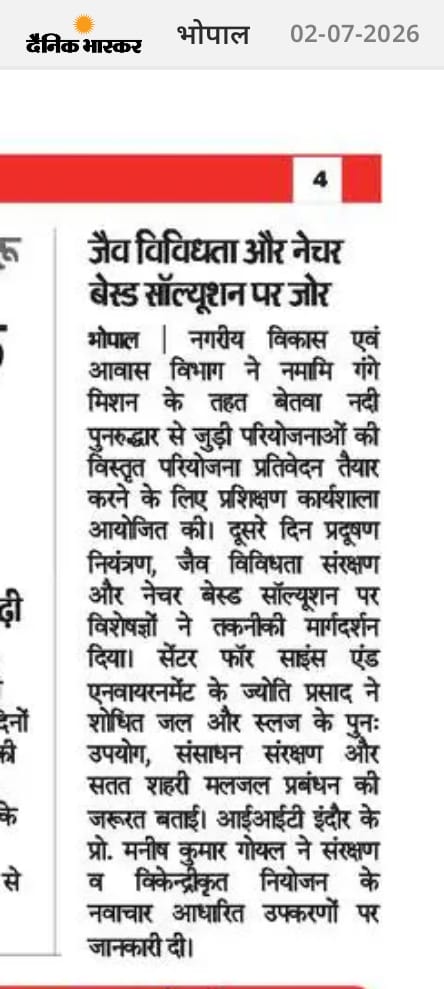
सेंटर फॉर साइंस एंड एनवायरनमेंट (CSE) की एक नई स्टडी के नतीजे बेहद चौंकाने वाले हैं। इस स्टडी के मुताबिक देश के शहरों में ग्राउंड लेवल ओजोन प्रदूषण फैल रहा है। यह प्रदूषण काफी देर तक बना रहता है। इस स्टडी के मुताबिक दिल्ली-एनसीआर इस प्रदूषण के सबसे ज्यादा प्रभावित हैं। यह प्रदूषण सेहत और फसलों के काफी नुकसानदेह है। क्या है ओजोन, क्यों बन रहा काल? CSE की एक नई स्टडी के मुताबिक, ज़मीन के पास की ओज़ोन (जो हवा को प्रदूषित करने वाला एक अदृश्य लेकिन बहुत खतरनाक तत्व है) भारत के शहरों में साल भर रहने वाली सार्वजनिक स्वास्थ्य और जलवायु से जुड़ी चुनौती के तौर पर तेज़ी से उभर रही है। छह साल तक 25 शहरों के डेटा आधारित स्टडी से यह पता चला कि ओज़ोन प्रदूषण अब सिर्फ़ गर्मियों में अचानक बढ़ने या कुछ उत्तरी शहरी केंद्रों तक ही सीमित नहीं है। इसके बजाय यह अलग-अलग इलाकों में फैल गया है और ज़मीन के अंदर बसे शहरों और तटीय शहरों, दोनों में ही इसके लंबे समय तक संपर्क में रहना आम बात हो गई है। CSE की ओर से 2021 से 2026 तक की अवधि में किए गए अध्ययन में दिल्ली-एनसीआर को देश का सबसे बड़ा क्षेत्रीय ओज़ोन हॉटस्पॉट बताया गया है। यहां साल पर वायु गुणवत्ता (AQI) का स्तर ऊंचा रहता है। इसकी मुख्य वजह PM 2.5 और PM10 जैसे पार्टिकुलेट मैटर की ज़्यादा मात्रा है। स्टडी में यह भी पता चला कि चंडीगढ़, जयपुर, अहमदाबाद, मुंबई, चेन्नई और बेंगलुरु जैसे शहरों में भी इसके संपर्क में आने का स्तर चिंताजनक है। वहीं शोधकर्ताओं का कहना है कि बढ़ता तापमान, तेज़ धूप और ओज़ोन बनाने वाली गैसों का बढ़ता उत्सर्जन वायु प्रदूषण के स्वरूप को बदल रहा है, जिससे एक ऐसा खतरा पैदा हो रहा है जो पार्टिकुलेट मैटर से कहीं ज़्यादा गंभीर है। इंसानों के शरीर पर व्यापक प्रभाव जानकारों का कहना है कि जमीन के पास की ओज़ोन इंसानी शरीर पर असर डालने वाले सबसे खतरनाक वायु प्रदूषकों में से एक है। इससे स्वास्थ्य संबंधी गंभीर समस्याएं पैदा हो सकती हैं। बता दें कि वायुमंडल में ऊपर मौजूद सुरक्षात्मक ओज़ोन परत के उलट, ज़मीन के पास की ओज़ोन तब बनती है जब गाड़ियों, उद्योगों, घरेलू ईंधन और कचरा जलाने से निकलने वाले नाइट्रोजन ऑक्साइड और वोलाटाइल ऑर्गेनिक कंपाउंड (VOCs) तेज़ धूप में आपस में प्रतिक्रिया करते हैं। फेंफड़ों को नुकसान CSE की स्टडी के मुताबिक ओज़ोन फेफड़ों के ऊतकों को नुकसान पहुंचाती है, सांस की नली में सूजन पैदा करती है, अस्थमा को बढ़ाती है और धूल और पराग (पॉलन) जैसे एलर्जी पैदा करने वाले तत्वों के प्रति संवेदनशीलता बढ़ाती है। सांस लेने में दिक्कत हो सकती है और इमरजेंसी में अस्पताल जाना पड़ सकता है। वहीं लंबे समय तक संपर्क में रहने से हार्ट अटैक, स्ट्रोक, दिल की बीमारी से मौत और क्रोनिक ऑब्सट्रक्टिव पल्मोनरी डिजीज (COPD) के गंभीर रूप लेने का खतरा बढ़ जाता है। सेहत के लिए घातक CSE की एग्जीक्यूटिव डायरेक्टर और स्टडी की मुख्य लेखिका अनुमिता रॉय चौधरी ने कहा, "हमारा विश्लेषण बताता है कि ज़मीन के स्तर पर ओज़ोन का बढ़ना और लंबे समय तक इसके संपर्क में रहना भारत की स्थानीय, सर्दियों की पार्टिकुलेट समस्या को साल भर चलने वाले, सीमा-पार संकट में बदल रहा है।" उन्होंने कहा कि ओज़ोन न केवल लोगों की सेहत को नुकसान पहुंचाती है, बल्कि खेती को भी नुकसान पहुंचाती है और गर्मी को रोककर जलवायु परिवर्तन में योगदान देती है, जिससे एक फीडबैक लूप बनता है जो ओज़ोन बनने की प्रक्रिया को और तेज़ करता है।
West Bengal emerges as major Black Carbon hotspot; CSE calls for urgent national strategy

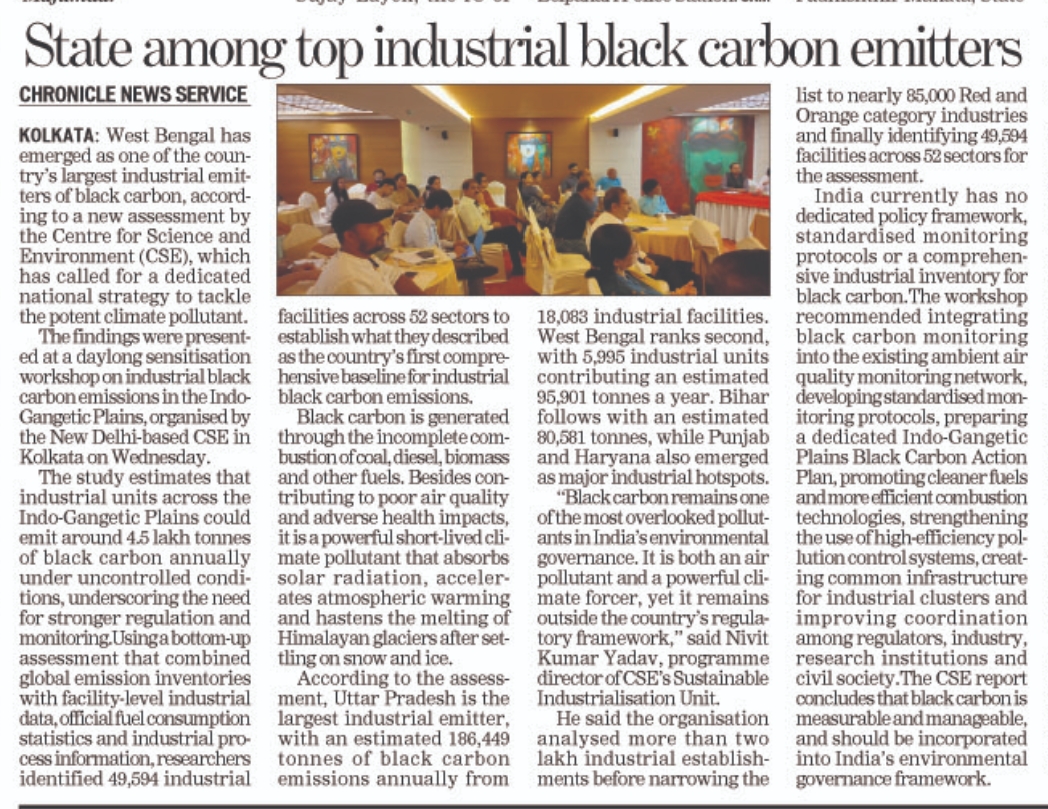
KOLKATA: West Bengal has emerged as a critical industrial hotspot for black carbon emissions, discharging a staggering 95,901 tonnes annually into the atmosphere. A pioneering study by the Centre for Science and Environment (CSE) reveals that the state is the second-largest emitter in the Indo-Gangetic Plains (IGP), a region that collectively generates roughly 4.5 lakh tonnes of industrial black carbon each year under uncontrolled conditions. The assessment mapped 5,995 industrial facilities across 38 categories in West Bengal to track the root causes of this footprint. The findings highlight the state’s massive industrial fuel dependency: local factories devour 51.6 million tonnes of coal, 251,416 kilolitres of petroleum products, and 4.8 million tonnes of alternative fuels annually. The principal sectors driving Bengal's high emissions include Iron & Steel, Chemicals, Foundries & Rolling Mills, Paper & Pulp, and Food Processing, alongside brick kilns and distilleries. To address these findings, CSE organized a vital sensitization workshop in Kolkata on July 1, 2026. Bringing together the West Bengal Pollution Control Board (WBPCB), the Central Pollution Control Board (CPCB), and industry leaders, the workshop aimed to forge state-specific pathways for emission mitigation. "Black carbon remains one of the most overlooked pollutants in India’s environmental governance," stated Nivit Kumar Yadav, Programme Director at CSE. "It is both a public health hazard and a powerful climate forcer. Bringing it into mainstream policy will deliver immediate benefits for air quality and regional climate mitigation." The urgency of a localized, bottom-up approach is highlighted by flaws in global data models. Standard global inventories offer wildly divergent estimates for the region, ranging from 1.3 lakh to 8.4 lakh tonnes. By verifying facility-level data across 49,594 facilities in the IGP, CSE has provided a reliable regulatory roadmap. Shobhit Srivastava, Programme Manager at CSE, noted that mapping these facilities provides a practical baseline for prioritizing high-emitting clusters. Black carbon, a byproduct of the incomplete combustion of fossil fuels and biomass, traps solar radiation and severely accelerates the melting of Himalayan glaciers. Despite these threats, India currently lacks standardized monitoring protocols or dedicated policy frameworks for it. Moving forward, CSE has called for a dedicated Indo-Gangetic Plains Black Carbon Action Plan. Key recommendations include integrating black carbon tracking into the existing Ambient Air Quality Monitoring Systems (AAQMS), establishing shared green infrastructure for MSME clusters, and accelerating fuel transitions. The report concludes that black carbon is entirely manageable if integrated into India’s mainstream environmental governance.

Bengaluru records 55 days of unsafe ozone levels, raising serious health concerns

Bengaluru has crossed a worrying environmental milestone after recording unsafe levels of ground-level ozone on 55 out of 71 days, according to a new analysis by the Centre for Science and Environment (CSE). The study has raised concerns over the city's worsening air quality and the possible impact on public health. The analysis covered 25 Indian cities between March 1 and May 10, 2026. Among all the cities studied, Delhi reported the highest number of unsafe ozone days at 62, followed by Bhopal with 60. Bengaluru ranked third with 55 days, making it one of the country's worst-affected cities during the study period. According to the report, Bengaluru's ground-level ozone concentration exceeded the National Ambient Air Quality Standards (NAAQS) limit of 100 micrograms per cubic metre (μg/m³) for an eight-hour exposure on all but 16 days during the 71-day period.

Ground-Level Ozone Is Delhi's Next Big Environmental Crisis

India's capital, Delhi, has long been battling the grave menace of air pollution. Every winter, a thick blanket of smog, toxic air, and suffocating atmospheric conditions become a matter of national concern. Until now, public discourse on this crisis has largely revolved around PM2.5, PM10, stubble burning, and vehicular emissions. However, a new and even more insidious threat is rapidly emerging—ground-level ozone pollution. A recent report by the Centre for Science and Environment (CSE) has revealed that not only Delhi-NCR but also cities such as Jaipur, Chandigarh, and Ahmedabad are increasingly falling into the grip of ozone pollution. Unlike visible smog, ozone pollution is invisible, yet its effects gradually undermine human health, agriculture, and the environment. Ironically, even such a critical issue is often reduced to political blame games. At times, farmers are held solely responsible because of stubble burning; at others, vehicles become the exclusive target. The truth, however, is far more complex. If we genuinely seek to address the root of the problem, we must critically reassess unplanned urbanisation, unchecked industrialisation, current patterns of energy consumption, and the prevailing model of development. Today, Delhi is not merely the nation's capital; it has also become one of India's largest pollution hotspots. During summer, rising temperatures, intense sunlight, and chemical reactions between nitrogen oxides and volatile organic compounds emitted by vehicles and industries lead to the formation of ground-level ozone. This is fundamentally different from the ozone layer high in the stratosphere, which shields the Earth from harmful ultraviolet radiation. Ground-level ozone is a toxic gas that reduces lung function, aggravates asthma, irritates the eyes, and increases the risk of cardiovascular diseases. Across Delhi-NCR, an increasing number of people are suffering from breathing difficulties, allergies, and respiratory illnesses, with ozone pollution playing an increasingly significant role. The Delhi Government has undertaken several commendable initiatives to curb pollution. Incentives for electric vehicles, a comprehensive EV policy, expansion of public transportation, development of charging infrastructure, and the phased withdrawal of highly polluting vehicles are all positive steps. If effectively implemented, these measures could bring meaningful improvements in air quality over the coming years. However, vehicle policies alone cannot solve the crisis. The deeper challenge lies in unplanned urbanisation. Over the past two decades, vast stretches of agricultural land, ponds, and green spaces in Delhi and its surrounding regions have been transformed into sprawling concrete landscapes. This has severely disrupted the ecological balance. Areas where rainwater once naturally percolated into the soil are now covered with cement and asphalt. Traditional water bodies have disappeared, tree cover has declined, and urban temperatures have risen significantly. Consequently, cities now remain several degrees warmer than neighbouring rural areas—a phenomenon that accelerates the formation of ground-level ozone. Urban expansion is often celebrated as a symbol of progress, yet this development has come at the expense of nature. Cities demand more roads, electricity, housing, and industries. To meet these needs, forests are cleared, farmland disappears, and water bodies are destroyed. As a result, pollution is no longer confined to the air; it has also contaminated water resources, degraded soil quality, and threatened biodiversity. Such a trajectory of development ultimately works against human well-being. The number of private vehicles in Delhi continues to rise. Public transportation, despite significant improvements, has yet to become efficient and convenient enough to persuade large numbers of people to abandon private vehicles. Promoting electric mobility is undoubtedly welcome, but one crucial question remains: if the electricity powering these vehicles is generated primarily from coal-fired thermal power plants, pollution is merely shifted from city streets to power generation sites. Therefore, the transition to electric mobility must be accompanied by a simultaneous expansion of renewable energy, particularly solar power, along with investments in sustainable public transport. Ozone pollution is not merely a public health issue; it also poses a serious threat to agriculture. Scientific studies have shown that ozone interferes with photosynthesis, thereby reducing crop productivity. At a time when farmers are already struggling with climate change, erratic monsoons, and rising temperatures, ozone pollution could further intensify the agricultural crisis. India's National Clean Air Programme has established ambitious targets for improving air quality in numerous cities. However, the time has come to broaden its scope. Instead of focusing exclusively on particulate matter, equal attention must be given to secondary pollutants such as ozone through enhanced monitoring, scientific research, and targeted mitigation strategies. Air quality monitoring systems must become more comprehensive, technologically advanced, and transparent. Citizens also have a vital role to play. Practices such as open burning of waste, construction dust, burning of biomass and plastic, and improper disposal of industrial waste must be eliminated. Greater use of public transport, cycling, and walking should be actively encouraged. Large-scale afforestation, expansion of urban green belts, and restoration of traditional water bodies must become integral components of pollution-control strategies. Air pollution is not merely an environmental challenge; it is also an economic and social crisis. Rising pollution-related illnesses place enormous pressure on healthcare systems, reduce workforce productivity, and inflict billions in economic losses. Most alarming of all is its impact on children and young people, whose health and future are increasingly at risk. Unless decisive action is taken today, future generations will bear an even heavier burden. The initiatives undertaken by the Delhi Government deserve appreciation and offer hope for meaningful progress. Yet lasting success will require coordinated efforts involving the Union Government, state governments, local authorities, industry, scientists, and civil society. Pollution cannot be attributed to a single government, a single season, or a single source. It is the cumulative outcome of our development model, our lifestyle choices, and our relationship with the environment. The need of the hour is not political blame but visionary policymaking and collective responsibility. If we truly aspire to breathe clean air, we must move beyond pollution-control measures alone and embrace a new model of development that is in harmony with nature. Otherwise, invisible pollutants such as ground-level ozone will continue to silently poison our cities, turning the very model of modern development into one of the greatest threats to human civilization.

Sustainable growth is possible, if it is inclusive

It is a time of great disorder, climate disruption, and global discord. It is also a time for societal transformation, for technological innovation, and for economic renewal. The world is witnessing, in real time, the urgent crisis of climate change; increased temperatures and their impact on livelihood, and economies but also the fact that there are mature pathways for transformation of energy and economic systems. This is the opportunity. The question is whether from this great churn the world’s poor can emerge stronger; more resilient and more secure. I believe it is possible. For this we need an agenda that links the two global super-cycles – the existential crisis of climate change and the increasing poverty and marginalisation of millions and their insecurity. The opportunity is to build an agenda for economic resilience that will reduce the risk of climate change impact and build livelihoods and wellbeing. It is a co-benefit agenda, which most importantly, reworks the development paradigm so that it is affordable, inclusive, and so sustainable. This is the time when the World Meteorological Organization confirms that 2015-2026 are the hottest 11 years on record. The signals new threats of rising temperatures and more extreme weather events. In India, our official data shows that we are experiencing almost one extreme event a day, with huge and crippling impacts on the economies of the poor. But the world is also on a clean energy transition – steadily replacing coal with renewables for electricity and displacing the use of petrol and diesel in vehicles. According to the International Renewable Energy Agency’s March 2026 report, by the end of 2025, renewables accounted for close to 50 per cent of the world’s installed electricity generation; 85 per cent of new power additions that year were renewables, mainly solar and wind. What is interesting is that this energy transition was not happening only where one might expect – China or even Europe. A recent report by think tank Ember, in partnership with a coalition of 74 of the world’s most climate-vulnerable countries, found that these countries were fast-tracking electro-tech, not because of climate change but because it was faster, cheaper, and more reliable. These low- and middle-income economies are fuel importers, and for them, the energy crisis is real: over 700 million still lack reliable energy for basic needs. This also means they are not yet connected to the grid and so can adopt an alternative energy system at speed and scale. These countries can bypass fossil fuel and fast-track renewables. So, the question is no longer the viability of the alternative technology, but indeed how it will be scaled up to provide affordable and reliable energy for all. India, for instance, in the peak heat months of 2026, we have seen renewable energy meet up to 30-40 per cent of daily electricity demand. But as these sources are intermittent, the issue now is the affordability of batteries and other storage options; the question is how green energy technology will ‘fit’ into the conventional energy grid, how it will displace conventional sources of power and how it will be affordable for large numbers of people who are still energy-deprived. Our agenda is based on the idea that co-benefit is not just desirable, but also within reach – clean energy for livelihoods and also local air benefit, which in turn reduced greenhouse gas emissions. In this way, our Nationally Determined Contribution (NDC), which puts together the package of actions to reduce emissions, would be based on co-benefits; development, if done right, will also address the urgent crisis of climate change. We know that it is in our interest to achieve this twin goal. The opportunity is for countries to deepen their ability to manufacture green technologies, secure vital components, and build confidence in the new supply chains. The need is to build an economic growth model to put money in the budgets of the most vulnerable countries so that they can invest in the green transition. This then would be the foundations of the new modern economic growth – resilient communities which are then able to withstand climate shocks. We can no longer talk about small changes, or about short-changing the poor. This is key if the transition to the cleaner and more secure world has to succeed. This is the big agenda in this big churn so that it can lead to a better tomorrow: more resilient, more inclusive, and more sustainable. This is why at the beginning of the epoch of climate change, now that the world has moved into a different today, we can and must plan for a different tomorrow. Author: Sunita Narain is Director General of the Centre for Science and Environment (CSE), a research organisation based in New Delhi. How can sustainable development be advanced in a world shaped by geopolitical tensions, economic constraints, technological disruption, and competing political priorities? In cooperation with the Hamburg Sustainability Conference, the Table.Forum “Sustainable Development 2030 and Beyond” brings together leading voices from politics, international organizations, business, academia, and civil society to discuss solutions, priorities, and partnerships for the years ahead. At the center of the forum are the main themes of HSC 2026, which will take place on June 29–30. Our partner: Hamburg Sustainability Conference

Delhi govt implements EV policy; experts hail move, auto unions call for caution

Anumita Roychowdhury, Executive Director at the Centre for Science and Environment, said the decision to allow only electric three-wheelers and N1 trucks to be registered from next year was a welcome move. “Along with subsidies on new purchases, there was an urgent need for a legal mandate to properly implement the new EV policy so that the desired results to reduce vehicular emissions can be achieved,” she said. According to Roychowdhury, two-wheelers are a major contributor to vehicular emissions in Delhi.

Night Heat Stress: शहरों में क्यों बढ़ रहा नाइट हीट स्ट्रेस, इसकी वजह एसी या आपका अपना घर?

भारत के बड़े शहरों में गर्मियों की रातें अब वैसी राहत नहीं देती जैसी पहले देती थी. सूरज डूबने के बाद भी तापमान अक्सर 30 डिग्री सेल्सियस से ऊपर ही रहता है. इस वजह से लोगों को आराम से सोने में मुश्किल होती है. वैज्ञानिक स्टडी से यह पता चलता है कि रात में बढ़ती गर्मी की वजह कोई एक चीज नहीं है. दरअसल यह कंक्रीट की इमारत, खराब शहरी योजना, कम होती हरियाली और एयर कंडीशनर के बढ़ते इस्तेमाल का मिला-जुला असर है. गर्मी को रोकने वाली हीट ट्रैप रात में बढ़ते तापमान की सबसे बड़ी वजहों में से एक है आधुनिक घरों के बनने का तरीका. दरअसल ज्यादातर शहरी इमारतें कंक्रीट, सीमेंट, ईंट, कांच और स्टील से बनती हैं. ये सभी चीजें दिनभर सूरज की गर्मी को सोखती हैं और रात में धीरे-धीरे उसे छोड़ती हैं. सूरज डूबने के बाद ठंडा होने के बजाय घर जमा हुई गर्मी को बाहर निकालते रहते हैं. इस वजह से घर के अंदर का तापमान 30 डिग्री सेल्सियस से 35 डिग्री सेल्सियस के बीच बना रहता है. वेंटीलेशन की समस्या तेजी से हो रहे शहरीकरण की वजह से इमारतें एक दूसरे के काफी पास बन रही हैं. हालांकि ज्यादातर घरों में खिड़कियां होती हैं लेकिन अक्सर हवा के सही तरह से आने जाने की व्यवस्था नहीं होती. ताजी हवा के लगातार बहाव के बिना घर के अंदर की गर्म हवा अंदर ही फंसी रह जाती है. हरियाली की कमी पारंपरिक घरों में घर के अंदर के तापमान को प्राकृतिक रूप से कंट्रोल करने के लिए अक्सर मिट्टी का प्लास्टर, छायादार आंगन, ‌ मोटी दीवार और आसपास के पेड़ों का इस्तेमाल किया जाता था. लेकिन आधुनिक इमारतों में आमतौर पर ठंडक देने वाली यह खूबी नहीं होती. कंक्रीट की खुली छत, पेड़ की कमी और ग्रीन रूफ न होने की वजह से इमारत दिन में ज्यादा गर्मी सोखती है और सूरज डूबने के बाद धीरे-धीरे उसे छोड़ती है. एयर कंडीशनर का ज्यादा इस्तेमाल हालांकि एयर कंडीशनर घर के अंदर की जगह को ठंडा करते हैं लेकिन वे अंदर से निकाली गई गर्मी को अपने कंडेंसर यूनिट के जरिए बाहर भेजते हैं. जब अपार्टमेंट कॉम्पलेक्स, बाजार और रिहायशी इलाकों में हजारों एयर कंडीशनर एक साथ चलते हैं तो आसपास के माहौल में छोड़ी गई गर्मी बाहर के तापमान को काफी ज्यादा बढ़ा देती है. अर्बन बाउंड्री लेयर का असर वैज्ञानिक रातें ज्यादा गर्म होने की एक और बड़ी वजह अर्बन बाउंड्री लेयर को बताते हैं. दरअसल रात के समय हवा की निचली परत ज्यादा स्थिर हो जाती है. इस वजह से गर्म हवा आसानी से ऊपर नहीं उठ पाती. यही वजह है कि इमारत, सड़क, गाड़ी और एयर कंडीशनर से निकलने वाली गर्मी हवा में फैलने के बजाय जमीन के पास ही फंसी रह जाती है. शहरों में प्राकृतिक रूप से ठंडा होने का समय कम हो रहा सेंटर फॉर साइंस एंड एनवायरमेंट जैसे पर्यावरण संगठनों की रिपोर्ट से यह पता चलता है कि भारतीय शहर दिन के मुकाबले रात में तेजी से गर्म हो रहे हैं. दिल्ली में 25 मई 2026 को रात का न्यूनतम तापमान 32.4 डिग्री सेल्सियस दर्ज किया गया था. यह पिछले 14 सालों में सबसे गर्म रात थी. रिपोर्ट्स के मुताबिक पिछले दशक में दिल्ली में दिन और रात के तापमान का अंतर लगभग 9% कम हो गया है. शहर अपने आसपास के ग्रामीण इलाकों की तुलना में काफी ज्यादा गर्म रहते हैं. ऐसा इसलिए क्योंकि कंक्रीट, डामर और इमारतें गर्मी को ज्यादा देर तक रोककर रखती हैं. रात के समय सरफेस अर्बन हीट आईलैंड की तीव्रता को मापने वाली रिसर्च से शहरों और आसपास के ग्रामीण इलाकों के बीच औसत तापमान के अंतर का पता चलता है. आपको बता दें कि रात के तापमान के मामले में ग्रामीण इलाकों की तुलना में अहमदाबाद लगभग 3.1 डिग्री सेल्सियस, दिल्ली 2.5 डिग्री सेल्सियस, सूरत 2.4 डिग्री सेल्सियस, हैदराबाद 2.3 डिग्री सेल्सियस, चेन्नई 1.9 डिग्री सेल्सियस, मुंबई 1.5 डिग्री सेल्सियस और कोलकाता लगभग 1.5 डिग्री सेल्सियस ज्यादा गर्म रहे.

West Bengal emerges as major black carbon hotspot; CSE calls for urgent national strategy

West Bengal has emerged as a critical industrial hotspot for black carbon emissions, discharging a staggering 95,901 tonnes annually into the atmosphere. A pioneering study by the Centre for Science and Environment (CSE) reveals that the state is the second-largest emitter in the Indo-Gangetic Plains (IGP), a region that collectively generates roughly 4.5 lakh tonnes of industrial black carbon each year under uncontrolled conditions. The assessment mapped 5,995 industrial facilities across 38 categories in West Bengal to track the root causes of this footprint. The findings highlight the state’s massive industrial fuel dependency: local factories devour 51.6 million tonnes of coal, 251,416 kilolitres of petroleum products, and 4.8 million tonnes of alternative fuels annually. The principal sectors driving Bengal's high emissions include Iron & Steel, Chemicals, Foundries & Rolling Mills, Paper & Pulp, and Food Processing, alongside brick kilns and distilleries. To address these findings, CSE organized a vital sensitization workshop in Kolkata on July 1, 2026. Bringing together the West Bengal Pollution Control Board (WBPCB), the Central Pollution Control Board (CPCB), and industry leaders, the workshop aimed to forge state-specific pathways for emission mitigation. "Black carbon remains one of the most overlooked pollutants in India’s environmental governance," stated Nivit Kumar Yadav, Programme Director at CSE. "It is both a public health hazard and a powerful climate forcer. Bringing it into mainstream policy will deliver immediate benefits for air quality and regional climate mitigation." The urgency of a localized, bottom-up approach is highlighted by flaws in global data models. Standard global inventories offer wildly divergent estimates for the region, ranging from 1.3 lakh to 8.4 lakh tonnes. By verifying facility-level data across 49,594 facilities in the IGP, CSE has provided a reliable regulatory roadmap. Shobhit Srivastava, Programme Manager at CSE, noted that mapping these facilities provides a practical baseline for prioritizing high-emitting clusters. Black carbon, a byproduct of the incomplete combustion of fossil fuels and biomass, traps solar radiation and severely accelerates the melting of Himalayan glaciers. Despite these threats, India currently lacks standardized monitoring protocols or dedicated policy frameworks for it. Moving forward, CSE has called for a dedicated Indo-Gangetic Plains Black Carbon Action Plan. Key recommendations include integrating black carbon tracking into the existing Ambient Air Quality Monitoring Systems (AAQMS), establishing shared green infrastructure for MSME clusters, and accelerating fuel transitions. The report concludes that black carbon is entirely manageable if integrated into India’s mainstream environmental governance.

Persistent harmful ozone threatens city’s air quality

Ground-level ozone is emerging as a major air pollution challenge in Bengaluru, with a new analysis by the Centre for Science and Environment (CSE) showing that the city is witnessing prolonged exposure to the harmful pollutant during summer months. Of 25 major Indian cities analysed between March 1 and May 10, 2026, Bengaluru recorded 55 days when the eight-hour National Ambient Air Quality Standard (NAAQS) for ozone was found to have exceeded. The city also reported one of the longest durations of daily exposure, with ozone concentrations remaining above safe limits for an average of 15.9 hours in a day, thereby placing it among the worst-affected cities across the country. Experts say that, traditionally considered to be a daytime pollutant, ozone is now persisting after sunset due to atmospheric conditions that prevent its rapid breakdown. Bengaluru recorded 14 nights with ozone levels exceeding the prescribed standards, second only to Delhi-NCR ( which recorded 46 such nights). While Delhi-NCR remains the country’s largest ozone hotspot, CSE says Bengaluru is among the cities where ozone pollution is expanding both spatially and in duration. Ground-level ozone is not emitted directly. It forms when nitrogen oxides (NOx) and volatile organic compounds (VOCs), largely released from vehicles, industries and other combustion sources, react under intense sunlight and high temperatures. According to CSE, rising temperatures and increasing emissions are accelerating ozone formation, making it a growing year-round concern rather than a seasonal problem.

Ozone pollution spreading across India, Delhi-NCR emerges as prime hotspot: CSE report

Ground-level ozone, an invisible but highly harmful air pollutant, is emerging as a year-round public health and climate challenge across India's cities, a new analysis by the Centre for Science and Environment (CSE) said. Based on six years of data from 25 cities, the analysis said that ozone pollution is no longer confined to isolated summer spikes or a handful of northern urban centres. Rather, it has spread across regions, with prolonged exposure becoming increasingly common in both inland and coastal cities.