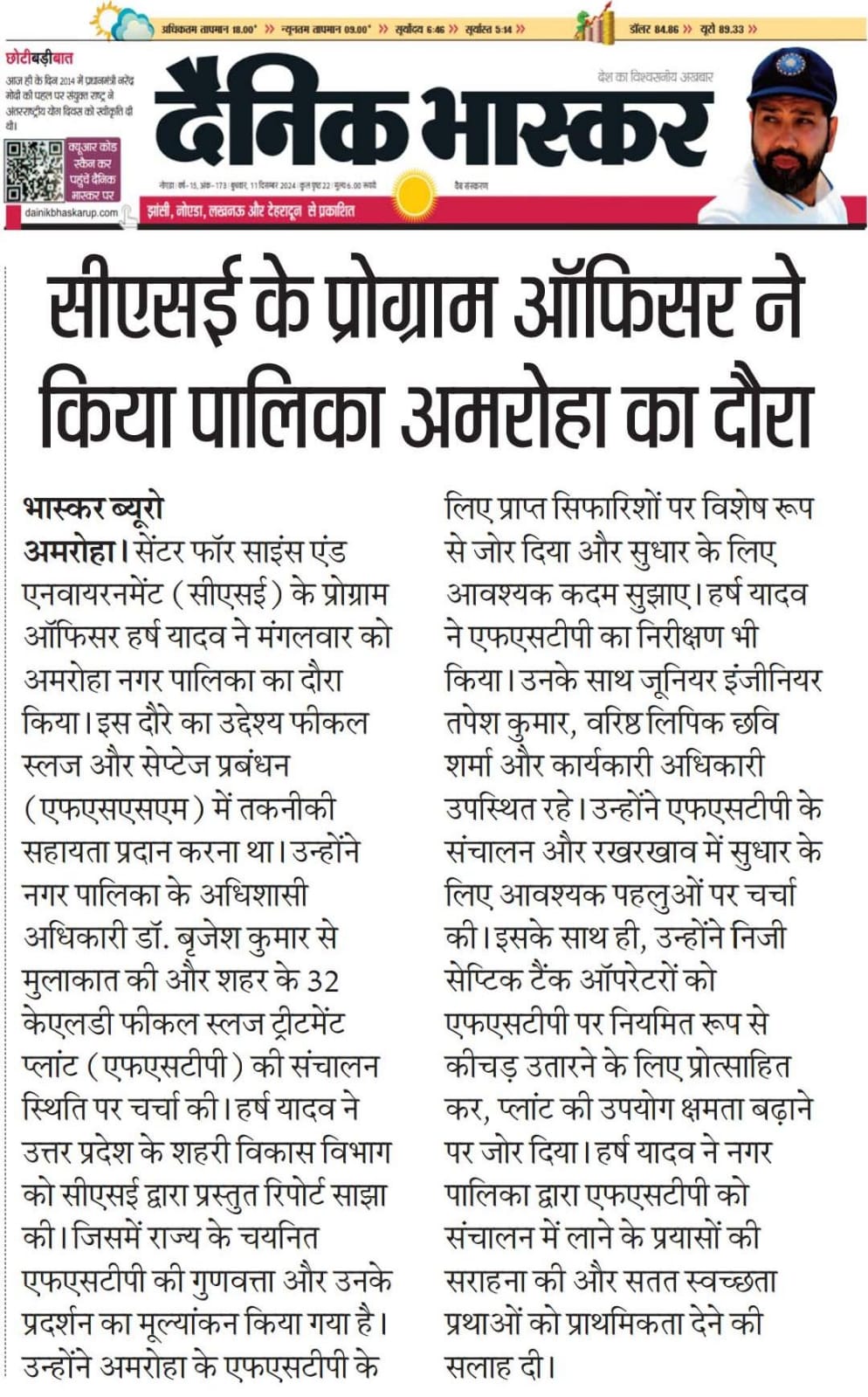
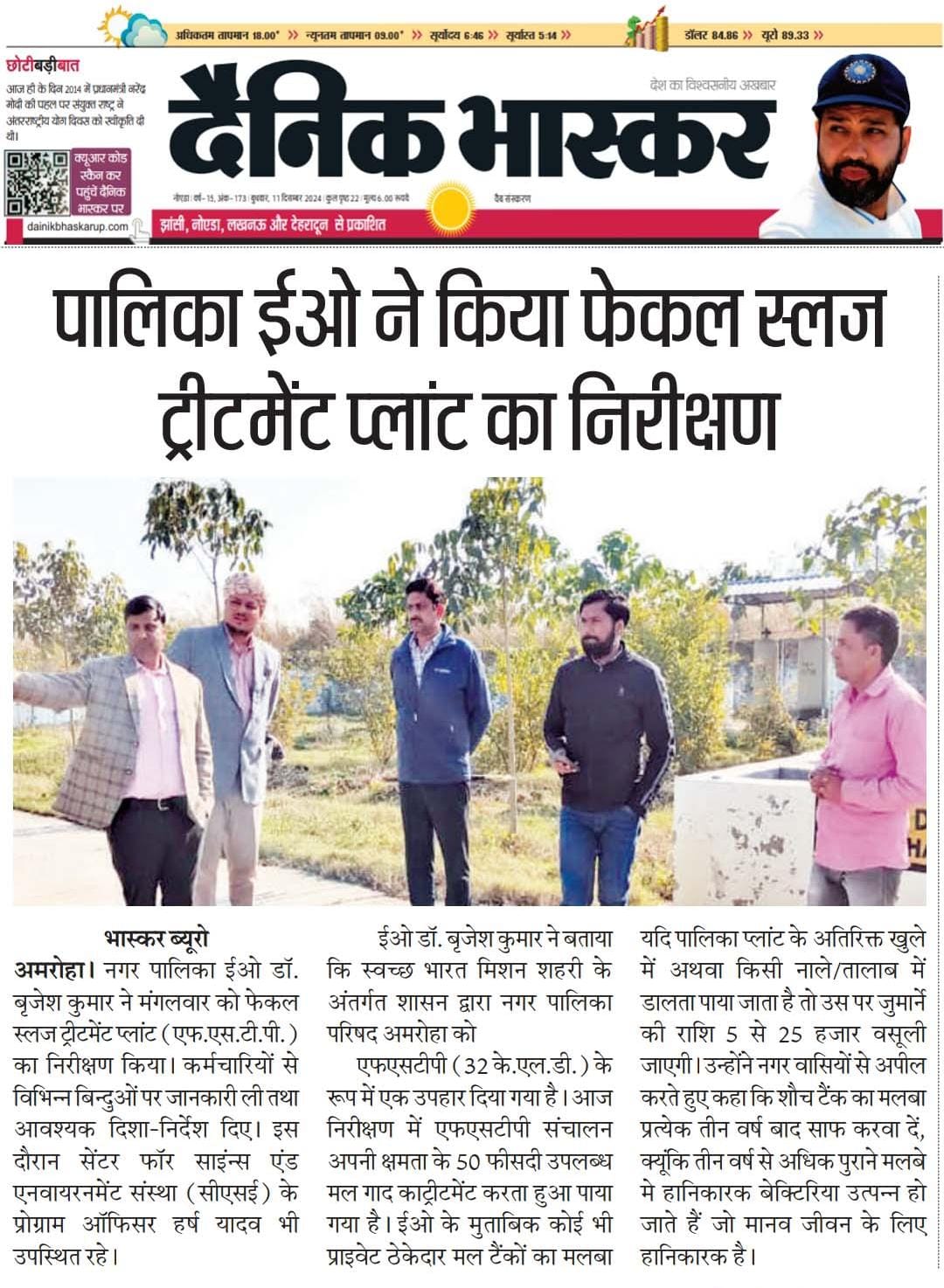
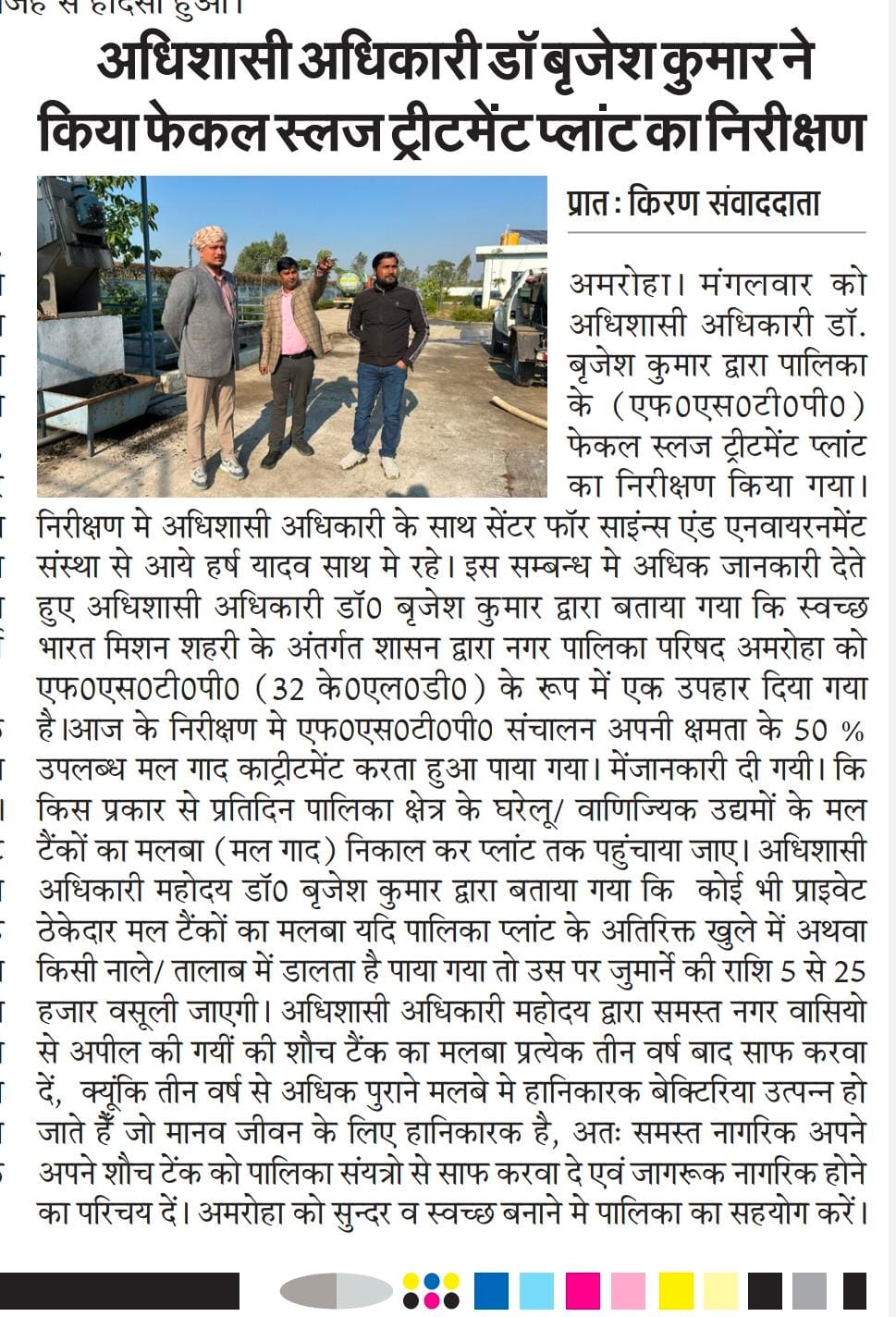
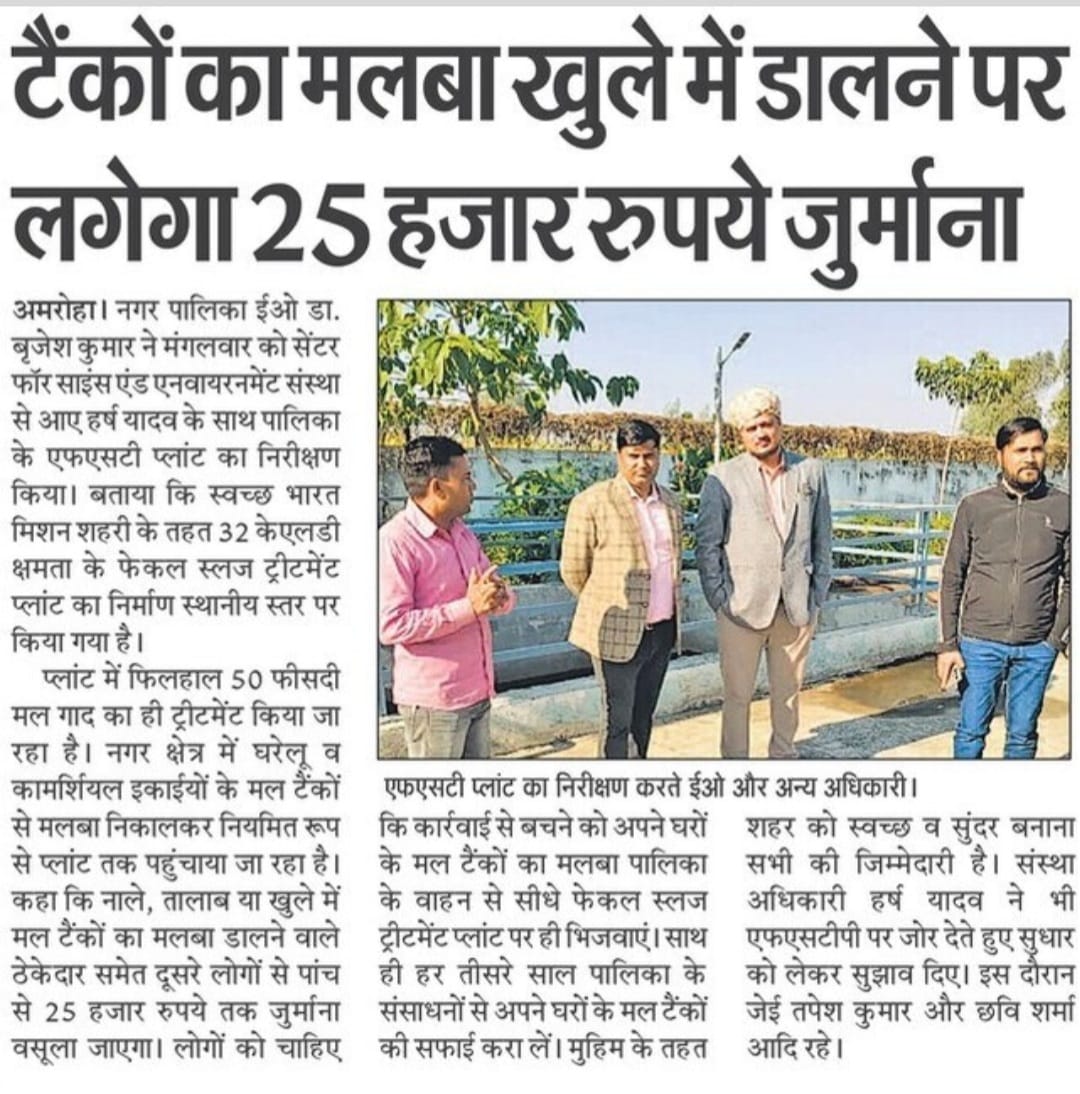
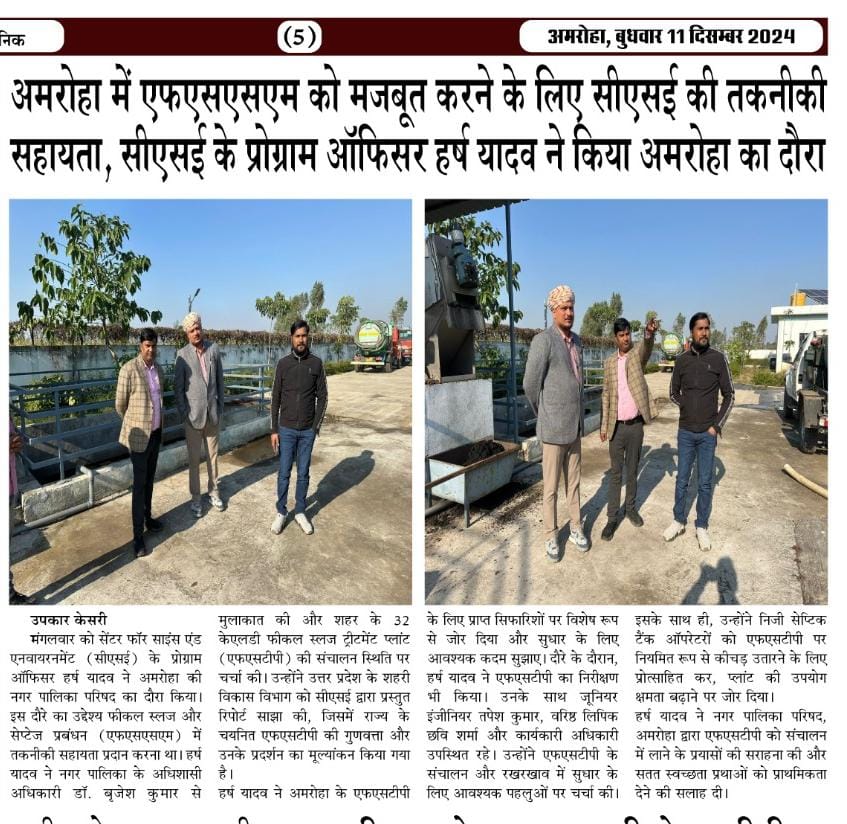
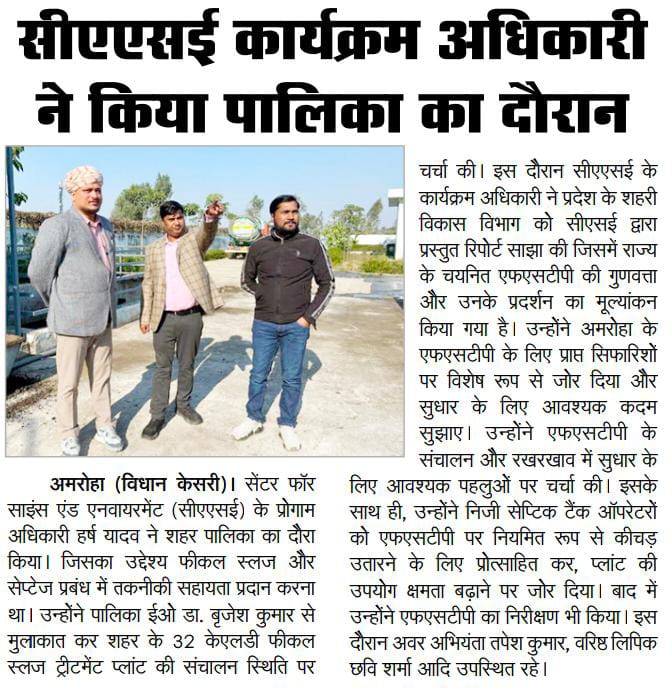
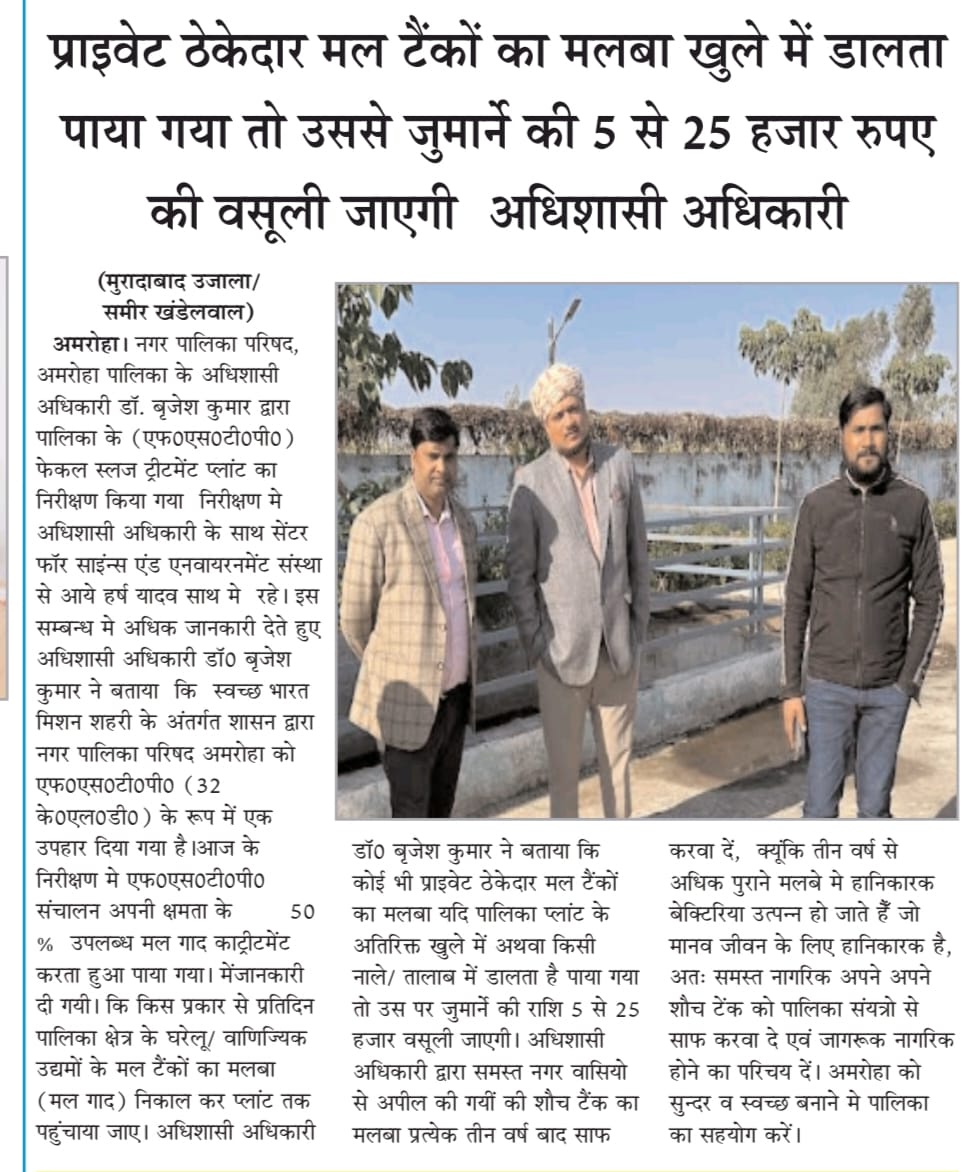
नगर पालिका ईओ डा. बृजेश कुमार ने मंगलवार को सेंटर फॉर साइंस एंड एनवायरनमेंट संस्था से आए हर्ष यादव के साथ पालिका के एफएसटी प्लांट का निरीक्षण किया
President Droupadi Murmu on Tuesday (December 10, 2024) while speaking at an event hosted by the National Human Rights Commission (NHRC) in New Delhi said cyber crimes and climate change have emerged as "new threats to human rights". Speaking on the occasion of Human Rights Day, observed on December 10 each year to commemorate the Universal Declaration of Human Rights (UDHR) adopted and proclaimed by the United Nations General Assembly in 1948, President Murmu said that climate change forces us to review the human rights situation at a global level. "As we progress into the future, we are confronted with emerging challenges. Cyber crimes and climate change are new threats to human rights," Murmu said. Human rights discourse is centered around "human agency" as the violator is assumed to be a human being who has a "range of human emotions such as compassion and guilt", Murmu said. However, with artificial intelligence (AI) entering our lives, the culprit could be "a non-human but intelligent agent", she added. Murmu also said that while being transformative, the digital era had brought with it complex issues such as cyber bullying, deepfake, privacy concerns and spread of misinformation. "These challenges underscore the importance of fostering a safe, secure and equitable digital environment that protect the rights and dignity of every individual," the President said. Talking about AI, she mentioned, "AI has now entered our day-to-day life, solving many problems, and creating several new ones too." Protection from Climate Change a Right In April 2021, the Supreme Court of India, delivered a landmark judgement recognising the right to be free against the adverse effects of climate change as a fundamental right, to be included under Article 14 and Article 21 of the Indian Constitution. 2024 has been the hottest year till now and the world is set to witness 3 degrees Celsius warming by the end of the century compared to pre-industrial levels in 1990. Heatwaves, uneven rainfalls, floods and cyclones have been the highlights of the year in India, in addition to record air quality index levels in the capital city. According to a recent report by the Centre for Science and Environment (CSE) and Down To Earth, India experienced extreme weather events on 255 out of 274 days in the first nine months of 2024, increasing from 235 days in 2023 and 241 days in 2022. The study—that analysed occurrence of seven extreme weather events including lightning and storms, heavy rains, floods and landslides, heatwaves, coldwaves and cold days, cloudbursts, cyclones and snowfall—suggested that 3,228 people lost their lives in 2024 due to such events. The tally was 2,755 in 2022. Advertisement Considering the rising threats of climate change and its related effects, the 2021 judgement by the Supreme Court was delivered amid a growing consensus among nations regarding the impacts of climate change. During the verdict, the apex court noted that that the consequences of climate change are an infringement of the fundamental rights to life and personal liberty enshrined in the Constitution. The Landmark Case that Led to a Landmark Verdict The Supreme Court's judgement, dated 29 April 2021, was regarding the protection of two indigenous avian species, the great Indian bustard and the lesser Florican. The petition was originally filed in 2019 by MK Ranjitsinh Jhala, former chairman of the Wildlife Trust of India, seeking urgent action to protect endangered species and their habitat. Advertisement "Pollution, climate change, predators and competition with invasive species are among the many threats that exacerbate the challenges faced by these vulnerable species," noted the bench of judges led by Former Chief Justice of India DY Chandrachud. According to WWF, the great Indian bustard is confined mostly to Rajasthan and Gujarat in India. However, a small population can be found in Maharashtra, Karnataka and Andhra Pradesh. Bustards generally favour flat open landscapes with minimal visual obstruction and disturbance, therefore adapt well in grasslands. The apex court also noted how expansion of human population and accompanying activities have led to the fragmentation of the great Indian bustard's habitat. "The expansion of infrastructure such as roads, mining and farming activities have cumulatively contributed to the dangers faced by the avian species," it said. Advertisement The Supreme Court also formed a committee to determine the scope and feasibility of setting up overhead and underground electric lines in priority areas, as highlighted in the reports shared by the petitioner. It also passed directions regarding the panel's role in recommending measures ensuring the long-term survival of the great Indian bustard in these priority areas, and facilitating an increase in its population. Measures aimed at replenishing the population of the indigenous bird species could include habitat restoration, anti-poaching initiatives and community engagement programs, stated the court.
The Visual Kathã series, Portraits of Persistence: Enduring Communities of North Bihar, was inaugurated on December 6at the Art Gallery, India International Centre Annexe. The exhibition was formally opened by Sunita Narain, Director General of the Centre for Science and Environment, amidst an engaging gathering of art enthusiasts, social development professionals, environmentally conscious individuals, and media personnel.
“At COP 29, we lost an opportunity -- without a meaningful agreement on climate finance; both in terms of quantity and quality, large parts of the world that would have had the chance to rein-vent growth to make it low-carbon intensive, will not be able to do so. What’s worse, this comes at a time when these countries are even more vulnerable due to climate change impacts,” said Sunita Narain, director general, Centre for Science and Environment (CSE), speaking at an online debriefing on the Baku conference’s results. CSE organised the debriefing – titled ‘Did the finance COP deliver?’ – today. The 29th Conference of Parties to the United Nations Framework Convention on Climate Change ended November 24 in Baku, Azerbaijan. The headline issue of the conference was the New Collective Quanti-fied Goal (NCQG) on climate finance. The NCQG is the successor to the US $100 billion per year com-mitment made by developed countries in 2009 to support climate action in developing countries by 2020. Says Avantika Goswami, programme manager, Climate Change, CSE: “An ambitious NCQG out-come at COP 29 would have been critical for supporting the increasing climate needs of the Global South. So did the finance COP deliver? The answer has to be a most emphatic ‘no’.”
A high-level roundtable discussion, “Future of Climate Change Negotiations: Lessons from COP29,” was held in New Delhi to discuss the outcomes of COP29, which took place in Baku, Azerbaijan. The event, organized by The Energy and Resources Institute (TERI), brought together policymakers, experts, and industry leaders to address the pressing climate issues faced by the Global South, with a focus on climate finance, adaptation, and the ongoing energy transition. Insights on COP29 Outcomes and the Global South’s Climate Strategy Mr. RR Rashmi, Distinguished Fellow at TERI, kicked off the session by summarizing key takeaways from COP29 and highlighting the shift in negotiation formats over the years. He noted that many countries of the Global South expressed disappointment over the low ambition of climate finance outcomes in Baku. “The developed world is unwilling to shoulder its responsibility of providing commensurate finance to support developing countries’ climate actions,” Rashmi said, stressing the importance of holding developed nations accountable and building stronger solidarity among the Global South. Dr. Manish Kumar Shrivastava, Associate Director at TERI, echoed similar concerns, emphasizing the political dynamics and principles at the core of COP negotiations. He warned that the increasing burden on developing countries was a significant worry and stressed the need for greater unity among these nations to protect their interests in future climate negotiations. Preparing India for COP33 in 2028 The discussions turned to the stark divide between developed and developing nations in addressing climate challenges. Ambassador Manjeev Puri, Distinguished Fellow at TERI, praised India’s leadership in representing the Global South’s concerns at COP29. He noted that, despite some progress on carbon markets and finance, much work remains for future COPs. “India showcased the voice of developing countries,” Puri said. Sanjay Seth, Senior Director at TERI, highlighted India’s leading role in the built environment, particularly in sectors like cement and concrete, where cleaner processes have gained traction. He emphasized that building resilience must remain an ongoing effort for achieving long-term success. The Role of Adaptation and Philanthropy in the Global Climate Agenda Ms. Suruchi Bhadwal, Director at TERI, discussed the challenges surrounding adaptation, stating that the focus on developing country processes risks duplicating efforts. She called for a global approach to adaptation that connects institutions and tracks progress through standardized indicators. Ms. Manavi Bhardwaj, representing the India Climate Collaborative, pointed out that philanthropy could play a pivotal role in fostering solidarity within the Global South and in facilitating dialogues between various stakeholders ahead of COP conferences. Ms. Avantika Goswami, Programme Manager at the Centre for Science and Environment (CSE), voiced concerns about the shifting of responsibilities from developed nations. She questioned the commitment of the private sector to contribute to climate finance and stressed the need for stronger coalitions among the Global South in a divided world. India’s Preparations for COP28 and Beyond Dr. Ritu Mathur, Director at TERI, urged India to avoid getting bogged down in debates on infrastructure and fossil fuels and instead focus on a careful assessment of sectors for achieving a net-zero pathway. She called for a clear distinction between economic and social impacts. Dr. Prabhat Upadhyaya, representing the African Climate Foundation, reminded participants of the urgency to refocus efforts on what must be done in the coming years, particularly with the GST coinciding with US elections. “India must build a narrative and partnerships to push the developing country agenda at COP33,” he said.
The city’s attempts to address severe air quality through the odd-even rule and fines meet mixed reactions from residents and experts. Delhi's vibrant colors fade each winter as the capital struggles with its notorious air pollution crisis. Residents often find themselves breathing air deemed hazardous, with the Air Quality Index (AQI) surpassing 500, which led the Delhi High Court to label the city a “gas chamber” back in 2015. The court's ruling pricked the conscience of both state and national governments, igniting discussions about urgent measures to counteract this persistent dilemma. Each year, as pollution levels rise, the government rolls out various strategies to mitigate the crisis, with one of the more controversial being the odd-even vehicle rule. The odd-even scheme was first introduced by former Chief Minister Arvind Kejriwal in 2016. Under this policy, vehicles with odd-numbered plates are allowed on odd days, and those with even-numbered plates on even days, aiming to rationalize traffic volumes and cut down on emissions. Despite hopes surrounding this rule, scepticism remains among experts and citizens; many feel it tackles symptoms rather than the root causes of air pollution. "It's not addressing the issues of industrial pollution, stubble burning, or vehicular emissions comprehensively—it's merely putting up band-aids," said Anumita Roychowdhury, Executive Director at the Centre for Science and Environment. The city experienced another alarming spike in pollution levels this year when the AQI hit 450 on November 17, prompting the Commission for Air Quality Management to enact Stage IV restrictions under the Graded Response Action Plan (GRAP). The GRAP framework consists of varying measures activated depending on pollution severity, and during this heightened alert, the government took rigorous actions, including banning non-essential trucks and slapping hefty fines on vehicles lacking Pollution Under Control Certificates (PUCC). Between October 16 and December 6, the government issued 260,258 challans, collecting upwards of ₹260 crore (approximately $31 million) from violators. This included over 114,000 fines within just the final stages of GRAP. Motorists without PUCC faced penalties soaring up to ₹10,000. Despite these rigorous measures, reports indicate some residents still prefer personal vehicles over public transport, raising questions about long-term behavioral changes. While some argue the odd-even rule can yield positive outcomes during peak pollution periods, tackling underlying issues like diesel vehicle emissions and industrial output will remain imperative for lasting ecological relief. The odd-even scheme's repeated re-implementation indicates the urgent need for strategic long-term solutions. Meanwhile, studies indicate it made some headway; for example, PM2.5 levels decreased by about 13% during the odd-even rule's enforcement period. Yet, critics argue this is not substantial enough to warrant the repeated use of the scheme without significant investment in broader anti-pollution strategies. Internationally, cities like Beijing and Paris have explored similar initiatives. Beijing's odd-even policy introduced before the 2008 Olympics reportedly cut pollution levels to nearly 20%. Paris made public transport free during such enforced measures to encourage residents to opt for transit instead of private vehicles. Such combined approaches could be pivotal for Delhi if the government seeks to implement holistic and effective air quality solutions.
“Iwork with fire. But this has been the hottest ever, even for me,” says Harilal Rajput, squinting in the blazing midday sun. Rajput, 41, is a chief fire worker at a brick kiln near the town of Danapur on the outskirts of Patna, capital of the eastern state of Bihar. He is a migrant worker; his wife, a farmer, lives in neighbouring Uttar Pradesh with their three children. It is almost 1pm on a June afternoon and neither Rajput nor the nine fire workers he supervises have had any food since the previous night. They will eat only when their eight-hour shift ends at about 4pm. His team, he says, is “running on water”. Tying a cotton cloth on their heads and keeping a bucket of water handy to hydrate occasionally are some of the many precautions kiln workers take to cope with heat exhaustion. When the Guardian visits the kiln in the middle of India’s longest ever heatwave, Patna clocks 42.2C (108F). But Rajput says it feels twice as hot on top of the kiln where he works, adding coal to a small brick firing zone of 35 neatly arranged holes. “I often feel dizzy, my throat goes dry and I shiver as my body heats up, but our firing work cannot stop,” he says. The kilns close during the monsoon season from late June to November, but this month they will be reignited and the brick firing will begin again. For the 200 days or so of the 2024-25 dry brick making season, firemen such as Rajput will feed coal into the kiln every 10 minutes, a gruelling job that is even more taxing on hot days. Rajput is one of an estimated 15 million workers employed by about 140,000 brick kilns in the country. India is the world’s second-largest brick producer, after China. The sector is not organised and is under-regulated. It offers seasonal employment to informal workers, mostly migrants, and often sees cases of bonded labour. Bihar has about 7,700 brick kilns with an annual production of more than 20bn bricks. Kiln workers, who almost always work and live on the same premises, face the double blow of rising atmospheric temperatures and high heat that radiates from the furnace. During the hot season, kiln workers reported symptoms of “heat strain, reduced productivity, and impacts on daily life”, according to a 2015 study. Ram Pravesh Manjhi, a 35-year-old brick moulder at the same kiln as Rajput, says that day and night feel equally hot for him. “In winter, we can work for almost the whole day but right now [in June] even a few hours in daytime are exhausting.” At his kiln almost all the work is suspended during the hottest hours of the day – but not the firing. India’s 2024 summer was particularly harsh, with the country experiencing the longest heatwave on record. Bihar was one of the northern states that bore the brunt of the extreme temperatures, with more than a dozen deaths from suspected heatstroke as schools were forced to close. And it is going to get worse. Heatwaves in India are projected to become more intense, last longer and occur at a higher frequency and earlier in the year, and the northern states, including Bihar – which have the highest concentration of brick kilns, themselves a contributor to rising temperatures – will see the most brutal temperatures. New research by the Rights Lab at the University of Nottingham in England shows that brick kiln workers are among the most vulnerable to human-caused global heating. Researchers mapped more than 48,000 brick kilns across India using satellite data then overlaid climate models on to the geolocations of the kilns to forecast the number of days of extreme heat that kiln workers would endure between now and 2050. Predictions of the risk of future heat stress in brick kilns were made using the wet-bulb globe temperature (WBGT) measure, which combines dry air temperature (as you’d see on a thermometer) with humidity, sun angle and wind levels. A WBGT of more than 30C is defined as moderate heat stress and 34C is extreme heat stress. According to the US National Weather Service, if WBGT exceeds 32.2C working or exercising in direct sunlight will stress your body after just 15 minutes. Prof Doreen Boyd, associate director of the Rights Lab, says: “This study measures the future risk of heat stress in the brick kilns across all of India, at scales never previously possible, to 2050 – showing that it’s possible to predict and prepare for threats to decent work using new data and methods.” Decent work is defined by the International Labour Organization as “productive work … in conditions of freedom, equity, security and human dignity”. Forecasts were made based on three possible scenarios: the first is marked by low emissions, clean technologies, strong global cooperation and a consumption focus on sustainability; the second by moderate emissions, regional competition and mixed efforts in climate action; and the third by high emissions, fossil-fuel reliance and no or limited climate action. The study, published in Sustainable Development journal, shows that by 2050, even in the most optimistic scenario, people will be working in hotter temperatures at the majority of kilns. Workers at more than 40% of kilns (more than 19,000) will face more than 50 days (about one in four) of WBGT above 30C, or moderate heat stress during the brick-making season. Some kilns will see WBGT above 30C for at least 100 days. Locations in northern states of India, including Bihar, are modelled to have a significant increase in days with extreme heat, above 34C. Most kiln workers are paid piecemeal so may be reluctant to take breaks for fear of losing pay, making them particularly vulnerable to heatstroke, dehydration and long-term disease. Boyd hopes that highlighting these risks in the research and creating an online training module will lead to a discussion among policymakers and employers about workers’ rights, including improved conditions and a fairer payment system. “There is an urgent need for the kiln industry and government labour and environmental inspectorates to understand and design comprehensive labour policies and workplace interventions to avert health risks for these millions of workers in the 48,000-plus kilns,” says the study, which was supported by the UK government’s Modern Slavery Innovation Fund. Shiv Narayan, 22, is a recent graduate from Madhya Pradesh, who ended up working at the Danapur kiln after being unable to find other work to support his family, who were struggling to pay debts. Most of his co-workers come from similar poverty-stricken backgrounds. “Anyone you meet here is poor, but we work here because there is no other choice,” he says. Narayan says working in extreme heat conditions has made him “hot headed”, literally. He says he snaps at people during his daily routine, which he regrets later. Despite the exhausting heat, Narayan and other workers say they are against curtailing work days as it would mean loss of pay. With every passing year, it is getting hotter and hotter. If you work at a kiln, there is no way to escape fire Harilal Rajput, kiln worker The kiln is unusual because it hires people on a set monthly wage, with most workers earning an average of 14,000 rupees (£130) a month. Rajput earns more because he also recruits workers. Baldev Prasad, the kiln owner, says he prioritises safety and fair wages. Workers here say they have access to clean drinking water, bathrooms, electricity in their accommodation, regular water spraying to cool the ground and access to medical aid. “Heat impacts worker productivity but we want them to stay on. So, we make sure we take all necessary steps to ensure their convenience. This includes the decision to halt all activities other than the firing work during peak hot hours of the day,” says Prasad, who has been running his kiln for more than 25 years. Nivit Kumar Yadav of the Centre for Science and Environment in Delhi says not much is being done on the ground right now, but in the long term, an adaptation plan is necessary. “An average kiln worker is trained to deal with the heat that is coming from below [furnace] but not with the heat that is coming from above [atmospheric],” he says. Shorter work shifts, artificial shade and green cover are some of the steps that can be taken, he says.
Despite braces from legal issues for Adani Group, experts affirm India's commitment to renewable energy expansion remains strong and achievable India is making ambitious strides toward transforming its energy sector, with significant focus on renewable energy. The recent indictment of the Adani Group over bribery charges has raised questions about the future of the country’s clean energy goals, yet industry leaders remain optimistic. Gautam Adani, the billionaire behind the Adani Group, has promised to invest $100 billion toward India's energy transition. This includes plans to ramp up renewable energy capacity significantly. Currently, about 45% of India's power generation capacity comprises non-fossil fuel sources, thanks to efforts over the last decade. Despite the hurdles presented by legal troubles, experts assert these challenges will not significantly derail the country’s overall targets of achieving 500 gigawatts (GW) of electricity from renewables by 2032. The legal issues stemming from the U.S. could delay some of Adani's expansion ambitions but will likely not impact the Indian government’s commitment to its clean energy objectives. According to analysts, the backlog from legal troubles is like “a passing dark cloud” over the otherwise bright future of India’s renewable energy initiatives. The Adani Group is currently pivotal, expected to contribute to nearly 10% of India's renewable energy capacity by 2030. The sector is witnessing rapid growth, with India achieving the fastest expansion rate among major economies, presenting new opportunities for both domestic and international firms. Current estimates suggest India's installed clean energy capacity has already surged by five times over recent years. Adani Green Energy currently produces around 11GW of clean energy mainly through wind and solar initiatives, with aggressive targets for expansion. The centerpiece of this growth is the Khavda plant located in Gujarat, poised to be the largest clean energy site globally. The government has set forth plans to augment the solar energy pillar of this growth, anticipated to contribute around 23% of the total power generated by 2030. The Center for Science and Environment (CSE) highlights the fact India is suffering from acute energy poverty, which necessitates doubling its energy capacity. CSE's Sunita Narain emphasizes the idea of 'displacing' coal with clean energy as opposed to merely replacing it. Current statistics indicate fossil fuel sources contribute 77% of total energy, projected to drop as renewables increase from 13% to 32% by 2030. Meanwhile, the government is also shifting its focus onto natural gas, aiming to increase its share to 15% by 2030. Expanded infrastructure, including the National Gas Grid Pipeline and city gas distribution networks, is set to facilitate this transition. Efforts to liberalize gas marketing have also been introduced to encourage domestic production. The path to these ambitious goals is fraught with challenges, particularly concerning bureaucratic hurdles. State-run power companies face financial constraints and tend to rely on cheaper fossil fuels, making it difficult to minimize reliance on coal. CSE experts believe the continued demand for renewable energy will drive investment, but improvements to the regulatory environment are sorely needed. One aspect of improvement focuses on the process of bidding for project contracts. Current practices are critiqued as overly complicated, which limits competition and raises costs. Reforms are necessary to streamline these processes and lower risks for developers and investors alike. The focus is shifting toward creating more effective governance and efficient bidding systems, as well as integrating energy initiatives with local economic needs, such as health and employment opportunities. Stalwarts of the renewable sector, like Tata Power and ReNew Power, are also gearing up to play pivotal roles as they ramp up their manufacturing and energy generation capacities. Adani's financial might has helped it to expand rapidly, but it has also brought about scrutiny and challenges to maintain competitive momentum. Looking toward the overarching future, the commitment from the Indian government to continue fostering renewable energy development is unwavering. Policymakers remain optimistic, arguing the market fundamentals guiding renewable energy continue to be strong. With increasing domestic demand for clean energy, companies are hopeful about obtaining the necessary investment capital to support this shift. It seems the biggest test for India's clean energy ambitions isn't the fallout from legal troubles but instead its administrative bureaucracies and financial structures guiding the sector. The coming years are likely to be defining for the energy transition, with the focus on comprehensive reforms to support burgeoning renewable projects. Other stakeholders, including reputable international financial institutions, are asserting themselves as they navigate this complex energy transition. Rising scrutiny of financing practices may push for more responsible economic practices within the country, thereby shaping the future of India’s renewable energy sector. The collective effort will also need regional support to understand the local demands and technical aspects of renewable energy adoption. Addressing localized issues can bridge the gap between burgeoning clean technologies and the communities they aim to benefit, yielding mutual benefits as India strives toward its ambitious clean energy goals.