Cse In News

सुनीता नारायण का कॉलम:स्वच्छ हवा के लिए पूरे साल उपाय करने की जरूरत है

एक बार फिर से दिल्ली और आस-पड़ोस के लोग खतरे के अंदेशे से भर गए हैं। सर्दी शुरू हो गई है। हल्की हवा बहना बंद कर देगी और हवा में मौजूद प्रदूषक असर दिखाएंगे। तब हम सांस नहीं ले पाएंगे। हम सिर्फ उम्मीद करेंगे कि हवा-पानी राहत देकर जाए। ये हालात इसलिए हैं क्योंकि हमने प्रदूषण से निपटने के लिए कुछ भी नहीं किया। हम इन्हीं दिनों में कदम उठाते हैं, जाहिर तौर पर ये बहुत थोड़े होते हैं और देर भी हो जाती है। अब कहा जा रहा है कि क्लाउड सीडिंग पर विचार हो रहा है। जबकि यह स्पष्ट है कि प्रदूषक कारक नमी में फंसकर रह जाते हैं, जिससे स्थिति विकट हो जाती है। 1990 के दशक में सेंटर फॉर साइंस एंड एन्वॉयरमेंट ने ‘स्लो मर्डर’ रिपोर्ट में प्रदूषण के मुख्य कारक बताए थे। इनमें वाहन, ईंधन की खराब गुणवत्ता व वाहन निर्माताओं के कार्बन उत्सर्जन मानकों में कमी थी। उसी दशक के उत्तरार्ध में सुप्रीम कोर्ट ने दिशानिर्देश जारी किए, जिसमें सरकार से ईंधन की गुणवत्ता में सुधार करने, गाड़ियों के लिए उत्सर्जक मानक अनिवार्य बनाने (यह भारत स्टेज 1,2,3 और अब 6 की शुरुआत थी) और सार्वजनिक परिवहन को बढ़ावा देने के लिए कहा था। 1998 में कोर्ट ने निर्देश दिया था कि सड़कों पर 11 हजार बसें चलाई जाएं। पर ऐसा नहीं हुआ। पेट्रोल-डीजल की गुणवत्ता सुधारने के बजाय विकल्प के रूप में सीएनजी आई। हालांकि यह तत्काल राहत साबित हुई। आज, जब हम ईवी की ओर बढ़ रहे हैं, ऐसे में सीएनजी अपनाने से जुड़े कई सबक काम आ सकते हैं। पहला है टेक्नोलॉजी की चुनौती। किसी भी देश ने इतनी व्यापकता से सीएनजी की ओर रुख नहीं किया था, जैसा 90 के दशक में दिल्ली में प्रस्ताव था। मूल्य की भी चिंताएं थीं। मतलब टेक्नोलॉजी में इनोवेशन के लिए नीतिगत मार्गदर्शन की जरूरत थी। वित्तीय मदद दी गई, ताकि पुरानी वाहन हटाए जा सकें और सीएनजी वाहन आ सकें। दूसरा था लागू करने की चुनौती और क्रियान्वयन। कोर्ट ने दो से तीन साल में पूरी तरह से सीएनजी वाहनों पर शिफ्ट होने को अनिवार्य किया था। इसमें समन्वय के साथ कुछ कड़े निर्णयों की जरूरत थी। आज जब दिल्ली में ई-बसों की महत्वाकांक्षी परियोजना है, लेकिन यह वांछनीय गति से नहीं हो रहा है, ताकि निजी वाहन बढ़ने से रोके जा सकें। साल 2023 में रजिस्टर्ड हुए निजी वाहनों की संख्या 2022 के मुकाबले दोगुनी थी। भले ही नए वाहन ज्यादा स्वच्छ हों, लेकिन उनकी भी बहुत ज्यादा संख्या से इसके फायदे कहीं खो जाते हैं। यह साधारण- सा गणित है। दूसरा महत्वपूर्ण फैक्टर ईंधन हैं, जो कि घरों में चूल्हे से लेकर फैक्ट्री और थर्मल पावर प्लांट में इस्तेमाल होता है। ज्यादातर मामलों में यह बायोमास या कोयला है। सुप्रीम कोर्ट ने पेट कोक, वहीं दिल्ली सरकार ने कोयले पर प्रतिबंध लगाया है। यह भी सहमति हुई कि थर्मल पावर प्लांट सफाई करेंगे या बंद हो जाएंगे। पर ऐसा हुआ नहीं। सीएनजी की तरफ शिफ्ट होने के सबक ये हैं कि किसी चीज के बैन को प्रभावी बनाने से पहले लोगों को विकल्प चाहिए होते हैं। जब डीजल बसें बंद हुईं, तो सीएनजी की आपूर्ति सुनिश्चित करनी पड़ी। कोर्ट ने कहा था कि स्वच्छ ईंधन को सस्ता रखने के लिए राजकोषीय उपायों की आवश्यकता है। लेकिन प्राकृतिक गैस की कीमत उद्योग को अप्रतिस्पर्धी बनाती है। हमें समझना जरूरी है कि स्वच्छ हवा के लिए पूरे साल कदम उठाने होंगे। (ये लेखिका के अपने विचार हैं)
Air quality worsens to ‘poor’ in Delhi, minimum stays below 20°C

The Capital’s air quality deteriorated significantly on Sunday morning, which brought with it the dreadfully familiar haze of dirty air that experts attributed to smoke from Dussehra effigy burning and calm conditions typical of the winter. The 24-hour average air quality index was at 224 at 4pm in the “poor” category — a bleak 69 points worse from 155 (moderate) recorded at the same time the day before, according to the Central Pollution Control Board’s national bulletin. This is the first “poor” air day day since the monsoon withdrew, marking the beginning of a transition to winter when meteorological factors, farm fires in Punjab and Haryana, and local emissions create a toxic cocktail that has, at its worst, led to schools closing and stay-at-home advisories being issued. The commission for air quality management (CAQM), a high-powered body that monitors and implements curbs during the air pollution crisis, said it had noted a rise in AQI “owing to episodic events” since Saturday night till about noon on Sunday. “However, the pollutant concentrations and thereby the AQI are now exhibiting a declining trend, with AQI improving to 222 at 5PM, and it is further expected to improve with time,” it added in a statement, forecasting “moderate” air pollution on by Monday. Citing this improvement, the agency said it will monitor the situation for one more day before deciding to invoke stage 1 of the Graded Response Action Plan (Grap), which includes, 24 preventive measures like increasing mechanised sweeping, shutting down construction and demolition sites with an area over 500 sqm, increased deployment of traffic police at congestion points, etc. Another expert said Sunday’s bad air was down to both, meteorology and concentrated burning. “With the onset of the winter, the city and the larger NCR region requires strong preventive measures to be better prepared,” said Anumita Roychowdhury, executive director, research and advocacy at the Centre for Science and Environment.

Ratan Tata: An environmentalist's homage to India's business icon

Our first interaction with the late Ratan Tata was not pleasant. Delhi was choking with pollution, and our campaign on the right to clean air had been launched. Diesel was a fuel that was being indicted for emissions of tiny particulate matter PM2.5. This all was new in the mid-1990s, as science was discovering how fuel and vehicle quality, when improved, would lead to an unexpected outcome of smaller particulates, which could go deep into our lungs. So, my late colleague Anil Agarwal and I wrote about the dangers of diesel. And we promptly got a defamation notice of some consequent sum of money from Tata Motors. That was when Ratan Tata had just launched his car enterprise. It was riding on the change of fuel — diesel, which would give his company an edge over the petrol variants of Maruti Suzuki and others. We were not the kind to back down. Nor was he. It was a messy battle in the highest court of the country. Slowly, what went on was anger in this contest. As the matter proceeded, I realised that Ratan Tata was driven to the case genuinely believing that we were doing this on behalf of his competitors — petrol car guys. But once it was established that our campaign was based on the emerging science of PM2.5, and the health impact of diesel as an automotive fuel — the mood changed. This is not to say that Tata Motors backed down from its diesel car ambition. And it is not as if we gave up our fight against diesel vehicles. But it settled into what you can say were good old-fashioned democratic traditions of acceptance of contrary views. In fact, when Ratan Tata launched his pet project, the Nano cars, at the Delhi automobile exhibition, he called out my name, saying that he hoped this affordable vehicle would meet my approval. Amazing and humbling. My second experience was more personal but equally touching. I was at a rather high-level lunch table — this was when Manmohan Singh was Prime Minister. It was a table of the rich and powerful, and Ratan Tata was explaining how his automobile company catered to every segment of India’s population. He had just bought the iconic Jaguar in the UK, which was the car of the famous, and had launched the Nano for the first-time buyer. I intervened and said he had forgotten something. I could see the worried glint in his eyes as he expected the activist in me to say something inconvenient. But I said that he had forgotten to list the fact that Tata Motors also made buses and that these moved more people — thousands more than cars — and his buses were now modern (the low-floor bus had just been launched) and clean (running on compressed natural gas). There was appreciation all around. The conversation then moved on to other banalities, and I thought the matter was over. But no. A few days later, I got a visit from a top executive of Tata Motors. I presumed that it was about our anti-diesel campaign. He said he was not from the car side of the Tata but from the bus business. He asked what I had said to Ratan Tata; I asked why he was asking, and then he explained. The fact is that after my lunch-time comment to his boss, he had received a call asking what was this amazing work that was happening that even Sunita Narain appreciated and praised it. I was then told that this led to a huge interest from the boss in mobility transformation and the role of modern buses to move people and not vehicles. I am writing this today not because I want to show off my interactions with the great man. But to explain what, in my view, this greatness was about — an ability to listen and to accept different positions, however inconvenient. I am also saying this because of what we have seen from other industry leaders. When I look back, the most aggressive and obnoxious reactions to our work came from the two multinationals when we revealed our study on pesticides in their product. Their response was to dismiss us, saying that they could not be wrong because they were what they were — US-based companies. Their arrogance was absolute. The second-worst response we have had is from pesticide-manufacturing companies. We continue to face a barrage of threats, intimidation tactics, and legal cases on our work against toxins in food. There is no understanding here that our work is not personal but about the other side of business and that balance is all that we seek. So, as we mourn the demise of Ratan Tata, let’s also mourn the passing of the time when business leaders like him ruled our world, when values of frugality and simplicity in personal life were cherished, and when business was not only about private gain but also about securing the public good. Let’s hope that when we pay homage to Ratan Tata, we also reject the idea of that obscene lavishness of the powerful of today and that we pledge to bring back the idea that dissent is not dissent, it is the idea that we did not know existed.

Delhi AQI: दिल्ली में गर्मी से राहत… लेकिन खराब स्तर पर पहुंची राजधानी की ‘हवा’

Delhi AQI: दिल्ली में सर्दियों की शुरुआत होने के साथ ही वायु गुणवत्ता खराब होने लगती है। राजधानी में दशहरे पर हुई आतिशबाजी से रविवार को AQI 224 दर्ज किया गया। केंद्रीय प्रदूषण नियंत्रण बोर्ड ने बताया कि यह इस महीने का सबसे ज्यादा एक्यूआई रहा है। पिछले दो दिनों में दिल्ली में मौसम भी बदलने लगा है, इस दोरान हवाएं 8 किमी प्रतिघंटे की रफ्तार से चलीं। हालांकि सोमवार से हवा में सुधार की संभावनाएं जताई जा रही हैं। 224 दर्ज किया गया AQI केंद्रीय प्रदूषण नियंत्रण बोर्ड के राष्ट्रीय बुलेटिन के मुताबिक, 24 घंटे का औसत वायु गुणवत्ता शाम 4 बजे 224 रही, जो कि खराब श्रेणी में आती है। एक दिन पहले इसी समय की बात करें तो ये 155 (मध्यम) दर्ज किया गया। मानसून जाने के बाद ये पहली बार है जब वायु गुणवत्ता खराब हुई है। इससे ये भी पता चलता है कि दिल्ली में सर्दियों की आमद होने वाली है। इस मौसम में दिल्ली की हवा में जहर घुलना शुरू हो जाता है। दशहरे की आतिशबाजी से बढ़ा प्रदूषण वायु गुणवत्ता प्रबंधन आयोग (सीएक्यूएम) ने कहा कि शनिवार रात से लेकर रविवार दोपहर तक एक्यूआई में वृद्धि देखी है। दिल्ली की हवा में दशहरे पर आतिशबाजी के बाद से बदलाव आया। हालांकि शाम 5 बजे एक्यूआई में सुधार होने लगा, ये 224 से 222 तक पहुंच गया। आने वाले समय में इसमें और सुधार होने की संभावनाएं हैं। सोमवार तक ये मध्यम श्रेणी में पहुंच सकता है। दशहरे के अलावा इसका एक कारण पराली जलाना भी बताया गया। हिंदुस्तान टाइम्स की रिपोर्ट के मुताबिक, रविवार की खराब हवा मौसम विज्ञान और सघन पराली जलाने दोनों के कारण थी। सेंटर फॉर साइंस एंड एनवायरनमेंट में रिसर्च और एडवोकेसी की कार्यकारी निदेशक अनुमिता रॉय चौधरी ने कहा सर्दियों की शुरुआत के साथ, शहर और बड़े एनसीआर क्षेत्र को बेहतर तैयारी के लिए मजबूत निवारक उपायों की जरूरत है। कितना रहा तापमान? दिल्ली का न्यूनतम तापमान लगातार दूसरे दिन 20 डिग्री सेल्सियस से नीचे रहा। रविवार को यह सामान्य से एक डिग्री कम 18.6 डिग्री सेल्सियस रहा। शनिवार को इस मौसम में पहली बार न्यूनतम तापमान 20 डिग्री सेल्सियस से नीचे गया था, तब भी यह 18.6 डिग्री सेल्सियस था। पिछले सालों में कितना रहा AQI? इस साल इस समय तक AQI पिछले साल से बेहतर रहा। पिछले साल दशहरे के अगले दिन (25 अक्टूबर) दिल्ली का AQI 243 (खराब) था। 2022 में 6 अक्टूबर को यह 79 (संतोषजनक) था। ये 2015 के बाद से दशहरे के बाद के दिन दिल्ली में सबसे अच्छा AQI था। दशहरे के बाद सबसे ज्यादा AQI 2020 (26 अक्टूबर) में 353 (बहुत खराब) था।

दिल्ली में गर्मी से राहत… लेकिन खराब स्तर पर पहुंची राजधानी की ‘हवा’

Delhi AQI: दिल्ली में सर्दियों की शुरुआत होने के साथ ही वायु गुणवत्ता खराब होने लगती है। राजधानी में दशहरे पर हुई आतिशबाजी से रविवार को AQI 224 दर्ज किया गया। केंद्रीय प्रदूषण नियंत्रण बोर्ड ने बताया कि यह इस महीने का सबसे ज्यादा एक्यूआई रहा है। पिछले दो दिनों में दिल्ली में मौसम भी बदलने लगा है, इस दोरान हवाएं 8 किमी प्रतिघंटे की रफ्तार से चलीं। हालांकि सोमवार से हवा में सुधार की संभावनाएं जताई जा रही हैं। 224 दर्ज किया गया AQI केंद्रीय प्रदूषण नियंत्रण बोर्ड के राष्ट्रीय बुलेटिन के मुताबिक, 24 घंटे का औसत वायु गुणवत्ता शाम 4 बजे 224 रही, जो कि खराब श्रेणी में आती है। एक दिन पहले इसी समय की बात करें तो ये 155 (मध्यम) दर्ज किया गया। मानसून जाने के बाद ये पहली बार है जब वायु गुणवत्ता खराब हुई है। इससे ये भी पता चलता है कि दिल्ली में सर्दियों की आमद होने वाली है। इस मौसम में दिल्ली की हवा में जहर घुलना शुरू हो जाता है। —विज्ञापन— ये भी पढ़ें: Congestion Tax क्या? टोल टैक्स से कैसे अलग? दिल्ली वालों की जेब पर पड़ेगा असर दशहरे की आतिशबाजी से बढ़ा प्रदूषण वायु गुणवत्ता प्रबंधन आयोग (सीएक्यूएम) ने कहा कि शनिवार रात से लेकर रविवार दोपहर तक एक्यूआई में वृद्धि देखी है। दिल्ली की हवा में दशहरे पर आतिशबाजी के बाद से बदलाव आया। हालांकि शाम 5 बजे एक्यूआई में सुधार होने लगा, ये 224 से 222 तक पहुंच गया। आने वाले समय में इसमें और सुधार होने की संभावनाएं हैं। सोमवार तक ये मध्यम श्रेणी में पहुंच सकता है। —विज्ञापन— दशहरे के अलावा इसका एक कारण पराली जलाना भी बताया गया। हिंदुस्तान टाइम्स की रिपोर्ट के मुताबिक, रविवार की खराब हवा मौसम विज्ञान और सघन पराली जलाने दोनों के कारण थी। सेंटर फॉर साइंस एंड एनवायरनमेंट में रिसर्च और एडवोकेसी की कार्यकारी निदेशक अनुमिता रॉय चौधरी ने कहा सर्दियों की शुरुआत के साथ, शहर और बड़े एनसीआर क्षेत्र को बेहतर तैयारी के लिए मजबूत निवारक उपायों की जरूरत है। कितना रहा तापमान? दिल्ली का न्यूनतम तापमान लगातार दूसरे दिन 20 डिग्री सेल्सियस से नीचे रहा। रविवार को यह सामान्य से एक डिग्री कम 18.6 डिग्री सेल्सियस रहा। शनिवार को इस मौसम में पहली बार न्यूनतम तापमान 20 डिग्री सेल्सियस से नीचे गया था, तब भी यह 18.6 डिग्री सेल्सियस था। पिछले सालों में कितना रहा AQI? इस साल इस समय तक AQI पिछले साल से बेहतर रहा। पिछले साल दशहरे के अगले दिन (25 अक्टूबर) दिल्ली का AQI 243 (खराब) था। 2022 में 6 अक्टूबर को यह 79 (संतोषजनक) था। ये 2015 के बाद से दशहरे के बाद के दिन दिल्ली में सबसे अच्छा AQI था। दशहरे के बाद सबसे ज्यादा AQI 2020 (26 अक्टूबर) में 353 (बहुत खराब) था।

Delhi Air Quality Declines to ‘Poor’ As Temperatures Stay Below 20°C

On Sunday morning, residents of the National Capital Region (NCR) awoke to a disheartening haze as air quality plummeted sharply. The Central Pollution Control Board (CPCB) reported a 24-hour average air quality index (AQI) of 224 at 4 PM, categorizing the air quality as “poor.” This marks a troubling increase of 69 points from the previous day’s AQI of 155, which was classified as “moderate.” Causes of Deterioration Experts attribute the decline in air quality to several factors, primarily the smoke emanating from Dussehra effigy burnings and the stagnant atmospheric conditions typical of winter. This episode is the first significant drop in air quality since the end of the monsoon season, signaling the onset of a period often fraught with poor air quality. The combination of meteorological conditions, agricultural burning in Punjab and Haryana, and local emissions contribute to a toxic mix that can lead to severe health impacts, including school closures and stay-at-home advisories. The Commission for Air Quality Management (CAQM) reported that since Saturday night, air quality had deteriorated due to “episodic events.” However, there was a glimmer of hope as the CAQM noted a slight improvement in AQI readings, reporting a decline to 222 by 5 PM. The commission anticipates further improvement in air quality, projecting “moderate” pollution levels by Monday. Potential Measures and Expert Insights In light of the current situation, the CAQM indicated that they would continue to monitor air quality for another day before deciding whether to invoke Stage 1 of the Graded Response Action Plan (GRAP). This plan encompasses 24 preventive measures aimed at mitigating air pollution, such as enhancing mechanized street sweeping, closing construction sites larger than 500 square meters, and deploying additional traffic police at congestion points. Anumita Roychowdhury, executive director of research and advocacy at the Centre for Science and Environment, elaborated on the causes of the poor air quality. She stated, “With the onset of winter, the city and the larger NCR region require strong preventive measures to be better prepared.” Weather Conditions and Historical Context On Sunday, Delhi’s minimum temperature recorded a drop below 20°C for the second consecutive day, settling at 18.6°C, which is a degree below normal. This was the first time this season that the temperature dipped below 20°C, mirroring the same reading on Saturday. Comparing historical data, last year, the AQI in Delhi a day after Dussehra (October 25) was recorded at 243 (poor). This figure significantly contrasts with 2022, when the AQI was just 79 (satisfactory), marking it as the best air quality in Delhi for the day after Dussehra since 2015. Notably, the worst post-Dussehra AQI was 353 (very poor) in 2020. The fluctuation in air quality trends is closely linked to the timing of festivals. The upcoming weeks are critical, as this period sees a rise in pollution levels, particularly due to the smoke from stubble burning in Punjab and Haryana, where farmers resort to burning paddy stubble as a cost-effective and swift method for clearing fields for subsequent crops. This year, Diwali, a festival that typically features firecracker celebrations despite a ban, falls within this high-pollution window. Temperature Insights On Sunday, the maximum temperature reached 35.1°C, two degrees above normal, an increase from the previous day’s high of 33.6°C. According to forecasts from the India Meteorological Department, warm conditions are expected to persist, with maximum temperatures hovering around 35°C and minimums settling at 19°C in the coming days.

India industries confident of 2030 renewable energy aim

Indian industries are confident about reaching the country's renewable energy target of 500GW by 2030, senior executives said at the Financial Times' Energy Transition Summit in New Delhi last week. This is especially given strong capacity installation of solar and wind projects in the coming years, delegates heard. India's renewable energy capacity stands at 199.5GW as of August, a rise of 12pc on the year, data from the Central Electricity Authority show. "India's [renewable] power sector has already grown at a [compound annual growth rate] of nearly 20pc in the last 10 years … The pace at which some of the bids are coming, we should reach 500GW by 2030," said domestic utility Tata Power's chief executive officer Praveer Sinha. A record 69GW of renewable energy tenders were issued during the April 2023-March 2024 fiscal year, surpassing the government-mandated target of 50GW. Tata Power is operating 4.5GW installed capacity of renewable energy that produced 64.6Th of electricity in the April 2023-March 2024 fiscal year. It aims to add another 5GW of installed capacity in the coming years, underscoring its commitment to providing round-the-clock renewable energy through solar, wind, and pumped hydro storage projects, Sinha added. Indian steel manufacturer ArcelorMittal Nippon Steel (AMNS) also plans to add 1GW/yr of renewable energy capacity for its captive power consumption, managing director Dilip Oommen said. AMNS has developed a 975MW hybrid renewable energy project at Alamuru village in India's southern state of Andhra Pradesh. The project will generate 661MW of solar and 314MW of wind power capacity, which will be integrated with a pumped hydro storage facility owned by renewables developer Greenko to overcome the intermittent nature of wind and solar power generation, ensuring round-the-clock power. Power generated from the solar and wind sites will be connected from Andhra Pradesh's Kurnool district via a 400kV interstate transmission system up to AMNS' Hazria facility. The firm is also considering using hydrogen in its electric arc furnace, but remains skeptical about the cost economics. "At present, the cost of hydrogen is $3.50/kg," Oommen said, adding that if this falls below $2/kg, it would be feasible for commercial use at its facilities. The reduction in the cost of renewable power generation over the last few years has also raised interest in the sector, incentivising the coal-dominated eastern regions of India to adopt renewables, said Indian independent power provider Ampin Energy's chief executive officer Pinaki Bhattacharya. The domestic steel sector, one of the country's largest carbon emitters, is looking at ways to reduce emissions in light of the policies under the EU's carbon border adjustment mechanism (CBAM), which will take effect on 1 January 2026. This was echoed during a session on 9 October when India's finance minister Nirmala Sitharaman noted that India has been consistent in promoting domestic investment in renewables and establishing transmission lines. But she described CBAM as "a trade barrier" that could hurt investment in India's heavy industries and hinderthe country's transition away from fossil fuels. CBAM is a "unilateral" and "arbitrary" measure, which would "not be helpful" for India, she said, adding that India's concerns "would definitely be voiced" with the EU. Her sentiments were in line with that of commerce minister Piyush Goyal, who said last year that India will not accept any unfair taxes on steel that the EU imposes under the CBAM. Coal to renewables switch "We are not on track yet to displace coal," said Indian not-for-profit thinktank Centre for Science and Environment's director general Sunita Narain, when asked about India's transition from coal to renewables, considering that coal still dominates the country's electricity mix. Renewable energy generation capacity has currently increased to 13pc of the total electricity mix, but the country needs to hit the 35pc target by 2030, she added. India's power generation continues to rely on coal because of an abundant supply of the fuel as well as its cheaper price over other alternatives. Out of India's total installed capacity of 451GW, coal comprises 48.27pc, followed by solar at 19.84pc and wind at 10.47pc, as of August, data from government think tank Niti Aayog show.

Delhi may soon get first vehicle scrapping unit

New Delhi: The capital is likely to get a registered vehicle scrapping facility (RVSF) to dismantle overaged vehicles in a scientific manner. At its recent meeting, the Delhi Pollution Control Committee categorised vehicle dismantling units as an orange category industry and said it would give consent to any private entity planning to operate such units. Officials said DPCC would authorise these units under various rules, including those on the management of hazardous waste, e-waste and plastic waste. At present, Delhi has no such scrapping units. To reduce vehicular pollution, the transport department is acting against end-of-life vehicles (ELVs) and sending the seized ones to RVSF in the neighbouring states. All petrol vehicles older than 15 years and diesel vehicles more than 10 years old are considered ELVs. The Supreme Court and National Green Tribunal have directed that registration and plying or deemed plying (parked in public space) of ELVs must be restricted. At its board meeting on Sept 27, DPCC observed, "It was decided that in view of the age limits prescribed by the central govt for deregistering overaged vehicles, the number of vehicles to be scrapped in a scientific manner is increasing. The committee is of the view that if such facilities are not allowed in Delhi, illegal units will flourish in residential or non-conforming areas without any pollution control. As the activity is a service industry and also helps in the circular economy, consent may be granted to such units in approved industrial areas." RVSFs will be an orange category industry in Delhi. Based on the level of pollution involved, CPCB categorises industry in four colours — red, orange, white and green, the last being least polluting. A DPCC official said since there is a plan to impound ELVs on a large scale this winter and given the jump in electric vehicles, the board decided to permit RVSFs in Delhi. "Any private entity with access to land in an industrial area and capital can apply for consent to operate. Monitoring of air and water in the locality, especially for lead, will be undertaken by DPCC," said the official. Out of around 50 lakh ELVs in the city, 15,401 have been impounded so far in 2023 and 2024. The Commission for Air Quality Management informed the Supreme Court that although harvest stubble burning has reduced by half in the last three years, the large fleet of ELVs in these states accentuated the pollution. Anumita Roychowdhury, executive director, research and advocacy, Centre for Science and Environment, said, "A well-organised scrappage infrastructure is an integral part of any fleet renewal policy and schemes to replace the older vehicles with new and e-vehicles. While this can reduce emissions from the older and polluting vehicles, it also helps recover material from the old fleet for reuse while preventing toxic contamination of the environment." Roychowdhury added that even as the scrappage infrastructure was expanded, efficient implementation had to ensure proper identification of all ELVs and that they reached RVSFs.

लखनऊ की टीम ने एफएसटीपी का किया निरीक्षण

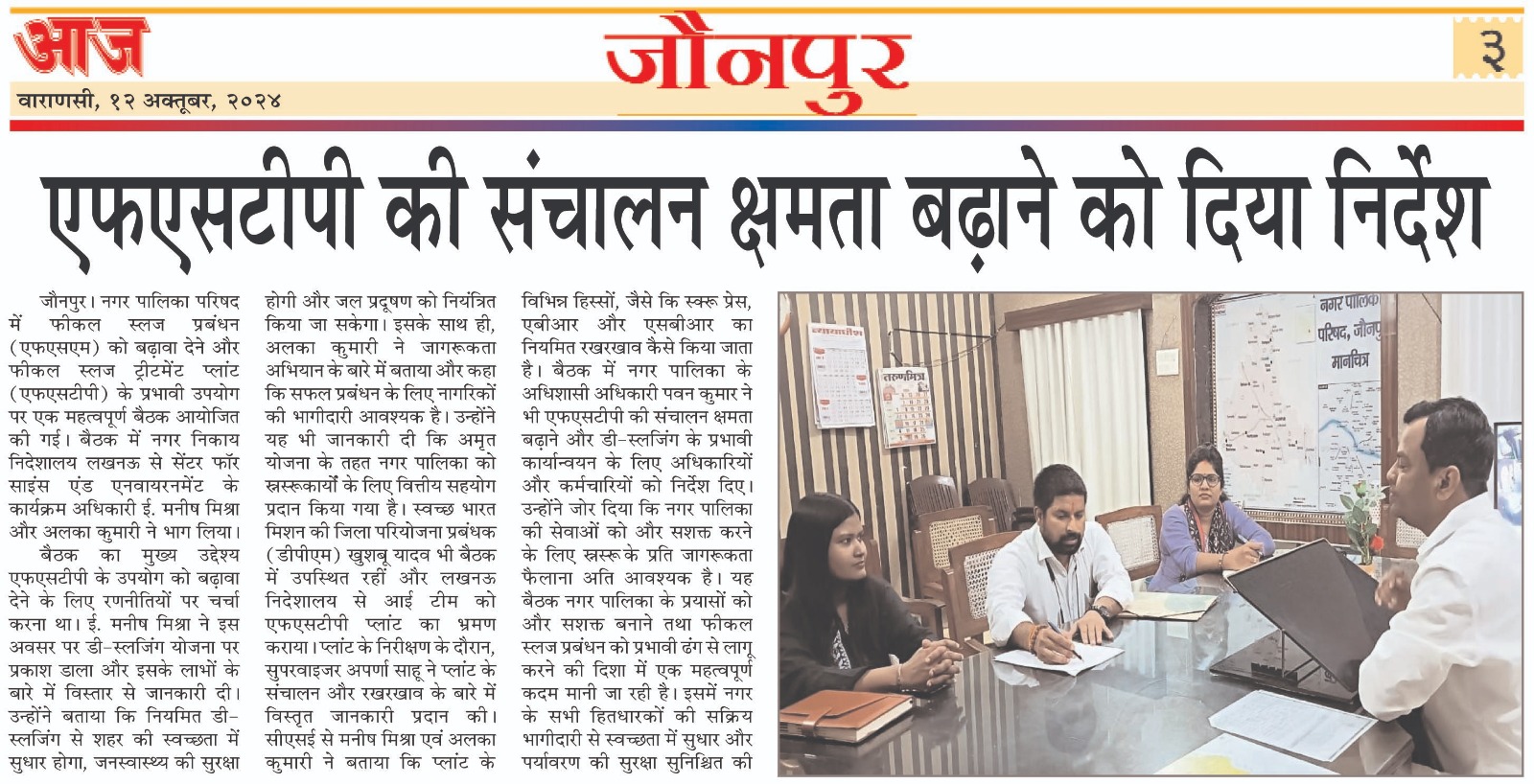
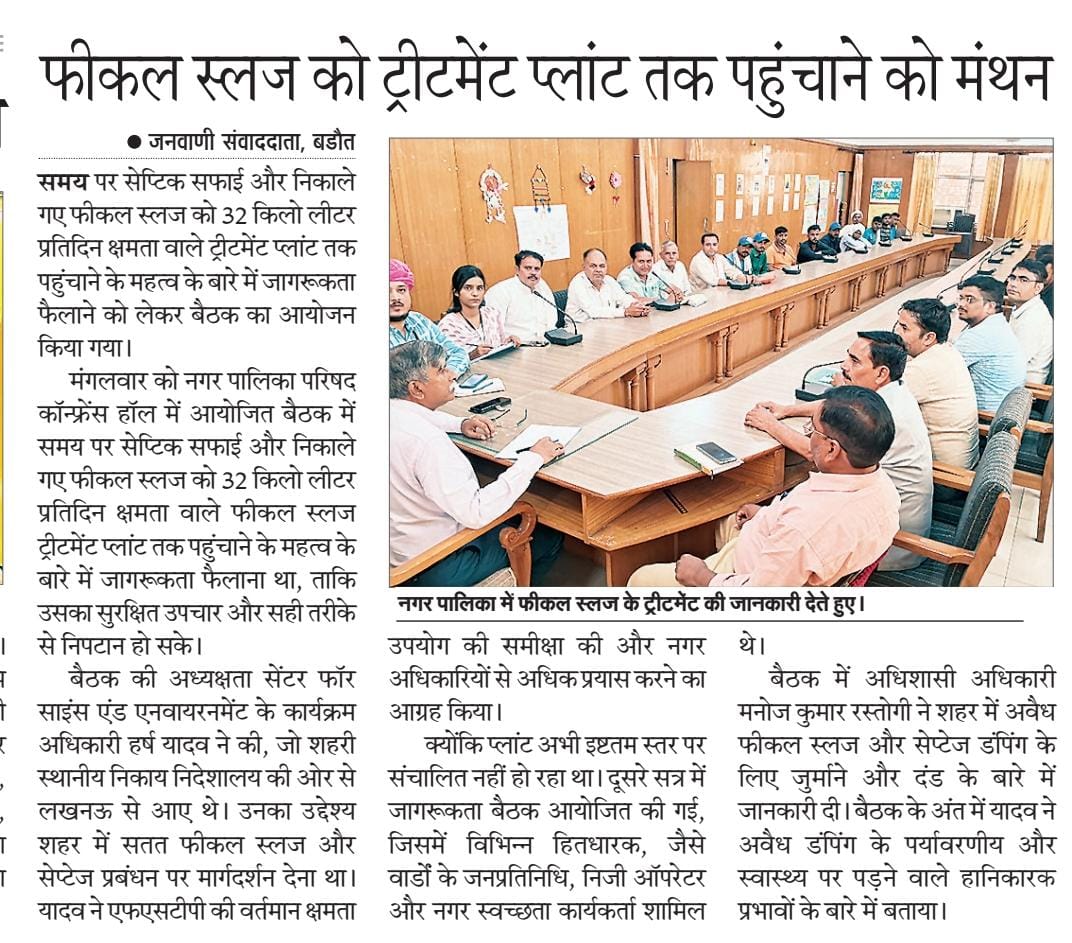
नगर निकाय निदेशालय लखनऊ सेसेंटर फॉर साइंस एंडएं एनवायरनमेंट की टीम शुक्रवार को कुल्हनामऊ मेंस्थापित फीकल स्लज ट्रीटमेंट प्लांट का निरीक्षण किया। प्लांट को नियमित रख-रखाव की जानकारी दी। इससेपहलेटीम ने लखनऊ की टी म ने एफएसटी पी का कि या नि री क्षण, जौ नपुर न्यूज़ लखनऊ सेआयी टीम कार्यक्रम अधिकारी ई. मनीष मिश्रा और अलका कुमारी को स्वच्छ भारत मिशन की जिला परियोजना प्रबंधक खुशबूयादव नेएफएसटीपी का भ्रमण कराया। प्लांट के निरीक्षण के दौरान सुपरवाइजर अपर्णासाहू नेसंचालन और रखरखाव के बारेमेंजानकारी दी। लखनऊ की टीम नेबताया कि प्लांट के विभिन्न हिस्सों, जैसेस्क्रू प्रेस, एबीआर, एसबीआर का नियमित रखरखाव कैसेकिया जाता है। अलका कुमारी नेजागरूकता अभियान के बारेमेंबताया। इससेपहलेपालिका के सभागार मेंफीकल स्लज प्रबंधन को बढ़ावा देनेव प्लांट के प्रभावी उपयोग को लेकर बैठक की गयी। ईओ पवन कुमार नेभी एफएसटीपी की संचालन क्षमता बढ़ानेऔर डी-स्लजिंग के प्रभावी कार्यान्वयन के लिए अधिकारियों और कर्मचारियों को निर्देश दिया।

नगर पालिका परिषद जौनपुर में फीकल स्लज प्रबंधन और एफएसटीपी निरीक्षण पर बैठक

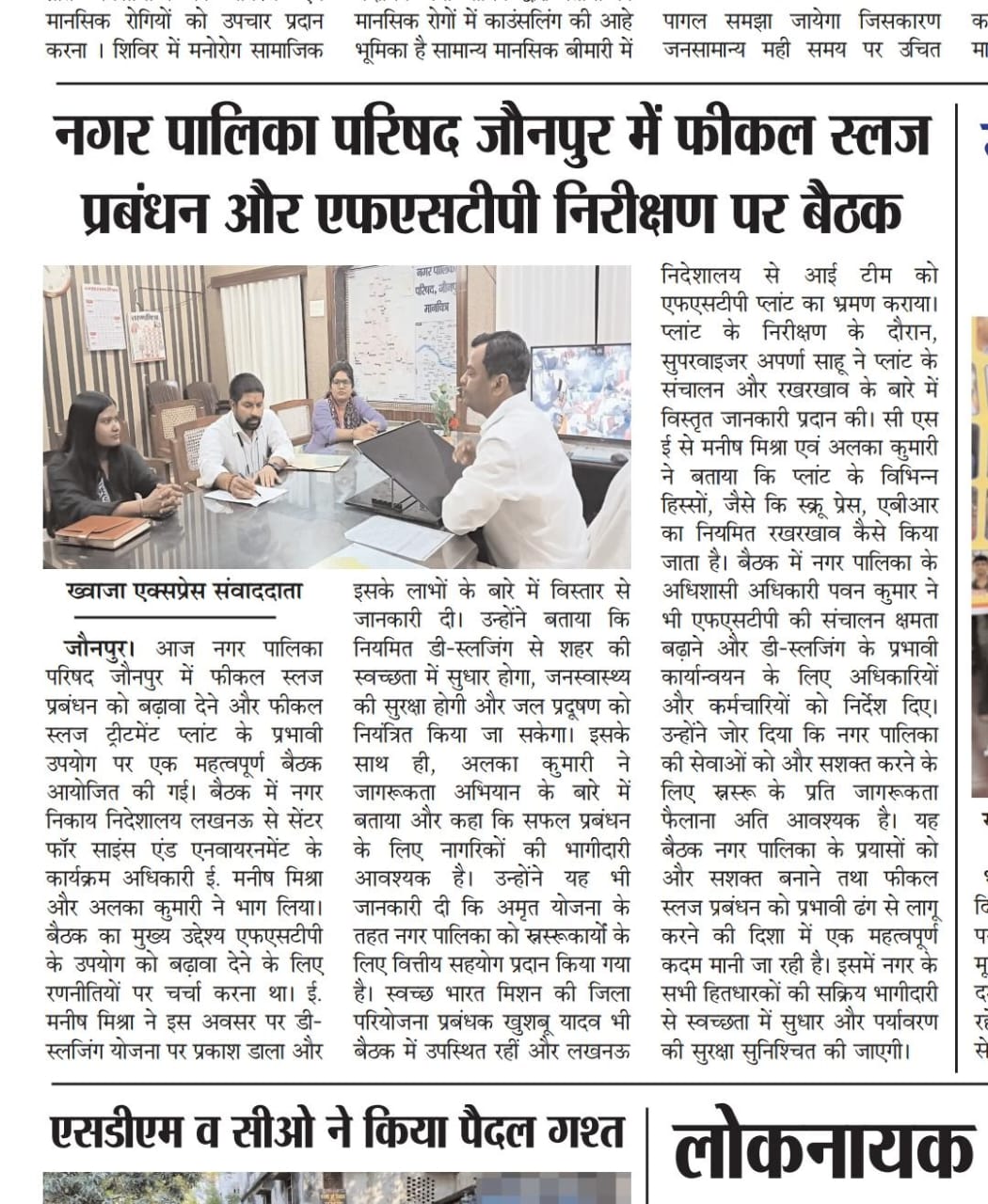
आज नगर पालिका परिषद जौनपुर में फीकल स्लज प्रबंधन (FSM) को बढ़ावा देने और फीकल स्लज ट्री टमेंट प्लांट (FSTP) के प्रभावी उपयोग पर एक महत्वपूर्ण बैठक आयोजित की गई। बैठक में नगर निकाय निदेशालय लखनऊ से सेंटर फॉर साइंस एंड एनवायरनमेंट के कार्यक्रम अधिकारी ई. मनीष मिश्रा और अलका कुमारी ने भाग लिया। बैठक का मुख्य उद्देश्य एफएसटीपी के उपयोग को बढ़ावा देने के लिए रणनीतियों पर चर्चा करना था। ई. मनीष मिश्रा ने इस अवसर पर डी-स्लजिंग योजना (Desludging Plan) पर प्रकाश डाला और इसके लाभों के बारे में विस्तार से जानकारी दी। उन्होंनेन्हों नेबताया कि नियमित डी-स्लजिंग से शहर की स्वच्छता में सुधार होगा, जनस्वास्थ्य की सुरक्षा होगी और जल प्रदूषण को नियंत्रित किया जा सकेगा। इसके साथ ही, अलका कुमारी ने जागरूकता अभियान के बारे में बताया और कहा कि सफल प्रबंधन के लिए नागरिकों की भागीदारी आवश्यक है। उन्होंनेन्हों नेयह भी जानकारी दी कि अमृत योजना के तहत नगर पालिका को FSM कार्यों के लिए वित्तीय सहयोग प्रदान किया गया है। स्वच्छ भारत मिशन की जिला परियोजना प्रबंधक (DPM) खुशबू यादव भी बैठक में उपस्थित रहीं और लखनऊ निदेशालय से आई टीम को एफएसटीपी प्लांट का भ्रमण कराया। प्लांट के निरीक्षण के दौरान, सुपरवाइजर अपर्णा साहू ने प्लांट के संचालन और रखरखाव के बारे में विस्तृत

नगर पालिका परिषद जौनपुर में फीकल स्लज प्रबंधन और एफएसटीपी निरीक्षण पर बैठक

आज नगर पालिका परिषद जौनपुर में फीकल स्लज प्रबंधन (FSM) को बढ़ावा देने और फीकल स्लज ट्रीटमेंट प्लांट (FSTP) के प्रभावी उपयोग पर एक महत्वपूर्ण बैठक आयोजित की गई। बैठक में नगर निकाय निदेशालय लखनऊ से सेंटर फॉर साइंस एंड एनवायरनमेंट के कार्यक्रम अधिकारी ई. मनीष मिश्रा और अलका कुमारी ने भाग लिया। बैठक का मुख्य उद्देश्य एफएसटीपी के उपयोग को बढ़ावा देने के लिए रणनीतियों पर चर्चा करना था। ई. मनीष मिश्रा ने इस अवसर पर डी-स्लजिंग योजना (Desludging Plan) पर प्रकाश डाला और इसके लाभों के बारे में विस्तार से जानकारी दी। उन्होंने बताया कि नियमित डी-स्लजिंग से शहर की स्वच्छता में सुधार होगा, जनस्वास्थ्य की सुरक्षा होगी और जल प्रदूषण को नियंत्रित किया जा सकेगा। इसके साथ ही, अलका कुमारी ने जागरूकता अभियान के बारे में बताया और कहा कि सफल प्रबंधन के लिए नागरिकों की भागीदारी आवश्यक है। उन्होंने यह भी जानकारी दी कि अमृत योजना के तहत नगर पालिका को FSM कार्यों के लिए वित्तीय सहयोग प्रदान किया गया है। स्वच्छ भारत मिशन की जिला परियोजना प्रबंधक (DPM) खुशबू यादव भी बैठक में उपस्थित रहीं और लखनऊ निदेशालय से आई टीम को एफएसटीपी प्लांट का भ्रमण कराया। प्लांट के निरीक्षण के दौरान, सुपरवाइजर अपर्णा साहू ने प्लांट के संचालन और रखरखाव के बारे में विस्तृत जानकारी प्रदान की। सी एस ई से मनीष मिश्रा एवं अलका कुमारी ने बताया कि प्लांट के विभिन्न हिस्सों, जैसे कि स्क्रू प्रेस, एबीआर (Anaerobic Baffle Reactor) और एसबीआर (Sequencing Batch Reactor) का नियमित रखरखाव कैसे किया जाता है। बैठक में नगर पालिका के अधिशासी अधिकारी पवन कुमार ने भी एफएसटीपी की संचालन क्षमता बढ़ाने और डी-स्लजिंग के प्रभावी कार्यान्वयन के लिए अधिकारियों और कर्मचारियों को निर्देश दिए। उन्होंने जोर दिया कि नगर पालिका की सेवाओं को और सशक्त करने के लिए FSM के प्रति जागरूकता फैलाना अति आवश्यक है। यह बैठक नगर पालिका के प्रयासों को और सशक्त बनाने तथा फीकल स्लज प्रबंधन को प्रभावी ढंग से लागू करने की दिशा में एक महत्वपूर्ण कदम मानी जा रही है। इसमें नगर के सभी हितधारकों की सक्रिय भागीदारी से स्वच्छता में सुधार और पर्यावरण की सुरक्षा सुनिश्चित की जाएगी।

Garbage burning in the open goes unchecked, Gurgaon chokes on bad air

Gurgaon: The city's air quality has deteriorated over the past six days, primarily due to open waste burning. The heaps of garbage on fire, several spotted by TOI on Thursday, are not just polluting the air but also causing hazards. There was a fire in Sector 10 that took 20 minutes to douse after trash was set ablaze in a green belt on Thursday. Residents said MCG officials did not respond, after which they contacted the fire officials who eventually doused the flames. The city's air quality index (AQI) remained in the ‘moderate' category on Thursday at 110. It was 136 on Friday. The Sector 51 station recorded an AQI of 165 on Thursday, followed by Vikas Sadan at 59. Teri Gram and Gwalpahari's data were not recorded. The last time it was in the ‘satisfactory' category was on Oct 5. According to residents, such incidents go unchecked daily despite multiple complaints to the state pollution control board. Waste-burning hotspots include DLF -2, IFFCO Chowk, Sector-10, Udyog Vihar, and Sector 31, among others. Locals alleged shopkeepers, garbage collectors, sanitation workers, and security guards burn trash in the open. "Frequent burning of waste like leaves and twigs has led to thick smoke and toxic fumes. The AQI in our locality has worsened and people are facing breathing difficulties," said Sector 10 resident Sumit Saini. Amit Kumar, a resident of Sector 90, said there is no mechanism to clean roads, maintain green belts, or garbage disposal systems in new sectors, due to which people choose the easy way out — burning their waste. "Waste burning on open grounds releases pollutants like PM2.5, PM10, oxides of nitrogen, and carbon monoxide. PM10 is a coarse particle that embeds itself deep in the lungs, causing diseases," said Shubhansh Tiwari, a research associate at centre for science and environment. Talking about the actions being taken to curb waste burning, HSPCB regional officer Vijay Chaudhary said, "We have asked both MCG and MCM to take steps to curb garbage burning incidents in the city." An MCG official acknowledged the corporation received complaints of open waste burning and they have been forwarded to the concerned sanitary inspectors to carry out checks. "The issue will be resolved soon and violators will be penalised," the official added. Explaining the health repercussions, Dr Kuldeep Kumar Grover, head of critical care and pulmonology at CK Birla Hospital, said, "Short-term health effects include headaches, nausea, and skin rashes, while long-term exposure can lead to an increased risk of heart disease and birth defects." He added that inhaling large amounts of these pollutants can severely impact the lungs, potentially leading to bronchitis, respiratory swelling, pneumonia, cardiovascular issues, and neurological problems. Growth retardation in children and health issues for expectant mothers, such as persistent coughing, delayed lactation, and hormonal imbalances, are also common consequences of prolonged exposure to pollution from open burning.

सोलन में पर्यावरण जागरूकता पर तीन दिवसीय प्रशिक्षण कार्यक्रम संपन्न

सोलन: राज्य शैक्षिक एवं अनुसंधान प्रशिक्षण परिषद (SCERT) सोलन की ओर से पर्यावरण जागरूकता पर तीन दिवसीय प्रशिक्षण कार्यक्रम का आयोजन किया गया। कार्यक्रम में प्रदेश के 40 प्रवक्ताओं ने भाग लिया। SCERT सोलन के प्रिंसिपल प्रो. हेमंत कुमार ने कार्यक्रम में बतौर मुख्यातिथि शिरकत की। प्रशिक्षण कार्यक्रम में विभिन्न गतिविधियों के द्वारा पर्यावरण को कैसे पाठ्यचर्या में शामिल किया जा सकता है उस पर खास फोकस रहा। अलग-अलग विषय के प्रवक्ताओं ने इस पर प्रभावी तथा व्यवहारिक प्रस्तुतियां दी। पर्यावरण जागरूकता प्रशिक्षण कार्यक्रम में विमर्श के विषयों में पर्यावरण और विज्ञान के क्षेत्र में कार्य करने वाली अंतर्राष्ट्रीय स्तर की संस्था सेंटर फॉर साइंस एंड एनवायरनमेंट दिल्ली के दो विशेषज्ञ नीरज कुमार और साक्षी उनियाल -जलवायु परिवर्तन के राष्ट्रीय एवं अंतर्राष्ट्रीय परिप्रेक्ष्य : हिमाचल विशेष के संदर्भ में तथा सतत विकास लक्ष्य, भारत में पर्यावरण शिक्षा : विहंगम दृष्टि एवं राष्ट्रीय शिक्षा नीति 2020 और राष्ट्रीय पाठ्यचर्या 2023, ग्रीन स्कूल कार्यक्रम : हिमाचल विशेष के सम्बन्ध में तथा स्कूलों में सतत आत्मनिर्भरता पर चर्चा की। जेडएसआई सोलन के वरिष्ठ वैज्ञानिक डॉ. कमल सैनी-जैव विविधता संरक्षण तथा डॉ. धीरेंद्र पठानिया -प्राकृतिक आपदाओं से हिमाचल में पर्यावरण संरक्षण के खतरे तथा इस पर एक केस स्टडी और कुछ स्थायी समाधान विषय, अर्थ जस्ट से अभिषेक तनेजा और सुभाश्री अग्रवाल – ठोस अपशिष्ट प्रबंधन, पृथकीकरण तथा ठोस अपशिष्ट प्रबंधन नियम -2016 पर तथा ई-कचरा प्रबंधन पोक्सो एक्ट एवं नशा विमुक्ति विषय पर मनीष तोमर ने अपना संवाद रखा।