Cse In News

India: Heat and sickness march together as climate shifts

Indians are no strangers to scorching summers, but this year’s hottest months – from April to June – felt unbearably hot and agonizingly deadly. Temperatures shot past 50 degrees Celsius (122 Fahrenheit) in New Delhi and the northern states of Rajasthan and Uttar Pradesh. The country faced its worst heat wave in over a decade, with hundreds dying and thousands others having their health severely impacted by extreme weather conditions. Then came the monsoon season and the heat broke. This month, however, torrential rain triggered flood and landslides in India’s north and northeast, killing scores of people and affecting hundreds of thousands. And both heat and flooding are exacerbating an even deadlier problem – the spread of disease. ‘Beyond human tolerance’ In India, experts say, climate change is boosting the spread of malaria, dengue, yellow fever, cholera, and chikungunya, as well as chronic diseases, particularly among the millions of people who already experience poor sanitation, pollution, malnutrition, and a shortage of drinking water. In India’s urban centres ‘temperatures are rising beyond human tolerance, humidity is increasing, and so is the night-time heat’, Sunita Narain, head of Centre for Science and Environment (CSE), a New Delhi-based public interest research and advocacy organisation, told DW. Recent studies have shown that temperature rising a few degrees above our body heat levels have an array of harmful effects on mental and physical capabilities. Women working in heat-sensitive jobs such as agriculture or construction are at risk for pregnancy-related complications. Narain warns that cholera, a disease thought to be virtually eradicated was now ‘back again with a vengeance’. At the same time, she says there is more to the problem than rising temperatures. “It is not climate change that is bringing cholera. The fact is, it is the mismanagement of the environment,” Narain said. Attributed to other causes Experts warn that heat waves may be deadlier than we realise, as many heat deaths are attributed to other factors on the death certificate. “Most people dying during heat waves are not recorded as connected to the heat. There needs to be a proper formulation of heat action plans for cities and towns,” Dileep Mavalankar, former head of the Indian Institute of Public Health, told DW. “The government needs to implement long-term strategies to minimise vulnerability and inequalities across communities especially when heat waves are getting deadlier with every passing year,” he added. A rise in diseases Climate-sensitive diseases are rising in India, with some of them showing a clear link to the monsoon rainfall and heat. The government is also aware of the link between mortality and heat, and has listed detailed objectives to build up its capacities and prepare India’s medical system to mitigate risks. However, experts trying to plan and ameliorate these issues often face a fundamental problem – a lack of data. “This is the first hurdle that we need to work on if we are to save lives,” climate scientist Roxy Mathew Koll from the Indian Institute of Tropical Meteorology told DW. “Most of the data is not available. Some cities and districts have annual or monthly aggregates, and for a short time, which are insufficient. Hence, it is possible for us to prepare early warning systems that can inform and save lives and livelihoods if data is available. Basically, the health departments do not share the data that they have.” adds Koll. Focus on ‘resilient’ crops Children and the poorest segments of India are believed to be bearing the brunt of health risks associated with changing climate. A recent study showcased by Indian officials explored the association between climate parameters and infectious diseases in a three-year study involving 461 children under 16 in the northern city of Varanasi. The researchers established that climate parameters like temperature, humidity, rainfall, solar radiation, and wind speed were significantly associated with the infectious diseases like gastrointestinal diseases, respiratory diseases, vector-borne diseases, and skin diseases in the children. Chandra Bhushan, head of the Delhi-based International Forum for Environment, Sustainability & Technology, told DW that building resilience of the health infrastructure is crucial to deal with climate extremes. This year, for instance, the Delhi government asked hospitals to initiate a heat-relief action plan and ensure preparedness to deal with Heat Related Incidents (HRIs). In May, there was an increase of between 10% and 15% of heat-related patients coming in OPD and about 10% in the emergency department. “In Delhi, hospitals were asked to quickly setup new cooling wards to deal with patients will heat related illnesses. Many other cities faced similar challenges,” said Bhushan. According to the veteran activist, the impact on nutrition and health due to climate crisis is also now being studied. This is also expected to impact India’s agriculture. “Thus, there is now a greater focus on climate resilient crops and in the latest budget the government has announced to release over a hundred new climate resilient crops.” With climate change extracting a heavy toll on people’s health, the researcher says India will have to ‘adapt and invest’ to boost its resilient health infrastructure.
India needs to adapt to heat “beyond human tolerance”

Experts say climate change in India is increasing the spread of chronic diseases including malaria, dengue fever, yellow fever, cholera and chikungunya, especially among millions of people who already face problems of sanitation, pollution, malnutrition and lack of potable water. “Temperatures in urban centers are rising beyond human tolerance, humidity is increasing, as is night heat,” Sunita Narain, head of the Centre for Science and Environment (CSE), a research and advocacy organization, told DW in New Delhi. Recent studies have shown that raising the temperature even a few degrees above our body’s heat level has a number of harmful effects on human physical and mental abilities. For example, women who work in heat-sensitive jobs such as farming or construction are at risk for pregnancy-related complications. Narayan warns that cholera, a disease thought to be nearly eradicated, is now “back with a vengeance.” At the same time, she says, the problem extends far beyond rising temperatures. He highlighted, “It is not climate change that is causing cholera. The fact is that it is poor management of the environment.”

No respite from heat for workers in India

In June, as the India Meteorological Department (IMD) warned of ‘severe heatwave conditions’ sixty-year-old Mohd Zaffer fed fuel to the fire. Zaffer, a master craftsman with three decades of experience making perfumes, was heating large metal pots called deghs, used in the production of Shamama Attar, a rare, traditional scent made in the city of Kannauj, the perfume capital of India. Despite temperatures reaching 45?C outside, a sweat-drenched Zaffer maintained his focus. The scent-making process involves a simple distillation method. Ingredients are added to a metal pot to simmer on a small furnace, from which steam travels through a wooden pipe to another pot or receiver, which is kept in water to condense the steam. Artisans must simultaneously control the heat and adjust the hot receiver, working perilously close to the furnace and exposing themselves to dangerous levels of heat. Summers are especially difficult to work here. The entire area is filled with smoke and black soot. Mohd Zaffer, master craftsman “Our job requires us to keep an eye on these deghs to keep the heat in control. If it needs more heat, we add wood to the furnace. Once the steam is collected in the receiver pot or bhapka, the water around it gets extremely hot. And that’s the time we have to adjust it (receiver) with our bare hands,” explains Zaffer, detailing the traditional degh-bhapka method. Zaffer works dangerously close to the furnace for over 10 hours without any protective gear, wearing only loose shorts and a vest to let the sweat dry quickly. Even when changing the hot receiver, his only protection is a damp cotton cloth. The heat from the furnace is not the only danger. Zaffer works in a closed estate with a large tin-covered compound in the middle housing 20 such deghs and furnaces. “Summers are especially difficult to work here. The entire area is filled with smoke and black soot. Others can’t even stand here for even 10 minutes,” he says. “We have gotten used to this heat and smoke now. But yes, winters are more bearable here.” According to the latest global report on health and safety in a changing climate by the International Labour Organisation (ILO), “Workers across different sectors are exposed to these hazards but some workers, such as agricultural workers and other outdoor workers carrying out heavy labour in hot climates, may be particularly at risk.” There is no consolidated data on heat deaths due to labour conditions in India, even if newspapers sometimes report them. man pouring water over furnace fire Sixty-year-old craftsman Mohd Zaffer pouring water to control the furnace fire inside the perfumery (Image: Tej Prakash Bhardwaj) The perfumery where Zaffer works employs about 15 workers. Their work exposes them to various hazards, like high ambient temperatures and radiant heat from furnaces. These workers operate in poorly ventilated home-based industries and small factories, classified under the micro, small and medium enterprises (MSME) category. In the state of Uttar Pradesh, where Kannauj is located, the MSME sector employs about 11 million workers, while across India, the sector employs over 123 million people, accounting for 20% of the entire workforce. While not all MSMEs engage in extreme heat-related activities, most MSME employees are exposed to heat hazards due to the informal nature of their work. Avikal Somvanshi, head of the Urban Lab programme at the Centre for Science and Environment (CSE), says: “Anyone working in medium and small-scale industries, factories, which are not insulated, or do not have any kind of air conditioning or even fans to cool people down are highly vulnerable to heat.” He notes that these buildings are cramped withoutventilation, with tin roofs that fail to block out the heat, especially during extreme temperatures such as those experienced in May and June.

एफएसएसएम में अग्रणी रहे झांसी में आई इथियोपिया की टीम

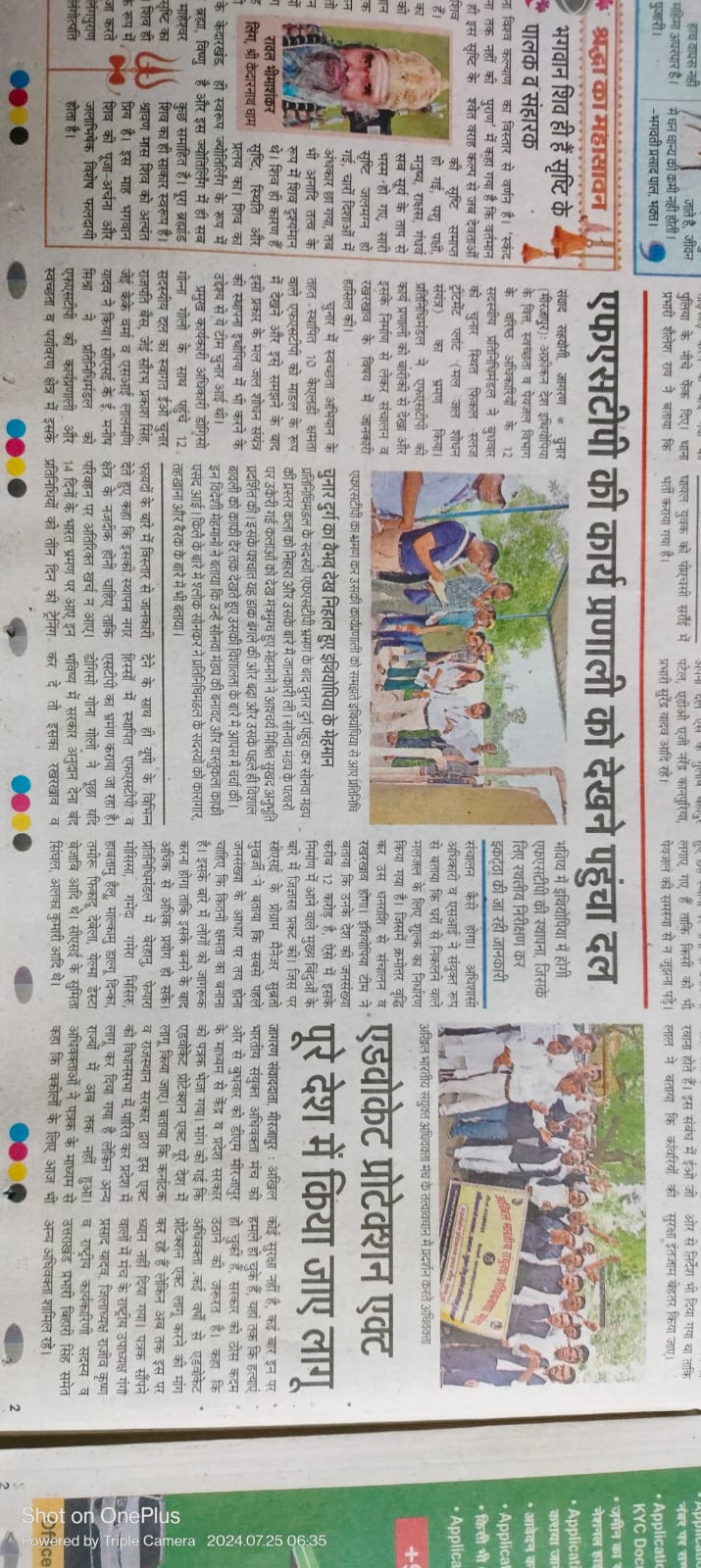
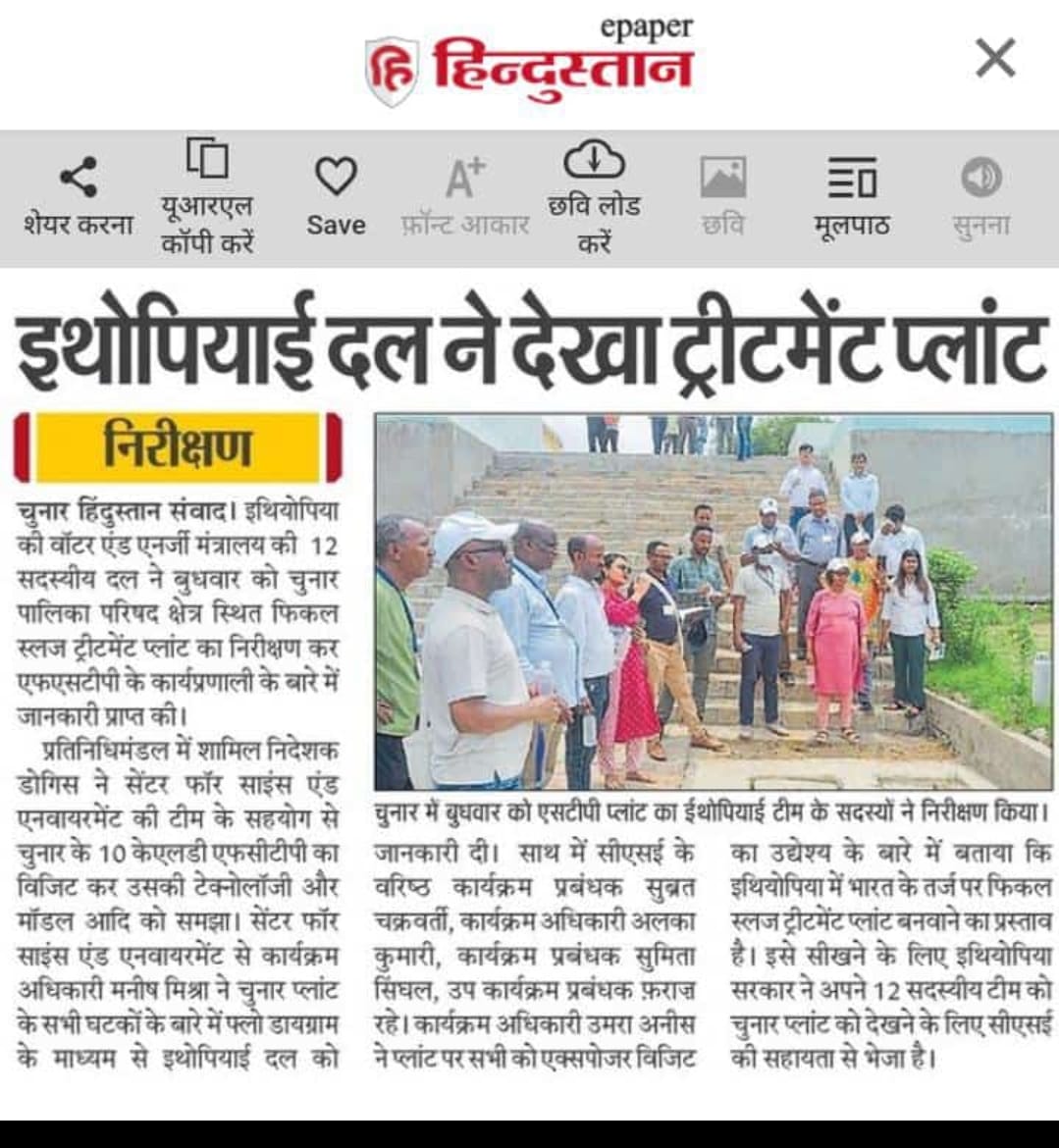
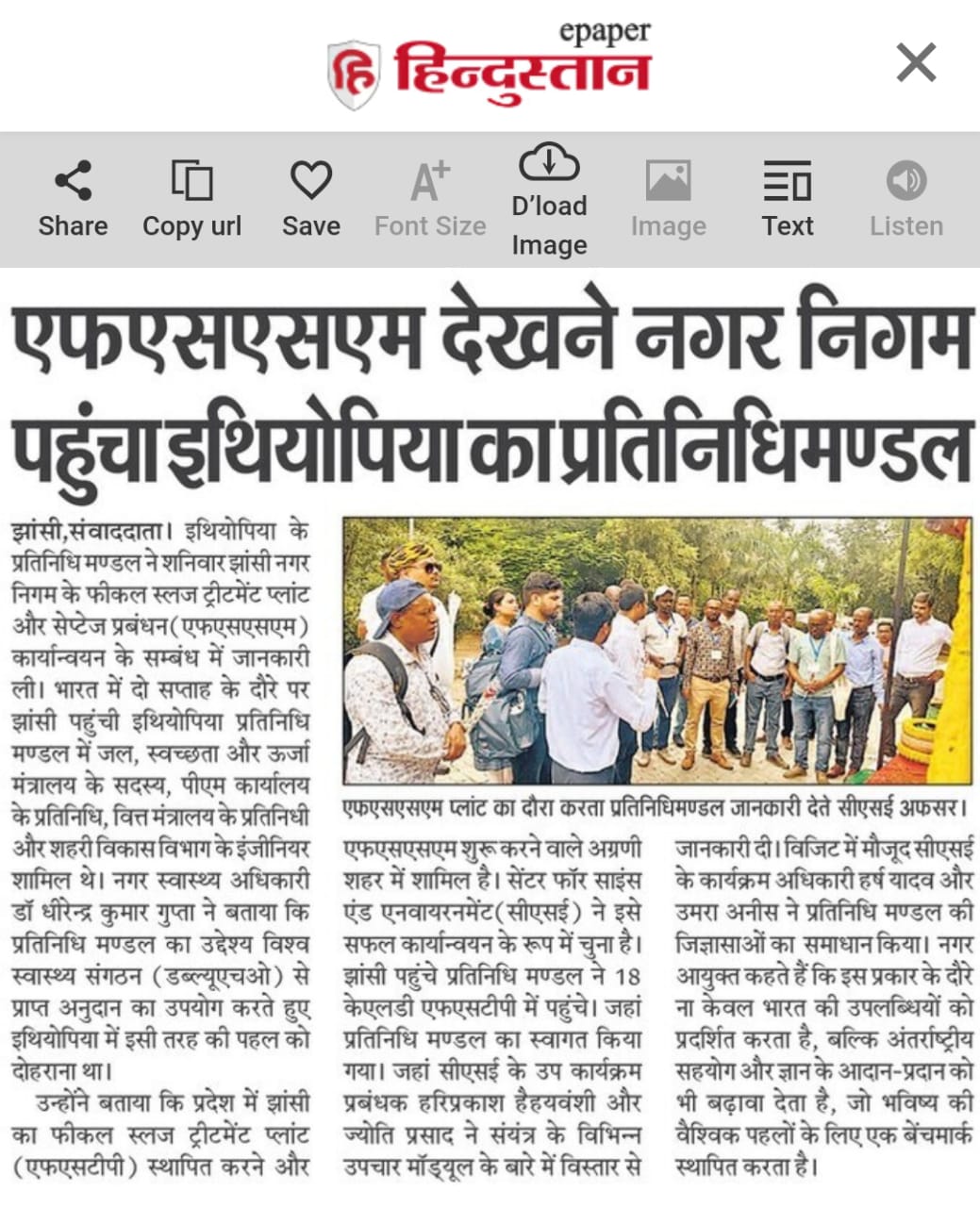
झांसी 27 जुलाई। फिकल स्लज ट्रीटमेंट प्लांट (एफटीपी) स्थापित करने के लिए और सलज और सेपटेज प्रबंधन (एफएसएसएम) शुरू करने में अग्रणी माने जाने वाले उत्तर प्रदेश के झांसी में शनिवार को इथियोपिया की प्रतिष्ठित टीम ने एक्स्पोज़र विजिट की। यह एक्सपोजर विजिट सेंटर फॉर साइंस एवं एनवायरमेंट ने शहरी विकास विभाग उत्तर प्रदेश सरकार और झांसी नगर निगम की सहायता से आयोजित की।इस टीम में इथियोपिया के जल स्वच्छता और ऊर्जा मंत्रालय के प्रतिनिधि और शहरी विकास विभाग के इंजीनियर शामिल थे। इस विजिट का उद्देश्य झांसी के एफटीपी प्लांट के बारे में जानकारी प्राप्त करके इथियोपिया में इस पहल को दोहराना था। इथियोपिया प्रतिनिधियों ने दिल्ली लखनऊ रायबरेली वाराणसी और चुनार के उन्नत जल अपशिष्ट जल और एफएसएसएम व्यवस्थाओं का भी पता लगाया। इथियोपिया की टीम इथियोपिया की टीम ने विजिट के बाद नगर के आयुक्त सत्य प्रकाश से मुलाकात की जिन्होंने उन्हें एफएसएसएम मॉडल लागू करने की चुनौतियों और सफलताओं के बारे में बताया इसके बाद विजिटिंग टीम ने नगर निगम द्वारा आयोजित झांसी के किले का दौरा किया और शाम को जल और प्रकाश शो का आनंद लिया जिसमें क्षेत्र की संस्कृति समृद्धि को दर्शाया गया। यह दौरा अंतरराष्ट्रीय सहयोग और ज्ञान के आदान-प्रदान को बढ़ावा देता है।

The Economic Survey, the Budget and more...

Should the EU face a historical polluter tax? The EU is on a mission to hit climate neutrality by 2050, and it's shaking things up with its Emissions Trading System (ETS) and the Carbon Border Adjustment Mechanism (CBAM). It's all about making big polluters pay. But this has created a new set of problems for countries like India. And an independent think tank, the Centre for Science and Environment (CSE) suggests that that countries like India, or particularly those that haven't historically contributed much to climate change, should, in turn, impose a "historical polluter tax" on these more affluent economies like the EU. If that makes you curious, find out what's happening in our Monday's newsletter. The Economic Survey 2024 Explained This week the Finance Minister Nirmala Sitharaman tabled the annual Economic Survey in the Lok Sabha. And this year’s survey has its fair share of interesting observations. So we had to write about it in our Tuesday's newsletter. You can read it here. The Budget 2024 explained In Wednesday's newsletter we covered the important highlights of the Budget that the Finance Minister rolled out this week. Didn't have the time to catch up on it? No problem! You can click here to catch up on the updates that matter most from this Budget. The escalating K-Pop crisis Kakao Corp's founder, Kim Beom-soo, was arrested this week for allegedly rigging stock prices in the K-pop industry, stirring up a major scandal. Kakao, a major player in South Korea's social media and entertainment scene, recently invested in SM Entertainment, a top K-pop agency. Now, Kim is accused of artificially boosting SM Entertainment's stock to fend off rival HYBE Corporation. And this controversy isn't just affecting Kakao's stock price, but could also worsen the already struggling K-pop market. What are we talking about. Head over to our Thursday's newsletter to find out. The great Indian Chinese conundrum India is at a crossroads, facing tough questions outlined in the latest Economic Survey. Can the country boost manufacturing without relying heavily on China? With the “Atmanirbhar Bharat” initiative pushing for self-reliance, India is trying to reduce its dependence on Chinese imports. But the reality is more complex. Is there a way to solve this problem, though? That's what we wrote about in Friday's newsletter. You can read it here.

After Intense Heat, Monsoons Add Torment of High Humidity for Indian Prisoners

The country has recorded an unprecedented number of 40,000 suspected cases of heatstroke with over 100 deaths between March 1 to June 18 as per statistics recorded by the National Centre for Disease Control, under India’s Union health ministry. Many parts of North and West India have been crippled by severe and intense heatwaves, peaking at nearly 50 degree Celsius. As per the Indian Metrological Department (IMD), heatwaves are periods of unusually high temperature compared to what is normally expected over a region. A heatwave is defined as a departure of 4.5 degree Celsius or more from a place’s ‘normal’ (based on historical records) temperature for two consecutive days. The criteria must be met in at least two stations in a meteorological sub-division. A heatwave is declared on the second consecutive day. As per an analysis of the temperature trends for India from January 2015 to May 2022 by Delhi-based environmental think tank Centre for Science and Environment (CSE), heatstrokes are the second most deadly force of nature in India. They have killed over 20,615 people in just two decades from 2000 to 2020. The country has recorded an unprecedented number of 40,000 suspected cases of heatstroke with over 100 deaths between March 1 to June 18 as per statistics recorded by the National Centre for Disease Control, under India’s Union health ministry. The National Crime Record Bureau (NCRB) records accidental deaths, including those from climatic stress, in its annual Accidental Deaths and Suicides in India. As per an analysis of the report by CSE, between 2015 and 2020, 2,137 people had reportedly died due to excess environmental heat. Another crucial aspect of the report is that dry heatwaves, as are being experienced currently, are less hazardous compared to humid heatwaves which could be experienced at the onset of monsoon. As per the analysis, high humidity can exponentially increase the public health risk posed by hot air temperatures. It even affects fit people acclimatised to work outside because it makes it difficult for the body to regulate temperature. It should be noted that the IMD does not account for the impact of relative humidity while computing heatwave conditions. The Leaflet spoke to Avikal Somvanshi, head of the Urban lab at CSE, which carried out the analysis. Somvanshi highlighted the “significant impact” of heat on indoor temperatures. Explaining his statement, he said that traditionally, buildings had thicker walls and were made of mud and stones, which meant that they could absorb more heat. Less heat was transferred indoors. In places where the temperature dropped at night, the absorbed heat would dissipate. Somvanshi added that the walls of buildings have become thin now and they are not even capable of storing heat for a day. He added that in places such as Delhi, the indoor temperature in the evening is probably much higher than the outdoor temperature. Indoor temperatures become more dangerous in such conditions, especially when accompanied with a lack of proper ventilation. Importantly, the CSE analysis states that there is a strong possibility that most of the deaths due to heat stress go unreported as such deaths may officially be attributed to other comorbidities. As public health expert Dileep Mavalankar has explained, “The first step is to analyse temperature and related it to the all-cause mortality data.” In other words, to have a better estimate of deaths due to heat waves, it is important to see if there has been a significant bump in the number of deaths during a heatwave and then analyse whether heat stress could be a factor in some of those deaths, even if the official cause of death is recorded as something else.

जौनपुर नगर पालिका परिषद में अमृत मित्र योजना के तहत महिलाओं को दिया गया फीकल स्लज ट्रीटमेंट प्लांट के ओ एंड एम का प्रशिक्षण

जौनपुर: जौनपुर नगर पालिका परिषद में अमृत मित्र योजना के तहत स्वयं सहायता समूह की महिलाओं को फीकल स्लज ट्रीटमेंट प्लांट के संचालन और रखरखाव के लिए प्रशिक्षण दिया गया। इस प्रशिक्षण कार्यक्रम में सुपरवाइजर अपर्णा साहू, माली रुकमीना, तथा सफाई मित्र प्रभावती और मंत्रा ने भाग लिया। नगर पालिका परिषद के अधिशासी अधिकारी पवन कुमार ने महिलाओं को प्रोत्साहित करते हुए उनके कार्यों की सराहना की। प्रशिक्षण में सेंटर फॉर साइंस एंड एनवायरमेंट (CSE) से कार्यक्रम अधिकारी अलका कुमारी ने महिलाओं को फीकल स्लज प्रबंधन के बारे में जानकारी दी, जिसमें सेनिटेशन वैल्यू चेन को आधार बनाया गया। महिलाओं को ऑपरेशन एवं मेंटेनेंस से संबंधित व्यक्तिगत सुरक्षा उपकरणों का उपयोग और प्लांट पर ध्यान रखने वाली बातों के बारे में भी बताया गया। CSE के कार्यक्रम अधिकारी और अभियंता मनीष मिश्रा ने शोधन संयंत्र के सभी घटकों के संचालन एवं मेंटेनेंस के बारे में तकनीकी जानकारी दी। प्रशिक्षण कार्यक्रम में नगर पालिका परिषद से सफाई एवं खाद्य निरीक्षक हरिश्चंद्र यादव, अवधेश कुमार, जलकल से अरविंद यादव, स्वच्छ भारत मिशन से खुशबू यादव, और अमृत योजना से यू आई एस घनश्याम मौजूद रहे। डूडा से सी एम एम जितेंद्र कुमार ने एस एच जी महिलाओं को व्यक्तिगत सुरक्षा के महत्व के बारे में जानकारी दी। प्रशिक्षण के उपरांत सी एस ई की टीम ने महिलाओं के साथ प्लांट भ्रमण भी किया। इस प्रशिक्षण कार्यक्रम का उद्देश्य महिलाओं को सशक्त बनाना और स्वच्छता एवं पर्यावरण संरक्षण में उनकी भूमिका को बढ़ावा देना है। इस पहल से जौनपुर नगर पालिका परिषद में स्वच्छता सेवाओं की गुणवत्ता में सुधार की उम्मीद है।

What India’s 2024 Budget Means for Climate Change and the Future of Food and Agriculture

India has released its annual Budget this week, with a climate finance taxonomy and spending on resilient crop varieties among the key takeaways for climate change and agriculture. This week, Indian finance minister Nirmala Sitharaman presented the country’s annual Budget for a record seventh consecutive year. It was also the first Budget announced by India’s NDA coalition government, which was re-elected for a third straight term in June, led by the Bharatiya Janata Party (BJP). Contrary to expectations, the BJP didn’t win an absolute majority on its own, let alone reach its predicted number of seats that would have given the right-wing party a supermajority in the party. After landslide victories in the previous two elections, that the BJP had to rely on coalition partners to form a government signalled a shift in the national sentiment. India voted against religious persecution, segregation and nationalism, rejecting the polarised environment cultivated by the ruling party in the last decade. But another huge factor was largely in the background: climate change. The six-week-long elections were held amid heatwaves in several parts of India, leading to record-high temperatures and dozens of deaths. Climate change was missing from candidates’ messaging, despite one of the biggest backlashes against the BJP’s tenure coming from farmers, a group even more adversely affected by the climate crisis. The finance ministry this week suggested that India’s annual per capita emissions are a third of the global average – but these have also risen by 93% since 2001. Its climate target (or nationally determined contribution) has been deemed “highly insufficient” by the Climate Action Tracker, with current policies and action rated as “insufficient” too. India is now the most populous country, and also the world’s third-largest polluter – it can’t afford to ignore climate change. In the Union Budget for the 2024-25 fiscal year, Sitharaman has allotted ₹3,265.53 crores ($390M) to the Ministry of Environment, Forest and Climate Change (MoEFCC), a 6% improvement on the ₹3,079.4 crores ($367.9M) set aside last year. As part of its efforts to meet its climate goals, India will also develop a climate taxonomy to classify economic activities in line with green commitments and broader environmental goals. “We will develop a taxonomy for climate finance for enhancing the availability of capital for climate adaptation and mitigation. This will support [the] achievement of the country’s climate commitments and green transition,” said Sitharaman. According to the UN Environment Programme, taxonomies provide clear science-based definitions, help avoid greenwashing, and help identify eligible assets, activities or projects that are low-carbon, align with climate-friendly economic development, or are environmentally sustainable. But while the move has been hailed by some, others have raised concerns about possible greenwashing. “India’s climate finance taxonomy could prove helpful and would be a move towards the ‘Paris alignment’ of finance in line with the goals of the Paris Agreement,” said Sehr Raheja, programme officer at think tank Centre for Science and Environment. “Whether the tagging of activities improves finance for climate or brings in risks of greenwashing remains to be seen after it is released,” he added. Aarti Khosla, director of consulting firm Climate Trends, said: “The budget lacks timelines for announcements on taxonomy, carbon pricing mechanisms and detailed strategies for mobilising climate finance for adaptation and mitigation efforts in vulnerable communities.” Additionally, the Budget allocated ₹220 crores ($26M) for the National Mission for a Green India, a 37.5% hike from last year. The initiative aims to preserve forest cover and protect citizens from the impacts of the climate crisis.

No respite from heat for workers in India

In June, as the India Meteorological Department (IMD) warned of ‘severe heatwave conditions’ sixty-year-old Mohd Zaffer fed fuel to the fire. Zaffer, a master craftsman with three decades of experience making perfumes, was heating large metal pots called deghs, used in the production of Shamama Attar, a rare, traditional scent made in the city of Kannauj, the perfume capital of India. Despite temperatures reaching 45˚C outside, a sweat-drenched Zaffer maintained his focus. The scent-making process involves a simple distillation method. Ingredients are added to a metal pot to simmer on a small furnace, from which steam travels through a wooden pipe to another pot or receiver, which is kept in water to condense the steam. Artisans must simultaneously control the heat and adjust the hot receiver, working perilously close to the furnace and exposing themselves to dangerous levels of heat. “Our job requires us to keep an eye on these deghs to keep the heat in control. If it needs more heat, we add wood to the furnace. Once the steam is collected in the receiver pot or bhapka, the water around it gets extremely hot. And that’s the time we have to adjust it (receiver) with our bare hands,” explains Zaffer, detailing the traditional degh-bhapka method. Zaffer works dangerously close to the furnace for over 10 hours without any protective gear, wearing only loose shorts and a vest to let the sweat dry quickly. Even when changing the hot receiver, his only protection is a damp cotton cloth. The heat from the furnace is not the only danger. Zaffer works in a closed estate with a large tin-covered compound in the middle housing 20 such deghs and furnaces. “Summers are especially difficult to work here. The entire area is filled with smoke and black soot. Others can’t even stand here for even 10 minutes,” he says. “We have gotten used to this heat and smoke now. But yes, winters are more bearable here.” Anyone working in medium and small-scale industries, factories, which are not insulated, or do not have any kind of air conditioning or even fans to cool people down are highly vulnerable to heat. Avikal Somvanshi, Urban Lab programme head, Centre for Science and Environment According to the latest global report on health and safety in a changing climate by the International Labour Organisation (ILO), “Workers across different sectors are exposed to these hazards but some workers, such as agricultural workers and other outdoor workers carrying out heavy labour in hot climates, may be particularly at risk.” There is no consolidated data on heat deaths due to labour conditions in India, even if newspapers sometimes report them. The perfumery where Zaffer works employs about 15 workers. Their work exposes them to various hazards, like high ambient temperatures and radiant heat from furnaces. These workers operate in poorly ventilated home-based industries and small factories, classified under the micro, small and medium enterprises (MSME) category. In the state of Uttar Pradesh, where Kannauj is located, the MSME sector employs about 11 million workers, while across India, the sector employs over 123 million people, accounting for 20 per cent of the entire workforce. While not all MSMEs engage in extreme heat-related activities, most MSME employees are exposed to heat hazards due to the informal nature of their work. Avikal Somvanshi, head of the Urban Lab programme at the Centre for Science and Environment (CSE), says: “Anyone working in medium and small-scale industries, factories, which are not insulated, or do not have any kind of air conditioning or even fans to cool people down are highly vulnerable to heat.” He notes that these buildings are cramped without ventilation, with tin roofs that fail to block out the heat, especially during extreme temperatures such as those experienced in May and June. In 2024, India experienced one of its longest-ever heatwaves. Uttar Pradesh saw 20 heatwave days between March 1 to June 9. Media reports indicate that between March 1 and June 18, approximately 110 people died from heat stroke, with over 40,000 suspected cases reported. Although data related to work-related illness or deaths due to heat is unavailable, reports suggest fatalities in North Indian states like Delhi and Uttar Pradesh. Indian labour laws on heat exposure in the workplace Occupational safety and health used to fall under the Factories Act, 1948, which required factories to ensure “adequate ventilation by the circulation of fresh air” and maintain “such a temperature as will secure to workers therein reasonable conditions of comfort and prevent injury to health”. In 2020, India consolidated 13 central laws on workers’ safety into the Occupational Safety, Health and Working Conditions Code, 2020. The new code mentions managing temperatures only in the context of dock workers. Moreover, as noted by the think tank PRS Legislative Research, “The 2020 bill empowers the state government to exempt any new factory from the provisions of the Code in order to create more economic activity and employment.” This exemption has been retained in the act. Other government institutions, such as the National Disaster Management Authority (NDMA), also ignore the impact of rising heat on industry, focussing only on individuals, with only advisory guidelines for heatwaves. The Ministry of Labour and Employment, responsible for overseeing worker safety, is restricted in its actions. Navneet Shrivastav, labour enforcement officer at the Kannauj labour department, says, “The district authority has released directions for putting work on hold during the day time. We are seeing a decline in working hours especially during peak heat time (12 PM-3 PM).” He adds, “We cannot ask small factories to stop work or inspect the workplace directly without any complaint by workers to the commission.” The ‘general’ nature of heat action plans and advisories In 2019, the NDMA published its national guidelines on heatwaves to protect the public from extreme heat. These guidelines aim to help public officials develop their own heatwave action plans across India’s cities and towns. During heatwaves, the labour department, state disaster management authorities (SDMAs), the India Meteorological Department and other state authorities release advisories and Heat Action Plan (HAPs) for the general public and workers. Aravind Unni, a policy researcher on heat and informal workers with the Tata Institute of Social Sciences (TISS), highlights that these HAPs and advisories are “general” in nature. “Our HAPs and heat warnings never go into details of workers, population groups, or marginalised groups,” he says. Unni suggests that district administration or municipal authorities could enhance HAPs by providing specific advisories for various demographics, such as perfume makers, brick kiln workers and textile workers, who experience heat in different workplace contexts. This tailored approach could improve the effectiveness of heat-related advisories. The lethality of humid heat Another missing element in the HAPs and guidelines is the consideration of humid heat. While humans can tolerate 54˚C of dry heat, studies show that, in humid conditions, “35°C marks the heat stress tolerance limit”. Since MSMEs are poorly ventilated and often cramped, humidity becomes more difficult to tolerate for workers, especially during the monsoon season. In early July, Dialogue Earth visited a few small bakeries in Delhi. Mohd Rizwan, who works alongside a furnace fuelled by liquified petroleum gas used for baking bread, says, “It is very bad here during summers, especially when the monsoon arrives. One starts feeling very hot and dizzy during summer. It often leads to vomiting.” The 24-year-old bakes bread near the furnace for over eight hours. “We can’t have [overhead] fans working here, as it just blows hot air,” he adds. The only fan that is present is a small table fan near the bhatti that blows hot air away. “Heat indexes are not well-established in India,” Dileep Mavalanka, a public health expert and former director of the Indian Institute of Public Health Gandhinagar, tells Dialogue Earth. “Other countries [such as the US] have measures to combine temperature and humidity. India doesn’t have separate advisories for humid heat or wet-bulb temperature.” “Every layer of marginality… brings a new problem,” says Unni. Unless the details are dealt with, he says, the HAPs and heat-related advisories will change nothing for those most at risk of the rising heat in India.

Monsoons set to add the torment of high humidity to the woes of intense heat of prisoners

THE year 2024 has been torrid in India, even by the standards of the subcontinent and the steady effects of climate change. The country has recorded an unprecedented number of 40,000 suspected cases of heatstroke with over 100 deaths between March 1 to June 18 as per statistics recorded by the National Centre for Disease Control, under India’s Union health ministry. Many parts of North and West India have been crippled by severe and intense heatwaves, peaking at nearly 50 degree Celsius. As per the Indian Metrological Department (IMD), heatwaves are periods of unusually high temperature compared to what is normally expected over a region. A heatwave is defined as a departure of 4.5 degree Celsius or more from a place’s ‘normal’ (based on historical records) temperature for two consecutive days. The criteria must be met in at least two stations in a meteorological sub-division. A heatwave is declared on the second consecutive day. As per an analysis of the temperature trends for India from January 2015 to May 2022 by Delhi-based environmental think tank Centre for Science and Environment (CSE), heatstrokes are the second most deadly force of nature in India. They have killed over 20,615 people in just two decades from 2000 to 2020. The country has recorded an unprecedented number of 40,000 suspected cases of heatstroke with over 100 deaths between March 1 to June 18 as per statistics recorded by the National Centre for Disease Control, under India’s Union health ministry. The National Crime Record Bureau (NCRB) records accidental deaths, including those from climatic stress, in its annual Accidental Deaths and Suicides in India. As per an analysis of the report by CSE, between 2015 and 2020, 2,137 people had reportedly died due to excess environmental heat. Also read: Stop denying political prisoners the right to healthcare: PUDR Another crucial aspect of the report is that dry heatwaves, as are being experienced currently, are less hazardous compared to humid heatwaves which could be experienced at the onset of monsoon. As per the analysis, high humidity can exponentially increase the public health risk posed by hot air temperatures. It even affects fit people acclimatised to work outside because it makes it difficult for the body to regulate temperature. It should be noted that the IMD does not account for the impact of relative humidity while computing heatwave conditions. The Leaflet spoke to Avikal Somvanshi, head of the Urban lab at CSE, which carried out the analysis. Somvanshi highlighted the “significant impact” of heat on indoor temperatures. Explaining his statement, he said that traditionally, buildings had thicker walls and were made of mud and stones, which meant that they could absorb more heat. Less heat was transferred indoors. In places where the temperature dropped at night, the absorbed heat would dissipate. Somvanshi added that the walls of buildings have become thin now and they are not even capable of storing heat for a day. He added that in places such as Delhi, the indoor temperature in the evening is probably much higher than the outdoor temperature. Indoor temperatures become more dangerous in such conditions, especially when accompanied with a lack of proper ventilation. Importantly, the CSE analysis states that there is a strong possibility that most of the deaths due to heat stress go unreported as such deaths may officially be attributed to other comorbidities. As public health expert Dileep Mavalankar has explained, “The first step is to analyse temperature and related it to the all-cause mortality data.” In other words, to have a better estimate of deaths due to heat waves, it is important to see if there has been a significant bump in the number of deaths during a heatwave and then analyse whether heat stress could be a factor in some of those deaths, even if the official cause of death is recorded as something else.