
Cse In News

जौनपुर नगर पालिका परिषद में अमृत मित्र योजना के तहत महिलाओं को दिया गया फीकल स्लज ट्रीटमेंट प्लांट के ओ एंड एम का प्रशिक्षण

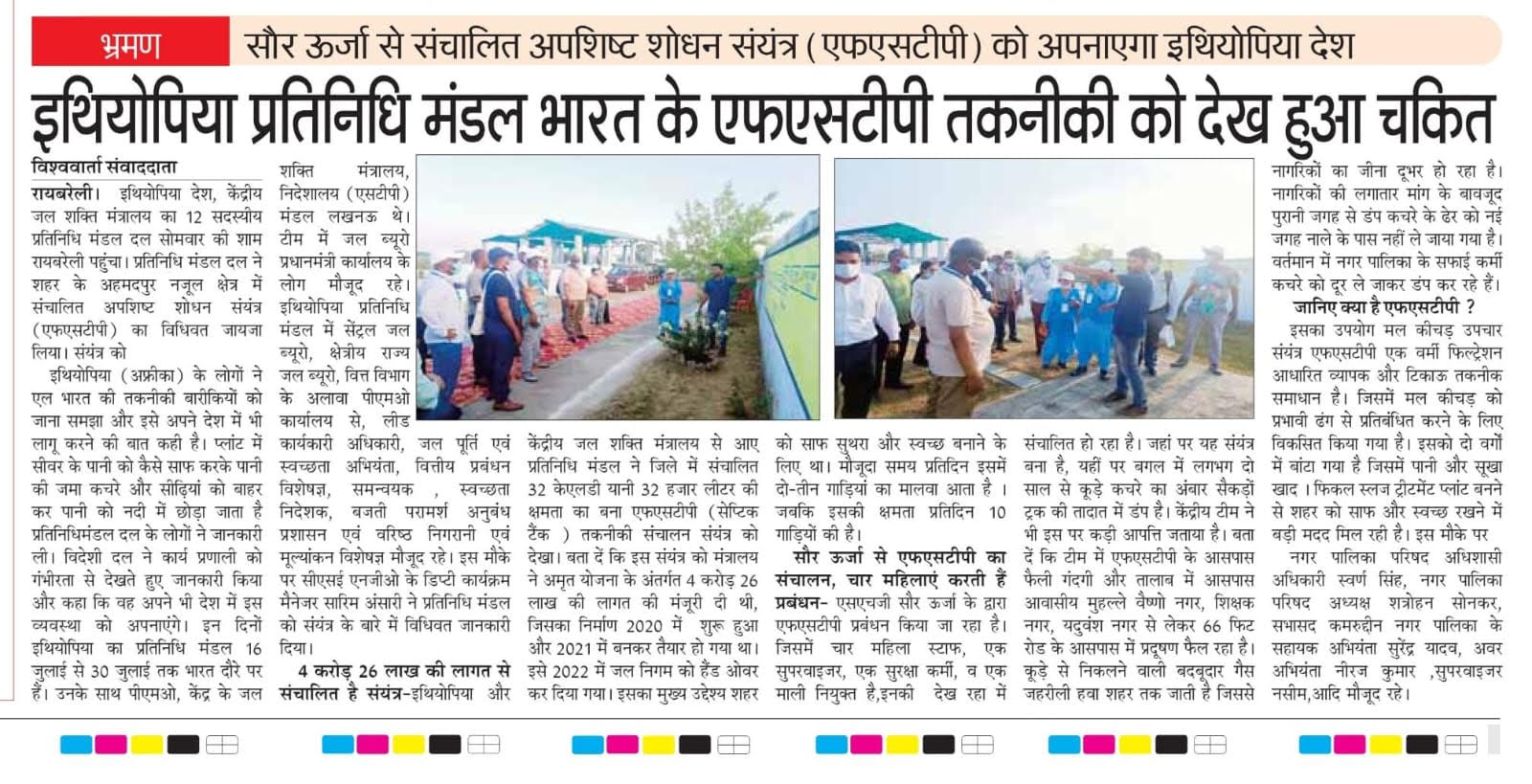
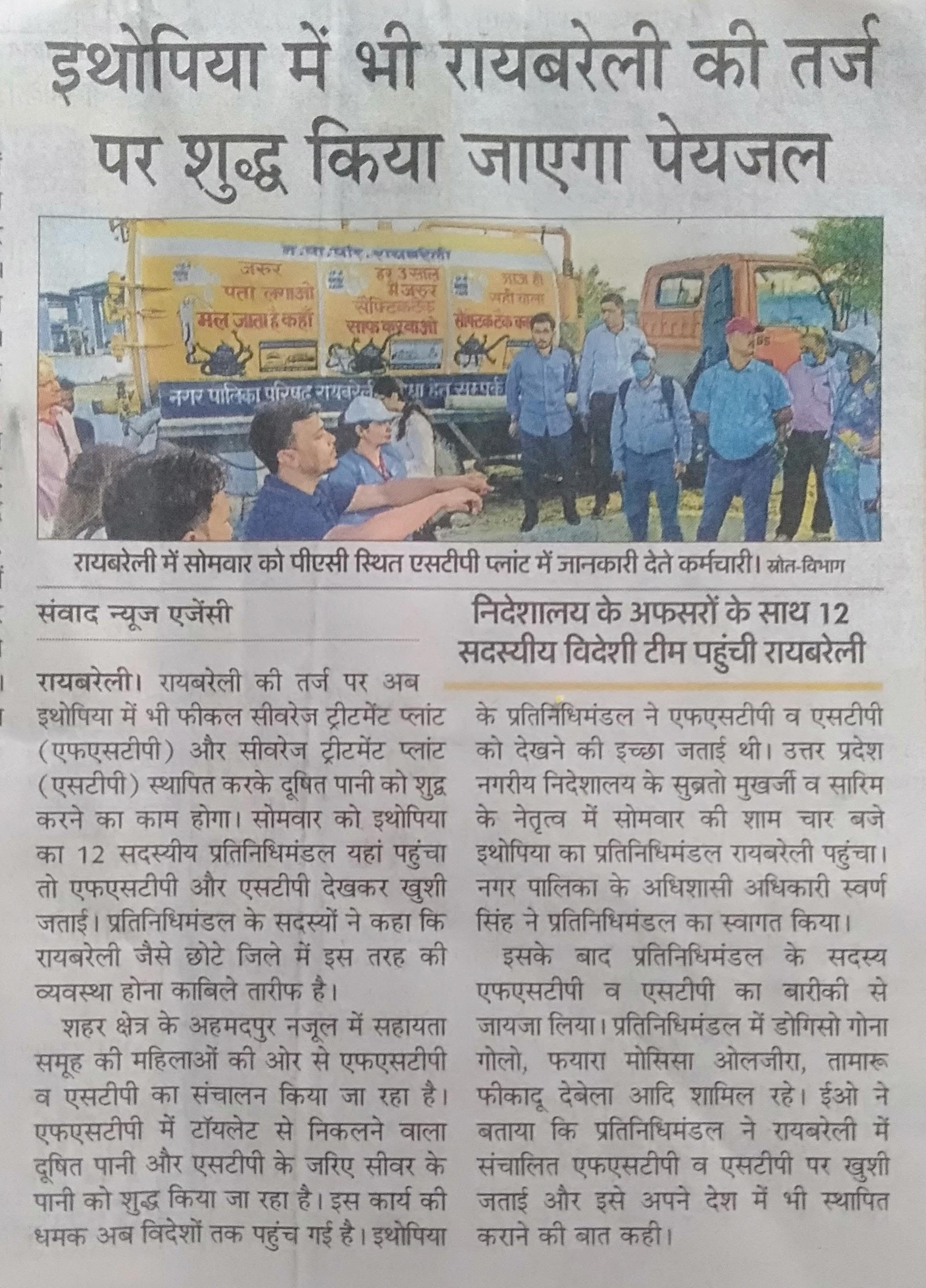
आज दिनांक 25 जुलाई 2024 को जौनपुर नगर पालिका परिषद में अमृत मित्र योजना के तहत स्वयं सहायता समूह की महिलाओं को फीकल स्लज ट्रीटमेंट प्लांट के संचालन और रखरखाव के लिए प्रशिक्षण दिया गया। इस प्रशिक्षण कार्यक्रम में सुपरवाइजर अपर्णा साहू, माली रुकमीना, तथा सफाई मित्र प्रभावती और मंत्रा ने भाग लिया। नगर पालिका परिषद के अधिशासी अधिकारी पवन कुमार ने महिलाओं को प्रोत्साहित करते हुए उनके कार्यों की सराहना की। प्रशिक्षण में सेंटर फॉर साइंस एंड एनवायरमेंट (CSE) से कार्यक्रम अधिकारी अलका कुमारी ने महिलाओं को फीकल स्लज प्रबंधन के बारे में जानकारी दी, जिसमें सेनिटेशन वैल्यू चेन को आधार बनाया गया। महिलाओं को ऑपरेशन एवं मेंटेनेंस से संबंधित व्यक्तिगत सुरक्षा उपकरणों का उपयोग और प्लांट पर ध्यान रखने वाली बातों के बारे में भी बताया गया। CSE के कार्यक्रम अधिकारी और अभियंता मनीष मिश्रा ने शोधन संयंत्र के सभी घटकों के संचालन एवं मेंटेनेंस के बारे में तकनीकी जानकारी दी। प्रशिक्षण कार्यक्रम में नगर पालिका परिषद से सफाई एवं खाद्य निरीक्षक हरिश्चंद्र यादव, अवधेश कुमार, जलकल से अरविंद यादव, स्वच्छ भारत मिशन से खुशबू यादव, और अमृत योजना से यू आई एस घनश्याम मौजूद रहे। डूडा से सी एम एम जितेंद्र कुमार ने एस एच जी महिलाओं को व्यक्तिगत सुरक्षा के महत्व के बारे में जानकारी दी। प्रशिक्षण के उपरांत सी एस ई की टीम ने महिलाओं के साथ प्लांट भ्रमण भी किया। इस प्रशिक्षण कार्यक्रम का उद्देश्य महिलाओं को सशक्त बनाना और स्वच्छता एवं पर्यावरण संरक्षण में उनकी भूमिका को बढ़ावा देना है। इस पहल से जौनपुर नगर पालिका परिषद में स्वच्छता सेवाओं की गुणवत्ता में सुधार की उम्मीद है।
No respite from heat for workers in India

In June, as the India Meteorological Department (IMD) warned of ‘severe heatwave conditions’ sixty-year-old Mohd Zaffer fed fuel to the fire. Zaffer, a master craftsman with three decades of experience making perfumes, was heating large metal pots called deghs, used in the production of Shamama Attar, a rare, traditional scent made in the city of Kannauj, the perfume capital of India. Despite temperatures reaching 45˚C outside, a sweat-drenched Zaffer maintained his focus. The scent-making process involves a simple distillation method. Ingredients are added to a metal pot to simmer on a small furnace, from which steam travels through a wooden pipe to another pot or receiver, which is kept in water to condense the steam. Artisans must simultaneously control the heat and adjust the hot receiver, working perilously close to the furnace and exposing themselves to dangerous levels of heat.

https://www.bloombergtechnoz.com/detail-news/43099/riset-jumlah-kematian-akibat-panas-tidak-dapat-dipastikan/2

Bloomberg, Para pejabat di Miami-Dade County, Florida, bingung saat ingin mengetahui berapa banyak orang yang meninggal karena cuaca panas ekstrem. Mereka pun meminta bantuan Christopher Ueijo, seorang ahli geografi di Florida State University. Ueijo menggunakan data suhu dan catatan kematian untuk menentukan bahwa antara tahun 2015 dan 2019, panas terik membunuh rata-rata 34 orang per tahun di wilayah tersebut yang seharusnya bisa tidak meninggal dunia. Perkiraannya ini lebih dari 10 kali lipat lebih tinggi daripada angka resmi: Selama periode yang sama, Miami-Dade hanya mengklasifikasikan dua kematian terkait panas. Sekitar setahun kemudian, Ueijo melakukan analisis kedua terhadap data yang sama. Kali ini, ia memperhitungkan peningkatan suhu sebelum puncak gelombang panas untuk menangkap lebih banyak dampak kesehatan awal dan kumulatif. Temuan terbaru, yang diterbitkan pada Mei, sangat berbeda: 600 kematian akibat panas per tahun. "Keduanya adalah studi yang ditinjau oleh rekan sejawat," kata Jane Gilbert, kepala petugas penanggulangan panas untuk Miami-Dade County yang menugaskan kedua analisis tersebut. "Saya bertanya [kepada Ueijo] mana yang harus saya gunakan, dan dia berkata antara 34 dan 600." Baca Juga Gelombang Panas Ekstrem Mengancam 130 Juta Penduduk AS Dilaporkan ke KPK, Bulog & Bapanas Dituduh Rugikan Negara Rp2,9 T Perubahan Iklim Picu Cuaca Ekstrem di China, Ancam Hasil Panen Di antara angka 34 dan 600, inilah letak tantangan utama dalam menghitung kematian akibat panas. Secara resmi tahun ini, tercatat 63 kematian akibat panas di Thailand, setidaknya 143 di India, setidaknya 172 di Meksiko, dan lebih dari 1.300 dalam satu minggu selama ibadah haji di Arab Saudi. Namun secara tidak resmi, angka-angka ini hanyalah sebagian kecil dari dampak nyata panas. Angka resmi biasanya hanya mencakup kasus yang paling jelas - di mana dokter atau pemeriksa medis dapat dengan yakin menarik garis antara panas dan kematian - dan jauh lebih kecil kemungkinannya untuk memperhitungkan kematian di mana suhu berperan secara tidak langsung. Beberapa ambiguitas ini terkait dengan sempitnya cara pelacakan kematian akibat panas, dan beberapa lagi terkait dengan banyaknya kondisi kesehatan yang diperparah oleh kenaikan suhu. Namun hasil akhirnya tetap sama: Lebih banyak orang yang meninggal karena panas, sementara akademisi, tenaga medis, dan pejabat pemerintah kesulitan melacaknya. Ilustrasi suhu panas dunia. "Panas itu rumit," kata Este Geraghty, kepala petugas medis di Esri, yang memproduksi perangkat lunak pemetaan yang digunakan oleh para peneliti dan pejabat pemerintah untuk melacak dampak panas. "Panas dijuluki sebagai pembunuh senyap, dan itu ada alasannya." Cara yang paling umum untuk melacak kematian akibat panas adalah dengan menghitung kematian, di mana panas telah secara resmi diidentifikasi sebagai penyebab utama atau penyebab kematian. Ini adalah pekerjaan Gregory Hess. Sebagai kepala pemeriksa medis di Pima County, Arizona, dia dan timnya mencatat penyebab kematian banyak orang yang meninggal dunia di salah satu wilayah terpanas di Amerika. Tahun lalu, Tucson di Pima County mengalami hampir 90 hari di mana suhu mencapai setidaknya 38°C. "Jadi katakanlah seseorang meninggal karena menembak kepalanya sendiri," kata Hess. "Mengapa orang tersebut meninggal dunia cukup mudah untuk dilacak. Tidak perlu menggunakan banyak kecanggihan." Namun, kematian akibat panas itu berbeda. Bentuk paling langsungnya berasal dari hipertermia, yang memiliki dua bentuk ekstrem: kelelahan akibat panas (heat exhaustion) dan serangan panas (heat stroke). Gejala kelelahan akibat panas termasuk pusing, haus, mual, dan lemas, sementara gejala serangan panas bisa berupa kebingungan dan hilang kesadaran. Serangan panas biasanya terjadi ketika suhu tubuh inti mencapai sekitar 40°C. Tubuh manusia tidak bisa menangani suhu tinggi seperti itu dalam waktu lama, dan akan mulai mengalami gangguan fungsi tanpa pendinginan cepat dan perawatan lainnya. Namun, ada batasan dalam mengidentifikasi hipertermia. Tidak semua orang yang sakit karena panas bisa mendapatkan pertolongan. Jika seseorang meninggal sendirian di rumah atau di taman pada malam hari, suhu tubuh inti mereka kemungkinan akan turun pada saat jenazah ditemukan, kata Sarah Henderson, direktur Pusat Pengendalian Penyakit British Columbia. Dengan kata lain, tanda paling jelas dari serangan panas menghilang. Banyak catatan resmi kematian akibat panas hampir seluruhnya mengandalkan serangan panas yang dapat diidentifikasi. Di Jepang, serangan panas adalah satu-satunya jenis kematian akibat panas yang dilacak oleh Badan Penanggulangan Kebakaran dan Bencana negara tersebut. Di AS, Pusat Pengendalian dan Pencegahan Penyakit melacak kematian akibat panas dengan mengumpulkan informasi dari surat kematian, di mana kematian akibat panas yang dilaporkan sering dikaitkan dengan serangan panas. Datanya terbatas pada warga negara AS, dan "biasanya ada jeda satu tahun sebelum data lengkap tersedia," kata petugas pers CDC Sharleta Stamps. Serangan panas juga merupakan penyebab sebagian besar kematian akibat panas yang dilacak oleh Kementerian Kesehatan dan Kesejahteraan Keluarga India, meskipun sistem rumah sakit setempat juga dapat melaporkan kematian terkait panas. Jika digabungkan, angka lokal seringkali lebih tinggi daripada angka nasional resmi. India memiliki "ambang batas yang cukup tinggi untuk apa yang dapat diklasifikasikan sebagai kematian terkait panas," kata Bhargav Krishna, seorang peneliti di organisasi penelitian Sustainable Futures Collaborative. Penetapan tersebut biasanya memerlukan catatan suhu tubuh yang tinggi dan dokumentasi ekstensif tentang riwayat keluarga dan medis pasien. Keluarga yang terdampak mungkin "berhak atas kompensasi tertentu," kata Krishna, yang dapat menyebabkan dokter menjadi "lebih konservatif dalam menyatakan kematian akibat panas." Cuaca panas ekstrem. (Dok: Bloomberg) Kematian akibat serangan panas adalah jenis kematian akibat panas yang paling mudah dipahami. Kategori lain yang lebih besar adalah apa yang disebut Hess sebagai "kematian akibat faktor panas" (heat-contributed deaths). Bayangkan seseorang mengalami serangan jantung pada hari yang panas, kata Geraghty dari Esri: "Apakah mereka mengalaminya karena cuaca panas atau hanya kebetulan meninggal pada hari yang panas?" Jawabannya tidak selalu mudah ditemukan, dan banyak tempat yang tidak memiliki sumber daya atau kemauan untuk mencoba. Tubuh manusia memiliki dua alat utama untuk menghindari kepanasan: berkeringat, yang melepaskan panas melalui penguapan, dan memompa jantung lebih cepat untuk meningkatkan sirkulasi darah dan memindahkan panas ke kulit. Kelompok mana pun yang tidak bisa menghindari panas - atlet, tunawisma, keluarga berpenghasilan rendah, dan pekerja luar ruangan - semakin rentan seiring dengan kenaikan suhu. Begitu juga orang-orang yang tubuhnya tidak dapat dengan mudah menyesuaikan diri, termasuk bayi dan anak kecil, ibu hamil, orang tua, dan mereka yang memiliki masalah kesehatan tertentu. Penyakit paru obstruktif kronis, penyakit jantung, dan diabetes, misalnya, dapat membatasi kemampuan tubuh untuk tetap sejuk, begitu pula beberapa obat yang digunakan untuk mengobatinya. Tetapi ketika orang yang menderita kondisi tersebut meninggal dalam cuaca panas, penyakit tersebut "lebih mungkin terdaftar sebagai penyebab kematian daripada panas," kata Ueijo. "Covid adalah analogi yang bagus," kata Kristie Ebi, profesor kesehatan global di University of Washington. Karena pengujian dan penyelidikan yang terbatas, banyak kemungkinan kematian terkait Covid hanya dikaitkan dengan penyakit penyerta seperti hipertensi atau diabetes. Efek jangka panjang virus juga menjadi faktor dalam kematian akibat organ yang melemah dan komplikasi kesehatan lama setelah seseorang berhenti dites positif. Bahkan bagi yang sehat secara fisik, tingkat rendah penyakit akibat panas dapat memengaruhi konsentrasi, keseimbangan, dan tingkat energi. Ini meningkatkan risiko bagi siapa saja yang mengalami gangguan akibat penggunaan narkoba atau alkohol, dan bagi mereka yang menderita penyakit mental. "Mengapa kita melihat lebih banyak tunawisma yang meninggal di taman dengan obat-obatan terlarang di bulan Juli dibandingkan Desember? Itu karena panas," kata Hess. Untuk secara akurat menentukan kematian yang disebabkan oleh faktor panas, petugas di setiap langkah proses harus memahami dampak panas dan bersedia untuk mengetahui apakah panas berperan. Minimal, perlu ada catatan resmi kematian - yang tidak selalu ada di daerah pedesaan India, misalnya - yang menyebutkan panas sebagai faktor penyebab. Tetapi jika pemerintah hanya melaporkan kematian akibat panas berdasarkan surat kematian dan pemeriksaan fisik jenazah, "maka kemungkinan besar itu akan menjadi perkiraan yang terlalu rendah," kata Eunice Lo, peneliti perubahan iklim dan kesehatan di Cabot Institute for the Environment, University of Bristol. Meskipun Pima County selalu melacak beberapa kematian akibat panas, Hess mengatakan mereka tidak dapat menyelidiki lebih banyak kasus sampai dia mendapatkan cukup dana untuk mempekerjakan ahli epidemiologi pada tahun 2022. Sejak tahun lalu, Pima County telah membagikan temuan kematian akibat panas mereka secara online dan memperbaruinya setiap bulan. Menurut data tersebut, sejauh ini wilayah tersebut telah mengidentifikasi 24 kematian terkait panas pada 2024. "Saya yakin jumlahnya masih kekurangan," kata Hess. "Menurut saya, kami melakukan yang terbaik yang kami bisa dengan cara kerja sistem, dan yang terbaik yang kami bisa lakukan berarti ini akan lebih baik daripada banyak tempat lain. Tetapi akan ada kematian yang terlewatkan." Inspirasi Hess adalah daerah tetangga Maricopa County, rumah bagi Phoenix dan pemimpin nasional dalam pelacakan kematian akibat panas. Selama bulan-bulan panas, daerah tersebut menerbitkan laporan mingguan tentang kematian akibat panas yang diketahui dan dicurigai. Untuk paruh pertama tahun ini, Maricopa County melaporkan 13 kematian terkait panas yang dikonfirmasi dan 162 lainnya sedang dalam penyelidikan. Pada tahun 2023, terdapat 645 kematian terkait panas. Untuk menyiasati jarangnya panas terdaftar sebagai penyebab resmi kematian, semakin banyak akademisi dan pejabat kesehatan masyarakat menerapkan studi "kematian berlebih" pada kematian akibat panas. Meskipun analisis ini biasanya tidak membantu pelaporan secara real-time, mereka menggunakan metode yang sama seperti yang dilakukan oleh para ahli kesehatan masyarakat untuk mengetahui berapa banyak orang yang meninggal secara langsung atau tidak langsung akibat Covid-19. Untuk menyelesaikan studi kematian berlebih, para ahli menerapkan pemodelan statistik pada data meteorologi lokasi dan catatan kematian resmi selama periode tertentu, baik itu gelombang panas selama seminggu, musim panas tunggal, atau beberapa tahun. Tujuannya adalah untuk "menemukan hubungan antara suhu dan kematian orang," kata Lo. Satu studi semacam itu, yang diterbitkan pada 2021, menemukan bahwa panas menyebabkan sekitar 489.000 kematian berlebih per tahun secara global antara tahun 2000 dan 2019. Setelah gelombang panas pada 2003 menyebabkan lebih dari 70.000 kematian di seluruh Eropa - angka yang ditentukan oleh studi kematian berlebih - Inggris meningkatkan fokusnya pada risiko panas. Sejak 2016, Badan Keamanan Kesehatan negara itu telah menghitung kematian berlebih akibat panas untuk setiap musim panas. Pada tahun 2023, para pejabat memperkirakan ada hampir 2.300 kematian akibat panas berlebih selama lima periode panas. "Bahkan sistem peringatan dini panas muncul karena gelombang panas 2003," kata Lo.

A guide to climate-smart cooking

Every few years since 2013, the Centre for Science and Environment (CSE) in New Delhi has put out a glossy volume of short essays and recipes, building what has become the First Food series of biodiversity-focussed guides to cooking and eating. The latest (2023) and the fourth addition to the series promises a perspective on Future of Taste, though all volumes have been broadly focussed on expanding tastes and opening palates to unusual local and native ingredients, becoming familiar with their nutraceutical properties—and, most importantly, their culinary uses. The CSE is perhaps our best-known independent environmental research, advocacy and consumer watch group; under the direction of Sunita Narain, and via its Down to Earth magazine, it has long drawn spotlights onto India’s transforming food systems and their complex environmental and human impacts. The heavily commercialised model of industrial agriculture that turns food farming into yet another mode of value-extraction, creates debilitating dependencies and enormous environmental burdens. Future of Taste First Food series Edited by Sunita Narain Centre for Science and Environment Pages: 258 Price: Rs. 950 India, however, remains home still to a great many smaller, livelihood-focussed farms and production centres that continue to maintain kinder and more intimate relationships with soil, plants, livestock, seasons, and communities, effectively safeguarding the nutritional richness and cultural rootedness of traditional foods and foodways. The CSE, and the First Food series in general, sees much hope in such realities. If the “connection between food, livelihood, nutrition, and nature” is to be reset, India has yet viable pathways to that goal. Also Read | Tastes of the earth There is also the need to consider more keenly what it means to farm and eat in the face of climate change. While earlier First Food volumes increased exposure to biodiversity and leaf-to-root use of plants particularly in traditional food economies, this latest Future of Taste edition bundles all of the above as routes to “climate responsibility” and ultimately, resilience. This means not only that farms should be less input-driven and more focussed on restorative and regenerative methods, but equally that consumers should eat in ways that encourage such practices. Food security in a “climate risked” world depends not only on strong governmental policy, but equally on consumer choices—what we decide to put on our plates, day-to-day. The book’s essays draw our attention to the biodiversity loss in several local contexts and turns the focus onto us: our values and decisions as eaters can help undo at least some of the damage. Cover of Future of Taste Cover of Future of Taste | Photo Credit: Special Arrangement So, Future of Taste proceeds much as the other Food First volumes have, laying out breakfast and meals, condiments and beverages for us to try, alongside orienting essays about specific ingredients which comprise “the future of taste” (the book’s title follows a pattern of the prior volumes and has no predictive, futurist elements). There is a predictable focus on millets, but also generally on plants which are hardy survivors, inherently braced for climate change. At each turn, we learn new things about even familiar ingredients. Did you know that you can make pakodas out of bitter gourd leaves? Or gulmohar flowers! Stir-fry the stolon of taro root (arbiin Hindi, cheppankazhangu in Tamil)? Or that the tamarind seeds we typically discard are protein- and mineral-rich? Do not forget to make a chutney out of wood apple (kaitha in Hindi, vilampazham in Tamil), the book reminds us, or a sharbat out of black currants (jamun in Hindi, navalpazham in Tamil) when they each are in season. It offers cues to our collective memory of older foodways, and many prompts to broaden our understandings of what counts as food in the plant world. The volume also makes a concerted effort to insert wild, hyper-local, and other relatively unknown ingredients into our culinary repertoires. Radhuni (wild celery) is beloved in Bengal, akarkara (pellitory) in the North-east, but not much beyond. Tree tomatoes or tamarillos (mara-thakkali), originally from the Andean regions of South America, have “gone native” in Nagaland, but make only infrequent appearances elsewhere. Other local plants like wild turmeric flowers and the Himalayan cherry in Manipur, or the hill lemons of Uttarakhand can bring to us the tastes of mountain terroir. While we open ourselves to all these different flavours and the prospects of reaping nutraceutical benefits, First Food authors keep ecosystemic realities in our sights: each plant’s drought tolerance, ease of growth, or vulnerability; or how whole plants provide both food and livelihoods to entire communities. In all these ways, this latest First Food compendium packs an impressive information punch. But the impression is just that, of a book packed with information; it is left to readers to figure out what matters in their local contexts, and how to grasp, remember, and utilise so much detail. Plant-forward cookbooks that offer what the American food writer Deborah Madison once termed “vegetable literacy” (in a cookbook of the same name) are rare, but these days there are dozens of YouTube channels showcasing village ingredients and country cooking. Dozens more on social media regularly feature the “lost” wonders of local, seasonal, tribal, or wild foods. In other words, the information gathered in this volume and much more of its kind is already plentiful, even overwhelmingly so. The only question remaining is how that information can be re-compiled in the most effective, engaging, and, yes, even entertaining ways so that we as consumers absorb it and—most importantly—put it to daily use. Also Read | The great Indian protein inequality Considered thus, Future of Taste misses a valuable opportunity to rethink meaningful information delivery in printed form. The volume’s many long-form essays could well have been punctuated by summaries, diagrams or other insets that would have reduced the density of fact reportage, facilitated unfamiliar plant recognition, and more effectively emphasised takeaways. The medicinal properties of ingredients are at times presented only generally and without actual guidelines for use. For instance, knowing that kaitha pulp inhibits the production of breast cancer cells or that maan dhaniya (wild coriander) treats nerve problems is of no practical value unless we can put this knowledge to direct therapeutic use. To boot, the book offers no means to identify foods to tackle specific ailments, look up ingredients from specific regions, or visually recognise named species. It does not help that the phytochemical profiles of various plants, associated research data and citations are all given in-line. For example, “According to research published in the June 2012 issue of Tropical Journal of Pharmacological Research…,” or sentences like it noting researcher positions and affiliations, are far too many in the text, adding distracting detail that makes for tedious reading. Future of Taste holds out the possibility of celebrating the wondrous relationship between plant worlds, what we find in markets, what grows wild or in our backyard gardens, and what we cook up in the kitchen for our health, adaptability and resilience. But this prospect remains largely unrealised. Lacklustre images, the incongruously grand spotlight on “First Food Cuisiniers” (whose relationship to this project or even to cuisine at times is entirely obscure) in a volume of locally sourced recipes, and the unparcelled information stream each convey the feel of another conventional cookbook—which First Food is anything but. One hopes that the next addition to this series will break the pre-set “taste” groove, and guide us more boldly into the futures that plants hold for our collective sustenance and well-being. Deepa S. Reddy is a cultural anthropologist with the University of Houston-Clear Lake. She blogs about native ingredients, ethnobotany, and food cultures on paticheri.com.

UN meet on antimicrobial resistance must take into account the needs and priorities of low- and middle-income countries: CSE

Come September, the UN General Assembly will be hosting a High-Level Meeting in New York on Antimicrobial Resistance (AMR) — member states are already negotiating on the draft political declaration which is expected to be adopted at the Meeting. Centre for Science and Environment (CSE), which has been closely monitoring and contributing to the strategies for global action on AMR, has been advocating that priorities and needs of low- and middle-income countries (LMICs) must be recognised and acknowledged in the draft declaration. “It is critical that the ongoing discussions around the draft political declaration are adequately informed about the priorities of LMICs, which clearly have different challenges and possibilities compared to other countries,” says Amit Khurana, Director, Sustainable Food Systems Programme, CSE. The New Delhi (India)-based think tank had recently organised a global webinar on this issue. AMR — antibiotic resistance in particular — is a silent pandemic that is one of the biggest public health threats of current times. The misuse and overuse of antibiotics in humans, animals and crops is making antibiotics ineffective – bacteria are increasingly becoming resistant to antibiotics. About five million deaths worldwide were associated with antibiotic resistance in 2019. Speaking at the webinar organised by CSE, Jean Pierre Nyemazi, Director a.i., Global Coordination and Partnership & Quadripartite Joint Secretariat on AMR, World Health Organization, Switzerland said: “The time is now if we want to continue advocate for it to come in the shape that we want. We need to work through the member states’ negotiators to try to raise the urgency of committing very bold, specific and measurable actions.” “Science, political commitment, narrative and financing are the four key points we need to move forward on the national action plans,” says Sujit Chandy, Executive Director, International Centre for Antimicrobial Resistance Solutions, Denmark, one of the speakers at the webinar. Chandy was sharing what needs to be done for effective implementation and financing of national action plans on AMR, particularly in LMICs. This, he says, would help in addressing context-specific challenges and developing sustainable solutions in these countries. According to Leena Menghaney, IP Advisor and South Asia Head, Medecins Sans Frontieres, Access Campaign, India, in addition to prevention, “there needs to be an equal amount of attention on access issues that actually affect people directly in terms of diagnostics access and treatment access”. CSE’s Programme Manager for Sustainable Food Systems Rajeshwari Sinha stressed on making prevention “the basis for interventions in and agenda for LMICs. Prevention approaches are cost-effective in most cases and the returns on investments are much higher”. CSE has also recently published and released a new report on ‘Priorities of Low- and Middle-Income Countries (LMICs) to inform the High-Level Meeting on AMR at UNGA 2024’. The action points in the report focus on areas such as financing of national action plans, antibiotic R&D and access, food systems transformation through preventive approach, managing antibiotic pollution from manufacturing etc. The report also reflects on key enablers and challenges at the national level that would help meet targets set for global action. “The UNGA High-Level Meeting on AMR is an opportune moment for LMICs to put their voice forward, and this opportunity should not be missed. We appeal to the member countries to listen to this voice,” says Khurana.

Budget 2024: Outlay hiked for nuclear, thermal and solar power

Union finance minister Nirmala Sitharaman , in her budget speech on Tuesday, announced a diversified energy plan for India focussed on small, modular nuclear reactors, rooftop solar plants, and the development of indigenous technology for Advanced Ultra Super Critical (AUSC) thermal power plants with much higher energy efficiency. Sitharaman said nuclear energy is expected to form a significant part of the energy mix for Viksit Bharat or developed India, adding that the government will partner with the private sector to set up Bharat Small Reactors, research and development (R&D) of Bharat Small Modular Reactor, and R&D for newer technologies for nuclear energy. “The R&D funding announced in the interim Budget [in February] will be made available for this sector.” India has an installed nuclear energy capacity of 7.48 GW (gigawatts ) which is slated to increase to 13.08 GW by 2029, with the addition of 7 more reactors. Sitharaman said PM Surya Ghar Muft Bijli Yojana has been launched to install rooftop solar plants to enable 10 million households to get free electricity up to 300 units monthly. She added the scheme has generated a remarkable response with over 12.8 million registrations and 1.4 million applications. “...we will further encourage it.” Sitharaman said the development of indigenous technology for AUSC thermal power plants with much higher efficiency has been completed. “A joint venture between NTPC [National Thermal Power Corporation] and BHEL [Bharat Heavy Electricals Ltd] will set up a full-scale 800 MW commercial plant using AUSC technology,” she said. “The government will provide the required fiscal support.” She said a roadmap for moving the “hard to abate” industries from “energy efficiency” targets to “emission targets” will be formulated. Sitharaman also announced the development of a taxonomy for climate finance to enhance the availability of capital for climate adaptation and mitigation. “This will support [the] achievement of the country’s climate commitments and green transition.” “The 2024 Budget has several promising provisions to build a sustainable economy. It addresses not only India’s clean energy ambitions (with a focus on rooftop solar and pumped hydro storage) but also outlines actions on water treatment, air quality, and recovery from riverine floods. In parallel, it targets the broader implications of India’s green industrialisation, how MSMEs—the backbone of India’s industry—will transition, and the importance of a Critical Mineral Mission. These elements are peppered through, but looked at together they form a significant push for a greener economy,” said Arunabha Ghosh, CEO, Council on Energy, Environment and Water (CEEW) in a statement. “Each of these provisions—from clean energy markets, to green industry, to quality of life—can benefit from a focus on loss prevention from climate events, promoting new business models for households and small industry, a circular economy of resources, and innovative financing beyond budgetary support. In that regard, the Budget’s proposal to define climate finance is a positive step towards mobilising capital for sustainability. These measures can lay strong foundations for a sustainable and prosperous India, with the energy transition as the fulcrum on which public policy can be leveraged for a wider economic transformation,” he added. International development consulting IPE Global’s sector head (climate change and sustainability) Abinash Mohanty said the Budget outlays a clear intent to bring climate finance from margins to the mainstream through a financial taxonomy. “The Budget stands true to India’s climate commitments and recognises the dire need to step up climate actions.” Mohanty called promises to mitigate flood risks through climate-resilient infrastructure development across flood hotspots such as Bihar, Assam, and other Himalayan states in the Budget speech laudable. Mohanty said the Budget, however, lacks focus on improving the climate data and information infrastructure and making it more people-centric, especially when India is losing millions in loss and damage due to climate extremes. The 2023-24 Economic Survey Union tabled in Parliament on Monday said India will target a diversified set of sources for energy security with a significant place for thermal power, including coal to provide base load, to minimise risks associated with systems while pursuing low-emission pathways in line with national commitments. It added the integration of renewables, alongside exploring nuclear energy and biofuels, presents a path towards achieving these objectives. “This will also include a significant role for thermal power, especially coal-based power plants, in providing base-load to support large-scale deployment of renewables,” said the survey, which is an overall review of the economy. “Geopolitically, the thrust on renewable energy and electric vehicles has set off a race to secure critical minerals and rare earths. China has positioned itself as an indispensable source of several of these materials,” the survey said. Funding of the National Clean Air Plan (NCAP) The notes on Demand for Grants, 2024-25 for the new budget mentions that pollution control has been conceptualised to provide financial assistance to pollution control boards/committees to fund the National Clean Air Programme (NCAP), the Centre for Science and Environment said. About ₹850 crore has been earmarked this year for NCAP, which is about ₹100 crore higher than the previous year. “It is important to underline that the experience with the NCAP so far has shown that the scope of the programme and its spending strategy requires reforms to make the programme scalable and effective across all key sectors of pollution, including industry, transport and all other combustion sources that emit highly toxic emissions. It should not remain largely a dust control programme. The funding in the sector requires a longer term policy roadmap along with an up-scaled funding strategy,” said Anumita Roy Chowdhury, executive director, Centre for Science and Environment

Uttar Pradesh to fast-track biofuel production with the right blend of ethanol and biogas

After getting early success in ethanol blending, the government of India is now promoting the blending of compressed biogas with compressed natural gas to use in vehicles to reduce emissions. Uttar Pradesh, the highest producer of ethanol in the country, is on a mission to establish 100 biogas plants to advance India’s green energy goals. In line with the UP government’s efforts, Jhansi’s grassland and fodder research institute is experimenting to produce commercially viable biomethane with spineless cactus. India has set a target of net-zero emissions by 2070, and to reduce its GDP emission intensity by 45% by 2030 from the 2005 levels. In line with these targets, the country is promoting fuel blending to reduce vehicular emissions. After setting a target of 20% ethanol blending with petrol by 2030 under the Ethanol Blended Petrol (EBP) Programme, the government is now promoting the blending of compressed biogas (CBG) with compressed natural gas and piped natural gas for transport and domestic sectors respectively. To claim its position as the leader in biofuel production, Uttar Pradesh, one of the leading ethanol producers in the country, is now expanding its potential for green fuel production with biogas. The state, riding on an ample amount of organic biomass availability to produce biomethane, is gearing up to set up 100 CBG plants, the highest in the country so far, in the coming time. Uttar Pradesh has a potential to set up over 1,000 biogas plants, as per a 2022 report by the Centre for Science and Environment. The CBG plant in UP’s Badaun, inaugurated in January this year, has a processing capacity of 100 metric tonnes (MT) of rice straw per day and can generate 14 MT of CBG along with 65 MT of solid manure per day. Addressing the public during the inauguration, Hardeep Singh Puri, Minister of Petroleum and Natural Gas, said that upon stabilisation of production, the Badaun plant will help in reducing stubble burning of 17,500-20,000 acres of fields translating into an annual reduction of 55,000 tons of CO2 emissions. He laid the foundation of eight more such plants in the state. UP has 118 sugar mills and 85 distilleries producing ethanol to blend with petrol. Image by Shuchita Jhai/Mongabay Uttar Pradesh has 118 sugar mills and 85 distilleries producing ethanol to blend with petrol. Image by Shuchita Jhai for Mongabay. Ethanol, CBG a champion blend India has already achieved 15% blending in May 2024, the target is likely to be reached by 2025, saving around Rs. 243 billion ($2.9 billion) on petrol imports. Uttar Pradesh, one of the largest sugarcane-producing states of the country has played a significant part in achieving this target. Uttar Pradesh is the second largest producer of ethanol in terms of installed capacity after Maharashtra. The state has an installed capacity of 205.3 crore litres per annum from molasses (sugarcane) based projects and 3.4 crore litres per annum from grain based projects. The state has around 118 sugar mills and over 85 operational distilleries. After producing over 153 crore litres of ethanol in the state in 2023, as per V K Shukla, Additional Cane Commissioner of the state, Uttar Pradesh is now expanding its potential of green fuel with biogas. In a bid to further the use of green fuel for transportation to reduce vehicular emissions, the government of India announced the blending of compressed biogas (CBG) in compressed natural gas (CNG) for vehicles that run on CNG under its CBG Blending Obligation (CBO) to encourage investment and facilitate establishment of 750 CBG projects by 2028-29. Uttar Pradesh stands at the third position when it comes to crop burning after Punjab and Madhya Pradesh. In this context, producing biogas from crop residue can help the state achieve two targets from the same project. “With India generating around 350 MT stubble each year and its burning leading to air pollution nuisance in North-West India, leading stubble generating states of Punjab, Haryana, and Uttar Pradesh need to find solutions other than adopting in-situ crop residue management practices. One such solution is producing biogas from stubble,” Neha Gupta, Lead, Centre for Clean Mobility, OMI Foundation told Mongabay-India. “This will not only ensure reduction in air pollution arising out of stubble burning but also lead to reduction in imports of LNG (liquefied natural gas) worth $1.17 billion annually by 2028-29 (as per a study by the Indian Biogas Association) when the blending of biogas with natural gas supplies in the country is proposed to reach 5% from 1% in FY 2025-26,” Gupta added. She added that states like UP are already witnessing huge interest from players like Reliance and Adani which have announced plans to commission the first commercial-scale CBG (compressed biogas) plants at Barabanki and Barsana respectively in the state. This therefore becomes an income generating source for the state while addressing a key concern which affects not just the state rather the entire north-western belt of the country. Jhansi's IGFRI is trying to produce biogas from spineless cactus- Image by Shuchita Jha/Mongabay Jhansi’s IGFRI is trying to produce biogas from spineless cactus. Image by Shuchita Jha for Mongabay. To enhance the production of biogas in Uttar Pradesh’s semi-arid region of Bundelkhand, the Indian Council of Agricultural Research (ICAR) – Indian Grassland and Fodder Research Institute (IGFRI) and International Center for Agricultural Research in the Dry Areas (ICARDA) are pioneering a transformation in agricultural practices, with the spineless fodder cactus in Jhansi. Cane farmers need better support Despite success with ethanol production and the increase in area under sugarcane cultivation, farmers in the state are still struggling with several challenges, the biggest of all is the low minimum support price (MSP) on sugarcane. Ramesh Chandra Singhal, chief executive officer, Seksaria Sugar Factory Ltd, Biswan, Sitapur, UP said that sugarcane mills are a strong foundation of the rural economy and with the changes in policy, it played a crucial role in taking India’s energy goals forward. “Before 2014, ethanol blending was very low at just one to two percent but with the new policies, the government increased the percentage of blending and also administered price regulations, fixing the price of procurement to end competition among the three big oil companies who used to put out tenders for buying ethanol from distilleries and sugar mills. This made ethanol production a viable business opportunity for sugar mills as well and streamlined the payment to farmers,” explained Singhal. However, according to sugarcane farmers, the payment is not regularised completely and there are still many mills which are delaying the payments. “Though the government claims that payments have been regularised, it has happened only in a few mills,” said Harinaam Singh Verma, state head of Bhartiya Kisan Union (Apolitical). Pilot experiment to produce biogas from spineless cactus at the ICARDA campus in Amlaha, MP. Image courtesy of ICARDA Pilot experiment to produce biogas from spineless cactus at the ICARDA campus in Amlaha, MP. Image courtesy of ICARDA. Verma also raised the point of the low MSP of sugarcane against the increasing production cost driving the farmers away from this crop. “The MSP for sugarcane is now Rs. 370 per quintal, which is still very low as sugarcane is a yearly crop and farmers hardly make any profit on it. They have to invest in seeds, pesticides, water and labour but the low prices are barely enough to make ends meet,” said Verma. He added that though the government data shows that the land under sugarcane cultivation is increasing in the state, farmers are now switching to other crops and are unwilling to grow sugarcane let alone expand their area of cultivation. Read more: [Video] Maize takes centre stage as Bihar ramps up biofuel production Explaining the disappointment of the farmers of the region, he said that farmers who have a stronghold on 40 of the 80 Lok Sabha seats in the state are unhappy and that reflected in the 2024 general elections as the ruling Bharatiya Janata Party (BJP) lost many seats in the states. The government is however working to solve these issues and to develop sugarcane varieties that give a higher yield with lower water intake with its ‘Panchamrit’ scheme that works to promote farming techniques to increase yield and educate the farmers.

Green Budget : वायु प्रदूषण से निपटने के लिए बढ़ाया बजट, दिल्ली-एनसीआर के लोग ले सकेंगे स्वच्छ हवा में सांस

केंद्र सरकार ने वायु प्रदूषण को बड़ी चिंता मानते हुए इस बार बजट बढ़ाया है। इसे राष्ट्रीय स्वच्छ वायु कार्यक्रम (एनसीएपी) के तहत खर्च किया जाएगा। इससे वायु प्रदूषण से निपटने, जागरूकता व नए नियम बनाने में मदद मिलेगी। आवंटित राशि से राज्यों को स्वच्छ हवा सुनिश्चित व व्यापक योजना तैयार करने के लिए प्रोत्साहित किया जाएगा। इसका बड़ा हिस्सा दिल्ली-एनसीआर पर खर्च होगा जिससे हर साल प्रदूषण की मार झेलने वाले करोड़ों लोग साफ हवा में सांस ले सकेंगे। विशेषज्ञों का मानना है कि वायु गुणवत्ता प्रबंधन के मुद्दे को अल्पकालिक और दीर्घकालिक दोनों उपायों के माध्यम से बहुआयामी दृष्टिकोण की आवश्यकता है। शहरों में प्रदूषण के उच्च स्तर को देखते हुए, यह वास्तव में एक सकारात्मक कदम है। इससे उम्मीद है कि राज्यों में प्रदूषण के स्रोतों की निगरानी में सुधार होगा। सेंटर फॉर साइंस एंड एनवायरनमेंट (सीएसई) की कार्यकारी निदेशक अनुमिता रॉय चौधरी ने बताया कि बजट में एनसीएपी को वित्त पोषित करने के लिए प्रदूषण नियंत्रण बोर्डों व समितियों को वित्तीय सहायता प्रदान करने के लिए प्रदूषण नियंत्रण की संकल्पना की गई है। लगभग 850 करोड़ रुपये निर्धारित किए गए हैं, जो पिछले वर्ष की तुलना में लगभग 100 करोड़ रुपये अधिक हैं। इस तथ्य को रेखांकित करना अधिक महत्वपूर्ण है कि उद्योग, परिवहन और अत्यधिक उच्च टॉक्सिक उत्सर्जन करने वाले अन्य सभी दहन स्रोतों सहित प्रदूषण के सभी प्रमुख क्षेत्रों में कार्यक्रम को अधिक प्रभावी बनाने पर ध्यान केंद्रित किया जाना चाहिए।

केंद्र सरकार ने वायु प्रदूषण से निपटने के लिए दिल्ली-एनसीआर में बढ़ाया बजट

केंद्र सरकार ने दिल्ली एनसीआर में बढ़ते हुए वायु प्रदूषण को देखते हुए इस दिशा में बजट को बढ़ाया है, इसे राष्ट्रीय स्वच्छ वायु के तहत खर्च किया जाएगा,बता दें कि इससे बढ़ते हुए वायु प्रदूषण को रोकने में मदद मिलेगी, वहीं आवंटित गई राशि में राज्यों को स्वच्छ हवा सुनिश्तित करने के लिए प्रोत्साहित किया जाएगा।इसका बड़ा हिस्सा दिल्ली-एनसीआर पर खर्च होगा क्योंकि हर साल दिल्ली वासी प्रदूषण की भारी मार झेलते हैं जिससे उन्हे भारी स्वास्थ संबंधी समस्याओं का सामना करना पड़ता है। पर्यायवरण विशेषज्ञों की माने तो पर्यायवरण सुरक्षा और वायु की गुणवत्ता को ठीक करन के लिए अल्पकालीन और दीर्घकालीन दोनों उपायों की आवश्यक्ता है, शहरों में बढ़े हुए प्रदूषण के देखते हुए वायु प्रदूषण की दिशा में उठाय़ा गया गया एक सकारात्मक कदम है।इससे उम्मीद है कि राज्यों में प्रदूषण के स्त्रोतों की निगरानी में सुधार होने की भी उम्मीद है। सेंटर फॉर साइंस एंड एनवायरमेंट की कार्यकारी निदेशक अनुमिता रॉय चौधरी ने बताया कि, इस बजट में प्रदूषण नियंत्रण बोर्डों व समितियों को वित्तीय सहायता प्रदान करने के लिए प्रदूषण नियंत्रण की संकल्पना की गई है।इसके लिए लगभग 850 करोड़ रुपये निर्धारित किए गए हैं, जो पिछले वर्ष की तुलना में लगभग 100 करोड़ रुपये अधिक हैं।उन्होने आगे कहा कि यह महत्वपूर्ण है कि कार्यक्रम को अधिक प्रभावी बनाने के लिए उद्योग, परिवहन और अत्यधिक उच्च विषाक्त उत्सर्जन करने वाले अन्य दहन स्रोतों सहित प्रदूषण के सभी प्रमुख क्षेत्रों पर ध्यान केंद्रित किया जाए।

全球温度连续12个月创纪录背后:有多少人死于高温?

六年前的那个夏天,绵阳的空气特别闷热。罗潇和父亲罗平最后一次的交流是在电话里,父亲对她说,自己打算回家做工,工地就在罗潇租的房子对面,离家打工10年后,终于可以回家了。 对于罗平来说,回家是件难得的事。2008年汶川地震,罗家刚好在重灾区边缘,震后重建花光了存款和补贴,还欠了些外债。此后十年里,他一直在青海、云南两地做建筑工人,为了省钱,即便是要坐好几天才能回家的慢速火车,也只有过年才舍得。 如今一家人终于有机会重新一起生活,电话里虽然见不着面,但两人都很高兴。罗潇记得:“我爸说,之后如果干完活太晚太累不想回去,我就住在你那儿吧,等我落实下来,过几天就搬过去,我说没问题。” 然而新的生活刚刚开始就戛然而止。回来工作的第三天傍晚,忙了一天的罗平正收拾工具准备下班,突然晕倒在地。工友们赶紧把他送到医院急救,接诊后测体温达41摄氏度。当罗潇接到电话赶去时,父亲已在ICU里陷入深度昏迷,身上放了20多瓶冰冻矿泉水物理降温。 医生告诉罗潇,初步诊断结果为热射病,即重症中暑。她的第一反应是“应该不会要命”,还安慰情绪崩溃的母亲:“没事儿,人已经在医院了,让医生治疗就好了”。 没有想到,经6天抢救,做了两次手术,为了帮助散热,医生还取下了罗平的一小块头骨,但他最终还是去世了。《司法鉴定意见书》里这样描述:“符合热射病并脑挫裂伤出血梗死,(继发大叶性肺炎)致急性呼吸循环功能障碍死亡”。罗潇说不了这么多专业术语,她只知道,父亲死于无法调节的身体高温。 2024年6月12日,西安灞桥区一建筑工地内,当时的地表温度52.9℃。 高温是最致命的极端天气。人类排放温室气体导致全球变暖加剧,截至2023年,地球平均温度已经比工业化前水平上升了1.2摄氏度。截至今年6月,全球平均气温已连续12个月比工业化前高出1.5摄氏度,创下有记录以来的高温纪录。 近年来,全球范围内可感知的高温天数和热度都在增加,然而人们对于高温的危害认识却始终像是“温水煮青蛙”般不温不火。在一个个看似孤立的悲剧背后,高温致死问题的严重性被大大低估。而要破解这一切,首先要从一个关键的问题开始:究竟有多少人被高温杀死? 被忽视的高温杀手 罗平1967年生,事发时刚过50岁,平时没什么不良嗜好,身体也不错。他没有中过暑,没有高血压等慢性病,除了2012年得过一次胃溃疡外没有其他疾病史;他很少喝酒抽烟,偶尔工作累了,也仅小酌一杯。 出事前几天,他还没有搬到女儿的出租屋里,每天晚上都回家。前一天妻子见到他时一切如常,“看上去挺精神的”;每天一起上下班的工友也没发觉异样,这让事故的到来显得猝不及防。 事发当天,当地的最高气温是32.9摄氏度,待在有荫蔽的地方并非难以忍受;但罗平当天恰好在3米多深的基坑中,四周用混凝土板支护,太阳光无遮挡地直射下来,手边的木制模型都开始发烫。此时,空气不流通加上热量积聚,坑中的体感温度比外头高出不少。 当环境温度超过30摄氏度,尤其是在高湿度条件下,人体的散热功能会开始弱化;当热指数(综合温度和湿度)达到或超过37.8摄氏度时,户外工作或运动的健康风险显著增加。而多数户外工作者很难像一般的高温避险建议里说的那样,“待在室内,保持通风,减少体力消耗”——工作环境与生计需求并没有给他们提供太多选择。 事实是,同样面对高温天气,不同群体的处境是不相同甚至不平等的。印度可持续未来合作组织研究员巴尔加夫·克里希娜(Bhargav Krishna)告诉澎湃新闻(www.thepaper.cn),除了职业之外,年龄、既有健康状况、是否怀孕、住房条件等都决定着个体面对高温时的脆弱性。“老年人、孕妇面临的风险更大;非正规住宅通常没有足够的应对机制,无论是通风、降温设备,还是供水和医疗条件。”她说。 与罗平相似的悲剧每一年都在发生。2022年7月14日,在浙江余姚最热的时候,装卸工人张公前在12平米、没有空调的出租屋里去世,前几天他便出现了中暑症状,“热得难受”,但因请假要扣工资,便顶着40摄氏度的高温又加了两天班。 2023年7月2日,48岁的导游龚贺带着研学团的孩子们逛完颐和园后,在前往下一站的大巴上昏迷,送院抢救时他的体温升到42摄氏度,距离他出现不适已经过去了两三个小时,医生判断“送来晚了”,他最终死于热射病。 清华大学万科公共卫生与健康学院黄存瑞研究发现,中国的热浪相关死亡人数具有快速增长、非线性和极端性的时间演变特征。过去40年间,热浪归因死亡负担增加了四倍,从1980年代的3679人上升到2010年代的15500人。另外,2010年代的归因死亡人数增速相较于1980-2009年又加快了2.8倍。近年来,其极端性愈加显著,2013、2017、2019年归因死亡人数均超过2万人。 不仅在中国,全球各地因为高温死亡的悲剧也在不断发生。据《卫报》报道,截至2024年7月,美国亚利桑那州马里科帕县法医报告的高温死亡人数为175人,比去年同期增加84%。 当地时间2024年5月30日,印度瓦拉纳西,医生正在检查一名中暑患者。 在人口最多的发展中国家印度,2024年有记录以来最长的极端高温给当地的公共健康造成了严重影响。据印度卫生部数据,印度各地长达数月的热浪已造成100多人死亡; 尽管高温对我们的生活影响越来越大,然而大多数人仍没有给予足够的关注。其中一个重要的原因是高温导致死亡的人数被远远低估了。据世卫组织估计,2000-2019年间,全球每年有49万人死于高温。但由于许多复杂的原因,许多高温死亡并没有被计入官方数字,实际数字可能远远不止于此。 为什么高温死亡难统计? 罗平因高温引发的热射病去世。这在大多数人看来是个小概率事件,但事实是,高温的威胁始终存在,只不过时常被忽视。 《全球柳叶刀人群健康与气候变化倒计时报告2023》(下称《全球报告》)显示,2018-2022年,全球人类平均每年经历86天对健康造成威胁的高温天气,其中有60%的发生概率因人类活动引起的气候变化而提高。 根据美国疾控中心(CDC)的数据,美国平均每年因高温死亡的人数在702例左右,近年来,由于气候变化导致的极端高温事件增多,这一数字有上升趋势。2023年,美国有2300多例死亡证明中提到了高温的影响,但佐治亚理工学院城市与区域规划学院教授布莱恩·斯通(Brian Stone)认为,这一结果仍然是被低估的。 其中一个重要原因是统计指标的分类变化。根据美国环境保护局的计算,1999-2014年,高温作为“根本原因”而导致死亡的人数每年仅有约600人,如果考虑高温作为“促成因素”,死亡人数则显著提升,在某些年份甚至翻了一番。 斯通告诉澎湃新闻:“考虑到所有因素的统计数据,美国每年与高温有关的死亡病例实际接近12000例。” 在两类数据的巨大差距之间,是死亡记录的分类标准不统一、死亡证明的填写和审核不可控以及数据收集和报告系统不完善等重要因素带来的障碍。不同国家、地区、统计主体对高温死亡的分类标准不同,有关指标可能也会随时间修正和调整。许多国家至今仍没有“高温致死”这一统计类别。 当地时间2024年5月30日,美国凤凰城,护士Perla Puebla正在给病人注射液,使其免受高温疾病。 罗平去世后,罗潇在律师的建议下给遗体做了司法鉴定,确认其符合热射病死亡。但在其他很多情况中,高温仅作为一种外部因素隐于直接病因背后。 高温死亡归因的复杂性与治疗、登记、认证等一系列死亡信息收集步骤相关,斯通告诉澎湃新闻:“许多与高温有关的疾病患者不会去医院就诊,而与高温有关的死亡要求尸体到达医院后核心体温达到40摄氏度——如果温度在运输过程中下降,则会记录另一种死亡原因。” 在现实中,医生和验尸官在填写死亡证明时,未必能充分考虑高温的间接影响,许多官方的高温死亡记录几乎只考虑中暑这种显然的疾病表现。 一个重要的事实是:大多数与高温有关的死亡并不是由于中暑。高温带来的更大危害是对心脏造成压力,尤其是对患有心血管疾病的人。因为身体的冷却机制在用力过猛时会对心血管造成压力。这就像腿脚有问题的人却还要奔跑赶公交车一样,肯定会出问题。 华盛顿大学全球健康教授克里斯蒂·埃比(Kristie Ebi)以新冠为类比来描述高温无法被完全记录的情况:由于检测手段的有限性,许多与新冠病毒相关的死亡病例只能被归因于高血压或糖尿病等并发症;同理,如果死亡与高温有关,医生需明确记录,然而,许多高温引发的疾病(如心脏病)可能被记录为主要原因,而非高温。 1995年,热浪侵袭美国芝加哥,气温连续多日超过38摄氏度。那个夏天,官方记录中只有465例热相关死亡,但当研究人员将当时的实际死亡人数与历史同期的平均死亡人数相比较时,发现约有700例超额死亡,多出来的部分很多都被归因于呼吸衰竭或心脏骤停。 “我们在计算高温死亡时只会考虑中暑和热相关疾病,这可能忽略了因高温加剧原有健康状况而导致的其他死亡。”克里希娜认为,“核心问题在于死亡登记的完整性(农村地区的登记率可能特别低)和归因指导标准的严格性。”此外,对于许多发展中国家来说,可能根本没有数字化的死亡记录可供查询。 如何提高高温致死数据统计的准确性?在不同情境中,超额死亡率逐渐成为一些研究者的优先选项,它的要点是将特定时期的实际死亡人数与历史同期的预期死亡人数相对比,把高温放进公共卫生系统和社会历史的纵向发展中去把握。 “这能更准确地反映(高温)对死亡的影响。”克里希娜评价道,尽管它也有局限性,“超额死亡人数通常仅在热浪发生几周后才能核实,因为死亡登记与死亡发生的时间通常是错开的,比如在印度是21天。此时,这些数据就无法协助政府提供即时的应对措施,只能帮助我们更好地了解如何为下一次热浪做准备。” 无论如何,对高温死亡的统计不断尝试和优化,意味着将气候变局纳入全球健康语境的努力,不再忽视极端高温对健康的巨大影响。伦敦卫生和热带医学学院的萨里·科瓦茨(Sari Kovats)对此表示:“没有完美和绝对的方法来衡量与高温相关的死亡,其结果取决于所使用的方法以及数据的可用性和质量。” 如何减少高温死亡 父亲过世前,罗潇并不了解父亲在工地上的工作状态,父亲也从来没有同她提过工作的困难或辛苦。在电话中,他往往只简要地讲讲当天做的事,分享些当地的风土人情。罗潇有时会在电话里叮嘱父亲“注意一点喔,天气这么热”或者“去高的地方要小心”,但这些“都只是口头上的”,她对施工环境和设施并不了解。 父亲去世后,她开始经常看新闻,每年夏天都会关注与中暑有关的消息。她逐渐意识到,基本的高温应对和保障措施对普通人而言不可或缺。 “工作时长上得有控制,天气很热的时候真的不建议开工,工地上做事的人大多数年纪偏大了。”罗潇列数着,“工地老板也应该多准备一些解暑的东西,在空旷地带工作的时候,遮阳的场所特别重要。” 2012年,国家卫健委就发布了《防暑降温措施管理办法》,要求用人单位根据气象预报调整作业时间,配备防暑降温饮料和药品,以及发放岗位津贴;劳动者因高温作业引起中暑,经诊断为职业病的,享受工伤保险待遇。 2024年6月16日,北京,持续不断的高温天气,在工地现场发放西瓜、冰棍等等,减少高温对工人健康的影响。 但规则从纸面走入现实的过程仍难免曲折——譬如,囿于用人单位的不配合、未在48小时内死亡、能进行职业性中暑诊断资质的机构数量有限等客观条件,罗潇为父亲的职业病认定奔走了近6年,直到最高检察院介入,事件才最终获得转机。但改进终究在缓慢发生,罗平的不幸悲剧激活了四川首例“职业性中暑(热射病)”认定工伤的法律适用规则。 据《极昼工作室》报道,根据近年公开数据,我国一些地区每年报告的高温中暑病例达几百人,仅有个位数申请职业病诊断。有律师在接受媒体采访时说,只有出现重症,无法工作、需要入院治疗,甚至死亡时,工人才会想到工伤认定。 长期关注高温下户外工作者生存状况的社会学者于坤告诉澎湃新闻,包括外卖骑手、快递员、环卫工人、建筑工人和农民在内的户外工作者的绝大部分一直处在被忽视的状态里。 “虽然我国政府和相关部门一直在努力改善劳动者的劳动条件和健康保障,但在应对夏季极端高温对健康的影响这块其实是不足的。比如说制定了劳动保护法规,那往往是劳动者在健康受到极大损害的情况下才会去起诉所在单位,而且取证过程也很难。”于坤说。 另外,相关部门要求用工单位提供必要的劳动防护用品和健康检查等措施来保障劳动者的健康和权益。但是在实际执行情况中,并不能得到很好的落实。 此外,公众对高温的认知度也不够。“包括我了解的户外工作者本人,也不觉得越来越热的夏季对健康有极大潜在伤害风险。另外在我看来还有一个被忽视的问题是心理问题,极端高温天气下会更容易烦躁、焦虑、紧张和易疲劳,更容易发生健康问题。”于坤说。 要减少高温死亡,不仅要关注劳动者权益保护,基础设施和城市规划、医疗和健康监测等方面同样重要。城市中的绿地和水域,能够有效降低城市热岛效应;高温健康风险的早期预警系统,是高温兵临城下时的“第一道防线”。 中国版《2023柳叶刀人群健康与气候变化倒计时报告》指出,2012-2022这十年间的城市绿地变化在我国总计避免了将近3.8万人的过早死亡,28个省份的气象部门在2022年向卫生部门共享了气候数据,2022年热浪和寒潮预警信号覆盖人数达到3185万。 全球范围内,不少国家也开始整合气象行动与健康预警系统。世界气象组织也在各方面加强制定和部署警报的能力,包括更新关于热健康警告系统的指南、开发极端高温的标准化术语和定义等等。此前就有专家指出应该像给台风命名一样对高温热浪进行命名。 当地时间2024年5月7日,印度金奈医院,护士正在治疗中暑病人。 在应对高温风险的各种努力中,对死亡人数的追踪和统计扮演着基础性的角色,其结果会直接影响人们的共识与行动方针。印度科学与环境中心城市实验室负责人阿维卡尔·索姆万什(Avikal Somvanshi)明确表示:“你需要知道这些数字,这样你才能相应地设计你的基础设施和政策。否则,人们会想,哦,印度是一个有14亿人口的国家,去年只有300人死于中暑。但这不是真的。” 从长远来看,应对高温的行动必然要求综合性的措施。克里希娜认为:“随着我们进入热浪越来越频繁和强烈的时代,建立有效措施来监测与高温相关的疾病和死亡至关重要。这需要启动全系统的响应,而不仅仅是关注卫生部门。” 对于所谓的“全系统的响应”,柳叶刀《全球报告》中说得更加具体,它包括增强全球和地方层面的健康与气候变化研究和知识生成,完善全球、区域和国家层面的监测系统,以及将健康放在全球气候变化行动的核心位置等。 父亲去世6年后,罗潇才拿到人社局的工伤认定书,有了终于结束的感觉。她找了一个地方,小小地哭了一场。而对于更多人来说,这本是可以预防的。“希望更多人重视高温的危害。不要让我父亲的悲剧在更多人身上重演。” (应采访对象要求,罗平和罗潇为化名)

全球温度连续12个月创纪录背后:有多少人死于高温?

六年前的那个夏天,绵阳的空气特别闷热。罗潇和父亲罗平最后一次的交流是在电话里,父亲对她说,自己打算回家做工,工地就在罗潇租的房子对面,离家打工10年后,终于可以回家了。 对于罗平来说,回家是件难得的事。2008年汶川地震,罗家刚好在重灾区边缘,震后重建花光了存款和补贴,还欠了些外债。此后十年里,他一直在青海、云南两地做建筑工人,为了省钱,即便是要坐好几天才能回家的慢速火车,也只有过年才舍得。 如今一家人终于有机会重新一起生活,电话里虽然见不着面,但两人都很高兴。罗潇记得:“我爸说,之后如果干完活太晚太累不想回去,我就住在你那儿吧,等我落实下来,过几天就搬过去,我说没问题。” 然而新的生活刚刚开始就戛然而止。回来工作的第三天傍晚,忙了一天的罗平正收拾工具准备下班,突然晕倒在地。工友们赶紧把他送到医院急救,接诊后测体温达41摄氏度。当罗潇接到电话赶去时,父亲已在ICU里陷入深度昏迷,身上放了20多瓶冰冻矿泉水物理降温。 医生告诉罗潇,初步诊断结果为热射病,即重症中暑。她的第一反应是“应该不会要命”,还安慰情绪崩溃的母亲:“没事儿,人已经在医院了,让医生治疗就好了”。 没有想到,经6天抢救,做了两次手术,为了帮助散热,医生还取下了罗平的一小块头骨,但他最终还是去世了。《司法鉴定意见书》里这样描述:“符合热射病并脑挫裂伤出血梗死,(继发大叶性肺炎)致急性呼吸循环功能障碍死亡”。罗潇说不了这么多专业术语,她只知道,父亲死于无法调节的身体高温。 2024年6月12日,西安灞桥区一建筑工地内,当时的地表温度52.9℃。 高温是最致命的极端天气。人类排放温室气体导致全球变暖加剧,截至2023年,地球平均温度已经比工业化前水平上升了1.2摄氏度。截至今年6月,全球平均气温已连续12个月比工业化前高出1.5摄氏度,创下有记录以来的高温纪录。 近年来,全球范围内可感知的高温天数和热度都在增加,然而人们对于高温的危害认识却始终像是“温水煮青蛙”般不温不火。在一个个看似孤立的悲剧背后,高温致死问题的严重性被大大低估。而要破解这一切,首先要从一个关键的问题开始:究竟有多少人被高温杀死? 被忽视的高温杀手 罗平1967年生,事发时刚过50岁,平时没什么不良嗜好,身体也不错。他没有中过暑,没有高血压等慢性病,除了2012年得过一次胃溃疡外没有其他疾病史;他很少喝酒抽烟,偶尔工作累了,也仅小酌一杯。 出事前几天,他还没有搬到女儿的出租屋里,每天晚上都回家。前一天妻子见到他时一切如常,“看上去挺精神的”;每天一起上下班的工友也没发觉异样,这让事故的到来显得猝不及防。 事发当天,当地的最高气温是32.9摄氏度,待在有荫蔽的地方并非难以忍受;但罗平当天恰好在3米多深的基坑中,四周用混凝土板支护,太阳光无遮挡地直射下来,手边的木制模型都开始发烫。此时,空气不流通加上热量积聚,坑中的体感温度比外头高出不少。 当环境温度超过30摄氏度,尤其是在高湿度条件下,人体的散热功能会开始弱化;当热指数(综合温度和湿度)达到或超过37.8摄氏度时,户外工作或运动的健康风险显著增加。而多数户外工作者很难像一般的高温避险建议里说的那样,“待在室内,保持通风,减少体力消耗”——工作环境与生计需求并没有给他们提供太多选择。 事实是,同样面对高温天气,不同群体的处境是不相同甚至不平等的。印度可持续未来合作组织研究员巴尔加夫·克里希娜(Bhargav Krishna)告诉澎湃新闻(www.thepaper.cn),除了职业之外,年龄、既有健康状况、是否怀孕、住房条件等都决定着个体面对高温时的脆弱性。“老年人、孕妇面临的风险更大;非正规住宅通常没有足够的应对机制,无论是通风、降温设备,还是供水和医疗条件。”她说。 与罗平相似的悲剧每一年都在发生。2022年7月14日,在浙江余姚最热的时候,装卸工人张公前在12平米、没有空调的出租屋里去世,前几天他便出现了中暑症状,“热得难受”,但因请假要扣工资,便顶着40摄氏度的高温又加了两天班。 2023年7月2日,48岁的导游龚贺带着研学团的孩子们逛完颐和园后,在前往下一站的大巴上昏迷,送院抢救时他的体温升到42摄氏度,距离他出现不适已经过去了两三个小时,医生判断“送来晚了”,他最终死于热射病。 清华大学万科公共卫生与健康学院黄存瑞研究发现,中国的热浪相关死亡人数具有快速增长、非线性和极端性的时间演变特征。过去40年间,热浪归因死亡负担增加了四倍,从1980年代的3679人上升到2010年代的15500人。另外,2010年代的归因死亡人数增速相较于1980-2009年又加快了2.8倍。近年来,其极端性愈加显著,2013、2017、2019年归因死亡人数均超过2万人。 不仅在中国,全球各地因为高温死亡的悲剧也在不断发生。据《卫报》报道,截至2024年7月,美国亚利桑那州马里科帕县法医报告的高温死亡人数为175人,比去年同期增加84%。 当地时间2024年5月30日,印度瓦拉纳西,医生正在检查一名中暑患者。 在人口最多的发展中国家印度,2024年有记录以来最长的极端高温给当地的公共健康造成了严重影响。据印度卫生部数据,印度各地长达数月的热浪已造成100多人死亡; 尽管高温对我们的生活影响越来越大,然而大多数人仍没有给予足够的关注。其中一个重要的原因是高温导致死亡的人数被远远低估了。据世卫组织估计,2000-2019年间,全球每年有49万人死于高温。但由于许多复杂的原因,许多高温死亡并没有被计入官方数字,实际数字可能远远不止于此。 为什么高温死亡难统计? 罗平因高温引发的热射病去世。这在大多数人看来是个小概率事件,但事实是,高温的威胁始终存在,只不过时常被忽视。 《全球柳叶刀人群健康与气候变化倒计时报告2023》(下称《全球报告》)显示,2018-2022年,全球人类平均每年经历86天对健康造成威胁的高温天气,其中有60%的发生概率因人类活动引起的气候变化而提高。 根据美国疾控中心(CDC)的数据,美国平均每年因高温死亡的人数在702例左右,近年来,由于气候变化导致的极端高温事件增多,这一数字有上升趋势。2023年,美国有2300多例死亡证明中提到了高温的影响,但佐治亚理工学院城市与区域规划学院教授布莱恩·斯通(Brian Stone)认为,这一结果仍然是被低估的。 其中一个重要原因是统计指标的分类变化。根据美国环境保护局的计算,1999-2014年,高温作为“根本原因”而导致死亡的人数每年仅有约600人,如果考虑高温作为“促成因素”,死亡人数则显著提升,在某些年份甚至翻了一番。 斯通告诉澎湃新闻:“考虑到所有因素的统计数据,美国每年与高温有关的死亡病例实际接近12000例。” 在两类数据的巨大差距之间,是死亡记录的分类标准不统一、死亡证明的填写和审核不可控以及数据收集和报告系统不完善等重要因素带来的障碍。不同国家、地区、统计主体对高温死亡的分类标准不同,有关指标可能也会随时间修正和调整。许多国家至今仍没有“高温致死”这一统计类别。 当地时间2024年5月30日,美国凤凰城,护士Perla Puebla正在给病人注射液,使其免受高温疾病。 罗平去世后,罗潇在律师的建议下给遗体做了司法鉴定,确认其符合热射病死亡。但在其他很多情况中,高温仅作为一种外部因素隐于直接病因背后。 高温死亡归因的复杂性与治疗、登记、认证等一系列死亡信息收集步骤相关,斯通告诉澎湃新闻:“许多与高温有关的疾病患者不会去医院就诊,而与高温有关的死亡要求尸体到达医院后核心体温达到40摄氏度——如果温度在运输过程中下降,则会记录另一种死亡原因。” 在现实中,医生和验尸官在填写死亡证明时,未必能充分考虑高温的间接影响,许多官方的高温死亡记录几乎只考虑中暑这种显然的疾病表现。 一个重要的事实是:大多数与高温有关的死亡并不是由于中暑。高温带来的更大危害是对心脏造成压力,尤其是对患有心血管疾病的人。因为身体的冷却机制在用力过猛时会对心血管造成压力。这就像腿脚有问题的人却还要奔跑赶公交车一样,肯定会出问题。 华盛顿大学全球健康教授克里斯蒂·埃比(Kristie Ebi)以新冠为类比来描述高温无法被完全记录的情况:由于检测手段的有限性,许多与新冠病毒相关的死亡病例只能被归因于高血压或糖尿病等并发症;同理,如果死亡与高温有关,医生需明确记录,然而,许多高温引发的疾病(如心脏病)可能被记录为主要原因,而非高温。 1995年,热浪侵袭美国芝加哥,气温连续多日超过38摄氏度。那个夏天,官方记录中只有465例热相关死亡,但当研究人员将当时的实际死亡人数与历史同期的平均死亡人数相比较时,发现约有700例超额死亡,多出来的部分很多都被归因于呼吸衰竭或心脏骤停。 “我们在计算高温死亡时只会考虑中暑和热相关疾病,这可能忽略了因高温加剧原有健康状况而导致的其他死亡。”克里希娜认为,“核心问题在于死亡登记的完整性(农村地区的登记率可能特别低)和归因指导标准的严格性。”此外,对于许多发展中国家来说,可能根本没有数字化的死亡记录可供查询。 如何提高高温致死数据统计的准确性?在不同情境中,超额死亡率逐渐成为一些研究者的优先选项,它的要点是将特定时期的实际死亡人数与历史同期的预期死亡人数相对比,把高温放进公共卫生系统和社会历史的纵向发展中去把握。 “这能更准确地反映(高温)对死亡的影响。”克里希娜评价道,尽管它也有局限性,“超额死亡人数通常仅在热浪发生几周后才能核实,因为死亡登记与死亡发生的时间通常是错开的,比如在印度是21天。此时,这些数据就无法协助政府提供即时的应对措施,只能帮助我们更好地了解如何为下一次热浪做准备。” 无论如何,对高温死亡的统计不断尝试和优化,意味着将气候变局纳入全球健康语境的努力,不再忽视极端高温对健康的巨大影响。伦敦卫生和热带医学学院的萨里·科瓦茨(Sari Kovats)对此表示:“没有完美和绝对的方法来衡量与高温相关的死亡,其结果取决于所使用的方法以及数据的可用性和质量。” 如何减少高温死亡 父亲过世前,罗潇并不了解父亲在工地上的工作状态,父亲也从来没有同她提过工作的困难或辛苦。在电话中,他往往只简要地讲讲当天做的事,分享些当地的风土人情。罗潇有时会在电话里叮嘱父亲“注意一点喔,天气这么热”或者“去高的地方要小心”,但这些“都只是口头上的”,她对施工环境和设施并不了解。 父亲去世后,她开始经常看新闻,每年夏天都会关注与中暑有关的消息。她逐渐意识到,基本的高温应对和保障措施对普通人而言不可或缺。 “工作时长上得有控制,天气很热的时候真的不建议开工,工地上做事的人大多数年纪偏大了。”罗潇列数着,“工地老板也应该多准备一些解暑的东西,在空旷地带工作的时候,遮阳的场所特别重要。” 2012年,国家卫健委就发布了《防暑降温措施管理办法》,要求用人单位根据气象预报调整作业时间,配备防暑降温饮料和药品,以及发放岗位津贴;劳动者因高温作业引起中暑,经诊断为职业病的,享受工伤保险待遇。 2024年6月16日,北京,持续不断的高温天气,在工地现场发放西瓜、冰棍等等,减少高温对工人健康的影响。 但规则从纸面走入现实的过程仍难免曲折——譬如,囿于用人单位的不配合、未在48小时内死亡、能进行职业性中暑诊断资质的机构数量有限等客观条件,罗潇为父亲的职业病认定奔走了近6年,直到最高检察院介入,事件才最终获得转机。但改进终究在缓慢发生,罗平的不幸悲剧激活了四川首例“职业性中暑(热射病)”认定工伤的法律适用规则。 据《极昼工作室》报道,根据近年公开数据,我国一些地区每年报告的高温中暑病例达几百人,仅有个位数申请职业病诊断。有律师在接受媒体采访时说,只有出现重症,无法工作、需要入院治疗,甚至死亡时,工人才会想到工伤认定。 长期关注高温下户外工作者生存状况的社会学者于坤告诉澎湃新闻,包括外卖骑手、快递员、环卫工人、建筑工人和农民在内的户外工作者的绝大部分一直处在被忽视的状态里。 “虽然我国政府和相关部门一直在努力改善劳动者的劳动条件和健康保障,但在应对夏季极端高温对健康的影响这块其实是不足的。比如说制定了劳动保护法规,那往往是劳动者在健康受到极大损害的情况下才会去起诉所在单位,而且取证过程也很难。”于坤说。 另外,相关部门要求用工单位提供必要的劳动防护用品和健康检查等措施来保障劳动者的健康和权益。但是在实际执行情况中,并不能得到很好的落实。 此外,公众对高温的认知度也不够。“包括我了解的户外工作者本人,也不觉得越来越热的夏季对健康有极大潜在伤害风险。另外在我看来还有一个被忽视的问题是心理问题,极端高温天气下会更容易烦躁、焦虑、紧张和易疲劳,更容易发生健康问题。”于坤说。 要减少高温死亡,不仅要关注劳动者权益保护,基础设施和城市规划、医疗和健康监测等方面同样重要。城市中的绿地和水域,能够有效降低城市热岛效应;高温健康风险的早期预警系统,是高温兵临城下时的“第一道防线”。 中国版《2023柳叶刀人群健康与气候变化倒计时报告》指出,2012-2022这十年间的城市绿地变化在我国总计避免了将近3.8万人的过早死亡,28个省份的气象部门在2022年向卫生部门共享了气候数据,2022年热浪和寒潮预警信号覆盖人数达到3185万。 全球范围内,不少国家也开始整合气象行动与健康预警系统。世界气象组织也在各方面加强制定和部署警报的能力,包括更新关于热健康警告系统的指南、开发极端高温的标准化术语和定义等等。此前就有专家指出应该像给台风命名一样对高温热浪进行命名。 当地时间2024年5月7日,印度金奈医院,护士正在治疗中暑病人。 在应对高温风险的各种努力中,对死亡人数的追踪和统计扮演着基础性的角色,其结果会直接影响人们的共识与行动方针。印度科学与环境中心城市实验室负责人阿维卡尔·索姆万什(Avikal Somvanshi)明确表示:“你需要知道这些数字,这样你才能相应地设计你的基础设施和政策。否则,人们会想,哦,印度是一个有14亿人口的国家,去年只有300人死于中暑。但这不是真的。” 从长远来看,应对高温的行动必然要求综合性的措施。克里希娜认为:“随着我们进入热浪越来越频繁和强烈的时代,建立有效措施来监测与高温相关的疾病和死亡至关重要。这需要启动全系统的响应,而不仅仅是关注卫生部门。” 对于所谓的“全系统的响应”,柳叶刀《全球报告》中说得更加具体,它包括增强全球和地方层面的健康与气候变化研究和知识生成,完善全球、区域和国家层面的监测系统,以及将健康放在全球气候变化行动的核心位置等。 父亲去世6年后,罗潇才拿到人社局的工伤认定书,有了终于结束的感觉。她找了一个地方,小小地哭了一场。而对于更多人来说,这本是可以预防的。“希望更多人重视高温的危害。不要让我父亲的悲剧在更多人身上重演。” (应采访对象要求,罗平和罗潇为化名)

Economic Survey Says It's Morally Wrong to Fault Developing Nations for Not Curbing Energy Consumption

The Economic Survey that was tabled in Parliament today has called global climate change strategies flawed. The reason behind it, the survey says, is simple: It continues to ignore trade-offs. Practical leaders have had to acknowledge trade-offs, causing delays in their plans. The UK postponed its ban on petrol and diesel vehicles from 2030 to 2035, and Germany relaxed its fossil fuel boiler ban rules. Alternative political parties are rising in developed countries due to public backlash against climate rules that increase living costs for the poor, according to the survey. Highlighting the disparity between developed and developing countries, the survey says that it is wrong to blame developing countries for not curbing energy consumption. It says, “It is morally wrong to tell developing countries to abandon their aspirations for better living standards so that developed countries can maintain their ways of living in cleaner environments and cooler climates.” The United Nations has also mentioned that developing countries are most vulnerable to climate change and “bear a disproportionate burden in terms of experiencing the adverse impacts of climate change.” Taking a direct hit at the developed countries, the survey highlights how, along with downgrading the process of elevation to contain global emissions, “developing nations are also being threatened with a carbon tax at the border.” A carbon tax is basically a fee imposed by companies for generating carbon emissions. A report by the Centre for Science and Environment (CSE), an independent think tank, recently said that the Carbon Border Adjustment Mechanism (CBAM) imposed by the European Union is expected to cost India 0.05 per cent of the country's GDP. So, what should India do amid this situation? The country should focus on managing the impact of climate change while also seeing that its developmental priorities are not affected.