India has released its annual Budget this week, with a climate finance taxonomy and spending on resilient crop varieties among the key takeaways for climate change and agriculture. This week, Indian finance minister Nirmala Sitharaman presented the country’s annual Budget for a record seventh consecutive year. It was also the first Budget announced by India’s NDA coalition government, which was re-elected for a third straight term in June, led by the Bharatiya Janata Party (BJP). Contrary to expectations, the BJP didn’t win an absolute majority on its own, let alone reach its predicted number of seats that would have given the right-wing party a supermajority in the party. After landslide victories in the previous two elections, that the BJP had to rely on coalition partners to form a government signalled a shift in the national sentiment. India voted against religious persecution, segregation and nationalism, rejecting the polarised environment cultivated by the ruling party in the last decade. But another huge factor was largely in the background: climate change. The six-week-long elections were held amid heatwaves in several parts of India, leading to record-high temperatures and dozens of deaths. Climate change was missing from candidates’ messaging, despite one of the biggest backlashes against the BJP’s tenure coming from farmers, a group even more adversely affected by the climate crisis. The finance ministry this week suggested that India’s annual per capita emissions are a third of the global average – but these have also risen by 93% since 2001. Its climate target (or nationally determined contribution) has been deemed “highly insufficient” by the Climate Action Tracker, with current policies and action rated as “insufficient” too. India is now the most populous country, and also the world’s third-largest polluter – it can’t afford to ignore climate change. In the Union Budget for the 2024-25 fiscal year, Sitharaman has allotted ₹3,265.53 crores ($390M) to the Ministry of Environment, Forest and Climate Change (MoEFCC), a 6% improvement on the ₹3,079.4 crores ($367.9M) set aside last year. As part of its efforts to meet its climate goals, India will also develop a climate taxonomy to classify economic activities in line with green commitments and broader environmental goals. “We will develop a taxonomy for climate finance for enhancing the availability of capital for climate adaptation and mitigation. This will support [the] achievement of the country’s climate commitments and green transition,” said Sitharaman. According to the UN Environment Programme, taxonomies provide clear science-based definitions, help avoid greenwashing, and help identify eligible assets, activities or projects that are low-carbon, align with climate-friendly economic development, or are environmentally sustainable. But while the move has been hailed by some, others have raised concerns about possible greenwashing. “India’s climate finance taxonomy could prove helpful and would be a move towards the ‘Paris alignment’ of finance in line with the goals of the Paris Agreement,” said Sehr Raheja, programme officer at think tank Centre for Science and Environment. “Whether the tagging of activities improves finance for climate or brings in risks of greenwashing remains to be seen after it is released,” he added. Aarti Khosla, director of consulting firm Climate Trends, said: “The budget lacks timelines for announcements on taxonomy, carbon pricing mechanisms and detailed strategies for mobilising climate finance for adaptation and mitigation efforts in vulnerable communities.” Additionally, the Budget allocated ₹220 crores ($26M) for the National Mission for a Green India, a 37.5% hike from last year. The initiative aims to preserve forest cover and protect citizens from the impacts of the climate crisis.
In June, as the India Meteorological Department (IMD) warned of ‘severe heatwave conditions’ sixty-year-old Mohd Zaffer fed fuel to the fire. Zaffer, a master craftsman with three decades of experience making perfumes, was heating large metal pots called deghs, used in the production of Shamama Attar, a rare, traditional scent made in the city of Kannauj, the perfume capital of India. Despite temperatures reaching 45˚C outside, a sweat-drenched Zaffer maintained his focus. The scent-making process involves a simple distillation method. Ingredients are added to a metal pot to simmer on a small furnace, from which steam travels through a wooden pipe to another pot or receiver, which is kept in water to condense the steam. Artisans must simultaneously control the heat and adjust the hot receiver, working perilously close to the furnace and exposing themselves to dangerous levels of heat. “Our job requires us to keep an eye on these deghs to keep the heat in control. If it needs more heat, we add wood to the furnace. Once the steam is collected in the receiver pot or bhapka, the water around it gets extremely hot. And that’s the time we have to adjust it (receiver) with our bare hands,” explains Zaffer, detailing the traditional degh-bhapka method. Zaffer works dangerously close to the furnace for over 10 hours without any protective gear, wearing only loose shorts and a vest to let the sweat dry quickly. Even when changing the hot receiver, his only protection is a damp cotton cloth. The heat from the furnace is not the only danger. Zaffer works in a closed estate with a large tin-covered compound in the middle housing 20 such deghs and furnaces. “Summers are especially difficult to work here. The entire area is filled with smoke and black soot. Others can’t even stand here for even 10 minutes,” he says. “We have gotten used to this heat and smoke now. But yes, winters are more bearable here.” Anyone working in medium and small-scale industries, factories, which are not insulated, or do not have any kind of air conditioning or even fans to cool people down are highly vulnerable to heat. Avikal Somvanshi, Urban Lab programme head, Centre for Science and Environment According to the latest global report on health and safety in a changing climate by the International Labour Organisation (ILO), “Workers across different sectors are exposed to these hazards but some workers, such as agricultural workers and other outdoor workers carrying out heavy labour in hot climates, may be particularly at risk.” There is no consolidated data on heat deaths due to labour conditions in India, even if newspapers sometimes report them. The perfumery where Zaffer works employs about 15 workers. Their work exposes them to various hazards, like high ambient temperatures and radiant heat from furnaces. These workers operate in poorly ventilated home-based industries and small factories, classified under the micro, small and medium enterprises (MSME) category. In the state of Uttar Pradesh, where Kannauj is located, the MSME sector employs about 11 million workers, while across India, the sector employs over 123 million people, accounting for 20 per cent of the entire workforce. While not all MSMEs engage in extreme heat-related activities, most MSME employees are exposed to heat hazards due to the informal nature of their work. Avikal Somvanshi, head of the Urban Lab programme at the Centre for Science and Environment (CSE), says: “Anyone working in medium and small-scale industries, factories, which are not insulated, or do not have any kind of air conditioning or even fans to cool people down are highly vulnerable to heat.” He notes that these buildings are cramped without ventilation, with tin roofs that fail to block out the heat, especially during extreme temperatures such as those experienced in May and June. In 2024, India experienced one of its longest-ever heatwaves. Uttar Pradesh saw 20 heatwave days between March 1 to June 9. Media reports indicate that between March 1 and June 18, approximately 110 people died from heat stroke, with over 40,000 suspected cases reported. Although data related to work-related illness or deaths due to heat is unavailable, reports suggest fatalities in North Indian states like Delhi and Uttar Pradesh. Indian labour laws on heat exposure in the workplace Occupational safety and health used to fall under the Factories Act, 1948, which required factories to ensure “adequate ventilation by the circulation of fresh air” and maintain “such a temperature as will secure to workers therein reasonable conditions of comfort and prevent injury to health”. In 2020, India consolidated 13 central laws on workers’ safety into the Occupational Safety, Health and Working Conditions Code, 2020. The new code mentions managing temperatures only in the context of dock workers. Moreover, as noted by the think tank PRS Legislative Research, “The 2020 bill empowers the state government to exempt any new factory from the provisions of the Code in order to create more economic activity and employment.” This exemption has been retained in the act. Other government institutions, such as the National Disaster Management Authority (NDMA), also ignore the impact of rising heat on industry, focussing only on individuals, with only advisory guidelines for heatwaves. The Ministry of Labour and Employment, responsible for overseeing worker safety, is restricted in its actions. Navneet Shrivastav, labour enforcement officer at the Kannauj labour department, says, “The district authority has released directions for putting work on hold during the day time. We are seeing a decline in working hours especially during peak heat time (12 PM-3 PM).” He adds, “We cannot ask small factories to stop work or inspect the workplace directly without any complaint by workers to the commission.” The ‘general’ nature of heat action plans and advisories In 2019, the NDMA published its national guidelines on heatwaves to protect the public from extreme heat. These guidelines aim to help public officials develop their own heatwave action plans across India’s cities and towns. During heatwaves, the labour department, state disaster management authorities (SDMAs), the India Meteorological Department and other state authorities release advisories and Heat Action Plan (HAPs) for the general public and workers. Aravind Unni, a policy researcher on heat and informal workers with the Tata Institute of Social Sciences (TISS), highlights that these HAPs and advisories are “general” in nature. “Our HAPs and heat warnings never go into details of workers, population groups, or marginalised groups,” he says. Unni suggests that district administration or municipal authorities could enhance HAPs by providing specific advisories for various demographics, such as perfume makers, brick kiln workers and textile workers, who experience heat in different workplace contexts. This tailored approach could improve the effectiveness of heat-related advisories. The lethality of humid heat Another missing element in the HAPs and guidelines is the consideration of humid heat. While humans can tolerate 54˚C of dry heat, studies show that, in humid conditions, “35°C marks the heat stress tolerance limit”. Since MSMEs are poorly ventilated and often cramped, humidity becomes more difficult to tolerate for workers, especially during the monsoon season. In early July, Dialogue Earth visited a few small bakeries in Delhi. Mohd Rizwan, who works alongside a furnace fuelled by liquified petroleum gas used for baking bread, says, “It is very bad here during summers, especially when the monsoon arrives. One starts feeling very hot and dizzy during summer. It often leads to vomiting.” The 24-year-old bakes bread near the furnace for over eight hours. “We can’t have [overhead] fans working here, as it just blows hot air,” he adds. The only fan that is present is a small table fan near the bhatti that blows hot air away. “Heat indexes are not well-established in India,” Dileep Mavalanka, a public health expert and former director of the Indian Institute of Public Health Gandhinagar, tells Dialogue Earth. “Other countries [such as the US] have measures to combine temperature and humidity. India doesn’t have separate advisories for humid heat or wet-bulb temperature.” “Every layer of marginality… brings a new problem,” says Unni. Unless the details are dealt with, he says, the HAPs and heat-related advisories will change nothing for those most at risk of the rising heat in India.
THE year 2024 has been torrid in India, even by the standards of the subcontinent and the steady effects of climate change. The country has recorded an unprecedented number of 40,000 suspected cases of heatstroke with over 100 deaths between March 1 to June 18 as per statistics recorded by the National Centre for Disease Control, under India’s Union health ministry. Many parts of North and West India have been crippled by severe and intense heatwaves, peaking at nearly 50 degree Celsius. As per the Indian Metrological Department (IMD), heatwaves are periods of unusually high temperature compared to what is normally expected over a region. A heatwave is defined as a departure of 4.5 degree Celsius or more from a place’s ‘normal’ (based on historical records) temperature for two consecutive days. The criteria must be met in at least two stations in a meteorological sub-division. A heatwave is declared on the second consecutive day. As per an analysis of the temperature trends for India from January 2015 to May 2022 by Delhi-based environmental think tank Centre for Science and Environment (CSE), heatstrokes are the second most deadly force of nature in India. They have killed over 20,615 people in just two decades from 2000 to 2020. The country has recorded an unprecedented number of 40,000 suspected cases of heatstroke with over 100 deaths between March 1 to June 18 as per statistics recorded by the National Centre for Disease Control, under India’s Union health ministry. The National Crime Record Bureau (NCRB) records accidental deaths, including those from climatic stress, in its annual Accidental Deaths and Suicides in India. As per an analysis of the report by CSE, between 2015 and 2020, 2,137 people had reportedly died due to excess environmental heat. Also read: Stop denying political prisoners the right to healthcare: PUDR Another crucial aspect of the report is that dry heatwaves, as are being experienced currently, are less hazardous compared to humid heatwaves which could be experienced at the onset of monsoon. As per the analysis, high humidity can exponentially increase the public health risk posed by hot air temperatures. It even affects fit people acclimatised to work outside because it makes it difficult for the body to regulate temperature. It should be noted that the IMD does not account for the impact of relative humidity while computing heatwave conditions. The Leaflet spoke to Avikal Somvanshi, head of the Urban lab at CSE, which carried out the analysis. Somvanshi highlighted the “significant impact” of heat on indoor temperatures. Explaining his statement, he said that traditionally, buildings had thicker walls and were made of mud and stones, which meant that they could absorb more heat. Less heat was transferred indoors. In places where the temperature dropped at night, the absorbed heat would dissipate. Somvanshi added that the walls of buildings have become thin now and they are not even capable of storing heat for a day. He added that in places such as Delhi, the indoor temperature in the evening is probably much higher than the outdoor temperature. Indoor temperatures become more dangerous in such conditions, especially when accompanied with a lack of proper ventilation. Importantly, the CSE analysis states that there is a strong possibility that most of the deaths due to heat stress go unreported as such deaths may officially be attributed to other comorbidities. As public health expert Dileep Mavalankar has explained, “The first step is to analyse temperature and related it to the all-cause mortality data.” In other words, to have a better estimate of deaths due to heat waves, it is important to see if there has been a significant bump in the number of deaths during a heatwave and then analyse whether heat stress could be a factor in some of those deaths, even if the official cause of death is recorded as something else.
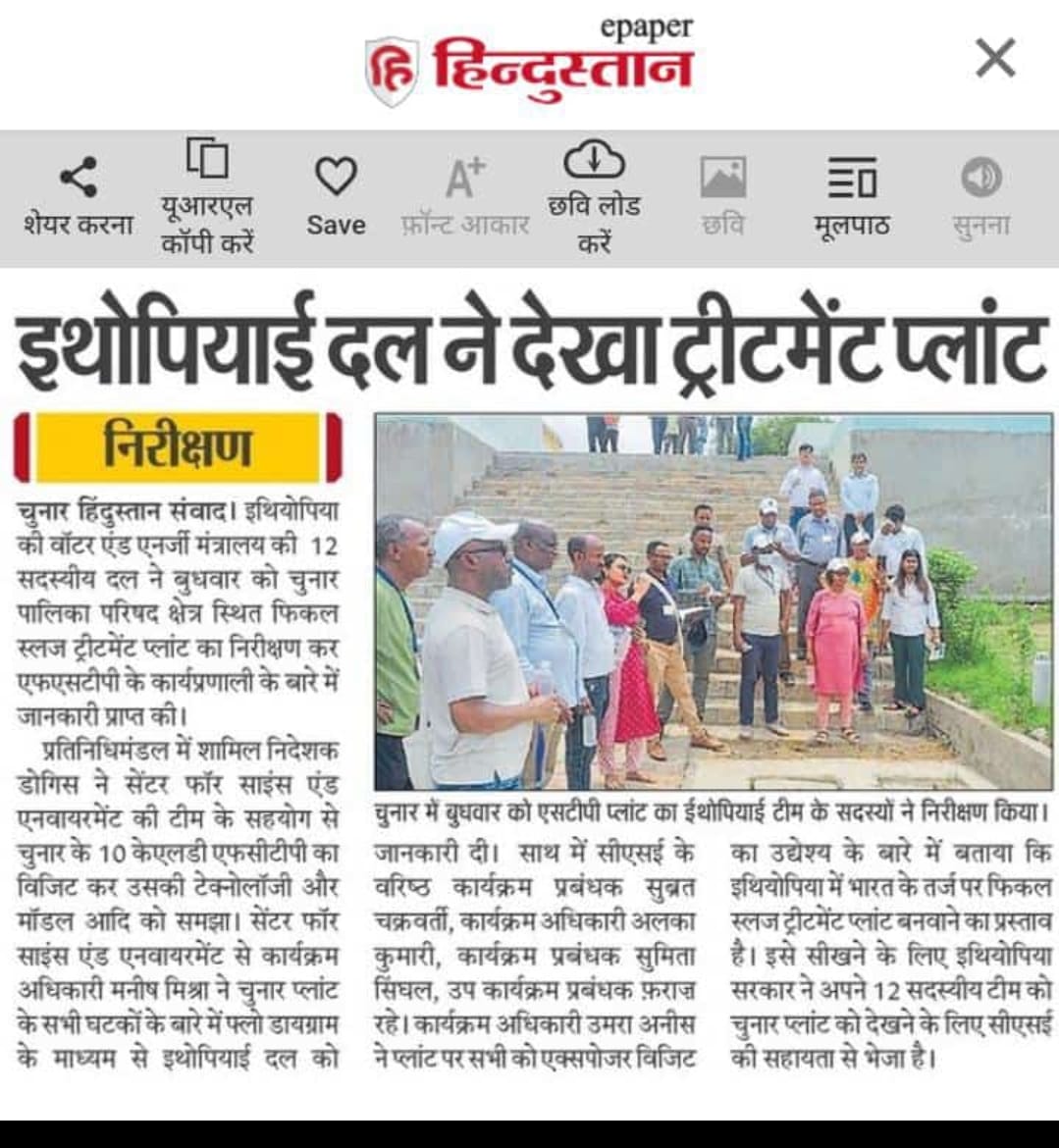
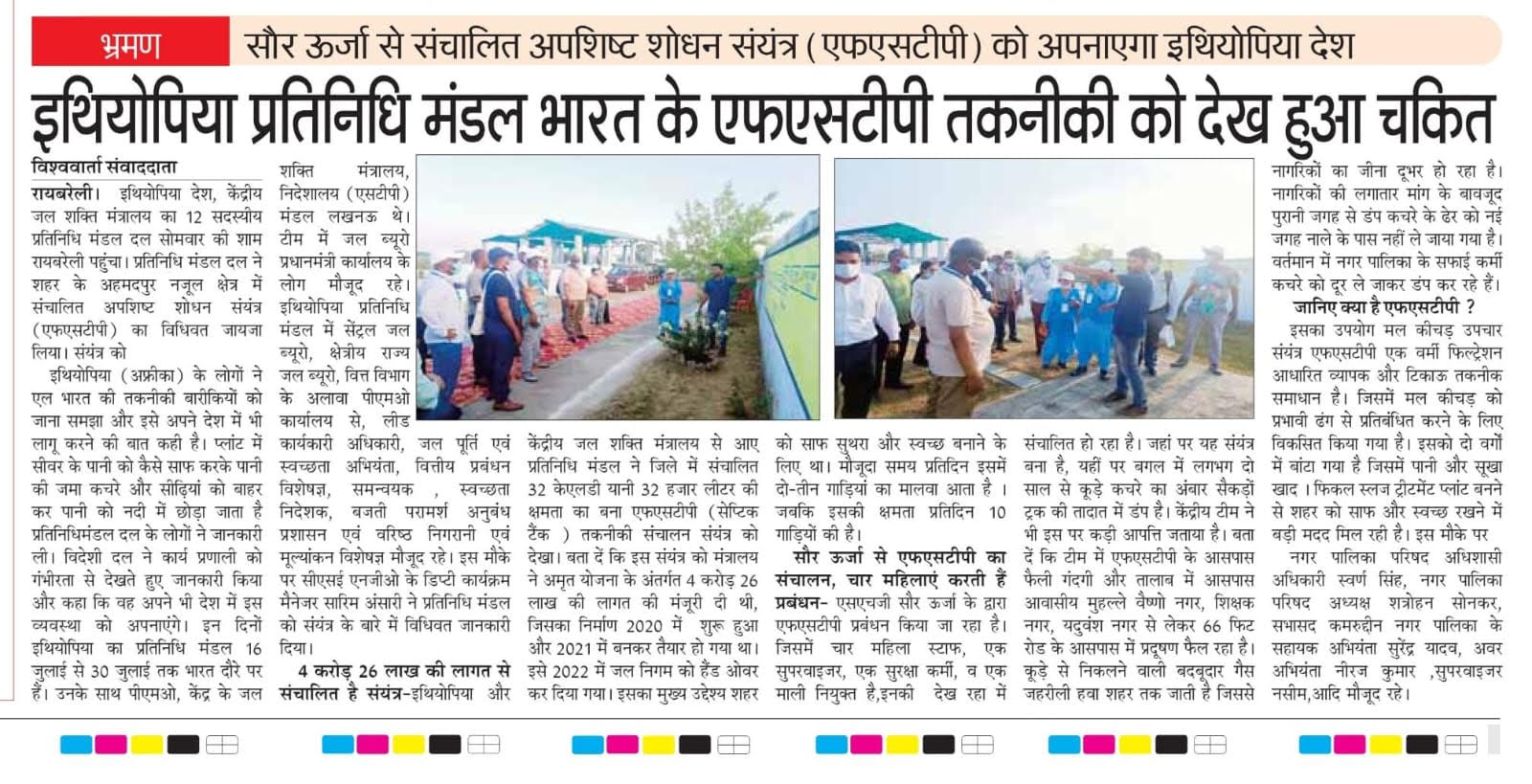
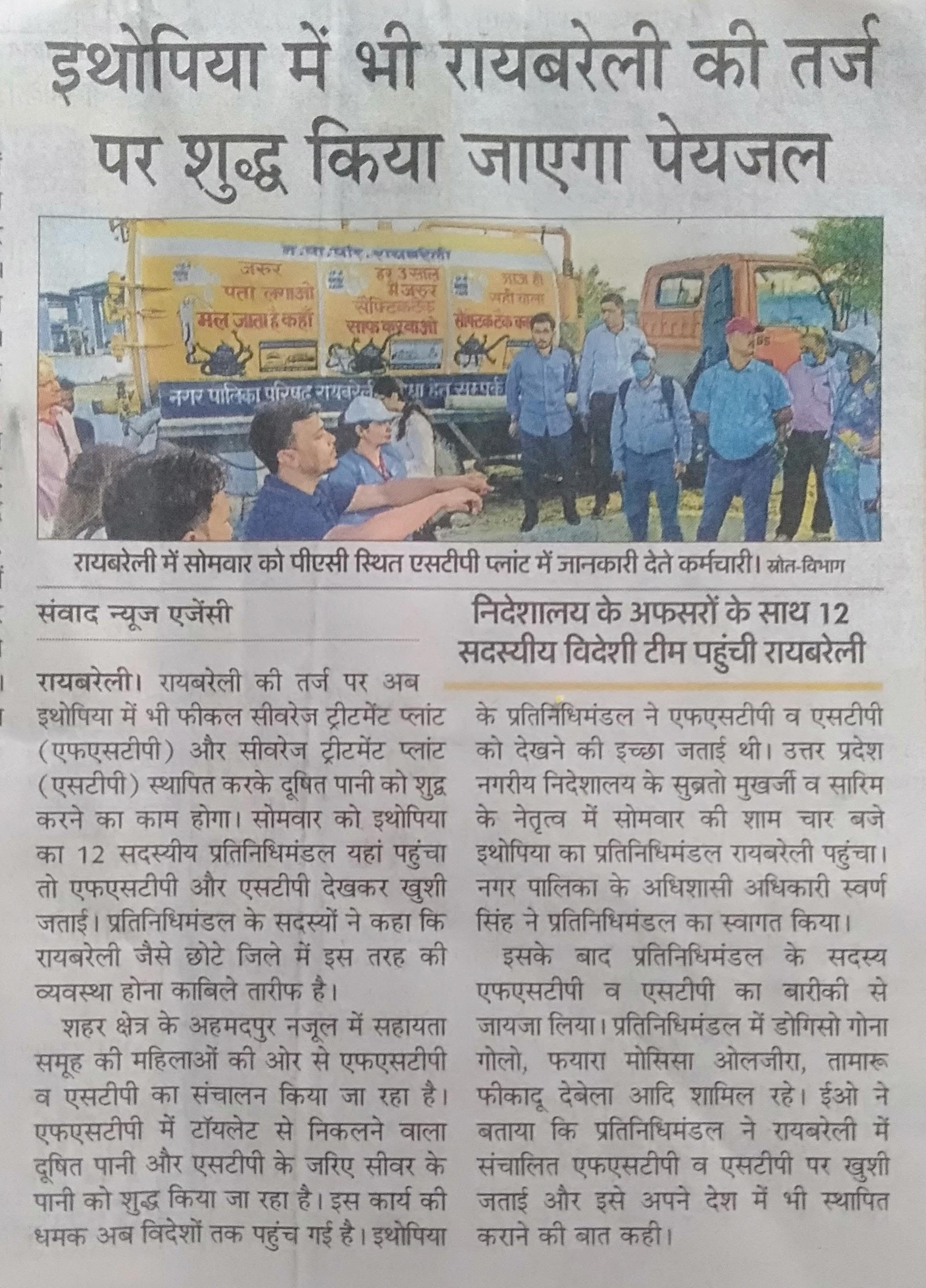
आज दिनांक 25 जुलाई 2024 को जौनपुर नगर पालिका परिषद में अमृत मित्र योजना के तहत स्वयं सहायता समूह की महिलाओं को फीकल स्लज ट्रीटमेंट प्लांट के संचालन और रखरखाव के लिए प्रशिक्षण दिया गया। इस प्रशिक्षण कार्यक्रम में सुपरवाइजर अपर्णा साहू, माली रुकमीना, तथा सफाई मित्र प्रभावती और मंत्रा ने भाग लिया। नगर पालिका परिषद के अधिशासी अधिकारी पवन कुमार ने महिलाओं को प्रोत्साहित करते हुए उनके कार्यों की सराहना की। प्रशिक्षण में सेंटर फॉर साइंस एंड एनवायरमेंट (CSE) से कार्यक्रम अधिकारी अलका कुमारी ने महिलाओं को फीकल स्लज प्रबंधन के बारे में जानकारी दी, जिसमें सेनिटेशन वैल्यू चेन को आधार बनाया गया। महिलाओं को ऑपरेशन एवं मेंटेनेंस से संबंधित व्यक्तिगत सुरक्षा उपकरणों का उपयोग और प्लांट पर ध्यान रखने वाली बातों के बारे में भी बताया गया। CSE के कार्यक्रम अधिकारी और अभियंता मनीष मिश्रा ने शोधन संयंत्र के सभी घटकों के संचालन एवं मेंटेनेंस के बारे में तकनीकी जानकारी दी। प्रशिक्षण कार्यक्रम में नगर पालिका परिषद से सफाई एवं खाद्य निरीक्षक हरिश्चंद्र यादव, अवधेश कुमार, जलकल से अरविंद यादव, स्वच्छ भारत मिशन से खुशबू यादव, और अमृत योजना से यू आई एस घनश्याम मौजूद रहे। डूडा से सी एम एम जितेंद्र कुमार ने एस एच जी महिलाओं को व्यक्तिगत सुरक्षा के महत्व के बारे में जानकारी दी। प्रशिक्षण के उपरांत सी एस ई की टीम ने महिलाओं के साथ प्लांट भ्रमण भी किया। इस प्रशिक्षण कार्यक्रम का उद्देश्य महिलाओं को सशक्त बनाना और स्वच्छता एवं पर्यावरण संरक्षण में उनकी भूमिका को बढ़ावा देना है। इस पहल से जौनपुर नगर पालिका परिषद में स्वच्छता सेवाओं की गुणवत्ता में सुधार की उम्मीद है।
In June, as the India Meteorological Department (IMD) warned of ‘severe heatwave conditions’ sixty-year-old Mohd Zaffer fed fuel to the fire. Zaffer, a master craftsman with three decades of experience making perfumes, was heating large metal pots called deghs, used in the production of Shamama Attar, a rare, traditional scent made in the city of Kannauj, the perfume capital of India. Despite temperatures reaching 45˚C outside, a sweat-drenched Zaffer maintained his focus. The scent-making process involves a simple distillation method. Ingredients are added to a metal pot to simmer on a small furnace, from which steam travels through a wooden pipe to another pot or receiver, which is kept in water to condense the steam. Artisans must simultaneously control the heat and adjust the hot receiver, working perilously close to the furnace and exposing themselves to dangerous levels of heat.
Bloomberg, Para pejabat di Miami-Dade County, Florida, bingung saat ingin mengetahui berapa banyak orang yang meninggal karena cuaca panas ekstrem. Mereka pun meminta bantuan Christopher Ueijo, seorang ahli geografi di Florida State University. Ueijo menggunakan data suhu dan catatan kematian untuk menentukan bahwa antara tahun 2015 dan 2019, panas terik membunuh rata-rata 34 orang per tahun di wilayah tersebut yang seharusnya bisa tidak meninggal dunia. Perkiraannya ini lebih dari 10 kali lipat lebih tinggi daripada angka resmi: Selama periode yang sama, Miami-Dade hanya mengklasifikasikan dua kematian terkait panas. Sekitar setahun kemudian, Ueijo melakukan analisis kedua terhadap data yang sama. Kali ini, ia memperhitungkan peningkatan suhu sebelum puncak gelombang panas untuk menangkap lebih banyak dampak kesehatan awal dan kumulatif. Temuan terbaru, yang diterbitkan pada Mei, sangat berbeda: 600 kematian akibat panas per tahun. "Keduanya adalah studi yang ditinjau oleh rekan sejawat," kata Jane Gilbert, kepala petugas penanggulangan panas untuk Miami-Dade County yang menugaskan kedua analisis tersebut. "Saya bertanya [kepada Ueijo] mana yang harus saya gunakan, dan dia berkata antara 34 dan 600." Baca Juga Gelombang Panas Ekstrem Mengancam 130 Juta Penduduk AS Dilaporkan ke KPK, Bulog & Bapanas Dituduh Rugikan Negara Rp2,9 T Perubahan Iklim Picu Cuaca Ekstrem di China, Ancam Hasil Panen Di antara angka 34 dan 600, inilah letak tantangan utama dalam menghitung kematian akibat panas. Secara resmi tahun ini, tercatat 63 kematian akibat panas di Thailand, setidaknya 143 di India, setidaknya 172 di Meksiko, dan lebih dari 1.300 dalam satu minggu selama ibadah haji di Arab Saudi. Namun secara tidak resmi, angka-angka ini hanyalah sebagian kecil dari dampak nyata panas. Angka resmi biasanya hanya mencakup kasus yang paling jelas - di mana dokter atau pemeriksa medis dapat dengan yakin menarik garis antara panas dan kematian - dan jauh lebih kecil kemungkinannya untuk memperhitungkan kematian di mana suhu berperan secara tidak langsung. Beberapa ambiguitas ini terkait dengan sempitnya cara pelacakan kematian akibat panas, dan beberapa lagi terkait dengan banyaknya kondisi kesehatan yang diperparah oleh kenaikan suhu. Namun hasil akhirnya tetap sama: Lebih banyak orang yang meninggal karena panas, sementara akademisi, tenaga medis, dan pejabat pemerintah kesulitan melacaknya. Ilustrasi suhu panas dunia. "Panas itu rumit," kata Este Geraghty, kepala petugas medis di Esri, yang memproduksi perangkat lunak pemetaan yang digunakan oleh para peneliti dan pejabat pemerintah untuk melacak dampak panas. "Panas dijuluki sebagai pembunuh senyap, dan itu ada alasannya." Cara yang paling umum untuk melacak kematian akibat panas adalah dengan menghitung kematian, di mana panas telah secara resmi diidentifikasi sebagai penyebab utama atau penyebab kematian. Ini adalah pekerjaan Gregory Hess. Sebagai kepala pemeriksa medis di Pima County, Arizona, dia dan timnya mencatat penyebab kematian banyak orang yang meninggal dunia di salah satu wilayah terpanas di Amerika. Tahun lalu, Tucson di Pima County mengalami hampir 90 hari di mana suhu mencapai setidaknya 38°C. "Jadi katakanlah seseorang meninggal karena menembak kepalanya sendiri," kata Hess. "Mengapa orang tersebut meninggal dunia cukup mudah untuk dilacak. Tidak perlu menggunakan banyak kecanggihan." Namun, kematian akibat panas itu berbeda. Bentuk paling langsungnya berasal dari hipertermia, yang memiliki dua bentuk ekstrem: kelelahan akibat panas (heat exhaustion) dan serangan panas (heat stroke). Gejala kelelahan akibat panas termasuk pusing, haus, mual, dan lemas, sementara gejala serangan panas bisa berupa kebingungan dan hilang kesadaran. Serangan panas biasanya terjadi ketika suhu tubuh inti mencapai sekitar 40°C. Tubuh manusia tidak bisa menangani suhu tinggi seperti itu dalam waktu lama, dan akan mulai mengalami gangguan fungsi tanpa pendinginan cepat dan perawatan lainnya. Namun, ada batasan dalam mengidentifikasi hipertermia. Tidak semua orang yang sakit karena panas bisa mendapatkan pertolongan. Jika seseorang meninggal sendirian di rumah atau di taman pada malam hari, suhu tubuh inti mereka kemungkinan akan turun pada saat jenazah ditemukan, kata Sarah Henderson, direktur Pusat Pengendalian Penyakit British Columbia. Dengan kata lain, tanda paling jelas dari serangan panas menghilang. Banyak catatan resmi kematian akibat panas hampir seluruhnya mengandalkan serangan panas yang dapat diidentifikasi. Di Jepang, serangan panas adalah satu-satunya jenis kematian akibat panas yang dilacak oleh Badan Penanggulangan Kebakaran dan Bencana negara tersebut. Di AS, Pusat Pengendalian dan Pencegahan Penyakit melacak kematian akibat panas dengan mengumpulkan informasi dari surat kematian, di mana kematian akibat panas yang dilaporkan sering dikaitkan dengan serangan panas. Datanya terbatas pada warga negara AS, dan "biasanya ada jeda satu tahun sebelum data lengkap tersedia," kata petugas pers CDC Sharleta Stamps. Serangan panas juga merupakan penyebab sebagian besar kematian akibat panas yang dilacak oleh Kementerian Kesehatan dan Kesejahteraan Keluarga India, meskipun sistem rumah sakit setempat juga dapat melaporkan kematian terkait panas. Jika digabungkan, angka lokal seringkali lebih tinggi daripada angka nasional resmi. India memiliki "ambang batas yang cukup tinggi untuk apa yang dapat diklasifikasikan sebagai kematian terkait panas," kata Bhargav Krishna, seorang peneliti di organisasi penelitian Sustainable Futures Collaborative. Penetapan tersebut biasanya memerlukan catatan suhu tubuh yang tinggi dan dokumentasi ekstensif tentang riwayat keluarga dan medis pasien. Keluarga yang terdampak mungkin "berhak atas kompensasi tertentu," kata Krishna, yang dapat menyebabkan dokter menjadi "lebih konservatif dalam menyatakan kematian akibat panas." Cuaca panas ekstrem. (Dok: Bloomberg) Kematian akibat serangan panas adalah jenis kematian akibat panas yang paling mudah dipahami. Kategori lain yang lebih besar adalah apa yang disebut Hess sebagai "kematian akibat faktor panas" (heat-contributed deaths). Bayangkan seseorang mengalami serangan jantung pada hari yang panas, kata Geraghty dari Esri: "Apakah mereka mengalaminya karena cuaca panas atau hanya kebetulan meninggal pada hari yang panas?" Jawabannya tidak selalu mudah ditemukan, dan banyak tempat yang tidak memiliki sumber daya atau kemauan untuk mencoba. Tubuh manusia memiliki dua alat utama untuk menghindari kepanasan: berkeringat, yang melepaskan panas melalui penguapan, dan memompa jantung lebih cepat untuk meningkatkan sirkulasi darah dan memindahkan panas ke kulit. Kelompok mana pun yang tidak bisa menghindari panas - atlet, tunawisma, keluarga berpenghasilan rendah, dan pekerja luar ruangan - semakin rentan seiring dengan kenaikan suhu. Begitu juga orang-orang yang tubuhnya tidak dapat dengan mudah menyesuaikan diri, termasuk bayi dan anak kecil, ibu hamil, orang tua, dan mereka yang memiliki masalah kesehatan tertentu. Penyakit paru obstruktif kronis, penyakit jantung, dan diabetes, misalnya, dapat membatasi kemampuan tubuh untuk tetap sejuk, begitu pula beberapa obat yang digunakan untuk mengobatinya. Tetapi ketika orang yang menderita kondisi tersebut meninggal dalam cuaca panas, penyakit tersebut "lebih mungkin terdaftar sebagai penyebab kematian daripada panas," kata Ueijo. "Covid adalah analogi yang bagus," kata Kristie Ebi, profesor kesehatan global di University of Washington. Karena pengujian dan penyelidikan yang terbatas, banyak kemungkinan kematian terkait Covid hanya dikaitkan dengan penyakit penyerta seperti hipertensi atau diabetes. Efek jangka panjang virus juga menjadi faktor dalam kematian akibat organ yang melemah dan komplikasi kesehatan lama setelah seseorang berhenti dites positif. Bahkan bagi yang sehat secara fisik, tingkat rendah penyakit akibat panas dapat memengaruhi konsentrasi, keseimbangan, dan tingkat energi. Ini meningkatkan risiko bagi siapa saja yang mengalami gangguan akibat penggunaan narkoba atau alkohol, dan bagi mereka yang menderita penyakit mental. "Mengapa kita melihat lebih banyak tunawisma yang meninggal di taman dengan obat-obatan terlarang di bulan Juli dibandingkan Desember? Itu karena panas," kata Hess. Untuk secara akurat menentukan kematian yang disebabkan oleh faktor panas, petugas di setiap langkah proses harus memahami dampak panas dan bersedia untuk mengetahui apakah panas berperan. Minimal, perlu ada catatan resmi kematian - yang tidak selalu ada di daerah pedesaan India, misalnya - yang menyebutkan panas sebagai faktor penyebab. Tetapi jika pemerintah hanya melaporkan kematian akibat panas berdasarkan surat kematian dan pemeriksaan fisik jenazah, "maka kemungkinan besar itu akan menjadi perkiraan yang terlalu rendah," kata Eunice Lo, peneliti perubahan iklim dan kesehatan di Cabot Institute for the Environment, University of Bristol. Meskipun Pima County selalu melacak beberapa kematian akibat panas, Hess mengatakan mereka tidak dapat menyelidiki lebih banyak kasus sampai dia mendapatkan cukup dana untuk mempekerjakan ahli epidemiologi pada tahun 2022. Sejak tahun lalu, Pima County telah membagikan temuan kematian akibat panas mereka secara online dan memperbaruinya setiap bulan. Menurut data tersebut, sejauh ini wilayah tersebut telah mengidentifikasi 24 kematian terkait panas pada 2024. "Saya yakin jumlahnya masih kekurangan," kata Hess. "Menurut saya, kami melakukan yang terbaik yang kami bisa dengan cara kerja sistem, dan yang terbaik yang kami bisa lakukan berarti ini akan lebih baik daripada banyak tempat lain. Tetapi akan ada kematian yang terlewatkan." Inspirasi Hess adalah daerah tetangga Maricopa County, rumah bagi Phoenix dan pemimpin nasional dalam pelacakan kematian akibat panas. Selama bulan-bulan panas, daerah tersebut menerbitkan laporan mingguan tentang kematian akibat panas yang diketahui dan dicurigai. Untuk paruh pertama tahun ini, Maricopa County melaporkan 13 kematian terkait panas yang dikonfirmasi dan 162 lainnya sedang dalam penyelidikan. Pada tahun 2023, terdapat 645 kematian terkait panas. Untuk menyiasati jarangnya panas terdaftar sebagai penyebab resmi kematian, semakin banyak akademisi dan pejabat kesehatan masyarakat menerapkan studi "kematian berlebih" pada kematian akibat panas. Meskipun analisis ini biasanya tidak membantu pelaporan secara real-time, mereka menggunakan metode yang sama seperti yang dilakukan oleh para ahli kesehatan masyarakat untuk mengetahui berapa banyak orang yang meninggal secara langsung atau tidak langsung akibat Covid-19. Untuk menyelesaikan studi kematian berlebih, para ahli menerapkan pemodelan statistik pada data meteorologi lokasi dan catatan kematian resmi selama periode tertentu, baik itu gelombang panas selama seminggu, musim panas tunggal, atau beberapa tahun. Tujuannya adalah untuk "menemukan hubungan antara suhu dan kematian orang," kata Lo. Satu studi semacam itu, yang diterbitkan pada 2021, menemukan bahwa panas menyebabkan sekitar 489.000 kematian berlebih per tahun secara global antara tahun 2000 dan 2019. Setelah gelombang panas pada 2003 menyebabkan lebih dari 70.000 kematian di seluruh Eropa - angka yang ditentukan oleh studi kematian berlebih - Inggris meningkatkan fokusnya pada risiko panas. Sejak 2016, Badan Keamanan Kesehatan negara itu telah menghitung kematian berlebih akibat panas untuk setiap musim panas. Pada tahun 2023, para pejabat memperkirakan ada hampir 2.300 kematian akibat panas berlebih selama lima periode panas. "Bahkan sistem peringatan dini panas muncul karena gelombang panas 2003," kata Lo.
Every few years since 2013, the Centre for Science and Environment (CSE) in New Delhi has put out a glossy volume of short essays and recipes, building what has become the First Food series of biodiversity-focussed guides to cooking and eating. The latest (2023) and the fourth addition to the series promises a perspective on Future of Taste, though all volumes have been broadly focussed on expanding tastes and opening palates to unusual local and native ingredients, becoming familiar with their nutraceutical properties—and, most importantly, their culinary uses. The CSE is perhaps our best-known independent environmental research, advocacy and consumer watch group; under the direction of Sunita Narain, and via its Down to Earth magazine, it has long drawn spotlights onto India’s transforming food systems and their complex environmental and human impacts. The heavily commercialised model of industrial agriculture that turns food farming into yet another mode of value-extraction, creates debilitating dependencies and enormous environmental burdens. Future of Taste First Food series Edited by Sunita Narain Centre for Science and Environment Pages: 258 Price: Rs. 950 India, however, remains home still to a great many smaller, livelihood-focussed farms and production centres that continue to maintain kinder and more intimate relationships with soil, plants, livestock, seasons, and communities, effectively safeguarding the nutritional richness and cultural rootedness of traditional foods and foodways. The CSE, and the First Food series in general, sees much hope in such realities. If the “connection between food, livelihood, nutrition, and nature” is to be reset, India has yet viable pathways to that goal. Also Read | Tastes of the earth There is also the need to consider more keenly what it means to farm and eat in the face of climate change. While earlier First Food volumes increased exposure to biodiversity and leaf-to-root use of plants particularly in traditional food economies, this latest Future of Taste edition bundles all of the above as routes to “climate responsibility” and ultimately, resilience. This means not only that farms should be less input-driven and more focussed on restorative and regenerative methods, but equally that consumers should eat in ways that encourage such practices. Food security in a “climate risked” world depends not only on strong governmental policy, but equally on consumer choices—what we decide to put on our plates, day-to-day. The book’s essays draw our attention to the biodiversity loss in several local contexts and turns the focus onto us: our values and decisions as eaters can help undo at least some of the damage. Cover of Future of Taste Cover of Future of Taste | Photo Credit: Special Arrangement So, Future of Taste proceeds much as the other Food First volumes have, laying out breakfast and meals, condiments and beverages for us to try, alongside orienting essays about specific ingredients which comprise “the future of taste” (the book’s title follows a pattern of the prior volumes and has no predictive, futurist elements). There is a predictable focus on millets, but also generally on plants which are hardy survivors, inherently braced for climate change. At each turn, we learn new things about even familiar ingredients. Did you know that you can make pakodas out of bitter gourd leaves? Or gulmohar flowers! Stir-fry the stolon of taro root (arbiin Hindi, cheppankazhangu in Tamil)? Or that the tamarind seeds we typically discard are protein- and mineral-rich? Do not forget to make a chutney out of wood apple (kaitha in Hindi, vilampazham in Tamil), the book reminds us, or a sharbat out of black currants (jamun in Hindi, navalpazham in Tamil) when they each are in season. It offers cues to our collective memory of older foodways, and many prompts to broaden our understandings of what counts as food in the plant world. The volume also makes a concerted effort to insert wild, hyper-local, and other relatively unknown ingredients into our culinary repertoires. Radhuni (wild celery) is beloved in Bengal, akarkara (pellitory) in the North-east, but not much beyond. Tree tomatoes or tamarillos (mara-thakkali), originally from the Andean regions of South America, have “gone native” in Nagaland, but make only infrequent appearances elsewhere. Other local plants like wild turmeric flowers and the Himalayan cherry in Manipur, or the hill lemons of Uttarakhand can bring to us the tastes of mountain terroir. While we open ourselves to all these different flavours and the prospects of reaping nutraceutical benefits, First Food authors keep ecosystemic realities in our sights: each plant’s drought tolerance, ease of growth, or vulnerability; or how whole plants provide both food and livelihoods to entire communities. In all these ways, this latest First Food compendium packs an impressive information punch. But the impression is just that, of a book packed with information; it is left to readers to figure out what matters in their local contexts, and how to grasp, remember, and utilise so much detail. Plant-forward cookbooks that offer what the American food writer Deborah Madison once termed “vegetable literacy” (in a cookbook of the same name) are rare, but these days there are dozens of YouTube channels showcasing village ingredients and country cooking. Dozens more on social media regularly feature the “lost” wonders of local, seasonal, tribal, or wild foods. In other words, the information gathered in this volume and much more of its kind is already plentiful, even overwhelmingly so. The only question remaining is how that information can be re-compiled in the most effective, engaging, and, yes, even entertaining ways so that we as consumers absorb it and—most importantly—put it to daily use. Also Read | The great Indian protein inequality Considered thus, Future of Taste misses a valuable opportunity to rethink meaningful information delivery in printed form. The volume’s many long-form essays could well have been punctuated by summaries, diagrams or other insets that would have reduced the density of fact reportage, facilitated unfamiliar plant recognition, and more effectively emphasised takeaways. The medicinal properties of ingredients are at times presented only generally and without actual guidelines for use. For instance, knowing that kaitha pulp inhibits the production of breast cancer cells or that maan dhaniya (wild coriander) treats nerve problems is of no practical value unless we can put this knowledge to direct therapeutic use. To boot, the book offers no means to identify foods to tackle specific ailments, look up ingredients from specific regions, or visually recognise named species. It does not help that the phytochemical profiles of various plants, associated research data and citations are all given in-line. For example, “According to research published in the June 2012 issue of Tropical Journal of Pharmacological Research…,” or sentences like it noting researcher positions and affiliations, are far too many in the text, adding distracting detail that makes for tedious reading. Future of Taste holds out the possibility of celebrating the wondrous relationship between plant worlds, what we find in markets, what grows wild or in our backyard gardens, and what we cook up in the kitchen for our health, adaptability and resilience. But this prospect remains largely unrealised. Lacklustre images, the incongruously grand spotlight on “First Food Cuisiniers” (whose relationship to this project or even to cuisine at times is entirely obscure) in a volume of locally sourced recipes, and the unparcelled information stream each convey the feel of another conventional cookbook—which First Food is anything but. One hopes that the next addition to this series will break the pre-set “taste” groove, and guide us more boldly into the futures that plants hold for our collective sustenance and well-being. Deepa S. Reddy is a cultural anthropologist with the University of Houston-Clear Lake. She blogs about native ingredients, ethnobotany, and food cultures on paticheri.com.
Come September, the UN General Assembly will be hosting a High-Level Meeting in New York on Antimicrobial Resistance (AMR) — member states are already negotiating on the draft political declaration which is expected to be adopted at the Meeting. Centre for Science and Environment (CSE), which has been closely monitoring and contributing to the strategies for global action on AMR, has been advocating that priorities and needs of low- and middle-income countries (LMICs) must be recognised and acknowledged in the draft declaration. “It is critical that the ongoing discussions around the draft political declaration are adequately informed about the priorities of LMICs, which clearly have different challenges and possibilities compared to other countries,” says Amit Khurana, Director, Sustainable Food Systems Programme, CSE. The New Delhi (India)-based think tank had recently organised a global webinar on this issue. AMR — antibiotic resistance in particular — is a silent pandemic that is one of the biggest public health threats of current times. The misuse and overuse of antibiotics in humans, animals and crops is making antibiotics ineffective – bacteria are increasingly becoming resistant to antibiotics. About five million deaths worldwide were associated with antibiotic resistance in 2019. Speaking at the webinar organised by CSE, Jean Pierre Nyemazi, Director a.i., Global Coordination and Partnership & Quadripartite Joint Secretariat on AMR, World Health Organization, Switzerland said: “The time is now if we want to continue advocate for it to come in the shape that we want. We need to work through the member states’ negotiators to try to raise the urgency of committing very bold, specific and measurable actions.” “Science, political commitment, narrative and financing are the four key points we need to move forward on the national action plans,” says Sujit Chandy, Executive Director, International Centre for Antimicrobial Resistance Solutions, Denmark, one of the speakers at the webinar. Chandy was sharing what needs to be done for effective implementation and financing of national action plans on AMR, particularly in LMICs. This, he says, would help in addressing context-specific challenges and developing sustainable solutions in these countries. According to Leena Menghaney, IP Advisor and South Asia Head, Medecins Sans Frontieres, Access Campaign, India, in addition to prevention, “there needs to be an equal amount of attention on access issues that actually affect people directly in terms of diagnostics access and treatment access”. CSE’s Programme Manager for Sustainable Food Systems Rajeshwari Sinha stressed on making prevention “the basis for interventions in and agenda for LMICs. Prevention approaches are cost-effective in most cases and the returns on investments are much higher”. CSE has also recently published and released a new report on ‘Priorities of Low- and Middle-Income Countries (LMICs) to inform the High-Level Meeting on AMR at UNGA 2024’. The action points in the report focus on areas such as financing of national action plans, antibiotic R&D and access, food systems transformation through preventive approach, managing antibiotic pollution from manufacturing etc. The report also reflects on key enablers and challenges at the national level that would help meet targets set for global action. “The UNGA High-Level Meeting on AMR is an opportune moment for LMICs to put their voice forward, and this opportunity should not be missed. We appeal to the member countries to listen to this voice,” says Khurana.