
Cse In News

India To Lose 0.05% of GDP Due To EU's Carbon Tax, Should Impose 'Historical Polluter Tax' on EU: Report

The European Union’s Carbon Border Adjustment Mechanism (CBAM) will impose an additional 25 per cent tax on carbon-intensive goods exported from India to the EU, a new report said on Wednesday and recommended a counter-tax on rich countries historically responsible for climate change. CBAM is the EU’s proposed tax on energy-intensive products, such as iron, steel, cement, fertilizers and aluminium imported from countries like India and China. This tax burden would represent 0.05 per cent of India’s GDP, according to the report titled ”The Global South’s response to a changing trade regime in the era of climate change” by an independent think tank — Centre for Science and Environment (CSE). These findings are based on data from the past three years (2021-22, 2022-23, and 2023-24). The tax is based on the carbon emissions generated during the production of these goods. The EU argues that this mechanism creates a level playing field for domestically manufactured goods, which must adhere to stricter environmental standards, and helps reduce emissions from imports. But other nations, particularly developing countries, are worried this would harm their economies and make it too expensive to trade with the bloc. The move has also sparked debate at multilateral forums, including UN climate conferences, with developing countries arguing that under UN climate change rules countries cannot dictate how others should reduce emissions. Trishant Dev, Programme Officer (Climate Change) at CSE, said that India’s CBAM-covered goods exports to the EU accounted for 9.91 per cent of its total goods exports to the bloc in 2022-23. He said 26 per cent of India’s aluminium and 28 per cent of its iron and steel exports were destined for the EU in 2022-23. These sectors dominate the basket of CBAM-covered goods shipped from India to the EU. In 2022-23, the exports of CBAM-covered goods to the EU made up about one-fourth (25.7 per cent) of India’s total such goods exported globally, which is significant for the industries operating in these sectors. Currently, hydrogen and electricity are not exported from India to the EU. Of India’s total goods exported worldwide, CBAM-covered goods exports to the EU constitute only about 1.64 per cent. The report recommended a counter-tax on rich countries historically responsible for climate change. Countries that have not historically contributed to the climate crisis may consider imposing a ’historical polluter tax’ on trade partners to fund their own decarbonisation efforts, the report said. This tax could be levied on trade partners responsible for a significant share of cumulative historical carbon dioxide emissions since the pre-industrial period, Avantika Goswami, who leads CSE’s climate change programme and the report’s co-author, said. Historical trends indicate that carbon-intensive production has shifted from developed to developing countries, creating disparities in emissions intensity between nations. Today’s differences in emissions intensity are also tied to historical emissions, as the Global North utilised fossil fuels like coal during the early stages of the Industrial Revolution which enabled it to amass wealth and grow its economies.
Tax: सीबीएएम के कारण भारत को GDP का .05 % नुकसान, रिपोर्ट में किया गया दावा

भारत से निर्यात किए जाने वाले कार्बन-सघन सामानों पर यूरोपीय संघ अतिरिक्त 25 प्रतिशत कार्बन बॉर्डर एडजस्टमेंट मैकेनिज्म (सीबीएएम) कर लगाएगा। यह बात बुधवार को एक रिपोर्ट में बताई गई है। रिपोर्ट में जलवायु परिवर्तन के लिए ऐतिहासिक रूप से जिम्मेदार अमीर देशों पर जवाबी कर लगाने की भी सिफारिश की गई है। क्या है CBAM? सीबीएएम भारत और चीन जैसे देशों से आयातित लोहा, इस्पात, सीमेंट, उर्वरक और एल्यूमीनियम जैसे ऊर्जा-गहन उत्पादों पर यूरोपीय संघ का प्रस्तावित कर है। थिंक टैंक - सेंटर फॉर साइंस एंड एनवायरनमेंट ने "द ग्लोबल साउथ रिस्पॉन्स टू चेंजिंग ट्रेड रिजिम इन द एरा ऑफ क्लाइमेट चेंज’’ शीर्षक वाली रिपोर्ट जारी की है। इस रिपोर्ट के मुताबिक सीबीएएम कर भारत के सकल घरेलू उत्पाद का 0.05 प्रतिशत होगा। ये निष्कर्ष पिछले तीन वर्षों (2021-22, 2022-23 और 2023-24) के आंकड़ों पर आधारित हैं।यह कर वस्तुओं के उत्पादन के दौरान उत्पन्न कार्बन उत्सर्जन पर आधारित है। यूरोपीय संघ बोला- सख्त पर्यावरण मानकों का पालन होगा यूरोपीय संघ का कहना है कि यह कर व्यवस्था घरेलू स्तर पर निर्मित वस्तुओं के लिए एक समान अवसर प्रदान करेगी। इसके साथ ही सख्त पर्यावरण मानकों का पालन करना होगा और आयात से उत्सर्जन को कम करने में मदद करता है। हालांकि इस कर व्यवस्था के कारण अन्य देश, विशेष रूप से विकासशील देश, चिंतित हैं। इन देशों का मानना है कि इस कर व्यवस्था से उनकी अर्थव्यवस्थाओं को नुकसान होगा और इस गुट के साथ व्यापार करना बहुत महंगा हो जाएगा। CBAM कर के कारण बहस छिड़ी इस कदम ने संयुक्त राष्ट्र जलवायु सम्मेलनों सहित बहुपक्षीय मंचों पर भी बहस छेड़ दी है। जिसमें विकासशील देशों का तर्क है कि संयुक्त राष्ट्र जलवायु परिवर्तन नियमों के तहत कुछ देश यह निर्देश नहीं दे सकते हैं कि दूसरे देशों को उत्सर्जन कैसे कम करना चाहिए। CEA भी जता चुके हैं आपत्ति मुख्य आर्थिक सलाहकार (सीईए) वी अनंत नागेश्वरन ने कहा, जलवायु परिवर्तन से निपटने के लिए विकसित देशों के कार्बन सीमा समायोजन व्यवस्था (सीबीएएम) जैसे उपाय विकासशील अर्थव्यवस्थाओं के लिए उचित नहीं हैं।

भारत से EU को एक्सपोर्ट होने वाली इन वस्तुओं पर लगेगा 25% टैक्स, कारोबारियों को सता रही बड़ी चिंता

सीएसई के जलवायु परिवर्तन कार्यक्रम का नेतृत्व करने वाली अवंतिका गोस्वामी ने कहा कि यूरोपीय संघ को सीबीएएम के दायरे में आने वाली वस्तुओं का भारत से निर्यात 2022-23 में ईयू को होने वाले कुल माल निर्यात का 9.91 प्रतिशत था। Hindi Newsपैसाबिज़नेसभारत से EU को एक्सपोर्ट होने वाली इन वस्तुओं पर लगेगा 25% टैक्स, कारोबारियों को सता रही बड़ी चिंता भारत से EU को एक्सपोर्ट होने वाली इन वस्तुओं पर लगेगा 25% टैक्स, कारोबारियों को सता रही बड़ी चिंता सीएसई के जलवायु परिवर्तन कार्यक्रम का नेतृत्व करने वाली अवंतिका गोस्वामी ने कहा कि यूरोपीय संघ को सीबीएएम के दायरे में आने वाली वस्तुओं का भारत से निर्यात 2022-23 में ईयू को होने वाले कुल माल निर्यात का 9.91 प्रतिशत था। Edited By: Pawan Jayaswal Updated on: July 17, 2024 23:43 IST Follow us onभारत से ईयू को निर्यात- India TV Paisa Photo:PIXABAY भारत से ईयू को निर्यात यूरोपीय संघ (EU) की कार्बन सीमा समायोजन प्रणाली के तहत भारत से ईयू को निर्यात की जाने वाली ऊर्जा-गहन वस्तुओं पर 25 प्रतिशत अतिरिक्त कर लगाया जाएगा। एक रिपोर्ट में बुधवार को यह जानकारी दी गई। स्वतंत्र शोध संस्थान सेंटर फॉर साइंस एंड एनवायरनमेंट (सीएसई) की एक रिपोर्ट के अनुसार यह कर का बोझ भारत के सकल घरेलू उत्पाद (जीडीपी) का 0.05 प्रतिशत होगा। यह निष्कर्ष पिछले तीन साल (2021-22, 2022-23 और 2023-24) के आंकड़ों पर आधारित है। क्या है CBAM यूरोपीय संघ की कार्बन सीमा समायोजन प्रणाली (सीबीएएम) भारत और चीन जैसे देशों से आयातित लोहा, इस्पात, सीमेंट, उर्वरक और एल्युमीनियम जैसे ऊर्जा-गहन उत्पादों पर ईयू का प्रस्तावित कर है। कर इन वस्तुओं के उत्पादन के दौरान होने वाले कार्बन उत्सर्जन पर आधारित है। यूरोपीय संघ का तर्क है कि यह प्रणाली घरेलू स्तर पर विनिर्मित वस्तुओं के लिए एक समान अवसर प्रदान करती है। इसके तहत सख्त पर्यावरण मानकों का पालन करना होगा। फलत: यह आयात से उत्सर्जन को कम करने में मदद करता है। विकासशील देश इसलिये हैं चिंतित लेकिन विशेष रूप से विकासशील देश इस बात से चिंतित हैं कि इससे उनकी अर्थव्यवस्थाओं को नुकसान होगा और यूरोपीय संघ के साथ व्यापार करना बहुत महंगा हो जाएगा। इस कदम ने संयुक्त राष्ट्र जलवायु सम्मेलनों सहित बहुपक्षीय मंचों पर भी बहस छेड़ दी है। विकासशील देशों का तर्क है कि संयुक्त राष्ट्र जलवायु परिवर्तन नियमों के तहत देश यह निर्देश नहीं दे सकते हैं कि दूसरों को उत्सर्जन कैसे कम करना चाहिए। कितना होता है भारत से निर्यात सीएसई के जलवायु परिवर्तन कार्यक्रम का नेतृत्व करने वाली अवंतिका गोस्वामी ने कहा कि यूरोपीय संघ को सीबीएएम के दायरे में आने वाली वस्तुओं का भारत से निर्यात 2022-23 में ईयू को होने वाले कुल माल निर्यात का 9.91 प्रतिशत था। उन्होंने कहा कि भारत का 26 प्रतिशत एल्युमीनियम और 28 प्रतिशत लोहा तथा इस्पात निर्यात 2022-23 में यूरोपीय संघ को किया गया था। दुनियाभर में निर्यात किए जाने वाले भारत के कुल माल में से यूरोपीय संघ को सीबीएएम के दायरे में आने वाले सामान का निर्यात केवल 1.64 प्रतिशत है।

EU's carbon tax mechanism expected to cost India 0.05% of GDP: Report

The European Union's Carbon Border Adjustment Mechanism (CBAM) will impose additional 25 per cent tax on energy-intensive goods exported from India to the EU, a new report said on Wednesday. This tax burden would represent 0.05 per cent of India's GDP, according to the report titled "The Global South's response to a changing trade regime in the era of climate change" by independent think tank Centre for Science and Environment (CSE). These findings are based on data from the past three years (2021-22, 2022-23, and 2023-24). CBAM is the EU's proposed tax on energy-intensive products, such as iron, steel, cement, fertilizers, and aluminum, imported from countries like India and China. The tax is based on the carbon emissions generated during the production of these goods. The EU argues that this mechanism creates a level playing field for domestically manufactured goods, which must adhere to stricter environmental standards, and helps reduce emissions from imports. But other nations, particularly developing countries, are worried this would harm their economies and make it too expensive to trade with the bloc. The move has also sparked debate at multilateral forums, including UN climate conferences, with developing countries arguing that, under UN climate change rules, countries cannot dictate how others should reduce emissions. Avantika Goswami, who leads CSE's climate change programme, said that India's CBAM-covered goods exports to the EU accounted for 9.91 per cent of its total goods exports to the bloc in 2022-23. She said 26 per cent of India's aluminum and 28 per cent of its iron and steel exports were destined for the EU in 2022-23. These sectors dominate the basket of CBAM-covered goods shipped from India to the EU. In 2022-23, the exports of CBAM-covered goods to the EU made up about one-fourth (25.7 percent) of India's total such goods exported globally, which is significant for the industries operating in these sectors. Currently, hydrogen and electricity are not exported from India to the EU. Of India's total goods exported worldwide, CBAM-covered goods exports to the EU constitute only about 1.64 percent.

EU's Carbon Tax to Cost India 0.05% of GDP, Says New Report

The European Union's Carbon Border Adjustment Mechanism (CBAM) will introduce a 25 per cent tax on energy-intensive goods exported from India to the EU, according to a recent report. This tax is expected to impact 0.05 per cent of India's GDP, as per the findings by the Centre for Science and Environment (CSE). The report titled "The Global South's response to a changing trade regime in the era of climate change" bases its conclusions on data from 2021-22, 2022-23, and 2023-24. CBAM targets products like iron, steel, cement, fertilisers, and aluminium imported from countries such as India and China. The tax is calculated based on the carbon emissions produced during the manufacturing of these goods. The EU claims this mechanism ensures fair competition for locally made products that must comply with stricter environmental regulations and aims to cut down emissions from imports. Impact on Indian Exports Avantika Goswami, who heads CSE's climate change programme, highlighted that India's CBAM-covered goods exports to the EU made up 9.91 per cent of its total goods exports to the bloc in 2022-23. She noted that 26 per cent of India's aluminium and 28 per cent of its iron and steel exports were directed to the EU during this period. These sectors are significant contributors to the CBAM-covered goods shipped from India to the EU. In 2022-23, CBAM-covered goods exports to the EU represented about one-fourth (25.7 per cent) of India's total such goods exported globally. This is crucial for industries operating within these sectors. However, hydrogen and electricity are not currently exported from India to the EU.

India to lose 0.05% of GDP due to CBAM, should impose 'historical polluter tax' on EU: Report

New Delhi: The European Union's Carbon Border Adjustment Mechanism (CBAM) will impose an additional 25 per cent tax on carbon-intensive goods exported from India to the EU, a new report said on Wednesday and recommended a counter-tax on rich countrie... Trishant Dev, Programme Officer (Climate Change) at CSE, said that India's CBAM-covered goods exports to the EU accounted for 9.91 per cent of its total goods exports to the bloc in 2022-23.

India Faces Impact of EU's Carbon Border Tax With Potential Countermeasures

The European Union's Carbon Border Adjustment Mechanism (CBAM) will impose a 25% tax on carbon-intensive goods exported from India to the EU, according to a new report released on Wednesday. The report also recommends that India impose a counter-tax on wealthy countries historically responsible for climate change. CBAM targets energy-intensive products like iron, steel, cement, fertilizers, and aluminium imported from countries such as India and China. This additional tax would cost India approximately 0.05% of its GDP, as per the report titled 'The Global South's Response to a Changing Trade Regime in the Era of Climate Change' by the Centre for Science and Environment (CSE). The EU argues that CBAM ensures a level playing field for domestic products, which follow stricter environmental standards, while reducing emissions from imports. However, developing countries fear the economic stress and trade barriers this mechanism could create. The move has sparked debate at forums like UN climate conferences, where developing nations argue that such rules should not dictate emission reduction methods for other countries.

India to lose 0.05 pc of GDP due to CBAM should impose 'historical polluter tax' on EU Report

The European Union's Carbon Border Adjustment Mechanism (CBAM) will impose an additional 25 per cent tax on carbon-intensive goods exported from India to the EU, a new report said on Wednesday and recommended a counter-tax on rich countries historically responsible for climate change. CBAM is the EU's proposed tax on energy-intensive products, such as iron, steel, cement, fertilizers and aluminium imported from countries like India and China. This tax burden would represent 0.05 per cent of India's GDP, according to the report titled "The Global South's response to a changing trade regime in the era of climate change" by an independent think tank -- Centre for Science and Environment (CSE). These findings are based on data from the past three years (2021-22, 2022-23, and 2023-24). The tax is based on the carbon emissions generated during the production of these goods. The EU argues that this mechanism creates a level playing field for domestically manufactured goods, which must adhere to stricter environmental standards, and helps reduce emissions from imports. But other nations, particularly developing countries, are worried this would harm their economies and make it too expensive to trade with the bloc. The move has also sparked debate at multilateral forums, including UN climate conferences, with developing countries arguing that under UN climate change rules countries cannot dictate how others should reduce emissions. Trishant Dev, Programme Officer (Climate Change) at CSE, said that India's CBAM-covered goods exports to the EU accounted for 9.91 per cent of its total goods exports to the bloc in 2022-23. He said 26 per cent of India's aluminium and 28 per cent of its iron and steel exports were destined for the EU in 2022-23. These sectors dominate the basket of CBAM-covered goods shipped from India to the EU. In 2022-23, the exports of CBAM-covered goods to the EU made up about one-fourth (25.7 per cent) of India's total such goods exported globally, which is significant for the industries operating in these sectors. Currently, hydrogen and electricity are not exported from India to the EU. Of India's total goods exported worldwide, CBAM-covered goods exports to the EU constitute only about 1.64 per cent. The report recommended a counter-tax on rich countries historically responsible for climate change. Countries that have not historically contributed to the climate crisis may consider imposing a 'historical polluter tax' on trade partners to fund their own decarbonisation efforts, the report said. This tax could be levied on trade partners responsible for a significant share of cumulative historical carbon dioxide emissions since the pre-industrial period, Avantika Goswami, who leads CSE's climate change programme and the report's co-author, said. Historical trends indicate that carbon-intensive production has shifted from developed to developing countries, creating disparities in emissions intensity between nations. Today's differences in emissions intensity are also tied to historical emissions, as the Global North utilised fossil fuels like coal during the early stages of the Industrial Revolution which enabled it to amass wealth and grow its economies. The imposition of a CBAM overlooks this historical context and unfairly penalises the Global South. It is not retaliation, but rather a necessary course correction for the South to impose costs on the North for years of cheap polluting energy use, offshoring, and reliance on inexpensive offsets, Goswami said. The CSE report also recommended collecting a carbon tax domestically to avoid being taxed in Europe. Countries like India could institute their own carbon tax on exports of CBAM products destined for the EU or any country imposing a carbon border tax. Revenues generated from a domestic carbon tax could be directed into a government-managed fund to support the decarbonisation efforts of Indian industries. By collecting a carbon tax domestically, they said India can exert greater control over its mitigation strategies and achieve decarbonization more effectively.

Biogas innovators honoured at awards ceremony

The winners of this year’s Anaerobic Digestion and Biogas Industry awards were recently announced during the World Biogas Expo and Summit 2024 at Birmingham NEC. Winning the Health and Safety category was Marches Biogas with Dmr Cymru Welsh Water (DCWW) being highly commended. The Women in Biogas category, sponsored by Shell Energy, was won by Katrin Pütz at (B)energy with Alex Dragonetti, Christine Mapp, Deanna Martin, Helen Edwards and Mantopi Martina de Porres Lebofa highly commended. The AD Hero of the Year, sponsored by Future Biogas, went to Christopher Kellner, while Marches Biogas collected Best Anaerobic Digestion/Biogas Support. Winner of Net Zero Circular Solutions (sponsored by Hexagon Agility) was Madrid City Council’s AD Complex, the Centre for Science and Environment (CSE) collected the Education Campaign of the Year award for advancing CBG and biomethane projects, while Electrochaea’s Biomethanation Technology received the Research and Innovation award. Fylde Fresh and Fabulous AD facility was honoured for having the Best Biogas Plant Below 1MWe and Cocal Energia won the corresponding award for over 1MWe. O Biodigestor Sertanejo won the Micro AD Initiative and David Payne from Zebra EM was nominated AD Rising Star. AG Image for 355436015 The awards were co-organised by the Anaerobic Digestion and Bioresources Association (ADBA) in partnership with World Biogas Association (WBA). WBA Chief Executive Charlotte Morton OBE said each nominee has demonstrated pioneering advancements, operational excellence and a commitment to sustainability, setting new benchmarks in the biogas industry. “Their contributions underscore the dynamic progress and potential of AD and biogas technologies in addressing global energy and environmental challenges. This year’s shortlist not only reflects the industry’s current achievements but also its promising future,” she said. During the ceremony, host Chris Hines MBE, sustainability pioneer and co-founder of Surfers Against Sewage, spoke about his decades campaigning for sustainable wastewater management and praised the AD and biogas industry for creating sustainable solutions, supporting healthy rivers and seas. His message resonated strongly with fellow guest speaker and avid surfer Clark Dearson, the 11-year-old Child Prime Minister of the UK Children’s Parliament, who spoke passionately about his own love of the sea and “inspiring power” that AD and biogas solutions provide.

A paradoxical turn

Why are Europe’s young voters moving towards right-wing parties? I ask this because it is the young who are angry about inaction on climate change, and yet they are voting for parties that are most in denial of this action. Why this paradox? What does it mean for our increasingly warm and at-risk Planet? In the June 2024 European Parliament elections, voters under 30 years gave their support to what are termed far-right parties, like the Alternative Fur Deutschland (AfD) in Germany, National Rally in France, Vox in Spain, the Brothers of Italy, Enough in Portugal, Vlaams Belang in Belgium, Finns Party in Finland and others. In many instances, it was a swing from the green vote in the 2019 elections to the far-right vote in 2024. Does this mean that there is less appetite for climate action among the European youth? Or does it mean that other concerns like unemployment and migration are taking precedence? Or, is it because the youth in Europe believe that far-right parties will still stay the course on climate action? The fact is, Europe is equally impacted by extreme weather events. And its action is not on track to reduce emissions and limit the global temperature rise to the guardrail of 1.5 degrees Celsius above pre-industrial levels. So, the youth, who will inherit this increasingly warmer and catastrophic world are bound to be concerned—in fact, anguished and worried about their future. Climate change is no longer the exclusive domain of the green and left parties. But when you consider far-right parties’ positions on climate change, there is a clear shift in emphasis if not a downright denial. This suggests that there will be greater resistance against measures that are inconvenient and drastic—the kind that are necessary to bend the curve of Planet-destroying emissions. The Dutch Party for Freedom in its manifesto says it should be the people’s choice to eat meat, take a plane or drive a petrol or diesel car—not of the officials in Brussels (where the EU headquarters is located). It goes on to say that people are suffering because of high energy prices, suggesting a rollback on fossil fuel taxes. Other far-right parties have been vocal against the transition from combustion engines or the shift to renewable energy sources, even arguing that this is “unaffordable madness”. Then, there is the movement of European farmers against the use of pesticides or reduction in livestock or the emotive issue of meat consumption that is bringing these parties together. Already, the ambitious Green Deal has been weakened; policies that drive national industrial interests—not climate action—are gaining traction. So, the question is if the young voters will support tough actions on climate change or opt for the so-called win-win solutions—actions that do not impinge on the cost of living or price of fuel or take away choices on their preferred mode of travel. Sadly, hesitant answers are not going to work, given the sheer urgency of the climate crisis and the fact that rich countries, including Europe, have not reduced emissions at the needed scale and pace. What, then, does this mean for our warming world; for Europe’s leadership on climate action? There is another paradox in today’s Europe, one that is resonating across the old industrial world. It is argued that the young are worried about the prospect of immigrants taking over local jobs and culture. They are shifting to the right because these parties say they will stop immigrants from crossing over; they are openly racist in some cases; and they want to maintain the “white” cultural and religious identity of their countries. But the fact is, Europe cannot do without the immigrants that service its economy. It needs the labour that comes from the “other” world to harvest its crops, run its trains and factories, and clean its cities. The “World Migration Report 2024” finds that in 2020, some 87 million international migrants lived in Europe, an increase of 16 per cent over 2015. It says the many wars in our world are adding to this flight of human beings—by the end of 2022, the largest number of migrants into Europe were from war-torn Syria and Ukraine. Then there are the illegal migrants, whose numbers are difficult to estimate but have become evocative symbols of the hordes arriving to displace original inhabitants. The same report points out that slow-onset events because of climate change cause displacement, which is a greater contributor to the reasons people migrate. In other words, if Europe weakens its resolve to take climate action, it will increase the impoverishment of people already crippled by extreme events and losing ability to cope. Remember, this is not a conundrum faced only by Europe. In Donald Trump’s world—there is a prospect that he could win US’ November elections—climate action and immigration are favourite hate-targets. Our world is in trouble, in more than one way. The writer is the Director-General of CSE and editor of DownToEarth. Views expressed are personal

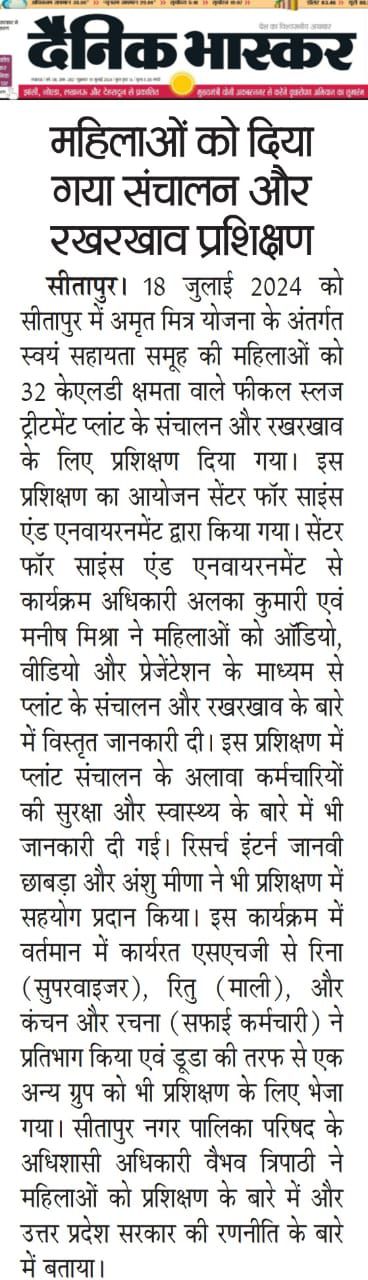
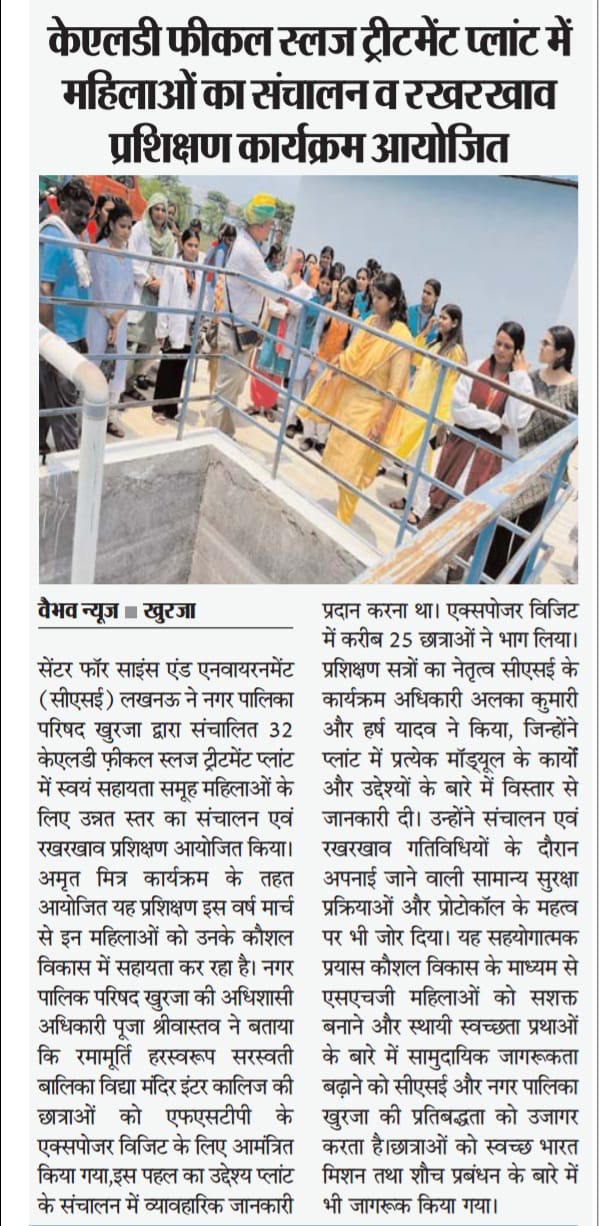
एफएसटीपी का संचालन शुरू, स्वयं सहायता समूह करेगा संचालित

स्वयं सहायत समूह की महिलाएं अब सेप्टिक टैंक सेनिकलनेवालेमलबेका निस्तारण कर खाद बनाएंगी एं । महिलाओं को सेंटर फॉर साइंस एवं एनवायरमेंट की टीम नेप्रशिक्षण दिया। प्रशिक्षण के बाद मंगलवार को महिलाओं नेविधिवत रूप सेकाम करना शुरू किया है।

Rejuvenated lakes & ponds drown irrigation worries, recharge groundwater

Pune: Some rejuvenated rainwater-dependent water bodies in the state have replenished groundwater, turning around peopleʼs lives, The centreʼs nationwide survey is documented in a book called ʻBack from the brink: Rejuvenating Indiaʼs lakes, ponds and tanks—A compendium of success storiesʼ. It looked at 250 lakes, ponds and tanks rejuvenated by central and state govt schemes to know what works so that the best features can become guidelines for future projects.The book was released on June 26.