
Cse In News

Low-floor buses arrive in Chennai after six-year hiatus

CHENNAI: The first fleet of low-floor buses has arrived in Chennai after a hiatus of six years. These distinctive blue-colored buses, stationed at Chromepet depot, has a capacity of 70 passengers (including 35 seats) each and are set to launch next month. Designed to facilitate easy boarding and alighting for disabled passengers, these buses come after activists filed a case against MTC, which initially cited cost constraints, floods or narrow streets as reasons for not procuring low-floor buses. While a standard bus costs approximately 55 lakh, a low-floor costs around 90 lakh. MTC argued in court that drivers will find it difficult to navigate sharp curves in narrow streets and inundated subways during monsoon. Vaishnavi Jayakumar, a prominent disability rights’ activist, had pushed for necessity for inclusive transport solutions, pointing out delays in implementation despite assurances from authorities. On hearing arguments, the court order mandated the addition of at least 350 new low-floor buses and allowed the rest to be standard city buses. Tenders were floated last year and bodies were built in the subsequent months this year. According to sources within the transport department, the low-floor buses are currently undergoing final preparations at the Chromepet bus depot. Pre-delivery inspections are underway, with Regional Transport Office (RTO) registrations expected to be completed shortly. An additional 50 buses are scheduled to augment the fleet within the next month, addressing the urgent need to modernise Chennai’s aging bus network. “The reintroduction of low-floor buses is expected to not only enhance accessibility but also improve public transport patronage, particularly among disabled individuals, senior citizens, and children. Past deployments of low-floor buses in routes such as 21G (Tambaram-Broadway), 576 (Kancheepuram-Saidapet), and 114 (Koyambedu-Red Hills) received positive feedback from commuters for their ease of use and comfort,” said K Anbalagan from Tamil Nadu transport employees (stop-corruption) federation. Apart from Chennai, another 200 low-floor buses are likely to be added to TNSTC Coimbatore and TNSTC Madurai. We also published the following articles recently Inter-city buses entering Delhi to switch to cleaner fuels by year-endTransitioning inter-city buses to cleaner fuels and battery technology is crucial for reducing emissions and pollution in Delhi-NCR, as emphasized by Anumita Roychowdhury from the Centre for Science and Environment.111269705 Tram-like electric buses to run on roads soon: GadkariNagpur's innovative tram-like electric buses, collaboration with Skoda and Tata, and plans for bio-aviation fuel production showcase the city's commitment to sustainable transportation and aviation development. The felicitation ceremony in Nagpur honored notable individuals, highlighting their contributions to the community.111372948 E-buses from July 1, govt assures HC as it extends deadlineThe high court hearing on traffic issues in Panaji city continues to address parking problems near casino entrances. The introduction of e-buses by July 1 aligns with efforts to enhance public transportation and reduce pollution in the city.
Heat crime

Last year, an incident at a swank mall near Calcutta’s Park Circus area triggered the debate on inequality of heat. Fed up with nature’s rage and frequent power outages, residents of slums contiguous to the mall picketed it. They knew it was owned by the same group that owned the discom responsible for the city’s power supply. “Those who contribute the least to global warming or greenhouse emissions are the worst sufferers of climate change,” Ulka Kelkar, an economist with 24 years of experience in climate change research, told The Telegraph. She added, “While the rich have access to gadgets to minimise their discomfort, the poor with no such access are deprived of the natural assets of green and blue by the rich to create their own comfort zones of air-conditioned malls and offices.” The Delhi-based Centre for Science and Environment recently published a heat tracker for Calcutta. It recorded annual and diurnal trends in temperature, humidity and overall heat index from 2001 to 2023. The data is supposed to help in the planning and implementation of heat action plans, specifically for the city to cope during summer and prevent heat lock-in.
 Avikal Somvanshi, who is co-author of the heat tracker report, says, “Calcutta is quite dense and tightly built. It is already saturated in terms of people density as well as ‘built structure’ as compared to Delhi or Hyderabad. This is creating urban heat islands.” An urban heat island is a patch that is several degrees warmer than its surrounding peri-urban or rural areas. Urban slums would qualify as heat islands.

Urgent Action Required to Address Sub-Saharan Africa’s Energy Equity: WEF Report

Sub-Saharan Africa is grappling with significant equity challenges, demanding urgent improvements in energy access, affordability and a fair energy transition, according to a new World Economic Forum (WEF) report published June 19, 2024. The 14th edition of the Forum’s report Fostering Effective Energy Transition 2024, created in partnership with Accenture, highlighted these issues. Despite the challenges, the region demonstrates the strongest growth in Energy Transition Index (ETI) scores, driven by enhancements in energy access and affordability.

How Delhi Went From Extreme Heat To Heavy Floods, Minister Explains

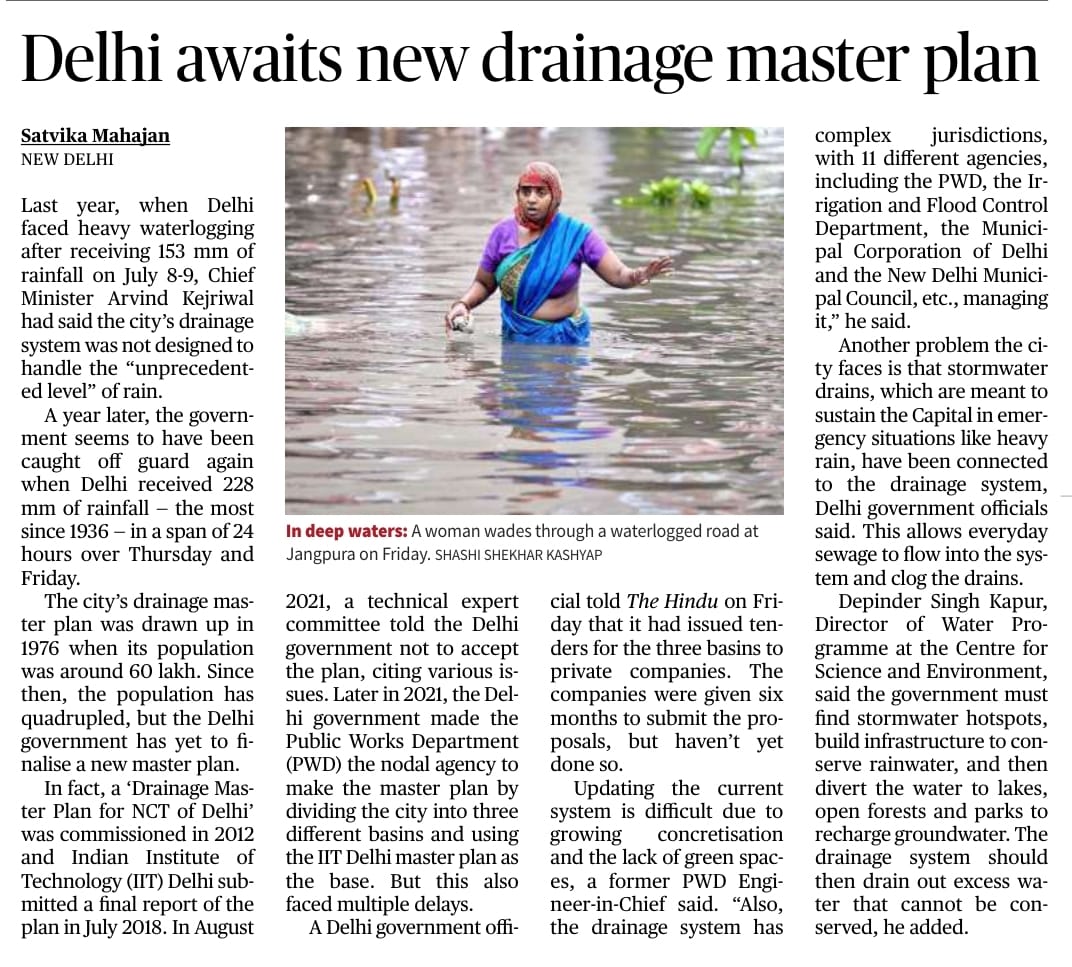
Delhi, which endured one of the worst heatwaves in history earlier this month, now faces severe water-logging with record-breaking rainfall in just 24 hours, surpassing the city's average for the entire month of June. According to the India Meteorological Department (IMD), the Safdarjung observatory in the city recorded 228mm of rainfall ending at 8:30 am today. It marks the second-highest 24-hour rainfall in June ever recorded. The city had on June 28, 1936 recorded 235.5mm rainfall. The IMD, which defines very heavy rain as rainfall amounting to between 124.5 and 244.4 mm in a day, said later in the morning that the monsoon has arrived. The rain began around 3 am. How Delhi Went From Extreme Heat To Heavy Floods, Minister Explains The state government has also released a WhatsApp chatbot number 8130188222 Delhi, which endured one of the worst heatwaves in history earlier this month, now faces severe water-logging with record-breaking rainfall in just 24 hours, surpassing the city's average for the entire month of June. According to the India Meteorological Department (IMD), the Safdarjung observatory in the city recorded 228mm of rainfall ending at 8:30 am today. It marks the second-highest 24-hour rainfall in June ever recorded. The city had on June 28, 1936 recorded 235.5mm rainfall. The IMD, which defines very heavy rain as rainfall amounting to between 124.5 and 244.4 mm in a day, said later in the morning that the monsoon has arrived. The rain began around 3 am. PlayUnmute Fullscreen The downpour caused a fatal airport roof collapse, disrupted flights, blocked underpasses, and nightmarish mega traffic jams, turning the city's relief from the heat into chaos. "You have to understand that if Delhi receives rainfall of 228 mm, then it will take time to decrease the water level... Right now, Delhi has received more rainfall than the capacity of the drains. That's why we are witnessing waterlogging at several places...," said Atishi, Delhi's Water Minister, whose own house was flooded. Delhi, a city of 20 million, has not recorded so much rain in the entire month of June at least in the last 15 years, IMD data shows. Temperatures this summer has neared 50 degrees Celsius in the city and it has recorded at least 40 consecutive days of temperatures at or above 40 degrees Celsius till June 22, according to IMD data. "...We conducted an emergency meeting regarding the waterlogging issue due to the heavy rainfall. It was chaired by 4 ministers of the Delhi government... It was attended by all the senior officials of the Delhi government. We made several important decisions for the upcoming days," the Delhi Minister added. The state government has also released a WhatsApp chatbot number 8130188222, helpline number 1800110093 for waterlogging complaints. Lieutenant Governor V K Saxena also held a meeting and asked officials to set up an emergency control room for waterlogging complaints. The control room would be manned 24X7 by senior officials. "Because of climate change, you will get more extreme rain events, which means more rain in a fewer number of rainy days, rainy hours," Sunita Narain, director general of research body Centre for Science and Environment, said in a recent video post.

From water crisis to flooding: How Delhi went from extreme heat to rivers on roads in just 24 hours

Emerging from scorching temperatures that peaked near 50 degrees Celsius, Delhi residents now grapple with unprecedented rainfall causing severe water-logging and chaos across the capital. Just weeks after enduring one of its hottest periods in history, the Indian capital experienced a deluge, receiving a staggering 228.1 mm of rainfall within a span of 24 hours. This amount surpasses Delhi's average rainfall for the entire month of June, transforming relief from the heat into widespread disruption. Delhi Received Record-Breaking Rainfall in 24 hours According to the India Meteorological Department (IMD), the torrential downpour marked a 266 per cent departure from the norm for this time of year. Areas surrounding the Delhi airport alone received 148.5 mm of rain in just three hours on Friday, exceeding the total rainfall recorded in June of the previous year (101.7 mm). The Safdarjung Observatory, Delhi's main weather station, registered 228.1 mm of rain in the 24 hours ending at 8:30 am on Friday. This amount is more than three times the average June rainfall of 74.1 mm and marks the highest June rainfall in at least 16 years. As per IMD, the weather station at Lodhi Road logged 192.8 mm of rainfall in the 24 hours ending at 8.30 am, Ridge 150.4 mm, Palam 106.6 mm, Delhi University 139 mm, Pitampura 138 mm, Pusa 89 mm, Mayur Vihar 75 mm, and Tughlakabad 70.5 mm. Heavy Rain led to Flooding The heavy rains in Delhi led to a fatal collapse of the airport's roof, flight disruptions, closure of metro stations, and extensive traffic congestion due to water-logged streets and flooded underpasses. This turn of events has underscored the vulnerability of Delhi's infrastructure to extreme weather events. Climate Change Behind Sudden Burst Experts attribute the intensifying rainfall to climate change, which escalates the atmosphere's water vapor content with rising global temperatures. "Due to climate change, extreme rain events are becoming more frequent, compressing annual rainfall into shorter periods," Sunita Narain of the Centre for Science and Environment told Reuters. Experts feel that urgent actions of climate change are needed as the erratic distribution of rainfall impacts both infrastructure and citizens severely. To mitigate future risks, experts recommend enhancing water storage capacity through the creation of lakes and ponds, clearing drains and canals to prevent flooding, and increasing public awareness about climate impacts. These steps, they argue, are crucial for safeguarding cities like Delhi from the dual threats of extreme heat and heavy rainfall. As Delhi navigates through these climatic extremes, the imperative remains clear: adapting infrastructure and policies to withstand unpredictable weather patterns exacerbated by climate change. With monsoon forecasts indicating a timely spread across the country, the focus now shifts to proactive measures that ensure resilience and readiness in the face of future weather challenges.

Delhi's weather chaos: How national capital went from extreme heatwaves to waterlogging in days

NEW DELHI: The people of Delhi, who recently suffered through one of the most severe heatwaves in history, are now grappling with extensive waterlogging due to unprecedented rainfall within a 24-hour period. The rainfall exceeded the city's average rainfall for the entire month of June. The heavy rains led to a deadly airport roof collapse, flight disruptions, the closure of a metro station, blocked underpasses, and significant traffic congestion, transforming the city's respite from the heat into turmoil. What is the situation in Delhi? According to the India Meteorological Department (IMD), Delhi, with a population of 20 million, experienced 228.1 mm of rainfall in 24 hours at its primary Safdarjung weather station until 8:30am on Friday, representing a 266% deviation from the norm. Delhi has not recorded so much rain in the entire month of June at least in the last 15 years, IMD data shows. On Friday, in three hours alone, areas around the Delhi airport got 148.5 mm of rain, compared with 101.7 mm for all of June last year. The arrival of the seasonal monsoon rains, which gradually cover the country starting from its southern tip at the end of May, provided relief from the heatwave conditions that had persisted in Delhi until the previous week. Prior to June 22, the city had experienced temperatures approaching 50 degrees Celsius and at least 40 consecutive days with temperatures at or above 40 degrees Celsius, according to IMD data. As heavy rains battered Delhi early Friday morning, many areas of the city were waterlogged, resulting in flood-like conditions and forcing vehicles to navigate through massive traffic jams. The Delhi Traffic Police issued alerts to inform commuters about the affected roads and advised them to plan their journeys accordingly. Visuals from various parts of the city showed several areas submerged in water, causing long traffic jams that impacted commuters, particularly office-goers. What led to the extreme weather conditions? Experts attribute the occurrence of extreme rainfall events to climate change, as every degree increase in the Earth's temperature can lead to a 7% increase in atmospheric water vapor, according to a Nasa. Sunita Narain, director general of the research body Centre for Science and Environment, told Reuters, "Because of climate change, you will get more extreme rain events, which means more rain in a fewer number of rainy days, rainy hours." What can be done to address challenges? To address the challenges posed by erratic monsoon patterns, experts suggest that India needs to create more lakes and ponds to store water from heavy rains, preventing massive water shortages in cities like Delhi and Bengaluru and municipalities must ensure that drains and canals are unclogged to avoid severe flooding and major disruptions. Additionally, the country needs to significantly increase its green cover, raise public awareness about the impacts of heat, stagger work hours, and adjust school timings.

Explainer | How India’s capital went from extreme heat to heavy floods

The residents of Delhi, who endured one of the worst heatwaves in history earlier this month, now face severe waterlogging with record-breaking rainfall in just 24 hours, surpassing the city’s average for the entire month of June. The torrential downpour caused a fatal airport roof collapse, disrupted flights, closed a metro station, blocked underpasses, and led to massive traffic jams, turning the city’s relief from the heat into chaos. What’s happening? The Indian capital of 20 million people received 228.1mm rainfall in 24 hours at its main Safdarjung weather station until 8:30am on Friday, a 266 per cent departure from normal, according to the India Meteorological Department (IMD). Delhi has not recorded so much rain in the entire month of June, at least in the last 15 years, IMD data shows. On Friday, in three hours alone, areas around the Delhi airport got 148.5mm of rain, compared with 101.7mm for all of June last year. The seasonal monsoon rain, which slowly covers the country beginning from its southern tip at the end of May, brought respite from heatwave conditions that persisted in Delhi until last week. Temperatures this summer has neared 50 degrees Celsius in the city, and it has recorded at least 40 consecutive days of temperatures at or above 40 degrees Celsius till June 22, according to IMD data. An IMD official said the progress of the monsoon was stalled for a week, which led to lower rainfall and heatwaves in northern India, but sudden thunderstorms last week in the region pushed the monsoon clouds back on track. This, he said, will help the monsoon cover the entire country on time or even a few days ahead of the normal schedule. Why the extremes? For every degree increase in earth’s temperature, the amount of water vapour in the atmosphere can increase by about 7 per cent, according to a Nasa article. Experts say that can lead to heavy rains in a short period of time. “Because of climate change, you will get more extreme rain events, which means more rain in a fewer number of rainy days, rainy hours,” Sunita Narain, director general of research body Centre for Science and Environment, said in a recent video post. “If you look at the data from across India, you will find that many weather stations are already reporting that they are breaking the record of 24-hour rainfall, which means that a city, a region, can get its annual rain, as much as a whole year’s rain, in a matter of a few days or even one day.” What needs to be done? Delhi has endured erratic monsoon patterns over the last 40 years, facing both deficient and excessive rainfall, said Vishwas Chitale, at think-tank Council on Energy, Environment and Water. “Such skewed distribution of rainfall impacts infrastructure and people severely, which re-emphasises the importance of climate proofing infrastructure and the economy,” he said. Experts say India needs to dig more lakes and ponds to store the water from heavy rain to prevent massive water shortages in places like Delhi and Bengaluru. Municipalities need to ensure drains and canals are unclogged to avoid heavy flooding and major disruptions. The country also needs to substantially increase its green cover and raise public awareness about the impacts of heat, stagger work hours and change school timings.

Delhi Grapples With Severe Water Crisis; Unequal Distribution, Leakages, Irregularities In Wastewater Management Among Key Factor

Delhi is facing the horrors of a severe water crisis again. Every summer, Delhi grapples with water scarcity, but this time the problem has reached historic levels. Mismanagement of water, inadequate storage, leakages and wastage are some of the many reasons why Delhiites face the water crisis every summer. Reports suggest that the average Indian wastes 30 per cent of their daily water needs. According to the United States Geological Survey, a faucet dripping 10 drops per bottles, while approximately 160 million people in the country do not have access to clean and fresh water. Former IAS officer KBS Sidhu highlights in his article that during the monsoon season, continuous rainfall and the overflowing Yamuna River submerge large parts of the city, forcing thousands of residents to flee their homes and seek refuge in higher areas. Amidst the floods, the city also faces an acute shortage of drinking water, creating a He also explains that Ramesh Negi, a retired IAS officer of the 1984 batch and a batchmate, highlighted that one of the most critical issues in managing Delhi's water resources is the lack of awareness among all sections of society about proper water usage. The elite class, often the biggest culprit, misuses the 20,000 litres of free water provided each month, especially in multi-story mansions, while both the rich and the poor suffer. There was a significant disparity in water distribution, with planned areas receiving 70 to 100 litres per person per day (LPCD), while unplanned areas received only 20 to 40 litres. The situation worsened during peak summers due to climate change. Rumi Aijaz, in his research paper "Water Supply in Delhi-Five Issues," states that despite concerns about the inadequate availability of raw water, wastage continues in various ways. DJB estimates that up to 40 per cent of the total supplied water is lost in distribution. A portion of the treated water is lost due to pipeline leakage. In some areas, illegal tapping from pipelines is an issue. Misuse of water by tanker mafias is another problem. During the summer season, pipelines do not provide enough water. Moreover, many houses in unauthorised colonies have not yet received a water pipe supply from DJB. In such situations, people have no option but to resort to alternative measures, such as government and private water tankers, to obtain water. Assistant Professor Ritu Singh of the Environmental Science Department, Central University Of Rajasthan states that the national capital Delhi is currently facing a water crisis. Many areas have been declared dry zones. A daily shortage of 50 million gallons of water is reported in Delhi. Climate change is a major cause of water scarcity, while overuse and wastage have exacerbated the water crisis. She mentions that around 160 million people in this country do not have access to clean and fresh water. If Delhiites are facing water scarcity today, it is due to two reasons – extreme heat and dependency on neighbouring states for water. India Facing a Water Crisis India is home to approximately 18 per cent of the global population but has only four per cent of the world's water resources. According to the World Bank, India's per capita water availability is around 1,100 cubic metres, significantly below the internationally recognized threshold of 1,700 m³ for water stress and alarmingly close to the 1,000 m³ per capita water scarcity limit. In contrast, the global per capita water availability is 5,500 cubic meters. Population growth and economic development have put pressure on water resources. Half a century ago, in 1970, per capita water availability in India was 2.5 times the current level. In 1970, per capita freshwater availability was 2,594 m³. According to the World Bank, this figure steadily decreased to 1,661 m³ in 1990 and 1,036 m³ in 2020. Northern and northwestern India are more stressed than other regions. In 2020, Punjab extracted 164.4 per cent of its limit. According to the Ministry of Jal Shakti, Rajasthan extracted 150.2 per cent of its annual groundwater in 2020, Haryana extracted 134.6 per cent and Delhi extracted 101.4 per cent. Rumi Aijaz states that about 80 per cent (720 MGD) of the water supplied to consumers goes down the drain as wastewater. To prevent harm to living beings and the environment, wastewater generated in various premises needs to be safely transferred through underground sewers and then treated for reuse for drinking/nondrinking purposes, disposal into surface water bodies, or groundwater recharge. In Delhi, there are several shortcomings in wastewater management. He suggests that more efforts are needed to conserve and enhance the capacities of existing and potential water sources in Delhi. Encroachment On Water Bodies According to the water body census report released by the Ministry of Jal Shakti in 2023, 216 out of 893 water bodies, or 24.19 per cent, in Delhi are encroached upon. The report states that 132 of the encroached water bodies had more than 75 per cent encroachment. Experts say that local community participation is crucial in preserving Additionally, there is a significant inequity in water supply in Delhi and during the summer season, the underprivileged urban residents living in unplanned and informal settlements face difficulties. According to a CSE report, a study by the Centre for Science and Environment (CSE) on the challenges of water supply, sanitation and water management in the dense, unplanned settlement of Sangam Vihar in South Delhi revealed that this settlement with a population of over one million receives an extremely low supply of 45 litres per person per day. Delhi needs to learn from other countries to tackle the water crisis. Countries like Singapore, Israel and many major cities worldwide are addressing the drinking water crisis by preventing water wastage and treating wastewater. More than half of the drinking water in Delhi is wasted through theft and leakage. In places like Singapore and Tokyo, this wastage is around five per cent. A former member of the Delhi Jal Board, RS Tyagi, says that steps should be taken to prevent water wastage during distribution and at home with the help of technology, similar to Singapore. The water crisis can be addressed by using treated wastewater. Delhi produces approximately 550 MGD of treated wastewater, of which 89 MGD is used. The remaining water flows are wasted. Singapore aims to treat 70 per cent of wastewater for use as drinking water by 2030. Other countries are also working in this direction to meet their drinking water needs. problem with rainwater harvesting is the lack of interest from consumers. Additionally, some buildings have structural deficiencies, such as a lack of space for constructing rainwater tanks or pits. In such cases, RWH established in private societies can make more efforts. The Delhi Jal Board (DJB) can identify potential areas in the city where RWH structures can be installed to collect rainwater falling on roads, flyovers, waterlogged areas and open spaces. Preventing Leakages Is Crucial Proper management of water by preventing leakage can prevent wastage in Delhi. Aijaz states that 40 per cent of the total treated water supplied by DJB is wasted due to pipeline leakage, misuse of treated water and unmetered connections. Thus, appropriate measures need to be taken to prevent the loss of potable water. Firstly, better technologies should be used to detect leaks to identify defects in pipes and fix them before leaks occur. Sewage Treatment Plants In Delhi According to the Delhi Economic Survey (FY 2023-24), Delhi has a total of 20 sewage treatment plants (STPs) with a total capacity of 632 MGD, but only 550.07 MGD is being utilised, resulting in 87 per cent capacity utilisation. Currently, approximately 792 MGD of wastewater is generated, of which only 550 MGD is treated. The largest STP in Asia, located in Okhla, is in its final stage of completion

Explainer-How India’s capital went from extreme heat to heavy floods

The residents of Delhi, who endured one of the worst heatwaves in history earlier this month, now face severe water-logging with record-breaking rainfall in just 24 hours, surpassing the city’s average for the entire month of June. The torrential downpour caused a fatal airport roof collapse, disrupted flights, closed a metro station, blocked underpasses, and led to massive traffic jams, turning the city’s relief from the heat into chaos. WHAT’S HAPPENING? The Indian capital of 20 million people received 228.1 mm rainfall in 24 hours at its main Safdarjung weather station until 8:30 a.m. (0300 GMT) on Friday, a 266% departure from normal, according to the India Meteorological Department (IMD). Delhi has not recorded so much rain in the entire month of June at least in the last 15 years, IMD data shows. On Friday, in three hours alone, areas around the Delhi airport got 148.5 mm of rain, compared with 101.7 mm for all of June last year. The seasonal monsoon rain, which slowly covers the country beginning from its southern tip at the end of May, brought respite from heatwave conditions that persisted in Delhi until last week. Temperatures this summer has neared 50 degrees Celsius in the city and it has recorded at least 40 consecutive days of temperatures at or above 40 degrees Celsius till June 22, according to IMD data. An IMD official said the progress of the monsoon was stalled for a week, which led to lower rainfall and heat waves in northern India, but sudden thunderstorms last week in the region pushed the monsoon clouds back on track. This, he said, will help the monsoon cover the entire country on time or even a few days ahead of the normal schedule. WHY THE EXTREMES? For every degree increase in earth’s temperature, the amount of water vapour in the atmosphere can increase by about 7%, according to a NASA article. Experts say that can lead to heavy rains in a short period of time. “Because of climate change, you will get more extreme rain events, which means more rain in a fewer number of rainy days, rainy hours,” Sunita Narain, director general of research body Centre for Science and Environment, said in a recent video post. “If you look at the data from across India, you will find that many weather stations are already reporting that they are breaking the record of 24-hour rainfall, which means that a city, a region, can get its annual rain, as much as a whole year’s rain, in a matter of a few days or even one day.” WHAT NEEDS TO BE DONE? Delhi has endured erratic monsoon patterns over the last 40 years, facing both deficient and excessive rainfall, said Vishwas Chitale, at think-tank Council on Energy, Environment and Water. “Such skewed distribution of rainfall impacts infrastructure and people severely, which re-emphasises the importance of climate proofing infrastructure and the economy,” he said. Experts say India needs to dig more lakes and ponds to store the water from heavy rain to prevent massive water shortages in places like Delhi and Bengaluru. Municipalities need to ensure drains and canals are un-clogged to avoid heavy flooding and major disruptions. The country also needs to substantially increase its green cover and raise public awareness about the impacts of heat, stagger work hours and change school timings. (Reporting by Krishna N. Das, Shivam Patel and Rajendra Jadhav; Editing by Raju Gopalakrishnan)

How Delhi went from extreme heat to heavy floods; all you need to know

The residents of Delhi, who endured one of the worst heatwaves in history earlier this month, now face severe water-logging with record-breaking rainfall in just 24 hours, surpassing the city's average for the entire month of June. The torrential downpour caused a fatal airport roof collapse, disrupted flights, closed a metro station, blocked underpasses, and led to massive traffic jams, turning the city's relief from the heat into chaos. What is happening? The Indian capital of 20 million people received 228.1 mm rainfall in 24 hours at its main Safdarjung weather station until 8:30 a.m. (0300 GMT) on Friday, a 266 per cent departure from normal, according to the India Meteorological Department (IMD). Delhi has not recorded so much rain in the entire month of June at least in the last 15 years, IMD data shows. On Friday, in three hours alone, areas around the Delhi airport got 148.5 mm of rain, compared with 101.7 mm for all of June last year. The seasonal monsoon rain, which slowly covers the country beginning from its southern tip at the end of May, brought respite from heatwave conditions that persisted in Delhi until last week. Temperatures this summer has neared 50 degrees Celsius in the city and it has recorded at least 40 consecutive days of temperatures at or above 40 degrees Celsius till June 22, according to IMD data. An IMD official said the progress of the monsoon was stalled for a week, which led to lower rainfall and heat waves in northern India, but sudden thunderstorms last week in the region pushed the monsoon clouds back on track. This, he said, will help the monsoon cover the entire country on time or even a few days ahead of the normal schedule. Why the extremes? For every degree increase in earth's temperature, the amount of water vapour in the atmosphere can increase by about 7 per cent, according to a Nasa article. Experts say that can lead to heavy rains in a short period of time. "Because of climate change, you will get more extreme rain events, which means more rain in a fewer number of rainy days, rainy hours," Sunita Narain, director general of research body Centre for Science and Environment, said in a recent video post. "If you look at the data from across India, you will find that many weather stations are already reporting that they are breaking the record of 24-hour rainfall, which means that a city, a region, can get its annual rain, as much as a whole year's rain, in a matter of a few days or even one day. What needs to be done? Delhi has endured erratic monsoon patterns over the last 40 years, facing both deficient and excessive rainfall, said Vishwas Chitale, at think-tank Council on Energy, Environment and Water. "Such skewed distribution of rainfall impacts infrastructure and people severely, which re-emphasises the importance of climate proofing infrastructure and the economy," he said. Experts say India needs to dig more lakes and ponds to store the water from heavy rain to prevent massive water shortages in places like Delhi and Bengaluru. Municipalities need to ensure drains and canals are un-clogged to avoid heavy flooding and major disruptions. The country also needs to substantially increase its green cover and raise public awareness about the impacts of heat, stagger work hours and change school timings.

Rejuvenating Water Bodies : सरकार और समाज के सहयोग से संवर रहे तालाब और झीलें, सीएसई ने किया सर्वे

भारत में ग्रामीण और शहरी क्षेत्रों में मौजूद तालाब, पोखर और झील सहित अन्य छोटे बड़े जलाशय पिछले कुछ दशकों से चल रही विकास की आंधी में अपना वजूद खोने लगे थे. इनमें से अधिकांश Encroachment के कारण या तो निर्माण कार्यों की भेंट चढ़ गए या बुरी तरह प्रदूषित हो गए हैं. पिछले कुछ सालों में जलाशयों के वजूद को बचाने के लिए तेज हुई बहस का असर यह हुआ कि अतिक्रमण के शिकार होने वाले या सूख चुके जल स्रोत अब सरकार और समाज के सहयोग से पुनर्जीवित होने लगे हैं. इनमें लखनऊ की कुकरैल नदी पर सरकार द्वारा हटाए गए अतिक्रमण से लेकर अमृत सरोवर योजना के तहत संवारे गए पुराने तालाब तक, तमाम ऐसे जल स्रोत शामिल हैं, जिनका कायाकल्प हो रहा है. सुकून देने वाली यह बात पर्यावरण से जुड़े शोध संस्थान Centre for Science and Environment (CSE) की सर्वे रिपोर्ट में उजागर हुई है. देशव्यापी स्तर पर किए गए सर्वे की रिपोर्ट में इस उपलब्धि का श्रेय Govt Schemes के साथ निजी और सामुदायिक स्तर पर तेज की गई पहल को दिया गया है. सर्वे के नतीजे देश में चार अलग अलग तरह की जलवायु वाले इलाकों में सीएसई की ओर से 250 जलाशयों का सर्वे किया गया. इसमें पाया गया कि सरकारी योजनाओं के कार्यान्वयन और जन सहयोग से 140 झील और तालाबों की हालत में गुणात्मक बदलाव आया है. सर्वे रिपोर्ट के निष्कर्षों को एक किताब में भी संकलित किया गया है. ‘बैक फ्रॉम द ब्रिंक: रिजुवनेटिंग इंडियाज लेक, पॉन्ड्स एंड टैंक्स - ए कॉम्पेंडियम ऑफ सक्सेस स्टोरीज’ नामक इस पुस्तक में प्रकाशित रिपोर्ट के अनुसार देश के दर्जन भर से ज्यादा राज्यों में जल स्रोतों को संवारने के काम का सर्वे किया गया था. इनमें राज्य सरकार की 22 और केंद्र सरकार की 5 योजनाओं के तहत बनी या बहाल हुई 250 Water Bodies की समीक्षा की गई. सर्वे में शामिल किए गए जल स्रोत जिन 4 जलवायु क्षेत्रों में मौजूद थे उनमें सिंधु-गंगा का मैदानी क्षेत्र, रेगिस्तान, तटीय मैदान और दक्कन का पठार शामिल है. सर्वे में मिशन अमृत सरोवर, अमृत 2.0, दिल्ली में झीलों काे संवारने की मुहिम और तमिलनाडु की अनाइथा ग्राम अन्ना मरुमलार्ची थोट्टम (एजीएएमटी) योजना भी प्रमुख रूप से शामिल रही. इन योजनाओं में शामिल 250 जलाशयों में से लगभग 140 जलाशय उम्मीदों पर खरे उतर रहे हैं. गौरतलब है कि देश में पहली बार जल संसाधनों की गणना पिछले साल की गई थी. इसके अनुसार, भारत में कुल 2,424,540 वॉटर बॉडी हैं. इनमें से 97 प्रतिशत से अधिक जलाशय ग्रामीण इलाकों में ही मौजूद हैं. इन जलाशयों का Catchment area और उनके Feeder Channel जल संग्रह में महत्वपूर्ण भूमिका निभा रहे हैं. साथ ही ये बाढ़ को भी नियंत्रित करने में कवच का काम करते हैं. जलाशय बढ़ा रहे जैव विविधता रिपोर्ट के अनुसार पुनर्जीवित हुए जलाशय Incredible Biodiversity के घर साबित हो रहे हैं. इन झील, तालाबों की दशा सुधारने के बाद इनका उपयोग स्थानीय लोगों द्वारा किया जाने लगा है. इससे ये जलाशय सामाजिक साहचर्य में भी अहम भूमिका निभा रहे हैं. यह सर्वे सीएसई में Water Program की प्रबंधक सुष्मिता सेनगुप्ता की अगुवाई में किया गया. सर्वे की Findings के बारे में सेनगुप्ता ने बताया कि पुनर्जीवित हुए जलाशयों की कामयाबी के पीछे राजनीतिक और प्रशासनिक इच्छाशक्ति के अलावा सामुदायिक भागीदारी मुख्य वजह रही. उन्होंने कहा कि जिन इलाकों में अमृत सरोवर मिशन जैसी योजनाओं को राजनीति और प्रशासनिक इच्छाशक्ति से पूरा किया गया, उनमें बदलाव साफ तौर पर देखा जा सकता है. सर्वे रिपोर्ट में सुझाव दिया गया है कि जलाशयों की बदहाली को सुधारने के लिए जो शुरुआत की गई है, उसे बरकरार रखने की जरूरत है. आगे का रास्ता सर्वे के आधार पर जुटाए गए तथ्यों के हवाले से रिपोर्ट में कहा गया है कि देश भर में जल स्रोतों को पुनर्जीवित करने के लिए यह जरूरी है कि उनमें गंदे पानी को जलाशय में डालने से पहले उसे साफ करें. क्योंकि गंगा और यमुना सहित देश की तमाम नदियों सहित अन्य जलाशयों के प्रदूषित होने की एक मात्र वजह इनमें गंदे पानी का लगातार हो रहा प्रवाह है. रिपोर्ट के अनुसार अटल कायाकल्प और शहरी परिवर्तन मिशन (AMRUT) 2.0 में Water Bodies के कायाकल्प के साथ-साथ उनमें Recycled Treated Water का ही प्रवाह करने का प्रावधान है. इस मिशन के तहत केंद्र और राज्य सरकार की एजेंसियों को इन प्रावधानों का पालन हर हाल में सुनिश्चित कराने की जरूरत है. साथ ही प्रत्येक जलाशय की दशा को सुधारने के क्रम में उसके बहाव क्षेत्र और फीडर चैनलों को भी एक साथ उपचारित किया जाना जरूरी है. इसके लिए जलभराव क्षेत्र और फीडर चैनलों की वास्तविक सीमाओं की Mapping की जानी चाहिए. इसके अलावा क्षेत्रीय और स्थानीय स्तर पर प्रत्येक जलाशय के जलभराव क्षेत्र को मैपिंग के जरिए खाली स्थान के रूप में छोड़ना जरूरी है. तभी बाढ़ नियंत्रण के उपाय कारगर साबित होंगे. डेटाबेस बना कारगर हथ‍ियार रिपोर्ट में कहा गया है कि सरकारी परियोजनाओं में जलाशयों का Database बनाकर इनकी पहचान करके इन्हें पुनर्जीवित करना सार्थक पहल साबित हुई है. रिपोर्ट में सुझाव दिया गया है कि अब देश के शहरी इलाकों में भी जलाशयों का विस्तृत डेटाबेस बनाना जरूरी है. क्योंकि शहरी इलाकों में अक्सर अतिक्रमण के शिकार हो चुके और गाद से भरे जलाशय सरकारी रिकॉर्ड में ही अपने वजूद को बचा पाते हैं. इस लिहाज से जलाशयों के जीर्णोद्धार की योजनाओं को लागू करने में मजबूत डाटाबेस मददगार साबित होगा. रिपोर्ट के अनुसार सरकारी योजनाओं में जल शोधन की आधुनिक तकनीकों का इस्तेमाल तो हो रहा है, लेकिन जितने प्रभावी ढंग से इन तकनीकों को सतत रूप से प्रयोग में लाया जाना चाहिए, उतना नहीं हो पा रहा है. इसे अपशिष्ट जल के उपचार और जलाशयों में प्रदूषण के उन्मूलन के लिए उपलब्ध कराया जाना चाहिए. रिपोर्ट के मुताबिक ग्राम पंचायतों की जमीनों पर भी अतिक्रमण का बढ़ता खतरा ग्रामीण इलाकों में जलाशयों पर आसन्न संकट के रूप में देखा जा रहा है. सरकार को समय रहते इस खतरे को भांप कर अभी से कारगर उपाय करने चाहिए.

Delhi's weather chaos: How national capital went from extreme heatwaves to waterlogging in days

NEW DELHI: The people of Delhi, who recently suffered through one of the most severe heatwaves in history, are now grappling with extensive waterlogging due to unprecedented rainfall within a 24-hour period. The rainfall exceeded the city's average rainfall for the entire month of June. The heavy rains led to a deadly airport roof collapse, flight disruptions, the closure of a metro station, blocked underpasses, and significant traffic congestion, transforming the city's respite from the heat into turmoil. What is the situation in Delhi? According to the India Meteorological Department (IMD), Delhi, with a population of 20 million, experienced 228.1 mm of rainfall in 24 hours at its primary Safdarjung weather station until 8:30am on Friday, representing a 266% deviation from the norm. Delhi has not recorded so much rain in the entire month of June at least in the last 15 years, IMD data shows. On Friday, in three hours alone, areas around the Delhi airport got 148.5 mm of rain, compared with 101.7 mm for all of June last year. The arrival of the seasonal monsoon rains, which gradually cover the country starting from its southern tip at the end of May, provided relief from the heatwave conditions that had persisted in Delhi until the previous week. Prior to June 22, the city had experienced temperatures approaching 50 degrees Celsius and at least 40 consecutive days with temperatures at or above 40 degrees Celsius, according to IMD data. As heavy rains battered Delhi early Friday morning, many areas of the city were waterlogged, resulting in flood-like conditions and forcing vehicles to navigate through massive traffic jams. The Delhi Traffic Police issued alerts to inform commuters about the affected roads and advised them to plan their journeys accordingly. Visuals from various parts of the city showed several areas submerged in water, causing long traffic jams that impacted commuters, particularly office-goers. What led to the extreme weather conditions? Experts attribute the occurrence of extreme rainfall events to climate change, as every degree increase in the Earth's temperature can lead to a 7% increase in atmospheric water vapor, according to a Nasa. Sunita Narain, director general of the research body Centre for Science and Environment, told Reuters, "Because of climate change, you will get more extreme rain events, which means more rain in a fewer number of rainy days, rainy hours."

पहले 52 डिग्री का टॉर्चर, अब 88 साल बाद 24 घंटे में सबसे ज्यादा बारिश, क्यों हुआ दिल्ली का ये हाल?

की शुरुआत में इतिहास में सबसे भीषण हीटवेव (Heatwave) को बर्दाश्त किया था. मुंगेशपुर में पारा 52 डिग्री के पार चला गया था. अब दिल्ली को दशकों में सबसे ज्यादा बारिश (Delhi Rain) का सामना करना पड़ा है. भारत के मौसम विज्ञान विभाग (IMD) के मुताबिक, गुरुवार सुबह 8:30 बजे से शुक्रवार सुबह 8:30 बजे तक यानी 24 घंटे में राजधानी में 228.1 mm (9 इंच) बारिश हुई. यहां 88 साल बाद जून महीने में एक दिन में सबसे ज्यादा बारिश हुई है. इससे पहले जून 1936 में 24 घंटे में 235.5 मिमी बारिश दर्ज की गई थी. आइए समझते हैं दिल्ली ने कैसे तय किया भीषण गर्मी से भारी बारिश तक का सफर:- दिल्ली में कितनी हुई बारिश?दिल्ली के सफदरजंग वेदर स्टेशन के मुताबिक, दिल्ली एयरपोर्ट के आसपास के इलाकों में शुक्रवार को तीन घंटे में 148.5 mm (5.85 इंच) बारिश हुई. जबकि पिछले साल पूरे जून में 101.7 mm (4 इंच) बारिश हुई थी.सड़कों पर बाढ़ जैसे हालातभारी बारिश की वजह से सड़कों पर बाढ़ जैसे हालात बन गए. 4 से 5 फीट पानी भरने से कारें डूब गईं. कई जगहों पर नावें भी चलीं. ट्रैफिक जाम होने से लोग कमर तक पानी में डूबकर रास्ता पार करने में मजबूर हुए. किसी की कार डूब गई, किसी की बाइक बीच सड़क बंद हो गई. भारी बारिश के कारण दिल्ली एयरपोर्ट के टर्मिनल-1 में पार्किंग की छत ढह गई. हादसे में एक कैब ड्राइवर की मौके पर ही मौत हो गई. बारिश के चलते कई मेट्रो स्टेशन भी बंद करने पड़े. अंडरपास में पानी घुस आया. कुल मिलाकर शुक्रवार को दिल्ली में बारिश से अफरा-तफरी की स्थिति रही.दिल्ली में क्यों हुई इतनी बारिश?मौसम विभाग के मुताबिक, मॉनसून ने दिल्ली में एंट्री कर ली है. मॉनसून ने उत्तराखंड, दिल्ली, हिमाचल प्रदेश, गुजरात और बिहार को शुक्रवार सुबह पूरी तरह से कवर लिया. हरियाणा में भी इसकी एंट्री हो चुकी है. बारिश के बाद अब मॉनसून राजस्थान और उत्तर प्रदेश के कुछ हिस्सों में भी आगे बढ़ गया है. फिलहाल राजस्थान, पंजाब और हरियाणा के कुछ हिस्सों में अभी तक मॉनसून नहीं पहुंचा है.मॉनसूनी बारिश से दिल्ली में भीषण गर्मी और हीटवेव से राहत मिली है. बीते दिनों भीषण गर्मी से तापमान 50 डिग्री सेल्सियस (122 फ़ॉरेनहाइट) के करीब पहुंच गया था. IMD के मुताबिक, दिल्ली में 22 जून से तापमान 40 C (104 F) या उससे ऊपर दर्ज किया गया है.IMD के एक अधिकारी ने नाम न छापने की शर्त पर बताया कि मॉनसून का रूट एक हफ्ते के लिए रुका हुआ था. इसस वजह से उत्तर भारत में कम बारिश हुई और गर्म हवाएं चलीं. लेकिन पिछले हफ्ते क्षेत्र में अचानक आए तूफान ने मॉनसून के बादलों को वापस मोड दिया है. अधिकारी ने कहा इससे मॉनसून को पूरे देश में समय पर या सामान्य समय से कुछ दिन पहले पहुंचने में मदद मिलेगी.इतनी बारिश क्यों?2022 में छपे अमेरिकी स्पेस एजेंसी NASA के एक आर्टिकल के मुताबिक, पृथ्वी के तापमान में हर एक डिग्री की बढ़ोतरी से वायुमंडल में जल वाष्प की मात्रा लगभग 7% बढ़ सकती है. एक्सपर्ट्स का कहना है कि इससे कम समय में भारी बारिश हो सकती है.सेंटर फॉर साइंस एंड एनवायरनमेंट की डायरेक्टर जनरल सुनीता नारायण ने इस हफ्ते सोशल मीडिया पर एक वीडियो पोस्ट में कहा, “क्लाइमेट चेंज की वजह से आप भारी से भारी बारिश देखेंगे. इसका मतलब है कि कम बरसात के घंटों में ज्यादा बारिश होगी.”सुनीता नारायण ने आगे कहा, “अगर आप पूरे भारत के आंकड़ों को देखें, तो पाएंगे कि कई मौसम केंद्रों ने पहले से ही भारी बारिश को रिपोर्ट किया है. कई जगहों पर 24 घंटे की बारिश का रिकॉर्ड टूट रहा है. इसका मतलब है कि एक शहर, एक क्षेत्र, अपनी वार्षिक बारिश के बराबर हो सकता है. यानी कुछ ही दिनों में उतनी बारिश हो जा रही है, जितनी पूरे साल या पूरे सीजन में होती है.”अनियमित मॉनसून से कैसे निपटेंगे?ऊर्जा, पर्यावरण और जल के लिए थिंक टैंक में शामिल विश्वास चितले ने कहा, “दिल्ली ने पिछले 40 साल में अनियमित मॉनसून पैटर्न को सहन किया है. इस दौरान हमें बहुत कम और बहुत ज्यादा बारिश दोनों का सामना करना पड़ा है.”उन्होंने कहा, “बारिश के ऐसे बेमेल होने का असर बुनियादी ढांचे और लोगों पर पड़ता है. लिहाजा हमें क्लाइमेट चेंज की चुनौतियों को संजीदगी से लेना चाहिए.”एक्सपर्ट्स का कहना है कि देश को अपने ग्रीन बेल्ट को भी काफी हद तक बढ़ाने की जरूरत है. साथ ही हमें गर्मी के प्रभावों, काम के घंटों में कमी के बारे में सार्वजनिक जागरूकता बढ़ाने की जरूरत है. मौसम विज्ञान विभाग (IMD) के मुताबिक, गुरुवार सुबह 8:30 बजे से शुक्रवार सुबह 8:30 बजे तक यानी 24 घंटे में राजधानी में 228.1 mm (9 इंच) बारिश हुई. यहां 88 साल बाद जून महीने में एक दिन में सबसे ज्यादा बारिश हुई है. इससे पहले जून 1936 में 24 घंटे में 235.5 मिमी बारिश दर्ज की गई थी.

बारिश और बल्ला, जानें 88 और 89 साल के कौन से 2 रिकॉर्ड टूट गए!

28 जून 2024 इतिहास में दर्ज हो गया. आज एक साथ दो रिकॉर्ड बने. दोनों महिला शक्ति ने बनाए. पहला रिकॉर्ड प्रकृति ने बनाया. दिल्ली में जोरदार बारिश हुई. तप रही और पानी के लिए तरस रही दिल्ली पानी से सराबोर हो गई. सड़कों पर जलभराव हो गया. 1988 के बाद जून महीने के एक दिन में हुई यह सबसे ज्यादा बारिश थी. वहीं दूसरा रिकॉर्ड भारतीय महिला क्रिकेट टीम ने बनाया. भारत ने एक दिन में सर्वाधिक रन बनाने का 89 साल पुराना रिकॉर्ड तोड़ दिया. सेंटर फॉर साइंस एंड एनवायरनमेंट की डायरेक्टर जनरल सुनीता नारायण ने इस हफ्ते सोशल मीडिया पर एक वीडियो पोस्ट में कहा, "क्लाइमेट चेंज की वजह से आप भारी से भारी बारिश देखेंगे. इसका मतलब है कि कम बरसात के घंटों में ज्यादा बारिश होगी." सुनीता नारायण ने आगे कहा, "अगर आप पूरे भारत के आंकड़ों को देखें, तो पाएंगे कि कई मौसम केंद्रों ने पहले से ही भारी बारिश को रिपोर्ट किया है. कई जगहों पर 24 घंटे की बारिश का रिकॉर्ड टूट रहा है.

Climate Change: IIT Dharwad बनी देश की पहली Green IIT

Climate Change: IIT धारवाड़, देश की पहली ग्रीन और सस्टेनेबल IIT है. इसके कैंपस के अंदर 60 एकड़ का प्राकृतिक जंगल है. 5,000 से ज़्यादा पेड़ होने के चलते तापमान बाहर के मुक़ाबले कम रहता है. IIT धारवाड़ में रेन वॉटर हार्वेस्टिंग के साथ 4 तालाब बनाने का काम भी चल रहा है. कैंपस की हर बिल्डिंग में सोलर पैनल लगाया जाएगा. साथ ही विंड पावर के ज़रिए बिजली आईआईटी धारवाड़ को मिलेगी.