Cse In News

With 50% of pvt bus fleet set to be scrapped, Kolkata faces commute crisis

KOLKATA: A city where 56% of the population relies on buses for daily commute, is facing a potential transportation crisis: half of its privately-owned bus fleet is set to be scrapped this year after completing 15 years in service. With only 26 new buses purchased by private operators this year, there is a significant shortfall between demand for public transportation and supply. The impact of diminishing bus fleet is being felt for the past few years with over 400 buses being withdrawn annually. "If so many buses suddenly stop plying, the impact will be telling. Unlike Mumbai, a train city, Kolkata is a bus city. Mobility of citizens is bound to be crippled," said A K Das, a former chief traffic and transportation engineer. Currently, 3,500-odd private buses operate in Kolkata, a significant drop from the 6,000 that were in service before the 2020 Covid pandemic. The decline is primarily attributed to viability issues as bus fares were last revised in 2018. While bus operators have informally revised fares, most believe such an informal system is unlikely to instil confidence in investors to purchase new buses to fill the void. "Who knows when the govt will suddenly crack down on operators for this revised fare, which is illegal but done for the sake of survival," said an operator on route 12C. Anumita Roychowdhury, executive director of Centre for Science and Environment and a transport expert said, "There are telltale signs of the weakening of public transport system, which received a body blow during the pandemic. It is a pity that Kolkata, which boasts a robust and reliable public transport system, has been weakening so fast." Since 2008, following a Calcutta High Court order, all commercial vehicles that have been in service for 15 years have to be scrapped due to higher levels of toxic emission. As 90% of commercial vehicles, including buses, are diesel-powered, they release as many as 24 carcinogenic components in their exhaust fumes. The decline in the number of buses has led to a significant increase in the use of personalised modes of transport, like four- and two-wheelers, resulting in clogging of road space and posing daily challenges to the city traffic police. "As buses are thinning in numbers, I am spending nearly four times that of my commute cost in pre-pandemic days. I am using autos, often hiring bike cabs snd saving less," said Bikas Santra, an insurance agent. Traffic and transport planning experts say the city's focus has shifted from mass transit to a car-centric transit policy. Gour Krishna Ghosh, a transport planning expert, explained, "We have built elevated corridors which eat into the carriageway. The elevated corridors mainly serve the car population. So by building flyovers and elevated corridors, we are facilitating faster movement of cars at the cost of public transport below on the congested road space. Thus, we are encouraging cars and discouraging the bus system, which has always been the backbone of the city's transportation."
AMR turns a ‘silent’ pandemic

“Prevention is the best bet for low- and middle-income countries (LMICs) to control antimicrobial resistance or AMR. Otherwise, they will struggle to slow down this silent, but deadly, pandemic,” said Sunita Narain, the director general, Centre for Science and Environment (CSE), while setting the context for a two-day international workshop on the subject here. The workshop, which is hosting over 45 globally acclaimed experts from 24 countries, has been organised by CSE to discuss priorities for LMICs to contain the crisis of antimicrobial resistance. Based on the discussions here, participating countries are hoping to put forward a set of views and recommendations at the High-Level Meeting on AMR, to be held during the UN General Assembly this year. At the High-Level Meeting, countries are expected to commit to bold and specific outcomes and targets related to reduction in antibiotic use and AMR. “LMICs have several challenges that are different from those faced by rich countries. But they also have unique possibilities. They need to be prudent and do things differently,” added Narain, who is also a member of the Global Leaders Group on AMR. The workshop is discussing key issues like financing of national action plans on AMR and antibiotic research and development; sustainable food systems; managing antibiotic pollution from manufacturing etc. “LMICs have several challenges that are different from those faced by rich countries. But they also have unique possibilities. They need to be prudent and do things differently,” added Narain, who is also a member of the Global Leaders Group on AMR. The workshop is discussing key issues like financing of national action plans on AMR and antibiotic research and development; sustainable food systems; managing antibiotic pollution from manufacturing etc. CSE released its latest report — ‘Challenges and possibilities to prevent and contain AMR: Key takeaways from the perspective of low- and middle-income countries’ – at the workshop. AMR has emerged as a major killer. In 2019, an estimated five million deaths worldwide were associated with antibiotic resistance – about 1.3 million of these deaths were directly attributed to this silent pandemic. Sharing the Swedish perspective during the opening session, Malin Grape, AMR Ambassador from Sweden, said: “Our presence here today holds great significance, representing our governments, or even being in a position to wield influence over their decisions. We are the ones that can ensure that the focus aligns with measures that can have an impact.” Talking about the Kerala experience, Rajeev Sadanandan, former additional chief secretary (health), government of Kerala, said: “The key is to generate evidence, act on it and collaborate with stakeholders to handle the crisis.” Sadanandan was instrumental in developing Kerala’s state action plan on AMR. Speaking about the dairy sector’s experience, Meenesh Shah, chairperson, National Dairy Development Board (NDDB), said: “India has a lot of ethno-veterinary medicines and for many of the common ailments, we may not need antibiotics. After a year-long observation in a district, it became apparent that 70-80 per cent of the cases, including mastitis, were treatable without antibiotics. Treating one million cases with ethno-veterinary medicines revealed a notable reduction in antibiotic usage across all treated animals.” In a scenario where existing antibiotics are becoming ineffective in the face of increasing and more virulent infections, there is a severe dearth of new antibiotics in the market. “The antibiotic pipeline is weak and not future-ready. Most big companies no longer develop antibiotics; instead, they are drawn to the huge profits in drugs for cancer and other diseases,” says Amit Khurana, director of CSE’s sustainable food systems programme. “Access to both new and old antibiotics is a big concern in LMICs. Global funding for antibiotic development should be tied with promoting such access,” he adds. “Access to effective antibiotics is a global public good; it should not be left to market forces,” said Jean Pierre Nyemazi, Director ai Global Coordination and Partnership & Quadripartite Joint Secretariat on AMR, World Health Organization (WHO) while referring to solutions for the antibiotic pipeline crises. Speaking at the workshop, Anand Anandkumar, CEO and MD, Bugworks, India said: “A primary factor contributing to the failure of small- and medium-scale antibiotic developers is often not a lack of innovation, but rather, challenges in manufacturing.” Bugworks is one of the few small-medium scale antibiotic developer from India which has taken up the challenge. Chairing a discussion on sustainable food systems, Narain said that “the food-animal systems in LMICs are largely about livelihoods, nutrition, food security and development. The biggest challenge is to produce more food while reducing antibiotic use. The need of the hour is cost-effective solutions and alternatives. ‘Prevention’ must become central to food-animal systems.”

कोलकाता आवागमन संकट का सामना,50% निजी बस बेड़े को खत्म करने की तैयारी

एक ऐसा शहर जहां 56% आबादी दैनिक आवागमन के लिए बसों पर निर्भर है, संभावित परिवहन संकट का सामना कर रहा है: सेवा में 15 साल पूरे करने के बाद इस साल इसके निजी स्वामित्व वाले बस बेड़े का आधा हिस्सा खत्म होने वाला है। इस वर्ष निजी ऑपरेटरों द्वारा केवल 26 नई बसें खरीदी गईं, सार्वजनिक परिवहन की मांग और आपूर्ति के बीच एक महत्वपूर्ण कमी है। बस बेड़े में कमी का असर पिछले कुछ वर्षों से महसूस किया जा रहा है और सालाना 400 से अधिक बसें वापस ली जा रही हैं। पूर्व मुख्य यातायात और परिवहन इंजीनियर एके दास ने कहा, "अगर इतनी सारी बसें अचानक चलना बंद कर देती हैं, तो प्रभाव स्पष्ट होगा। मुंबई, एक ट्रेन शहर के विपरीत, कोलकाता एक बस शहर है। नागरिकों की गतिशीलता निश्चित रूप से बाधित होगी।" वर्तमान में, कोलकाता में लगभग 3,500 निजी बसें संचालित होती हैं, जो 2020 की कोविड महामारी से पहले सेवा में मौजूद 6,000 बसों की तुलना में काफी कम है। गिरावट को मुख्य रूप से व्यवहार्यता के मुद्दों के लिए जिम्मेदार ठहराया गया है क्योंकि बस किराए को आखिरी बार 2018 में संशोधित किया गया था। जबकि बस ऑपरेटरों ने अनौपचारिक रूप से किराए में संशोधन किया है, अधिकांश का मानना ​​है कि इस तरह की अनौपचारिक प्रणाली निवेशकों में शून्य को भरने के लिए नई बसें खरीदने के लिए विश्वास पैदा करने की संभावना नहीं है। रूट 12सी पर एक ऑपरेटर ने कहा, "कौन जानता है कि सरकार इस संशोधित किराए के लिए अचानक ऑपरेटरों पर कब कार्रवाई करेगी, जो अवैध है लेकिन अस्तित्व की खातिर ऐसा किया गया है।" सेंटर फॉर साइंस एंड एनवायरनमेंट की कार्यकारी निदेशक और परिवहन विशेषज्ञ अनुमिता रॉयचौधरी ने कहा, "सार्वजनिक परिवहन प्रणाली के कमजोर होने के स्पष्ट संकेत हैं, जिसे महामारी के दौरान गहरा झटका लगा है। यह अफ़सोस की बात है कि कोलकाता, जो एक मजबूत स्थिति का दावा करता है और विश्वसनीय सार्वजनिक परिवहन प्रणाली, इतनी तेजी से कमजोर हो रही है।"

How Guwahati’s Air Became World’s 2nd Most Polluted

Guwahati, Assam: It has been about seven years since Milin Dutta, a 54-year-old trans man, moved back to his hometown Guwahati from the United States. Earlier, when he used to come home for vacations, he would always get a cold and a dust allergy, he recalled. It took a few years for Dutta to realise he had asthma, and it got worse in Guwahati. “I used to get asthma attacks and had to take medication for it,” he said. While Dutta’s health is better than before, he said that earlier he would go out for walks around his neighbourhood, but nowadays he no longer feels like it. “The entire city is full of dust and garbage. You don’t enjoy walking here anymore,” Dutta, who is the founder of Guwahati-based not-for-profit Anaajoree, said. Dutta’s worries are corroborated by the latest 2023 World Air Quality Report by IQAir–a Swiss air quality monitoring group–which has ranked Guwahati as the second most polluted city in the world. According to the report, Guwahati recorded an average annual PM 2.5 concentration of 105.4 microgram per cubic metre of air (µg/m³), more than 20 times the World Health Organization’s (WHO) recommended level of 5 µg/m³. India’s own standard is higher at 40 µg/m³. PM 2.5–fine particulate matter 30 times finer than human hair–can enter the bloodstream leading to severe health issues. IndiaSpend previously reported that if India were to meet the WHO air quality standards, it could potentially extend the average lifespan of its citizens by four years. The report by IQAir placed Begusarai in Bihar as the first and Delhi as the third most polluted cities in the world. Besides, it ranked India as the third most polluted country in the world after Bangladesh and Pakistan. IndiaSpend spoke to environmentalists and experts who noted that irrespective of the Swiss air quality report, Guwahati’s pollution levels are on a higher side. How accurate is the Swiss air quality report? Anumita Roychowdhury, executive director, research and advocacy at the Centre for Science and Environment (CSE) in New Delhi, said that the Swiss air quality data for Guwahati are a bit on the higher side than the data she was able to access from the Central Pollution Control Board (CPCB). Roychowdhury added that if the Swiss air quality report has combined Byrnihat–an industrial town in Meghalaya state on the border with Assam–it is quite possible to have a high average annual PM 2.5 concentration of 105.4 for Guwahati. We reached out to IQAir for clarity on this, and we will update the story when we receive a response. In fact, Byrnihat was declared as the most polluted city in India during February in a dataset released by the Centre for Research on Energy and Clean Air (CREA). “We don’t know what method the Swiss air quality monitoring group has used. I have no way of verifying whether they have combined Byrnihat or are they attributing this number only to Guwahati city,” Roychowdhury explained. But she noted that whether the Swiss air quality report is accurate or not, is not the key point. “Key point is that in Guwahati, the overall pollution levels are on the rise. Guwahati has certain geographical disadvantages: It is more like a valley surrounded by hills and in that kind of geography, there is often the tendency for the pollution concentration to be higher because the trapping bit happens, especially during winters,” she said. Rahul Mahanta, associate professor at Cotton University’s department of physics in Guwahati, reiterated Roychowdhury’s point. He said that PM 2.5 is “basically because of black carbon, and Guwahati has had a high PM 2.5 for a while now. During the winter months, conditions change: The moisture stays, a lid forms due to cold air that flows from the hills, and particles remain suspended in the air,” Mahanta said. IndiaSpend reached out to Arup Kumar Misra, chairman of the Pollution Control Board of Assam (PCBA). He said, “the air quality in Assam and more specifically, Guwahati, generally drops during the winter and pre-monsoon period due to lack of rainfall.” He added that Guwahati, being the largest city in the entire northeastern region, is also the main economic hub and has been going through a lot of infrastructural development. IndiaSpend also reached out to the Guwahati Municipal Corporation for comment. We will update the story when we receive a response.

How Guwahati’s Air Became World’s 2nd Most Polluted

Guwahati, Assam: It has been about seven years since Milin Dutta, a 54-year-old trans man, moved back to his hometown Guwahati from the United States. Earlier, when he used to come home for vacations, he would always get a cold and a dust allergy, he recalled. It took a few years for Dutta to realise he had asthma, and it got worse in Guwahati. “I used to get asthma attacks and had to take medication for it,” he said. While Dutta's health is better than before, he said that earlier he would go out for walks around his neighbourhood, but nowadays he no longer feels like it. “The entire city is full of dust and garbage. You don’t enjoy walking here anymore,” Dutta, who is the founder of Guwahati-based not-for-profit Anaajoree, said. Dutta’s worries are corroborated by the latest 2023 World Air Quality Report by IQAir--a Swiss air quality monitoring group--which has ranked Guwahati as the second most polluted city in the world. According to the report, Guwahati recorded an average annual PM 2.5 concentration of 105.4 microgram per cubic metre of air (µg/m³), more than 20 times the World Health Organization's (WHO) recommended level of 5 µg/m³. India’s own standard is higher at 40 µg/m³. PM 2.5--fine particulate matter 30 times finer than human hair--can enter the bloodstream leading to severe health issues. IndiaSpend previously reported that if India were to meet the WHO air quality standards, it could potentially extend the average lifespan of its citizens by four years. The report by IQAir placed Begusarai in Bihar as the first and Delhi as the third most polluted cities in the world. Besides, it ranked India as the third most polluted country in the world after Bangladesh and Pakistan. IndiaSpend spoke to environmentalists and experts who noted that irrespective of the Swiss air quality report, Guwahati’s pollution levels are on a higher side. How accurate is the Swiss air quality report? Anumita Roychowdhury, executive director, research and advocacy at the Centre for Science and Environment (CSE) in New Delhi, said that the Swiss air quality data for Guwahati are a bit on the higher side than the data she was able to access from the Central Pollution Control Board (CPCB). Roychowdhury added that if the Swiss air quality report has combined Byrnihat--an industrial town in Meghalaya state on the border with Assam--it is quite possible to have a high average annual PM 2.5 concentration of 105.4 for Guwahati. We reached out to IQAir for clarity on this, and we will update the story when we receive a response. In fact, Byrnihat was declared as the most polluted city in India during February in a dataset released by the Centre for Research on Energy and Clean Air (CREA). “We don’t know what method the Swiss air quality monitoring group has used. I have no way of verifying whether they have combined Byrnihat or are they attributing this number only to Guwahati city,” Roychowdhury explained. But she noted that whether the Swiss air quality report is accurate or not, is not the key point. “Key point is that in Guwahati, the overall pollution levels are on the rise. Guwahati has certain geographical disadvantages: It is more like a valley surrounded by hills and in that kind of geography, there is often the tendency for the pollution concentration to be higher because the trapping bit happens, especially during winters,” she said. Rahul Mahanta, associate professor at Cotton University’s department of physics in Guwahati, reiterated Roychowdhury’s point. He said that PM 2.5 is “basically because of black carbon, and Guwahati has had a high PM 2.5 for a while now. During the winter months, conditions change: The moisture stays, a lid forms due to cold air that flows from the hills, and particles remain suspended in the air,” Mahanta said. IndiaSpend reached out to Arup Kumar Misra, chairman of the Pollution Control Board of Assam (PCBA). He said, “the air quality in Assam and more specifically, Guwahati, generally drops during the winter and pre-monsoon period due to lack of rainfall.” He added that Guwahati, being the largest city in the entire northeastern region, is also the main economic hub and has been going through a lot of infrastructural development. IndiaSpend also reached out to the Guwahati Municipal Corporation for comment. We will update the story when we receive a response. Sources of air pollution in Guwahati According to Roychowdhury, the main sources of air pollution are vehicles, open burning of waste, and construction activities. Apart from these, she said, in dumping grounds where methane emission happens from the rotting waste, if that catches a spontaneous fire, it tends to emit continuous toxic gases. She added that small and medium scale industrial units could also be a contributor. Currently, the Guwahati Municipal Corporation dumps the city’s daily waste at Belortol in Paschim Boragaon village of Guwahati. The site is in close proximity to Deepor Beel--a freshwater wetland--listed as Assam’s only Ramsar site. According to Shirshendu Sekhar Das, founder of Guwahati-based environmental conservation organisation The Midway Journey, “the dump site has been on fire for the last one month now. Due to high temperatures of the food and plastic waste, the harmful gases get ignited on their own. There is no fire extinguisher, it looks like it has been normalised.” Parmod Kalita, a local conservationist, warned that the impact of the dumpsite near a Ramsar site is dangerous. “The plants in a wetland absorb almost 50% carbon dioxide, even more effectively than forests, so wetlands play a huge role in keeping the air quality intact of not just the nearby areas but perhaps the entire city. Deepor beel has been providing free ecosystem services and we don’t understand its importance.” Smoke and pollutants from the dumping ground have been posing a threat to the ecology of the wetland, which is also home to migratory birds, and several other flora and fauna. Arshel Akhter, an advocate for sustainable urban transportation, road safety and climate action, and also the co-founder of Pedal for Change in Guwahati, believes that a surplus of vehicles is a major contributor to air pollution in the city. “While there are other private constructions going on, we are witnessing more flyover-related construction work. We are making flyovers to accommodate more cars. It creates a phenomenon called ‘induced demand’ where people go on to buy more cars. Flyovers do not solve congestion. Road dust is mainly due to vehicles,” Akhter said. According to the 1971 census, the population of Guwahati metropolitan area was just under 300,000 and in 2011, when India conducted its last census, it was estimated to be about 1 million. Anwaruddin Choudhury, a Guwahati-based environmentalist, said: “With the increase in population, the number of vehicles has also increased, which is causing pollution,” he said, adding that other reasons are dust from the construction sites and garbage burning, including plastic. Over the years, several trees have also been cut down in the city. In 2023, the National Green Tribunal (NGT) had taken suo-motu cognisance of the allegations regarding the cutting of around 2,000 trees for a road expansion project between Guwahati and Goalpara in Assam. “Deforestation also has an impact on pollution--a lot of trees are being cut here and there for road widening projects. But some old trees could have been saved,” Choudhury said. Health impacts of air pollution According to Hyderabad-based Vishnun Rao Veerapaneni, consultant at the SWASA hospital on lung diseases for both children and adults, air pollution is a big threat to the entire human population particularly in big cities. “It affects all age groups. Outdoor pollution is mainly due to dust particles,” he said, adding that this PM 2.5 concentration which is rising in the Indian cities is especially dangerous because “it’s a big threat to all the organs, not only lungs but also heart, brain, and every cell of the body. This pollution is indirectly promoting the viral infections to contract. People who are exposed to pollution are easily getting targeted because lung linings are already damaged; therefore, viruses can enter easily into the lungs. Pollution and viral diseases go hand in hand,” Veerapaneni, who is also part of Doctors for Clean Air, said. He added that PM 2.5 is “a kind of soot”. “The soot penetrates into the interiors of the lungs and reaches every cell of the body. It also indirectly causes strokes and heart attacks. It precipitates kidney problems.” Urgent need to focus on the solutions The Indian government’s National Clean Air Programme has identified 131 cities across the country as non-attainment cities, which means these cities have a higher pollution level and they are unable to meet the clean air standards. Guwahati is already among the 131 non-attainment cities and has been mandated to prepare and implement a clean air action plan. The non-attainment cities are also mandated to prepare their emission inventory and conduct a source apportionment study to find out the key sources of pollution in the city and how much each of these sources are contributing to the overall pollution concentration. However, a more accurate source for the pollution in Guwahati will be found out when the source apportionment study is completed. Currently, the study is being carried out by the PCBA along with the Indian Institute of Technology Guwahati (IIT-G), Misra told us. Misra, the chairman of the PCBA, also said that the implementation of the city action plan under the National Clean Air Programme is ongoing. The major stake-holding departments include the transport, public works (road), Guwahati municipal corporation, PCBA, industries, forest, traffic. “The city action plan is based on specified six sources, which are construction and demolition activities, vehicular emission, road dust, industrial pollution, waste dumping, and burning and use of domestic fuel,” Misra said. Roychowdhury of the CSE pointed out that in order to control vehicular pollution, public transport and electric vehicles need to be scaled up, and the emissions from the vehicles need to be monitored. For waste management, she said, the municipality needs to ensure that the waste is collected from each and every household, and should be segregated as dry and wet waste. “The wet waste should be composted and not burnt, and the dry waste should be recycled; that’s how you can minimise the need to take the waste and dump it in the dumping ground,” Roychowdhury explained. Das of Midway Journey said that “the municipality has taken some initiatives, as we are improving our waste collection services, but we must also ensure that the waste is collected in a segregated manner, which we have failed to do.” Roychowdhury said that construction and demolition wastes need to be recycled. “The pollution control board has to ensure that [for] all these flyovers and road construction that is happening, they are adopting adequate dust control measures,” she added. According to Akhter, “We need more monitoring stations, better transportation planning, more trees and a robust waste management system.” It is necessary, Roychowdhury pointed out, that the state pollution control board and the government ensure that the clean city action plan gets implemented with “absolute stringency”.

Heat bullet threatens half of Kolkata, finds pan-India study

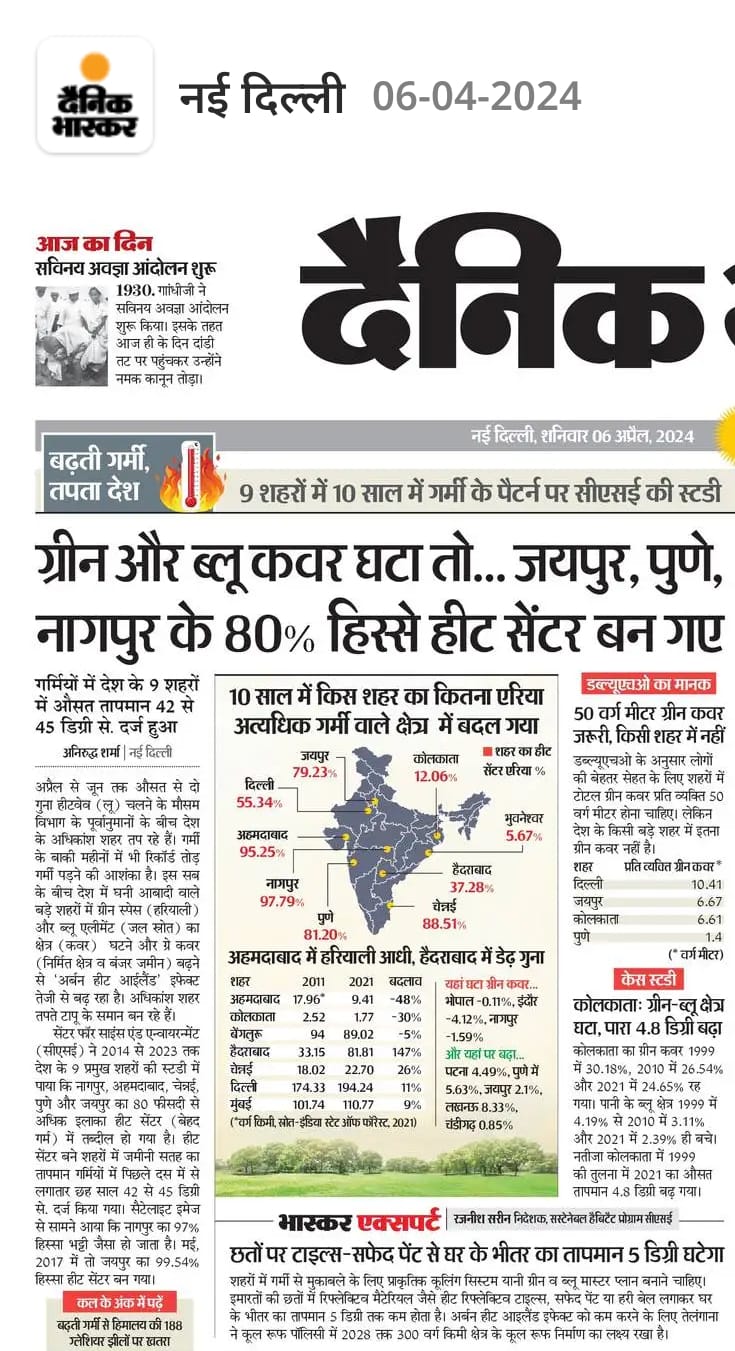
No part of Kolkata — not even the area around the chief minister’s home (Kalighat) or that of the mayor (Chetla) — is spared the effects of the rising Celsius, a recent study undertaken by a frontline environmental organisation of the country has found out. The report, prepared by the Centre for Science and Environment (CSE), has estimated that close to half of wards within the Kolkata Municipal Corporation limits fall in the category of either ‘high’ or ‘moderate’ heat vulnerability. The analysis, a copy of which is with The Plurals News Network, attributes the rising average Celsius in Kolkata to ‘shrinking’ green verge and water bodies, earning the label of the global topper in average heat rise over past six decades in a 2021 UN report. “Heatwaves are major threats to any city in India with high population and Kolkata is no exception. The city needs a heat action plan at the earliest,” said Subimal Ghosh, a climate scientist at the Indian Institute of Technology, Mumbai, and also a lead author of the IPCC report. City on boil The 2022-23 CSE study report that covered nine cities, including Kolkata, found that “47.2 per cent wards in Kolkata are highly to moderately vulnerable to heat”. Overall, 15 wards in the city were tagged as ‘high heat vulnerable’ with another 53 having ‘moderate’ status; including ward numbers 73 and 82, where chief minister Mamata Banerjee and city mayor Firhad Hakim live, respectively. While 55 wards were identified as ‘low heat vulnerable’, only 21 wards, mainly spread in the city’s southern and eastern fringes, were found not being heat - vulnerable. The report card also pointed out that “70 per cent slums fall in the recurrent heat stressed areas” almost throughout the entire length and breadth of Kolkata”, incidentally nearly one-third of the city’s resident population of around 4.5 million, live in slums. The Kolkata heat map shows that the northern part of the city stands more affected with almost non-existent ‘no heat vulnerable’ ward. The high heat vulnerable wards include 6, 13, 14, 29, 32, 46 in the north covering Cossipore, Maniktala, Narkeldanga, Kankurgachi, Ultadanga and Esplanade regions. Wards 75, 79, 80, 81 covering Hastings, Alipore, New Alipore and Kidderpore areas; wards 58 and 66 - Tiljala, Topsia and Tangra around EM Bypass – ward 134 in Garden Reach; and wards 116 and 129 in Behala; were also found with ‘high’ vulnerability. Satellite data and ground findings collated “CSE conducted a study across nine cities, including Kolkata. Utilising satellite data considering the hottest month of each year from 2014 to 2023, we looked for areas where the land surface temperatures exceeded 45°C; this threshold was established in line with the India Meteorological Department’s criteria for a heat wave and scientific literature,” Rajneesh Sareen of CSE, who led the study, told this agency. “In Kolkata, we visited the heat centres, captured the physical features and activities, and identified the contributors to heat. We considered the status of blue-green infrastructure, population at risk and their heat adaptability apart from the heat factor in the area to assess the vulnerability,” he further added. Heat centres are those areas where land surface temperature reach 45 degree Celsius or more 6 or more years within 10 years. Water body diminished by 39% in 20 years The CSE analysis found that the city’s water body has decreased by a whopping 39 per cent; vegetation by 19 per cent, while built-up area increased by nine per cent during 1999 -2021; resulting in the shooting up of average heat. The Assessment Report - 6 of UN body Intergovernmental Panel on Climate Change found that Kolkata recorded the highest rise in surface air temperature within the studied cities and regions across the world from 1950 to 2018 — 2.6°C — followed by Tehran and Moscow. “Climate adaptation is crucial and needs to involve extensive monitoring of temperature and humidity within the city, implementing a local-scale early warning system, and prompt dissemination of alerts to the public,” observed Ghosh of IIT Mumbai, adding that “we can say with high confidence that extreme heat and heat wave phenomena are going to increase in cities like Kolkata and hence, it definitely needs a heat action plan.” “We are working on a city climate action plan and mitigating heat is definitely one of its key components,” a senior Kolkata Municipal Corporation official told this reporter.

Human-made crisis

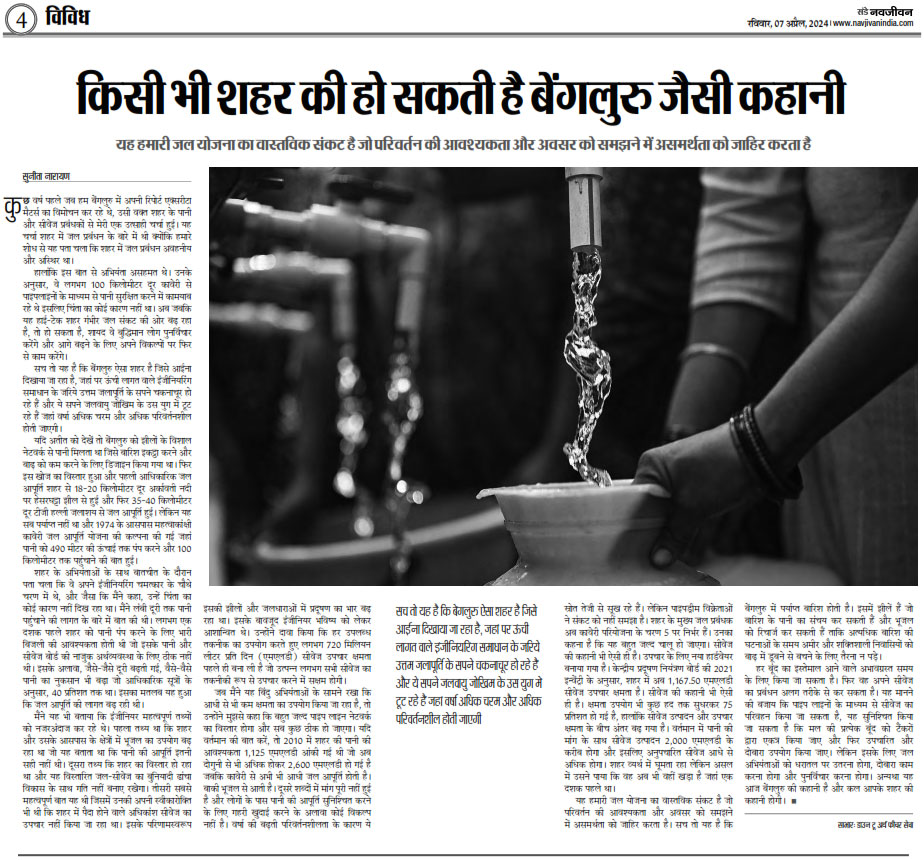
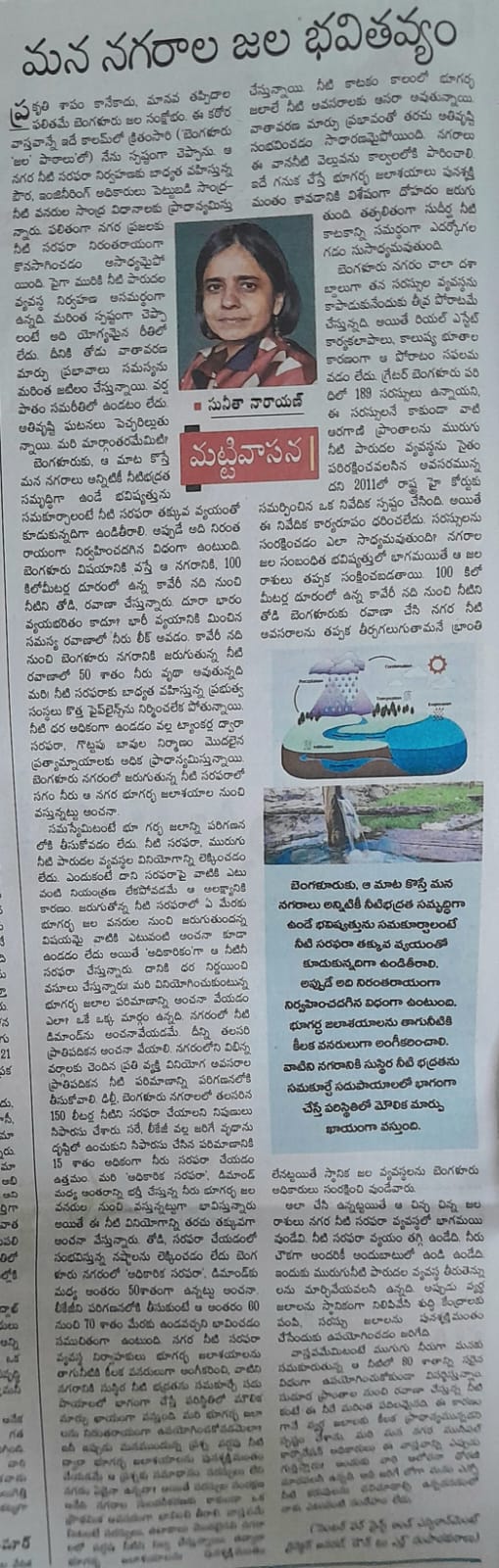
I wrote last time how Bengaluru’s water crisis is human-made. This crisis is not about the lack of water, but about how the city managers have invested in a system that is both capital- and resource-intensive and how this leads to unsustainable water supply and inadequate sewage management. This crisis is then exacerbated by climate change, which is adding to greater variability in rainfall and extreme rain events. What, then, is the way ahead? The key to a water-secure future for Bengaluru, and indeed for all our cities, is that water supply must be affordable. Only then can it be sustainable. In the case of Bengaluru, water is sourced from the Cauvery, some 100 km away, pumped up and transported. This means the cost of water is high. Worse, the longer the distance, the more is the water leakage. In the case of Bengaluru, water leakage is roughly 50 per cent. In Delhi, which also sources its water from a distance and then transports it across the length and breadth of the city, the loss is a whopping 60 per cent. This means, the water that is finally available after leakage or loss, is even more expensive to supply. This also means, industries and households either do not get the supply as the agencies cannot invest in new pipelines; or, if the cost of water is high, they prefer to look for other options—from tankers to digging borewells. In Bengaluru, it is estimated that half the water supply comes from its underground aquifers. The problem is, groundwater is not accounted for—the water and sewage boards discount its usage because they do not control its supply. In most cases, they do not even have any estimation of how much water is being sourced from below the ground, as against the “officially” supplied and billed water. The only way to do the math is to estimate the water demand of the city—this is done on a per capita basis, assuming a quantity for each person’s requirement in different classes of cities. Bengaluru and Delhi, for instance, have recommended water supply of 150 litres per capita per day and 15 per cent over and above this, for leakage. The gap between the “official supply” and demand is then assumed to be from groundwater. But this is often underestimated because the massive losses are not measured. In the case of Bengaluru, the gap is 50 per cent; it will be safely 60-70 per cent after accounting for water leakage. This is where the opportunity lies. If city managers accept that aquifers are a critical source of drinking water and make it part of the city’s water-secure future, it will change the equation. The question then would be how groundwater can be used sustainably. This is where the answer of recharging through rainwater becomes the real kicker. Conservation of lakes, and not just cosmetic beautification, becomes a necessity. The fact is, lakes and other waterbodies are sponges of a city; they hold excess rainwater and recharge the groundwater for times of scarcity. As climate change raises the spectre of more rain in fewer days, all cities will need to drain their flood. If cities do this in a way that helps recharge their aquifers, they can survive prolonged periods of water scarcity and drought. Bengaluru, like most other cities of India, had an intricate system of lakes, so that the overflow of one would spill to the next and then the next. But this was studiously discounted because our highly trained water managers only focus on “big” engineering solutions of transporting water in pipelines. The city, over the past many decades, has been fighting a battle to protect its waterbodies—but losing to land development and also to pollution. The 2011 report on lakes submitted to the state high court estimated that there were 189 lakes in Greater Bengaluru and said that not only the lake but even the catchment and drainage need to be protected—without any real success. Lakes can be protected only if they become part of the water-wise futures of our cities. If Bengaluru did not have the mirage of bringing water from 100-km away Cauvery, it would have invested in the protection of its local water systems—from rainwater harvesting to lake conservation. These would then have been part of the water supply infrastructure, making water supply less expensive and thus more affordable. This, in turn, would have required water boards to rework the paradigm of sewage management so that the wastewater could be intercepted locally, taken to treatment plants and then used to recharge lake water. The fact is, we discharge as much as 80 per cent of the water that is supplied as sewage. Its availability is more secure than water transported over distances. This is why excreta matters. But all this requires changing the mindset of our water managers, and I am not sure how many more droughts this will take. DTE The writer is the Director-General of CSE and editor of DownToEarth. Views expressed are personal

LSGD wants parties to pay for ‘campaign waste’ disposal

THIRUVANANTHAPURAM: The state government wants political parties to clean up their act! In a major move, the local self-government department (LSGD) has proposed that the state chief electoral officer make political parties and candidates financially accountable for the tonnes of waste generated during Lok Sabha election campaigns. It is estimated that a minimum of 5,000 tonnes of campaign material waste will be generated in the state this poll season. As per a study conducted by the Centre for Science and Environment, around 6,000 tonnes of plastic waste alone was generated during the 2019 LS election in the country. According to the Solid Waste Management Rules, 2016, the producer should pay for the waste generated by them. Ever since the launch of the ‘Malinya Muktham Nava Keralam’ campaign, the rules have been implemented strictly in the state. The government also brought out an ordinance to collect a user fee, along with the taxes, for those failing to foot the bill. It is learnt that the cost of disposing 1kg of unsegregated waste ranges from Rs 6 to Rs 10. “This is a huge burden on the financially struggling local bodies in the state. Political parties and candidates are not immune to these rules and regulations. Just like any other citizen or institution, they are also bound to be financially accountable for the waste generated during election campaigns,” said a top official of LSG department. According to the official, discussions in this regard are ongoing with election authorities. “Candidates are splurging to run their campaigns, and it shouldn’t be a problem for them to set aside funds for the disposal of campaign waste generated by them,” the official added. The LSGD in collaboration with the chief electoral officer has come out with a special handbook on green protocols to be followed for the Lok Sabha election.

Unlocking sustainable ways to manufacture locks

Aligarh hosts approximately 6,000 lock-making industries, collectively contributing to 75% of locks manufactured in India. The lock industry in Aligarh relies on the strategic use of scraps generated at the pre-manufacturing level, post-manufacturing remnants, and materials sourced from dismantled vehicles, to repurpose metal waste into locks. Recycling car scraps to manufacture locks, a trend observed over the past 10-15 years, reduces the demand for new resources and minimises energy consumption and also decreases the carbon footprint associated with steel production. On a typical Monday morning, 47-year-old Sajid Ali, a third-generation artisan from Aligarh, meticulously feeds steel sheets into a roller, which flattens them further getting them ready for the subsequent stages of lock manufacturing. Despite their fresh appearance, these sheets bear subtle signs of prior use and occasional unevenness – a testament to their recycled origins. Sajid, a resident of the Shah Jamal area in Aligarh, Uttar Pradesh, explains, “These are not fresh sheets. Extreme precision and uniformity are not always required in the hardware industry, allowing us to utilise these less uniform sheets. That is why we use car scraps.” Having started working as a locksmith at age 21, Sajid now produces around 35 to 40 locks per day of varying sizes, which require approximately 15 kg of car scraps. Procuring these materials is no small feat. At the crack of dawn, artisans like Sajid and their assistants converge at Saroj Nagar and a few other areas, where negotiations with scrap dealers unfold amidst a bustling backdrop. After rounds of bargains over prices, these artisans secure the raw materials essential for the locks they aim to craft. These locks, crafted from old sheets, gleam with the promise of safeguarding valuable assets. They are sought after not only across different parts of the country but also abroad, underscoring the city’s status as a prominent hub for lock manufacturing. With more than 6,000 lock-making facilities registered, Aligarh boasts a rich history dating back to the Mughal era, but it was the British who are credited with streamlining it as a major economic activity. Situated about 150 km southeast of New Delhi, Aligarh witnesses around two lakh artisans who are busy creating handmade locks. From large-scale factories to humble household kitchens, the city’s lock-making industry thrives, contributing to around 75% of all locks produced in India. Apart from registered businesses, an estimated 3,000 homes also actively participate in this industry, evident from lock-making tools and components scattered throughout local residences. Repurposing metal waste Lock manufacturing relies heavily on high-quality raw materials such as stainless steel, iron, brass, and nickel. However, in the recent years, there has been a notable shift within the industry towards utilising car scraps as a primary resource, according to local manufacturers. Sajid Ali recalls a time when scrap dealers, locally known as kabaadiwala, would arrive with carts overflowing with various brass scraps, including mugs, pans, and gas knobs. Recognising the potential in these discarded materials, manufacturers began exploring alternative sources for raw materials, leading to a transformative revelation that waste could be repurposed. This newfound perspective sparked a wave of innovation within the industry. With the automotive sector generating substantial amounts of metal waste, artisans and factory owners saw an opportunity to tap into this resource. The idea of using car scraps for crafting intricate locks proved to be innovative and cost-effective, addressing the scarcity of raw materials faced by manufacturers. Sagar Gupta, Managing Director of G.Bhaiyaji Secure Homes, sheds light on the industry’s eco-conscious approach. “We procure scrap material from large furnaces provided by car manufacturers, often obtaining surplus materials of varying thickness through online bidding. Despite being labelled as scrap by manufacturers, we find these materials to be of premium quality for our purposes,” he explains. The industry’s preference for malleable square sheets, ideal for lock and hardware manufacturing, drives the innovative repurposing of materials. Ratna Vadra, a faculty member at the Institute of Management Technology, Ghaziabad, has written a paper on the Aligarh lock industry highlighting its challenges. She says that concepts such as ‘learning by doing’ have a significant bearing on the Aligarh lock industry, especially in material sourcing. Through hands-on experience, lock manufacturers gain knowledge and skills in sustainable material sourcing. For instance, they test different recycled materials, judge their suitability, and discover which suppliers offer the most economical and ecologically responsible solutions, she says. The economics of recycling Ali reflects on the surge of interest in using car scrap some 15 years ago. “Although the industry has always relied on various types of scraps, not exclusively car scraps but also household scraps of brass, aluminium, iron, and steel in a limited capacity. The sheet coils that used to come to us had a width ranging from about 600 mm to over 1800 mm, neither of which met our requirements nor were cost-effective for us.” Many small-scale factory owners informed Mongabay-India that the shift towards car scrap was driven by cost-effectiveness. Compared to new sheets, which are more expensive, car scraps offer a cheaper alternative. Additionally, the nature of these scraps makes them suitable for producing small parts, further enhancing their utility. By carefully managing how these scraps are used—determining the number of pieces that can be produced and their combinations—they claim to have achieved efficient and effective production processes. The cost of stainless-steel sheet coils, such as the Jindal SS 304, varies with thickness and dimensions. For instance, a 3-4 mm thick sheet costs around Rs. 250 per kg in India, and the price generally increases with thickness. Gupta told Mongabay-India that the scrap material they acquire through bidding typically costs them between Rs. 100 and Rs. 150 per kg. The quest for sustainability also drives exploring diverse scrap sources beyond traditional practices. “In the lock industry, we look everywhere for scrap materials that can be reused, even from unexpected places like leftover sheets from computer manufacturing. After these sheets are cut down for their original purpose, we take the remaining pieces and turn them into parts for locks. This approach not only saves materials but also helps the environment by reducing waste,” says Pradeep Maheshwari, Proprietor, Brassco Enterprises. The commitment to recycling extends further, as evidenced by the strategic use of cylinder knobs. For example, the government collects certain items like cylinder knobs, sells them at auction, and then the factory owners buy them to use in their locks. “Even the waste from our casting process, ‘lochan,’ is recycled again and remoulded into brass form at a fraction of the cost of new materials,” Maheshwari further explains. Discussing the cost-effectiveness of recycling brass, Maheshwari emphasises that with the price of brass at Rs. 300 per kg, the recycling cost for this waste material is approximately Rs. 75. This cost includes the expenses associated with melting the waste and giving it a proper shape. Hari Om, president of the Aligarh Locks Manufacturers and Traders Association, sees the increased use of scraps due to the competition with Chinese products. He says, “We don’t receive the government support needed; we have to pay market price for iron or steel sheets. For instance, while raw brass material might cost Rs. 300 per kg in China, it costs us Rs. 500 per kg, which has led to a shift towards using scraps in our industry.” Stiff competition from Chinese products is a big challenge for Aligarh lock manufacturers, experts believe. Ratna Vadra highlighted these challenges in her 2020 paper. In addition to competition from Chinese manufacturers, she listed several other factors, such as dwindling demand for handmade locks and the adverse effects of government policies such as demonetisation and GST implementation on the Aligarh lock industry. Vadra says that the affordable pricing Chinese competitors offer may require more work for Aligarh producers to match, even with creative strategies like using recycled materials. Reducing the carbon footprint Furthermore, Gupta from G.Bhaiyaji Secure Homes emphasises the environmental benefits of utilising these scraps. He states, “By incorporating these materials into our production process, we reduce the demand for new resources and minimise energy consumption. This sustainable approach conserves energy expended in material creation and transforms waste into valuable products.” The iron and steel industry, essential for lock manufacturing, carries a substantial environmental burden due to its energy-intensive processes. Traditional steelmaking emits significant carbon dioxide, approximately 1.7 to 2.2 metric tonnes per tonne of steel produced. India generates around 25 million tonnes of scrap metal annually and imports an additional five million tonnes. To address steel requirements and emissions, the government aims to increase the share of scrap in steel production to 50% by 2047. Furthermore, data on car manufacturing waste in India underscores the urgency of adopting sustainable practices. A joint study by the Central Pollution Control Board (CPCB) and GIZ estimated that there were about 8.7 million end-of-life vehicles (ELVs) in India in 2015, with projections suggesting a 250% increase to approximately 21.9 million by 2025. The increase in scraps emphasises the need for innovative recycling initiatives like those in Aligarh. Anumita Roy Chowdhury, Executive Director, Centre for Science and Environment (CSE), explains that Aligarh’s lock manufacturers are reducing the demand for newly produced steel by repurposing car scraps and other recycled materials. This practice not only limits waste generation but also decreases the carbon footprint associated with steel production. For instance, reusing one tonne of steel scrap in manufacturing can save approximately 1.5 tonnes of carbon emissions compared to producing a new tonne of steel. Given Aligarh’s significant output, the city’s recycling innovation could substantially reduce the industry’s overall carbon footprint, though precise figures would require detailed analysis. However, Chowdhury points out that these practices are often informal and lack a structured framework. To fully leverage these efforts, a more systematic approach to waste management across the industry sector is needed. By better mapping where and how waste is generated and offering robust support to small and medium-scale enterprises, we can significantly enhance their economic benefits while advancing sustainability goals.

एलएसजीडी चाहता है कि पार्टियां 'अभियान अपशिष्ट' निपटान के लिए भुगतान करें

तिरुवनंतपुरम: राज्य सरकार चाहती है कि राजनीतिक दल अपना आचरण साफ़ करें! एक बड़े कदम में, स्थानीय स्वशासन विभाग (एलएसजीडी) ने प्रस्ताव दिया है कि राज्य के मुख्य निर्वाचन अधिकारी लोकसभा चुनाव अभियानों के दौरान उत्पन्न होने वाले टन कचरे के लिए राजनीतिक दलों और उम्मीदवारों को वित्तीय रूप से जवाबदेह बनाएं। अनुमान है कि इस चुनावी मौसम में राज्य में कम से कम 5,000 टन प्रचार सामग्री का कचरा उत्पन्न होगा। सेंटर फॉर साइंस एंड एनवायरमेंट द्वारा किए गए एक अध्ययन के अनुसार, देश में 2019 के लोकसभा चुनाव के दौरान अकेले लगभग 6,000 टन प्लास्टिक कचरा उत्पन्न हुआ था। ठोस अपशिष्ट प्रबंधन नियम, 2016 के अनुसार, निर्माता को उनके द्वारा उत्पन्न कचरे के लिए भुगतान करना चाहिए। 'मलिन्य मुक्तम नव केरलम' अभियान की शुरुआत के बाद से राज्य में नियमों को सख्ती से लागू किया गया है। सरकार बिल का भुगतान करने में विफल रहने वालों से करों के साथ-साथ उपयोगकर्ता शुल्क वसूलने के लिए एक अध्यादेश भी लेकर आई।

Deepening water crisis in Indian cities

Acute scarcity of drinking water in Bengaluru has attracted national and international attention. It is facing the worst crisis in decades. The Silicon Valley of India, the IT capital is being compared with Cape Town which was declared a, zero water city. It did manage to survive with some drastic measures. The situation, however, may not be that dire in Bengaluru, well, as yet. There are ominous signals of impending crisis in several Indian cities and urban centres. There is excessive dependence on groundwater and that has clearly compounded the problem of adequate supply of fresh water. The Centre for Science and Environment finds that 48% urban water supply comes from groundwater. What is disturbing is that in 7 out of the 10 most populous cities the groundwater table is receding for the last two decades. As per a Niti Aayog report 21 cities run the risk of running out of groundwater, even at great depths of the earth’s crust. Borewells have run dry, as in Bengaluru and other places. The state government has responded with an idea of drilling more borewells in summer months. Lakes have either dried up or have been usurped by unplanned, unbridled urban development. Out of 1,700 lakes in Bengaluru, just about 200 remain, some of them too have gone dry. This is the same story in every other city in India. According to a Niti Aayog report of 2018, 40 per cent of the population will have no access to drinking water. Global warming, climate change, weak monsoons et al, have contributed to the crisis in several cities. Unplanned, unregulated growth too has played its part. For example, from a population level of 96 lakhs or less in Bengaluru in 2011, the number has now touched 1.42 crore in a short span of time. Deficit in piped water has led to flourishing trade for packaged drinking water (PDW) in most urban areas. A recent study found that 38% of the households in Kolkata and 70% in Chennai depended on 20 litre water jars for their daily needs which is now developing as an alternative mode (to piped supply). They depend upon independent but groundwater sources. With little or no regulation, the efficacy of the model is a suspect. More problematic is the issue of quality standards. In a decentralized system, there is no way of ascertaining whether water is treated or otherwise. There are players that include multinational companies along with local operators at various levels of extraction and transportation. The model scores on quick response which is vital in a resource like water. Water mafias have erupted in several cities. There are reports of sudden spurt in demand for water tankers at the level of manufacturers. Quality concerns exist in the case of piped water systems, too. Samples collected from 21 cities last year did not meet the quality standards. According to Niti Aayog nearly 70% of the water supplied to households is contaminated. Worse, Jal Pey Survekhshan revealed last month that just 10% of Indian cities meet the drinking water standards. Old and leaky pipelines that run close to sewage pipes are a common problem in several cities. Fixing the water crisis problem needs a multipronged approach. Reuse of treated water is already done in cites. More needs to be done. For example, several industrial units can do with treated water. Accurate and reliable information needs to be given by authorities, even suggesting ways and means of using such water. In agriculture too, nearly 80% of the requirement is met by fresh water, suggesting the enormous scope for saving precious fresh water. Singapore is already using treated water for drinking purposes, of course, after due processing, testing and certification. ‘Ah! Drinking sewage water’-is the common refrain in India as we are not psychologically tuned to the idea nor is the level of general awareness good enough. Secondly, every effort must be made to conserve water. Various studies and reports suggest how a huge quantity of water is wasted. Water is a finite resource. Incentives for conservation and penalties for excessive usage have to be put in place. Free or near free electricity in rural areas in several states is the root cause of depleting groundwater resources. Governments and major political parties must come to terms and refrain from competitive populism. Farmers will resist and they have shown their collective ability in blocking roads and mobilizing mass support. But they may be compensated differently, say by factoring it in MSP or cash transfers by other means. Thirdly, pricing of water needs an overhaul. Presently, there is a huge gap in cost and price charged by government agencies. In several urban centres, water is fetched from distances as far as 100 kms, as in Bengaluru. Pricing based on costs incurred will encourage savings. Cost recovery will improve finances that can be used for enhancing efficiency. Fourthly, it is time for establishing a water regulatory authority on the lines of power or electricity. Due to political compulsions, state governments will be averse to taking hard pricing decisions. An independent regulatory authority will view the issue holistically and act in a sustainable manner. Finally, it boils down to urban planning, proper regulation and sustainable development. Patently illegal constructions put pressure on water consumption. There is a suggestion that apartment buyers obtain some sort of a water bond from the builder to secure their requirement. But the buck does not stop there; if there is no water, no bond or surety will come to rescue. There are enough powers already in the hands of municipal and local bodies to deny permission for construction where no thought is given to source and supply of water to the occupants. Till such time that the water infrastructure is improved to tide over rain deficit periods, the state should adopt a calibrated approach to granting of new licences and permits. The author has four decades of experience in higher education teaching and research. He is the former first vice-chancellor of ISBM University, Chhattisgarh.

Minimum temperature in most of Bengal has increased in past 50 years

The minimum temperature in most of Bengal has increased in the past 50 years, an analysis of daily temperatures recorded in the state between 1969 and 2020 has shown. The “preliminary analysis” by scientists at Indian Statistical Institute (ISI) Kolkata also showed a rise in temperatures recorded in Alipore and Dum Dum, two weather stations in Kolkata. Discussions around global warming are not new but this is the first time that a reliable dataset has been analysed and it has emerged that Bengal, and Kolkata, have also warmed in the 50-year period. The scientists associated with the analysis said the actual degree of rise in temperatures would be published later. They did not want to divulge it immediately. The Intergovernmental Panel on Climate Change (IPCC), a United Nations panel, said in its sixth assessment report (AR6 Synthesis Report) published last year that “human activities, principally through emissions of greenhouse gases, have unequivocally caused global warming, with global surface temperature reaching 1.1°C above 1850–1900 in 2011–2020”. The report said: “Global surface temperature has increased faster since 1970 than in any other 50-year period over at least the last 2000 years.” For the study on Bengal, the temperature dataset was sourced from the India Meteorological Department. It was procured as part of preparations to make a climate action plan for the state. The ISI has sorted and analysed the data to provide indicators to the state environment department, which will prepare the climate action plan. The impact of a temperature rise will be felt in multiple sectors, including agriculture, energy, fisheries and forests, said scientists. “We have analysed the daily temperature recorded across 32 weather stations in Bengal between 1969 and 2020. The results showed an increase in minimum temperature for most of Bengal, barring the saline coastal zone,” said ISI professor Debasis Sengupta. The ISI and state environment department teams divided Bengal into seven agro-climatic zones. These are the Himalayan mountains, Sub-Himalayan plains, Barind zone, Rarh plains, Western plateau, Gangetic Alluvial zone and Saline Coastal Zone. “We plotted the temperatures recorded on a straight line and found that the line is going up, which shows that there has been a rise in the minimum temperature recorded,” he said. “The maximum and minimum temperatures recorded in Dum Dum and Alipore have also recorded a rise in this period,” he said. Sengupta sorted and analysed the dataset with fellow professor Debashis Paul and ISI research scholar Urmisha Chatterjee. The state environment department had procured rainfall data from 1901 to 2020. The temperature and rainfall datasets have been analysed for indicators of climate change. The Telegraph had earlier reported that the analysis of south Bengal’s rainfall figures over 60 years from 1961 shows a clear decline in the amount of rain in early monsoon and an increase in rain in the latter part of the season, often stretching into October. The decline in the volume of rain in June and an increase in September and October can seriously impact agriculture, hitting both kharif (monsoon) and rabi (winter) crops, said scientists. “Rainfall and temperature are the basic climatic parameters to be examined for any indications of climate change. The findings for Bengal are consistent with regional and global trends,” said Anumita Roy Chowdhury, executive director of the New Delhi-based Center for Science and Environment. Harjeet Singh, an advocate for the cause of developing countries in the annual UN climate change conference, said there was now evidence proving “direct connection between increase in temperatures and rise in climate events like floods, cyclones and droughts”. “The findings on Bengal and Kolkata send a clear message that we need to step up adaptation and mitigation measures,” said Singh, co-founder of Satat Sampada, a social enterprise promoting environmental solutions. The AR6 Synthesis Report also said human influence has likely increased the chance of extreme events since the 1950s, including increase in the frequency of concurrent heatwaves and droughts. Climate change has reduced food security and affected water security. Threat to public health has also increased manyfold. “In all regions increases in extreme heat events have resulted in human mortality and morbidity..... The occurrence of climate-related food-borne and water-borne diseases... and the incidence of vector-borne diseases... have increased,” the report said. The vector-borne disease dengue leads to mortality and illness in Bengal every year, especially during late monsoon and the few months after that.