
Cse In News

Think tanks, civil society caution that ‘fossil fuels’ mention in GST is riddled with loopholes

The latest text emphasises the need to transition away from fossil fuels in energy system For the first time after three decades of climate negotiations, the draft of the Global Stocktake (GST) released on December 13, 2023 in Dubai makes a direct mention of fossil fuels. The latest text adopted at the 28th Conference of Parties to the United Nations Framework Convention on Climate Change (COP28) emphasises the need to transition away “from fossil fuels in energy systems, in a just, orderly, and equitable manner, accelerating action in this critical decade, to achieve net zero by 2050 in keeping with the science”. Sunita Narain, director-general of the Centre for Science and Environment (CSE), said: “The inclusion of fossil fuels in the GST is an important starting point for the world to now discuss the road ahead, which must be based on funding and fairness.” Linda Kalcher, executive director of Strategic Perspectives, a European think-tank, said, “For the first time, the United Nations climate talks have addressed the need to stop burning fossil fuels. COP28 marks the beginning of the end of the fossil fuel era.” Kalcher cautioned in her statement that this deal is still heavy with loopholes, lacks timelines and fails to provide the support that the majority of the world’s people are going to need to finance the rapid transition that is now required. The GST compromises on ambition by leaving open the role of “transitional fuels” for energy security, which is a reference to natural gas — a loophole that oil- and gas-producing nations can easily exploit to expand production and use. In fact, the GST singles out coal as a fuel, and makes no mention of oil and gas at all, a press release by CSE stated. “This, when countries like the United States have been ramping up LNG exports to record levels, and EU is building new LNG import terminals, despite the IEA’s warning of peaking of fossil fuel demand. These investments risk carbon lock-in till mid-century and beyond,” CSE researchers added. Previously, at COP26, the outcome mentioned just one fossil fuel by referring to the phase-down of unabated coal power, a watered-down version of the required ‘phase-out’ certain countries have been batting for. It was carried forward unchanged at COP27 and COP28. The new text calls on the parties to triple renewable energy by 2030 and double energy efficiency. It also recognises that the costs of renewables are falling fast. COP28 President Sultan Al Jaber called it the “UAE consensus”. In response to the last GST draft text at COP28, Chiara Liguori, Oxfam’s Senior Climate Change Policy Advisor, said: “Instead of committing to a full phase-out of all fossil fuels, it only vaguely calls on states to phase down coal and reduce use and production of fossil fuels. Any commitments to actually pay for the transition toward renewables for lower-income countries are notable by their absence.” “Right now, people are dying because of catastrophic climate breakdown in the Horn of Africa and around the world. We need far more action now to prevent further massive loss of life,” Liguori said. “To find a resolution, rich countries with high historical responsibility for the climate crisis, like the United Kingdom, should commit to phase out fossil fuels faster and provide adequate finance and support to lower-income countries to transition to renewable energy,” Ligouri added. Much to the ire of scientists, civil society and activists, the text also encourages removal technologies such as carbon capture, utilisation and storage (CCUS), particularly in hard-to-abate sectors. A recent study by Oxford University’s Smith School of Enterprise and Environment warned that a high-carbon capture and storage pathway to decarbonisation to potentially mitigate half of today’s emissions in the oil and gas industry will cost an additional $30 trillion by 2050, compared to a low-carbon capture and storage pathway pathway. Besides high cost, CCUS has not been proven to reduce emissions. A carbon capture and storage retrofit on a coal plant in Texas only reduced carbon dioxide-equivalent emissions by 10.8 per cent over 20 years, a 2019 study found. Much of this is owing to an energy penalty, which refers to emissions unaccounted for during the operation of the technology. Richard Black, the Oxford study’s author had said on microblogging platfgorm X (formerly Twitter): “Governments must abandon claims that blanket CCS rollout is a sensible way to deliver Net Zero and the Paris Agreement goals. It isn’t: Renewable energy, efficiency, and clean electrification can do the job with much greater feasibility, lower sustainability risks and lower cost.” CCUS is just a loophole for the oil and gas industry to maintain the status quo, indicated Harjeet Singh, head of global political strategy at Climate Action Network International. “After decades of evasion, COP28 finally cast a glaring spotlight on the real culprits of the climate crisis: Fossil fuels. A long-overdue direction to move away from coal, oil, and gas has been set. Yet, the resolution is marred by loopholes that offer the fossil fuel industry numerous escape routes, relying on unproven, unsafe technologies,” he added. An analysis by the Center for International Environmental Law (CIEL) found that 475 lobbyists belonged to companies directly involved with CCUS projects at COP28. Lili Fuhr, director of the fossil economy programme at CIEL, said in her statement, “Just a year ago at COP27, carbon capture and storage was merely a loophole, unnoticed by most. At COP28, the question of ‘to abate or not to abate’ took center stage, with carbon capture and storage offered up as a technological savior. But under public scrutiny, the fossil fuel industry’s favorite pretext was stripped bare, exposing the abysmal track record of carbon capture technologies and the climate-wrecking reality of ‘abated’ fossil fuels like ‘clean’ hydrogen, ‘blue’ ammonia, or ‘low carbon’ gas.” We are a voice to you; you have been a support to us. Together we build journalism that is independent, credible and fearless. You can further help us by making a donation. This will mean a lot for our ability to bring you news, perspectives and analysis from the ground so that we can make change together.
Remodelling food systems

With climate change in mind, there is a growing discussion on the need to re-engineer the current model of agriculture and the food we consume. Agriculture today contributes to greenhouse gas emissions in a variety of ways — through methane emissions from rice cultivation and livestock and through nitrous oxide from the use of synthetic fertilisers and manure on fields. The large-scale clearing of forests, including rainforests, to produce beef cattle and even palm oil adds to the crisis of our climate-risked world. Then, there is the multi-continent transport for food processing and sale. Not to mention that the sector itself is highly vulnerable to the increased frequency and intensity of extreme weather events. What, then, should be the transition plan? This is where farms and food of our world — countries like India — provide answers. We have, as yet, in most parts not moved to an input-intensive model of livestock production. Most dairy farmers are still individuals, using combinations of open and stallfeeding for their animals. Their farms are based on agrosilvopastoral systems. But this is changing fast. Farmers are increasingly using expensive inputs — from fertilisers to seeds to pesticides. This adds to their debt burden, making them even more vulnerable to crop losses and extreme weather impacts. So, the elements of the agricultural model for livelihood-nutrition-nature security in our climate-risked world are as follows. First, it has to be a low-input-based model that protects the farmer from multiple risks. This will also put more money in the hands of farmers, particularly as we know that the high cost of food is unaffordable in most countries. It is clear that low-input agriculture is not necessarily lower in productivity. The conventional strategy — even what is being promoted in the name of smart agriculture — depends on high-cost inputs, which add to the cost of cultivation. The argument is that this strategy will lead to higher yields, which will give the farmer higher income. But this works only if the costs do not wipe out the profits. In the case of smallholder farmers, where there are little economies of scale, this is just not possible. Increasing yields will, however, require working on the health of the soil and providing irrigation to farmers when they need it most. Climate change will also bring new pests — this makes it all the more important for agriculture to be resilient, but this does not mean increasing the use of pesticides. It can and must mean changes in the practices of agriculture as well as the use of non-chemical alternatives. The bottom line is that climate resilience requires more ability to cope, recover, and ultimately put higher returns in the hands of farmers. This also means investing in markets that will provide opportunities for farmers to maximise gains. Second, agriculture has to be built on the principle of risk minimisation. This would mean promoting multiple cropping systems. This will also promote biodiversity as farmers would grow more than one crop on the field. Livestock economy has to be made integral as it would allow for management of risk so that there is income from different sources. Think of it like the diversification of investment portfolios, which bankers would advise you in these times of uncertainty. Third is the choice of crops that are both nutritive and compatible with the local environment. In other words, where there is water shortage, farmers should grow water prudent crops like millets. But this choice is not in the hands of the farmer. Governments must enable policies — from procurement to price — to promote growing of these crops. For instance, more biodiverse and climate-appropriate millets will be grown by farmers where governments have included them in schemes such as mid-day meals (this is one of India’s most important programmes as it aims to provide hot-cooked food in every school of the country). Change of cropping patterns towards climate-resilience will need this supportive structure. The fourth, and the most critical, element is that the choice of food that farmers grow is in the hands of consumers — us; what we eat; and why we eat it. If we change our diets, it provides signals to the farmer to grow differently. We know that food is medicine; yet we continue to eat wrong; eat junk. The food on our plates has lost the meaning of nutrition. We are in danger of losing the knowledge of good food — what our grand-mothers and mothers cooked in different seasons. This is why we must be part of this changed agriculture story. Food cuisines are about culture and biodiversity. The climate change crisis is human-made; it is we humans who have contributed to the emissions that threaten our present, and the very existence of our children’s future. It is we who must rework our lives; our ways of doing business. The fact is that we cannot go ahead with this model of agriculture in a climate-risked world. The writer is the Director-General of CSE and editor of DownToEarth. Views expressed are personal

After fossil fuel deal, experts see challenging road ahead

With the dust settling on what has been hailed as a historic outcome at the COP28 climate conference, experts say much will now depend on how the shift away from fossil fuels will in reality take place With the dust settling on what has been hailed as a historic outcome at the COP28 climate conference, experts say much will now depend on how the shift away from fossil fuels will in reality take place, the role of developed countries in this effort and the sticky problem of inadequate climate finance on which there was little headway in Dubai. The deal, approved by nearly 200 countries in the UAE on Wednesday, contains the first call for a transition from fossil fuels in a just, orderly and equitable manner, while accelerating action in this decade to achieve net zero emissions by 2050. Experts said there remain critical questions --- such as, can developed countries eat into the remaining room the world has to burn fossil fuels. They also said that though the language may appear to give a sense of time for countries to do what they need to in order to honour this consensus, changes in policies and entire new outlook for economies need to be immediate. For countries like India, this would mean a calibrated approach on how they can transition while meeting development aspirations. “I think for the first time there was a sense of urgency and sense of the crisis. In spite of the deep divisions between the North and the South, the inconvenient truth --- that we have to collaborate and that we have to come together --- was recognised and accepted at COP28,” said Sunita Narain, director general, Centre for Science and Environment. “The narrative has changed on the issue of low and concessional finance to be made available for countries of the South, on the actions that are needed, and particularly on the question of putting fossil fuels on the table. It is an inconvenient truth but we need to face up to the fact that we cannot have a simplistic debate on phasing out fossil fuels without having an action plan connected to it,” she added.

Governing the Climate

The twenty-eighth UN climate change conference, which took place in Dubai over the course of the last two weeks, has now come to an end. Like previous conferences, this COP took the form of a series of negotiations between countries to find an effective and legitimate approach to reducing dangerous warming. The entire architecture of the 1992 UN Framework Convention on Climate Change was built around differentiating between the rich industrialized OECD countries of the global North and the developing countries of the global South, attempting to account for the different needs and responsibilities of various nations. Conflict over money, machines, and how soon countries should phase out coal, oil, and gas have once again been at the forefront of negotiations. Remonstrations of the conference outcome’s gross insufficiency in the face of the climate crisis have come from many quarters, especially since the full phaseout of fossil fuels has not been enshrined as a requirement. The shared goal of negotiators at Dubai is to triple renewable energy globally by 2030. Such a commitment implies breaking through the financing barriers for developing countries, and creating political coalitions that can drive necessary national policy changes. At stake is something more fundamental: can the world historical process of “uneven and combined development” be decarbonized under the terrifying acceleration of anthropocenic crises? Navroz Dubash is a professor at the Centre for Policy Research in New Delhi and has been a key figure in international climate diplomacy for as long as there has been such a thing. Dubash was instrumental in setting up the Global Climate Action Network in 1990, and recently was coordinating lead author of the IPCC’s Sixth Assessment on Climate Change. He is the author of India in a Warming World: Integrating Climate Change and Development (2020) and Tubewell Capitalism: Groundwater Development and Agrarian Change in Gujarat (2002). Tim Sahay spoke with Dubash about the changing narrative of climate-oriented national development, and how past mistakes might inform a more resilient future. An interview with Navroz Dubash TIM SAHAY: You’ve been involved in international climate diplomacy since 1990, when the Cold War was nearing its end and the unipolar world was taking root. Now that we exist in a messier, multipolar world, how is climate diplomacy changing? Navroz Dubash: In the early years, there was a very strong cognitive lock regarding the design of the process. It was expected that we would simply follow the Montreal Protocol, which encouraged richer countries to produce substitutes for ozone-depleting chemicals, while transferring technology to poorer countries. That somewhat simplistic protocol was later applied to the climate process, and I think it was damaging. In the case of the climate crisis, it’s of course not about finding substitutes for one chemical. It’s about ending the historical coevolution between fossil fuels and industrial development. That line of thinking led to the top down approach of carbon rationing, set out in the Kyoto Protocol. When the US Senate unanimously refused to ratify Kyoto in 1998, arguing that it violated US sovereignty, it became clear that it could not work politically. That led to a period where climate negotiations were oriented around finding a way for the US to be brought back in. I think that was damaging because, as I like to say, other countries have politics, too. During that window—say from about 1998 to 2008—China was coming up in the rearview mirror. It was becoming the most important global determinant of whether we would be able to address climate change, and we weren’t thinking enough about how to structure the agreement so as to incorporate China. With little money or technology being transferred, much of the developing world saw the agreement as dysfunctional. The industrialized countries, for their part, wanted developing countries to prioritize cutting emissions. This resulting impasse led to the agonizing failure at Copenhagen’s COP in 2009. The negotiators still produced a statement because, as a former Indian negotiator once told me, the first rule of climate negotiations is that they never fail. But between Copenhagen and Paris, the only question that was possible to ask was: how do you get everybody on board? What enabled the breakthrough at Paris in 2015 was a pre-deal between the US and China. The key phrase was “common but differentiated responsibility and respective capabilities.” They added a clause that basically said, as national circumstances change, this has to shift. And that language was carried verbatim into the Paris Agreement. TS: Since there is no planetary leviathan that can enforce decisions, the Paris Agreement was entirely bottom up and iterative. Countries submit a voluntary plan to cut emissions, they take stock every five years and ratchet up their ambitions. Much of this agreement was underpinned by a “G2” deal between the US and China. Is it the case that once the US and China stop agreeing on things, the Paris Agreement will blow up? ND: I agree that the guardrails of the Paris Agreement were set by the US and China. But it does not follow that their weakening relationship means blowing up the deal; we do still have the Paris Agreement. It has multilateral buy-in from a lot of actors—it survived the setback of Trump pulling the US out of it. That suggests Paris has a “political ratchet” mechanism in addition to the bottom-up ratchet. How smoothly those are implemented is, of course, affected by the US-China geopolitical confrontation. As it happens, I was in an India-US Track 2 meeting, when we got word of the pre-Paris China-US agreement. In the meeting we agreed on a bottom-up approach that would involve each country making Nationally Determined Contributions (NDCs). However, very soon the “High Ambition Coalition” of small island countries, which were very worried about the existential threat of climate change, intervened to alter the agreement. Thanks to their work, instead of limiting warming to 2 degrees Celsius, the Paris Agreement insisted on the need to limit warming to 1.5 degrees. This had the effect of bringing the deadlines forward. This is because to limit warming to 1.5 degrees, everyone’s emissions would have to peak sooner and fall more steeply. The wager behind the Paris Agreement was that countries would come up with very generous NDC pledges and, upon implementing them at home, find that cutting emissions is in fact cheaper than they had initially thought. This would in turn contribute to a new green economy that would foster political coalitions domestically—going on to stimulate competition between countries, which would prompt some to go faster than they otherwise would have. At the next COP, their pledge would become even more ambitious. For some, this all relied on naming-and-shaming those that don’t meet their pledges. To me, the domestic implementation of NDCs—the national churn—was the more important part of the story. Once the target became 1.5 degrees, there wasn’t enough time left for that national churn. So, as soon as countries came up with their pledges, everybody was asked to up their pledges before anyone could get home to actually figure out their politics of implementation. As for the current COP, I think there is a reckoning because we’ve now realized that the 1.5 degree target is really out of reach. We are in an overshoot scenario, and as soon as you get to an overshoot scenario you could overshoot by a little, you could overshoot by a lot. So that forcing mechanism of having a target—in a sense, it’s no longer there. To my mind, that means refocusing attention on the national story. Linking national development and climate action TS: How do different priorities of North and South play out? India often speaks in terms of climate justice, arguing that it has polluted very little over the course of its history and so deserves “carbon space” for development. Meanwhile, the lead US climate negotiator Todd Stern infamously once said “if equity is in, we are out.” ND: As you say, India has been the standard bearer, both at the governmental and the non-government level, for climate justice. Very early on, in 1991, Sunita Narain and Anil Agarwal wrote a pamphlet called “Global Warming in an Unequal World,” which had a huge impact. Even today, India continues to argue that there is a finite carbon budget that should be allocated to less developed countries. For my part, I think the fact that the North has historically emitted much more than the South has consequences for how we should proceed. That said, I’m not sure that allocating a global carbon budget is the best way to operate. First of all, how do you allocate who gets to emit how much? The most important thing is to ensure that countries have access to the carbon required to meet their developmental needs while pivoting to a low-carbon future. This is important because if a country gets locked into a high-carbon future, it will probably be an uncompetitive economy within ten or twenty years. Too much carbon now means shooting yourself in the foot with stranded costs, failure to develop new technologies, and so on. If there’s only so much fossil fuel we can burn and the rest we have to keep in the ground, then the principle should be maximizing global welfare, which means that if Nigeria needs to exploit some of its gas as a bridge measure, it should have first dibs on doing that, not Norway. Where the rubber really hits the road is in figuring out ways to have capital infusions going from the North to the South. Climate action is going to be highly capital intensive. One of the implications of the climate equity story is how do you manage these massive transfers. Let me come back to a hobby horse of mine. So much of the climate conversation is dominated by Northern analysts—that’s where the research money is—so their interests end up dominating the discussion. For example, there is much more research on decarbonizing heating than on cooling, but given that the majority of buildings in tropical, developing countries are yet to be built, the future of cooling is the much bigger story. To take another example, there’s a lot of conversation about pathways to net zero, which makes sense if you’ve already peaked. But for those who haven’t, they need to avoid locking-in at a high peak. Emissions trajectories should look like a hill, not a mountain. We should be thinking in terms of the idea of avoided emissions. What you do from a policy point of view to avoid emissions is quite different from what you do to reduce emissions. A carbon tax or a cap and trade system, for example, isn’t going to do much to help you avoid emissions because much of that is actually from infrastructure yet to be built like power, urban construction and transport. If 80 percent of future emissions are going to come from the developing world, we need to frame our questions accordingly. TS: Everybody’s talking about linking climate and development. You’ve written a book on the topic, but “co-benefits” like economic competitiveness or reducing air pollution are now broadly linked to national goals. Many countries are embarking upon a green project as one of national development. What do you make of these new varieties of governing climate? ND: I definitely see the shift in countries like India, Brazil, South Africa, and China thinking about climate as part of a larger project of remaking national economies. In a sense, I think that’s productive. The old framing of a “collective-action problem” that sought to distribute the “costs” of climate action was never going to work. Arguably, many of the developed countries have not delivered on climate finance or on phasing out fossil fuels first, so the North-South tensions have come roaring back. I think co-benefits are a productive turn, but it’s yet to be seen how they will work. Broadly, we have two competing approaches. One is a European-led narrative that says the mitigation imperative is an existential one, and so should be first priority. We have, however, seen in the UK and Germany for example, the extent to which climate goals by themselves are politically fragile. When something like the Ukraine war happens, or when energy prices spike, climate goals seem to take a back seat. The other approach is the idea that developing countries like India would pursue low-carbon development projects—public transport, for example— that would make for more liveable cities. This approach to climate is convergent with development; the choice between roads or railways are development choices but also climate choices. What’s really interesting to many of us is that the US Inflation Reduction Act implicitly adopts this approach; it wasn’t just for the developing world. This approach, what I call embedded—as opposed to standalone—climate framing, is an alternative to the European carbon-centric regulatory model, which is based very heavily on counting up and pricing carbon. TS: For decades the neoliberal project has gutted state capacity. A really interesting aspect in your work is the question of how states must be re-energized for green world-building. Bidenomics has called for a “whole-of-government” approach. A national developmental state is one thing, but one of the ways we’ve been thinking about the polycrisis is that the twenty-first century state needs to develop new eyes, ears, arms, and hands to intervene, listen, predict, and actually change the ways in which states are organized. What does that “climate-ready state” look like to you? ND: If a state wants to push a particular development agenda, it needs to have state capacities that can see the project out. A good example of such an institution is the Climate Change Committee in the UK, which is tasked with recommending five-yearly carbon budgets. It doesn’t have executive authority, but it has a kind of normative authority to set those budgets, which ministries are meant to align with; Parliament plus a few external actors drawing on the CCC’s analysis to hold those ministries to account. It charts a course not because it’s empowered to do so, but because it’s a place where a lot of ideas get digested and then injected into the public discourse with some credibility. Of course, that kind of vision isn’t enough. You need a strategy-setting body, but that has a much more complex analytical task. Another feature of such a state would be putting an end to what are currently siloed ministries, be they transport, or agriculture, or water usage or what have you. These departments need to work together. Take transport, for example: building transport infrastructure relies on a combination of urban planning and technology, plus, importantly, behavioral shifts. All this can’t just be dumped in the lap of a national transport ministry. In countries that are federated, it’s even more complex, and you have to also think about relationships between federal and provinces. Given all this, how do you develop mechanisms to coordinate? One way to do it is around existing epistemic communities. In the US, these take the shape of climate “task forces.” It is important to realize that there will be winners and losers as a result of these low-carbon transitions. Big shifts are on the horizon: phasing out the internal combustion engine, for example, means a whole new set of economic actors coming in around battery technologies and manufacturing. Land usage is bound to change, which is tied to powerful political interests. In the wake of Covid, there is also a shake-up of commercial real estate. How can these distributional conflicts be negotiated? Some countries do a better job of this than others. South Africa has a deliberative tradition coming out of the post-apartheid era that can be used to work through thorny questions. In South Africa, the future of their electricity-mineral complex Eskom needs careful discussion. If it is to be dissolved, how is that going to happen in ways that bring labor unions along? South Africa’s Presidential Climate Commission has been a really interesting experiment. This returns us to earlier debates about varieties of capitalism. How does the nature of the capitalist enterprise in different countries make it easier or harder to make the green transition? In each case, one needs to start with the historical institutions that already exist, whether it’s corporate structures or forms of voting, first-past-the-post systems or proportional representation. TS: Developing countries at COP28 have pushed hard to get financing for a Global Goal on Adaptation. Adaptation to extreme climate, unlike energy transition, is not going to make anyone money. It requires a lot more grants, as everyone seems to agree. Has the political economy of adaptation gotten enough attention or is it just assumed that governments have an obligation to save citizens’ lives? ND: It is, I think, under-baked. Adaptation is distinct from loss and damage which received a political fillip at the last COP. Adaptation is, in many ways, conceptually much more complex than mitigation, which can be measured with an emissions trajectory. You can’t measure your progress towards adaptation using a single metric. You have to build a more resilient economy and society. The message coming from the North is, we’re reasonably happy where we are, so we want to have systems that allow us to bounce back in the event of climate extremes. In the developing world, you already have massive loss and damage from floods, from weather events, and so on. It’s not about bouncing back, but about developing and building economic and social systems in ways that make it more resilient to both non-climate-triggered and climate-triggered shocks, understanding that one exacerbates the other. To bring it back to the question of state capacity: it’s imperative to anticipate areas of vulnerability upfront. You might have to rethink your entire pattern of what, in India, we call minimum support prices for agriculture. Which crops are you supporting and therefore incentivizing? India’s Council of Agricultural Research has done good work on identifying climate-resilient crops. The government typically incentivizes rice and wheat, and there’s a big push towards incentivizing millets, which are more resistant to weather events. Similarly, water resources planning is going to be huge for South Asia going forward. There’s an existing debate about surface water versus groundwater, about so-called river interlinkage projects, whether large storage structures like dams make sense or not in the context of heavy rain runoff. All these developmental questions are inflected with a climate imperative, and part of that is the coordinating story I talked about earlier. There are, to use the terminology of my colleague Sharad Lele, multiple stressors and multiple objectives. The multiple stressors—in addition to climate change, you have land use, industrial usage, urban patterns, and so on— are currently dominating, though they will soon be surpassed by the climate tipping points. The multiple objectives carry over from mitigation, things like job creation, urban livability, and so on. This, and the question of adaptation, implicitly raises important questions: What kind of development do you want? What kind of economy and society do you want to build?

Delhi Pollution Updates: खुलकर लें सांस, दिल्ली में हैं आप! प्रदूषण से मिली राहत, सभी इलाकों का AQI बेहतर

Delhi AQI Today: दिल्ली सरकार प्रदूषण को लेकर समय-समय पर एक्शन ले रही है. जिसका सकारात्मक असर दिल्ली के प्रदूषण के स्तर में देखने को मिल रहा है. इसकी ... https://www.aajtak.in/india/delhi/story/aqi-delhi-air-quality-improve-today-14-december-pollution-updates-aqi-moderate-cpcb-data-safar-mausam-updates-lbs-1594470-2022-12-14

The climate disaster strikes: what the data say

A series of impact assessments highlight India’s vulnerability to extreme weather events and the risks they pose to human health. India is facing a harsh new reality. In Kerala, near the southern tip of the subcontinent, floods frequently inundate farmlands and pour into households. In the sea off Mumbai, fewer fish are caught owing to an increase in cyclones and heavier rainfall. Farther north in Rajasthan, cattle farmers face rising temperatures and water shortages. In the northern state of Uttarakhand, forest fires are more frequent today than in the past. And in Satabhaya, a coastal village off the Bay of Bengal, rising sea levels and coastal erosion have forced hundreds of families to leave. All these problems have, of course, been exacerbated by climate change. Since the pre-industrial period, India’s rising temperature has caused the Himalayan glaciers to retreat, droughts to worsen, flash floods and landslides to increase and cyclones to intensify across the country’s 7,500-kilometre-long coastline. These events are now occurring on a regular basis (see ‘India’s extreme weather events’). In the first nine months of 2022, for example, India had an extreme weather event nearly every single day. “It can be a year-long swaying of the climate sledgehammer,” says Raghu Murtugudde, a climate researcher at the Indian Institute of Technology Bombay. “We now have disasters in pretty much every season.” Worrying change In 2020, India’s Ministry of Earth Sciences published the first climate-change assessment report for the country1. It was based on data from 1901 to 2018 and showed that the country’s average temperature in that period had risen by roughly 0.7 °C, bringing with it extreme weather patterns. March 2022, for example, was the hottest March on the subcontinent since records began in 1901, with temperatures of more than 40 °C combined with a drought as rainfall slowed to about one-third of normal rates. The two placed enormous stress on agriculture, with some regions experiencing a 30% reduction in their harvests, forcing the country to restrict its wheat exports. The increased demand on the electricity grid, partly caused by the increased use of air-conditioning units, caused the worst electricity shortage in more than six years. At least two states, Tripura in the northeast and West Bengal in the east, ordered schools to close. The extreme temperatures led to the deaths of at least 90 people. “It really shocked the country,” says Chandni Singh, who works on climate-change adaptation at the Indian Institute for Human Settlements, a national education institution based in Bengaluru. Nature Spotlight: India Heatwaves often have cascading effects on other hazards, leading to wildfires that destroy crops and release dangerous smoke, as well as accelerating the spread of infectious diseases and causing death. They can also lead to water shortages. Warmer air can hold more moisture, leading to lengthy dry periods before all that moisture gets dumped in a matter of days or even hours. The 2020 assessment1 shows that the total seasonal rainfall had dropped, but when it does rain, it pours, causing floods and landslides. In July this year, for example, torrential rain tore across northern India, causing landslides and flash floods, killing at least 22 people. And in August, heavy monsoon rains triggered landslides in India’s Himalayan region, leaving nearly 50 people dead. Events such as these have become the new normal. A climate assessment report published in November 2022 by the Centre for Science and Environment, a public-interest research and advocacy organization based in New Delhi, analysed the first nine months of 2022. It found that India experienced extreme weather events, ranging from heatwaves to cyclones, for 88% of that time period2. These disasters claimed 2,755 lives, affected 1.8 million hectares of crops, destroyed around 400,000 homes and killed almost 70,000 livestock. “This is the watermark of climate change,” the report states2. “It is not about the single event but about the increased frequency of the events — an extreme event we saw once every 100 years has now begun to occur every five years or less. Worse, it is now all coming together — each month is breaking a new record. This in turn is breaking the backs of the poorest who are worst impacted and are fast losing their capacities to cope with these repeated and frequent events.” Vulnerability Part of the problem is that India is positioned between the melting Himalayas and three rapidly warming bodies of water. The Arabian Sea warmed by 2 °C from 1982 to 2019, pumping moisture into northwest India. But the mountains squeeze the moisture from these damp winds as if they were a sponge, dumping rain and causing floods and landslides. The temperature of the sea now hovers at around 28 °C, which is warm enough for cyclones to form. A 2021 study shows that there has been a 50% increase in the number of cyclones in the past 40 years from the Arabian Sea3. There is “one extreme weather event after another — whether it’s the monsoon or the tropical cyclones”, says Roxy Mathew Koll, an oceanographer at the Indian Institute of Tropical Meteorology in Pune. To make matters worse, those cyclones now intensify rapidly, strengthening to dangerous storms in a matter of hours. Cyclone Amphan, for example, which caused widespread damage in eastern India in May 2020, initially had wind speeds of 140 kilometres per hour but quickly strengthened to 215 kilometres per hour, switching from a category 1 cyclone to a category 4 cyclone in less than a day. “We go to sleep thinking that it’s a big cyclone and by the time we wake up, our roofs are gone,” Koll says. “There is no time to respond.” It is clear that India’s unique locale places it at the mercy of climate change, but Singh points out that it is societal and economic factors that leave the Indian population with little protection. For example, in a heatwave, someone who can remain indoors with a cooling system is much less exposed than is a street vendor who needs to work outside — but fewer than 10% of Indians own air-conditioning. Furthermore, India’s booming population will place further demand on food and water, and the sheer number of people living in vulnerable areas (particularly in coastal regions) will rise, meaning climate change will take an even greater toll. Mumbai is particularly vulnerable, Koll says. It is already one of the most populous cities in the world and its population is likely to double to around 40 million by 2050. By that time, climate projections suggest a global temperature increase of 2 °C, causing worse monsoons, cyclones, storm surges, heatwaves and increased humidity in the city. “The impact at that time is unimaginable, even for climate scientists like me,” he says. Managing the fallout The 2020 assessment1 projected that the average temperature in India will increase by 4.4 °C by the end of the century. That will cause summer heatwaves to be 3–4 times more common and twice as long. A study by the Climate Impact Lab at the Tata Centre for Development, University of Chicago, predicts that there will be one million deaths a year from extreme heat in India by the end of the century if greenhouse emissions continue at their current level4. This means India needs to adapt to climate change. “We are headed to a very, very warm and hot world,” says Karthik Ganesan, a fellow at the Council on Energy, Environment and Water, a non-profit policy-research institution in New Delhi. “India’s effort must go towards figuring out solutions and managing the fallout of climate change.” In 2008, the Indian government launched the National Action Plan for Climate Change in an effort to do just that. The country has since poured money into hundreds of different adaptation schemes, from more-efficient irrigation systems to early-warning systems. The latter are crucial. If the government knows a cyclone is coming, for example, it can arrange an evacuation that can save lives. Before a drought, farmers can plan their irrigation effectively. And hospitals will have time to prepare for an influx of patients before a heatwave. Some of these adaptation schemes have already made an impact. In 2013, Ahmedabad, a city north of Mumbai in western India, implemented the first heat action plan across India and south Asia. After a six-day heatwave in 2010 that reached 46.8 °C and caused an extra 1,344 deaths (a 43.1% jump above the baseline death rate), the plan’s main goal was to alert the populations most at risk. But it also alerted government agencies, health officials, emergency responders, local community groups and media outlets. And it provided training to health-care professionals to help them prevent and manage heat-related cases. A later study estimated that 2,380 deaths were avoided in the two years after the plan was put into action5. Today, 30 similar plans are in place across the country. Heat action plans are not the only success story. In 1999, the Odisha cyclone, which hit the east coast south of Kolkata, peaked with winds of 260 kilometres per hour and killed nearly 10,000 people (although some estimates suggest there were as many as 30,000 fatalities). With the help of improved forecasts today, cyclones of similar intensity kill dozens of people, not thousands, Koll says. The study that analysed the first nine months of 2022 also found that fatalities from cyclones are increasingly rare2. Cyclones that devastated nearly 100,000 hectares of land resulted in only two deaths. “This is because of the laudable work” done by the India Meteorological Department in cyclone forecasting, so “there is adequate warning to governments”, the report states. Despite these advancements, Singh argues that many of the adaptation schemes are insufficient, mainly because the country is so large with so many different hazards. It also struggles to think holistically about many of these issues, she says. For example, Indian farmers have started using drought-resilient seed, but the government has not reformed the agrarian system as a whole. This means that farmers will simply run into other problems down the line, such as a lack of refrigerated trucks to ensure that the produce reaches the consumer in a decent condition. Singh says more fundamental change is needed. “We cannot be thinking of endlessly adapting to heatwaves or endlessly raising houses on stilts. We need to make deep changes in how we run the world.” India has invested in solar and wind power. It has committed to the Paris agreement to reduce its carbon intensity. And it has increased forest regeneration. These steps should help to mitigate the worst effects of climate change, although it needs other countries to take similar steps as well. As Singh says: “This is just a horrific trailer of what’s to come.” Nature 624, S26-S28 (2023) doi: https://doi.org/10.1038/d41586-023-03910-w

News9 Plus investigates the perilous Air Quality Crisis in new docu-series ‘Poison in the Air’

News OTT platform, News9 Plus, has recently unveiled a new series titled Poison in the Air. The series features two episodes: Air Apocalypse, shedding light on the alarming rise of lung cancer among non-smokers in India due to escalating air pollution levels, and Breathless, a comprehensive exploration into the life-threatening consequences of deteriorating air quality in India. Breathless opens with a chilling revelation about the frequency of breathing—an involuntary action we perform every 5 to 6 seconds, totalling 12 to 20 breaths per minute, approximately 23,000 breaths in a day. The narrative poses a haunting question: What if every breath you take poses a threat to your life? While Air Apocalypse delves into the shocking findings of studies conducted by renowned institutions, such as Medanta Medicity, exposing the staggering increase in lung cancer cases among non-smokers, particularly in the pollution-ridden region of Delhi NCR. Both the episodes draw inspiration from real-life experiences of individuals like Neera Shrivastav, a Delhi homemaker who, despite not smoking or drinking, was diagnosed with lung cancer in June 2022. And Qazi Riaz Masood and Saadia Siddiqui, who share their struggles with the immediate health impacts of air pollution on themselves and their families. The series unveils the shocking revelation that pollution, particularly in Delhi NCR, is a leading cause of lung cancer among non-smokers, as attested by medical experts and studies conducted by institutions like Medanta Medicity. Medical experts, including Dr. Randeep Guleria, Chairman of the Institute of Internal Medicine, and Karthik Ganesan, Fellow at the Council on Energy, Environment & Water, who feature in ‘Breathless’ provide invaluable insights into the alarming health hazards posed by air pollution. Dr. Guleria emphasizes the short-term and long-term effects on the respiratory system, heart, and other organs, while Ganesan sheds light on the complex factors contributing to Delhi’s severe air quality. In an eye-opening interview in the episode of ‘Air Apocalypse’, Dr. Arvind Kumar, Chairman of the Institute of Chest Surgery, Chest Onco Surgery, and Lung Transplantation at Medanta, reveals a significant shift in the demographic profile of lung cancer patients. The age at which non-smokers are diagnosed with lung cancer has preponed by about a decade and a half, with a staggering increase in cases among those under 50, including individuals in their 30s and even late 20s. The series underscores the detrimental impact of air pollution on the human body, especially for women and young individuals who have never smoked. The series also features Dr. GC Khilnani, Chairman, PSRI Institute of Pulmonology, Gufran Beig, Chairman of the National Center for Atmospheric Research, Anumita Roy Choudhary, Executive Director of the Centre for Science and Environment. Poison in the Air featuring both the episodes was also broadcasted on News9 Live, the 24×7 live streaming platform that is an integral part of the News9 Mediaverse.

No deal on global carbon market, bilateral carbon emissions trading agreements at COP28; civil society hails move

It would have put human rights, rights of Indigenous Peoples and ecosystem integrity at risk, say civil society members Countries failed to adopt rules to set up a global carbon market at the 28th Conference of Parties (COP28) to the United Nations Framework Convention on Climate Change, which concluded on December 13. This move was hailed by civil society groups. “Parties did not agree to adopt weak rules for Carbon Markets under the Paris Agreement that would have put human rights, rights of Indigenous Peoples and ecosystem integrity at risk,” Erika Lennon, a senior attorney in CIEL’s Climate and Energy Program at Center for International Environmental Law, wrote on X, formerly Twitter. At COP28, countries negotiated rules to establish the global carbon market under Article 6.4 of the Paris Agreement. It will allow the trading of carbon credits generated by the emissions reduction or removal of greenhouse gas emissions from the atmosphere. Carbon removal projects can be nature-based, which uses forests, mangroves, and agricultural soil to capture and store carbon, or technology-based solutions such as deploying big machines to such carbon dioxide. Under 6.4, entities that develop an emission reduction or removal project need to submit their proposal to the Supervisory Body, a panel tasked with overseeing the market. Once approved, these projects can earn carbon credits, which represent 1 tonne of carbon dioxide equivalent. These credits can be bought by countries, companies, or even individuals to reach their climate targets. On the evening of December 12, a draft negotiating text was released. It contained recommendations provided by the Supervisory Body for setting up standards for methodologies (to calculate emission reductions from projects) and removal projects. In a meeting held shortly after the draft release, countries did not reach a consensus. Countries expressed their reservations on the preceding day as well. At a meeting held on December 11, the European Union (EU) commented that the draft text needs to send a strong signal that carbon markets can contribute and close the gap we face. “The text [on the table] is not sending a strong signal,” the EU negotiator said. The EU further stated that standards on methodologies are ambitious, clear, and fit for purpose, but removal guidance in its current state is not ready to be applied yet. “Trading carbon credits requires strong environmental and human rights guardrails, as has been shown by the numerous scandals related to the voluntary carbon market that broke out over the past 12 months,” Gilles Dufrasne, Policy Lead on global carbon markets at Carbon Market Watch, said in a statement. The text on the table, he added, just didn’t provide this. “It would have risked reproducing the mistakes of voluntary carbon markets, and by rejecting it, negotiators made the best out of a bad situation,” he explained. Voluntary carbon markets support corporates seeking to offset their residual or unavoidable emissions to achieve net zero emissions. An investigation by Down To Earth (DTE) and the Centre for Science and Environment found that the voluntary carbon market may not benefit people and the climate. Injy Johnstone, Research Associate in Net Zero Aligned Offsetting, told DTE that the draft will need to be reworked and will happen at the next COP. Over the next year, the supervisory body will also have to develop a risk assessment tool for reversals of removals (reversals occurs when sequestered CO2 is released back into the atmosphere), additionality tool (to assess that financing from carbon credits would not have existed without carbon credits) and set up a registry (a platform to track, manage, and trade greenhouse gas emissions), Jonathan Crook, policy expert on global carbon markets at Carbon Market Watch, told DTE. He does not expect to see projects under 6.4 to be operational until before 2025. Further, countries also failed to adopt rules under Article 6.2, which covers bilateral actions between countries to reduce or remove greenhouse gas emissions. Though rules under Article 6.2 have not been approved yet, countries such as Switzerland, Japan, Singapore, and others, have already started inking deals. According to the United Nations Environment Programme Copenhagen Climate Centre, a total of 139 pilot projects have been recorded, out of which 116 belong to Japan´s Joint Crediting Mechanism, a Japan-initiated bilateral mechanism for reducing greenhouse gas emissions. Without rules in place, countries could face issues. For example, if a host party authorises credits, they will have to make corresponding adjustments to deduct the emissions reductions from their inventory and add it to the buyer’s account. “But if a host country decides to revoke some of the sold credits and count them towards their own climate target, there is a risk of double counting if the credit is being used by someone else or already traded,” Crook told DTE. Double counting occurs when the host and buyer count greenhouse gas emission reductions. “The minimalist and no-frills framework that was on the table would have allowed countries to largely define their own reporting rules, to trade carbon credits flagged as having flaws, and to revoke authorisation for previously approved carbon credits without any limits, which could have led to double-counting, Crook explained in a statement. We are a voice to you; you have been a support to us. Together we build journalism that is independent, credible and fearless. You can further help us by making a donation. This will mean a lot for our ability to bring you news, perspectives and analysis from the ground so that we can make change together. https://www.downtoearth.org.in/news/climate-change/no-deal-on-global-carbon-market-bilateral-carbon-emissions-trading-agreements-at-cop28-civil-society-hails-move-93372
City’s air pollution crisis refuses to abate despite efforts by RMC

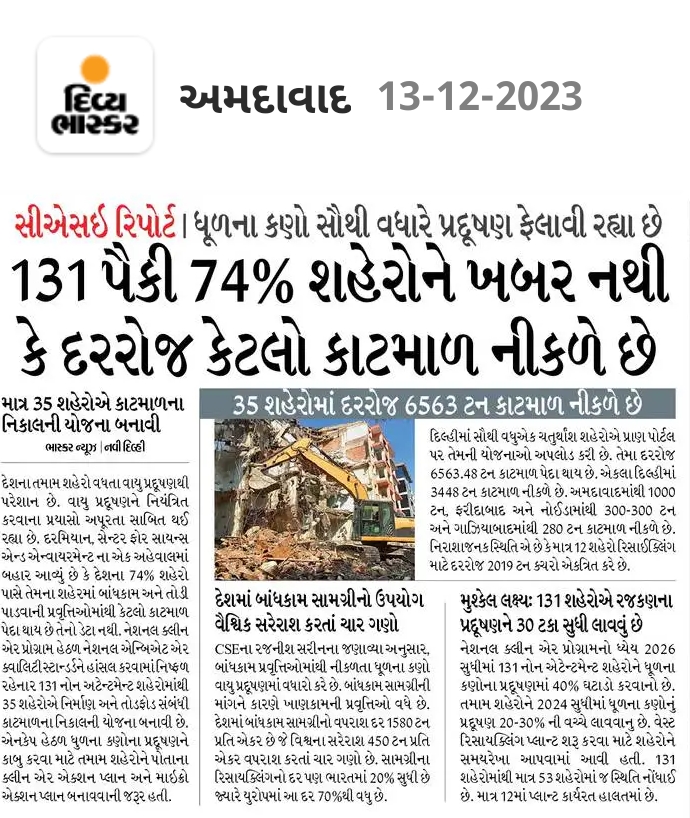
Ranchi: The air pollution in the city continues to worsen, fuelled by ongoing flyover and road construction work. According to a report of Centre for Science and Environment (CSE), 2023, there is widespread deficiency in readiness for the organized and scientific handling of construction and demolition (C&D) waste. The waste category stands as a significant contributor to urban pollution. The city is dealing with a worrisome rise in air pollution levels and the air quality has not improved despite significant yearly funding given to Ranchi Municipal Corporation (RMC). According to doctors, the Air Quality Index (AQI) has surged to 187, categorizing the city as moderately polluted. The airborne dust particles from construction sites and vehicle emissions during traffic congestion are causing major problems for the citizens. Efforts to address ambient air quality and identify pollution hotspots have been lacking. Only two air quality measuring instruments, provided by the Jharkhand State Pollution Control Board, exist in the city, revealing a critical data gap. This year, the RMC spent a significant 49.2% of the allocated budget, approximately Rs 45.9 crore, yet the air quality remains poor. Moreover, no ambient air quality devices have been installed throughout the city exacerbating the deteriorating conditions. The municipal corporation acquired three anti-smog machines and two super sucker machines with Rs 25 crore allocated in 2020-21 for ambient air quality improvements. Assistant administrator Jyoti Kumar Singh said, "RMC officials outline future plans, including an increase in city buses, awareness campaigns, and the installation of air purifying towers. RMC aims to use advanced technology for air quality improvement, scrap 15-year-old vehicles, and deploy air quality measuring equipment across various locations." Singh acknowledges challenges, citing non-compliance among builders. We also published the following articles recently Air quality has improved, but collective effort needed: HCThe special bench of Chief Justice Devendra Kumar Upadhyaya and Justice Girish Kulkarni acknowledged the improvement in air quality in Mumbai based on compliance reports submitted by advocate general Birendra Saraf. The Maharashtra Pollution Control Board has issued directions and closure orders against polluting units and project sites, with the transport department also taking action against vehicle owners. However, the court highlighted a TOI report that identified seven major public project sites generating dust and causing pollution. The report emphasized the need for compliance with debris removal mandates. The court directed joint inspections of these sites and ordered the BMC and MPCB to take legal actions against any deviations from norms. The court also called for monitoring of additional parameters like PM 2.5, PM 10, NO, and SO2, and requested detailed affidavits from officials regarding air pollution measurement and equipment. Additionally, the court urged the state to consider the recommendations of an expert panel on vehicular emissions and make a decision within eight weeks. Weather, air quality behind breathing issues?Climate change is impacting both the environment and human health in Ahmedabad. Rising temperatures, deteriorating air quality, and drastic shifts in seasonal cycles and rainfall patterns are causing respiratory ailments and long-drawn infections. Major hospitals in the city have seen a spike in cases related to flu, fever, bronchitis, and allergy-triggered respiratory issues. Pollution is a major factor, affecting both the elderly and younger patients. The high pollution level during Diwali and unseasonal rainfall patterns have led to an increase in cases of cough, cold, allergies, and viral infections. Medicine sales have seen significant growth, including antibiotics and over-the-counter cough syrups. Air quality in Delhi worsens further as wind speed slowsThe city's air quality deteriorated marginally within the 'very poor' category as the wind speed slowed down on Friday. The air quality index (AQI) worsened to 339 by 12pm. According to the forecast of the Indian Institute of Tropical Meteorology (IITM), AQI is likely to improve from Saturday due to better wind speed. 15.9% of the city's total PM2.5 was attributed to transport, about 6% to industries in and around Delhi. No major change in the temperature is likely over the next few days.

The silent migration from India’s cyclone capital

Pakhiralay, Sunderbans: Kaushala Mondal and her husband once nursed a dream—that some day, they would build a pakka house in their village, Pakhiralay, in the Sundarbans, the world’s largest mangroves that span the twin districts of North and South 24 Parganas in West Bengal. The couple just wanted a house with a patch of green that can survive the storms that periodically batter the region and would not collapse every time floodwaters invade it. That was in the first few years of their marriage and after the devastation left by super cyclone Aila in 2009. Nine years ago, the dream ended when Kaushala’s husband, a fisherman, was killed in a tiger attack when he was in his boat. “We had so many dreams. But my fate is such that I have lost everything. My son was four months old, and my daughter four years when he was killed," recalls Kaushala. As cyclones Bulbul (2019), Amphan (2020) and Yaas (2021) raged through the Sundarbans, local livelihoods suffered more, Kaushala grew more fretful of her children’s future. “For how long can one survive chewing on muri and gur (puffed rice and jaggery)?" They were barely surviving on the meagre income of her father-in-law Naren Mondal. She knew there was only one alternative: she would have to leave her children behind and leave for Kolkata to find work. When Kaushala would hear of a job in the city, and prepare to leave, her son would be inconsolable. In 2021, amid the second wave of the pandemic, Kaushala moved to Kolkata to work as a domestic worker for a salary of ₹10,000 a month. She cares for the three-year-old son and an 11-year-old daughter of a working couple. Occasionally, she goes back to the village. “When I leave my children to return to work, they are in tears," says Kaushala. Disaster displacements Interviews with families in Gosaba, one of the blocks in the Sundarbans most vulnerable to climate change because of high poverty and lack of livelihood options, showed how rife is the crisis caused by climate change-triggered migration. Sundarbans has been called the cyclone capital of India because of the increasing frequency of cyclonic storms in a region where people survive on fishing and collecting honey. Forest-dependent people are often forced to venture into ‘core area’—where human activities are not allowed—to earn their livelihood. As Europe’s climate monitor described 2023 as the hottest year on record on earth, India faced extreme weather events almost every day between January to September, according to a recent report by the Delhi-based think tank Centre for Science and Environment. With 86% extreme event days, at least 3,000 deaths were reported due to this. During the recently concluded COP-28 summit in Dubai, a United Nations official slammed climate inaction. While climate change remains one of the most difficult challenges of our times, India remains extremely vulnerable to the looming climate crisis, the Intergovernmental Panel on Climate Change (IPCC) pointed out. Recently, Chennai saw unprecedented levels of floods killing at least a dozen people as cyclone Michaung raged through the states of Tamil Nadu and Andhra Pradesh. In the past 50 years, Chennai has witnessed floods every 10 years, the last severe one being in 2015. However, other densely populated cities like Mumbai and Kolkata also remain vulnerable to increased risks of flooding. Kolkata—roughly 100km away from the Sundarbans—is home to around 4.5 million people. The city’s vulnerability to climate change was recently highlighted at an event at the COP-28, according to a Down To Earth report. Experts reiterate that Sundarbans is the lifeline for Kolkata. The mangrove vegetation acts as a buffer from climatic disasters; preserving the mangrove means mitigating the city’s vulnerability to weather events. The migration crisis is deepening in the aftermath of the pandemic, says Sugata Hazra, former professor at the Kolkata-based Jadavpur University’s School of Oceanographic Studies. In a 2002 paper, Hazra had estimated that climate change could permanently displace 70,000 people from the Sundarbans by 2020. A later study observed that by 2018, more than 60,000 people had already moved out because of land loss, cyclones and inundation. “Several people are migrating from the islands which are eroding fast in the Sundarbans. The other migration patterns are induced by the slow onset of events like an irregular monsoon, salinity intrusion and climatic disasters where livelihood options are becoming increasingly unsustainable," says Hazra. Research on migration and its impact on the socio-economic and demographic structure of Sundarbans shows four types of migration in the region—full-family migration, one-member migration, temporary and seasonal migration. The IPCC Sixth Assessment Report had pointed out that increased climate variability and extreme events were driving up migration. In 2019, India, Bangladesh, China and the Philippines each had recorded more than 4 million disaster displacements, it added. “It is a difficult task to capture this data–some people are choosing to migrate and are not directly forced. But the circumstances under which they are compelled to take this decision to migrate, even if seasonally, need to be investigated. Migration is a direct consequence of the vulnerability induced by the climate crisis," Hazra adds. ‘How will we eat?’ Next to Kaushala’s household, three children are growing up in the absence of their mother in abject poverty. Their mother, Panchami Mondal, works in Barasat—over 100 km from Pakhiralay. Working as a domestic worker in five households, she manages to earn ₹4,300 a month. After paying for rent and food, she sends back ₹1,500 back home for her children. “Tell me, is there any work in the Sundarbans? How will we eat? We have to leave our kids behind, and go to the city for work," says Panchami. Her husband died of cancer around five years back when she was pregnant with the youngest of her three children. She found work intermittently in the Sundarbans—working in other people’s agricultural lands. But the work was not steady, and the money paltry. Eventually, she was forced to migrate. Upasona Ghosh, social anthropologist at the Bhubaneswar-based Indian Institute of Public Health, explains: “You are a child growing up in a situation where you parents have migrated to the city, and you are responsible for looking after your siblings. They have no idea about their future. What kind of lives will these children have?" Unfit for agriculture Chanakya Mondal realized early on in his life that he has to migrate out for a few months every year to eke out a living. Since the age of 16, he has travelled across Andaman and Nicobar Islands, Maharashtra, Gujarat and Tamil Nadu for work. In the last decade, he has made frequent trips to Andhra Pradesh—for five months every year to work in paddy fields. Now 44, Chanakya manages to earn ₹1,000 per day for about 26 days a month. Back in the village, he primarily relies on his savings to run his family. “We have land which is not very fertile since Aila," he says. Repeated climatic disasters translates into increasing salinity levels in the region. “Salinity intrusion makes the land unfit for agriculture and jeopardizes rural existence. With climate change, the cyclones are getting more frequent and intense. Recall the devastation caused by Amphan and Yaas," says Santanu Chacraverti, president of the Society for Direct Initiative for Social and Health Action (DISHA), a non-profit that works across several blocks in the state, including the Sundarbans. “The local people realize their increasing vulnerability and tend to migrate to other states to engage in low-paying manual jobs," he adds. Chacraverti observes that historically, for human settlements, floods have not only been a curse but also a blessing—the silt brought in by flood waters makes the land more fertile. In the Sundarbans, the situation is the reverse—flooding by the brackish river water make the Sundarbans rivers infertile. While the Sundarbans habitations have grown up behind embankments that keep the flood water away, the land remains deprived of silt and loses fertility. The silt in the rivers settles on the riverbeds which reduces the carrying capacity of the rivers and makes them more prone to flooding, explains Chacraverti. “Any storm tends to breach and overflow embankments, causing devastation. This is the foundation of the poverty and vulnerability of the Sundarbans," he adds. Snakebites and accidents Chanakya Mondal explains the perils of migrating and working in exploitative conditions. “Despite snakebites, accidents at workplaces, and train accidents, we are still compelled to leave our villages and go to other states to work. We are scared seeing the loss of lives but we have no option," he says. In June 2023, almost 300 people died when three trains collided in Balasore district in Odisha. The Coromandel Express entered the passing loop instead of the main line near Bahanaga Bazar railway station at full speed and collided with a goods train. Due to the high speed of the Coromandel Express, its 21 coaches derailed and three of those collided with the oncoming SMVT Bengaluru–Howrah Superfast Express on the adjacent track. Anup Badhiya works in Andhra Pradesh—his day starting at 4am, and ending at 7 pm. He is entitled to a quick lunch break after standing for hours in knee-deep water in the paddy fields. “Working in the paddy fields is extremely labour-intensive. But one has to go (out to work) with repeated cyclones hitting our village. My house has been damaged so many times that I have to invest money rebuilding it. After Aila, we were without a home for three months," says Badhiya. When her house was flooded by Aila in 2009, and later by Yaas in 2021, and the roof of her house was blown away by Amphan in 2020, Shankari Halder held on. But she and her children would always miss her husband when he went to find work in the cities. “My children would tell me to ask their father to come back home. We can make do with eating only rice," says Halder. Over seven years back, her husband suffered a deep cut on his foot as a stone sliced through it while he was working in Andhra Pradesh’s paddy fields. For over a month, he remained bed-ridden. Their neighbour in the Sundarbans who had also migrated for work, helped him to the loo when he returned from work, and fed him. When he was fit enough to travel, he returned home. “We have not let him return since. What will we eat if, god forbid, something happens to him? There is no security when you go to places like this to work. Nobody is accountable for your safety," says Halder. As the family struggled through the pandemic, Shankari completed work days under the Mahatma Gandhi National Rural Employment Guarantee scheme, which guarantees 100 days of work during a financial year. She took a loan of ₹50,000 in phases to buy an engine van for her husband, and stationery they sold in stalls in country fairs. “The interest for this comes at a high rate. But there is no other option, no work in villages," she says. When male members leave villages, and remain stuck in transit or in cities, it falls on the womenfolk to bail out the family, says Sugata Hazra. “Most of these women do not have any land rights. They sell off jewellery and other belongings. Then they migrate out to cities with their families," he says. As for Kaushala and Panchami, the dream is to stay with their children while also managing to secure their future. But both agree it would be impossible if they return to their village. “The first time I went to work, I was wailing through the night…I kept thinking is this what my fate is? Gradually, I consoled myself. I look at the two kids I am bringing up in the city and try to find solace…But where do I keep this grief?" asks Kashala rhetorically. Ritwika Mitra is an independent journalist.

Indian cities need to do lot more to manage their construction and demolition (C&D) waste, says new CSE report

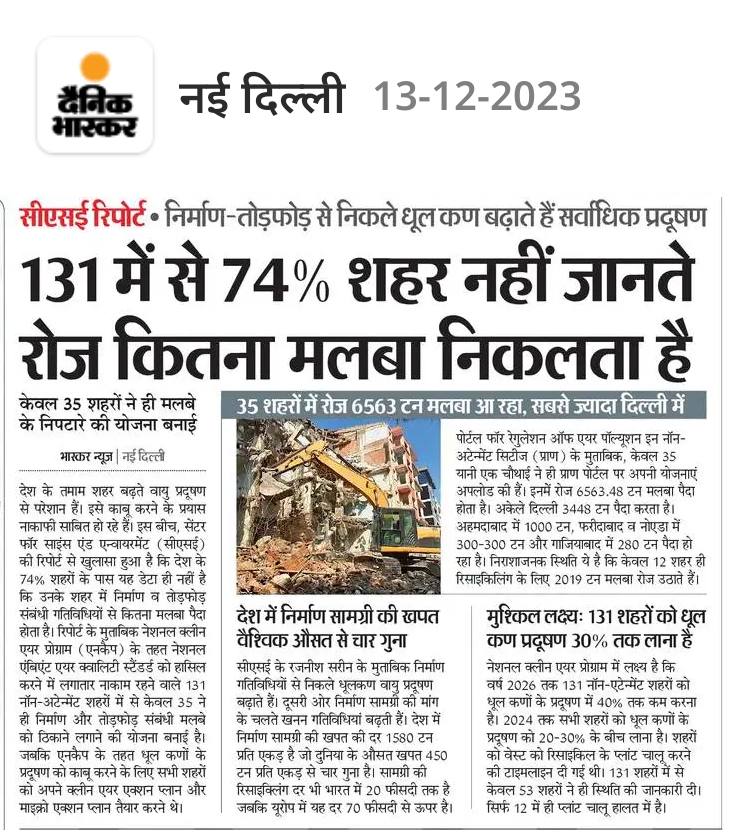
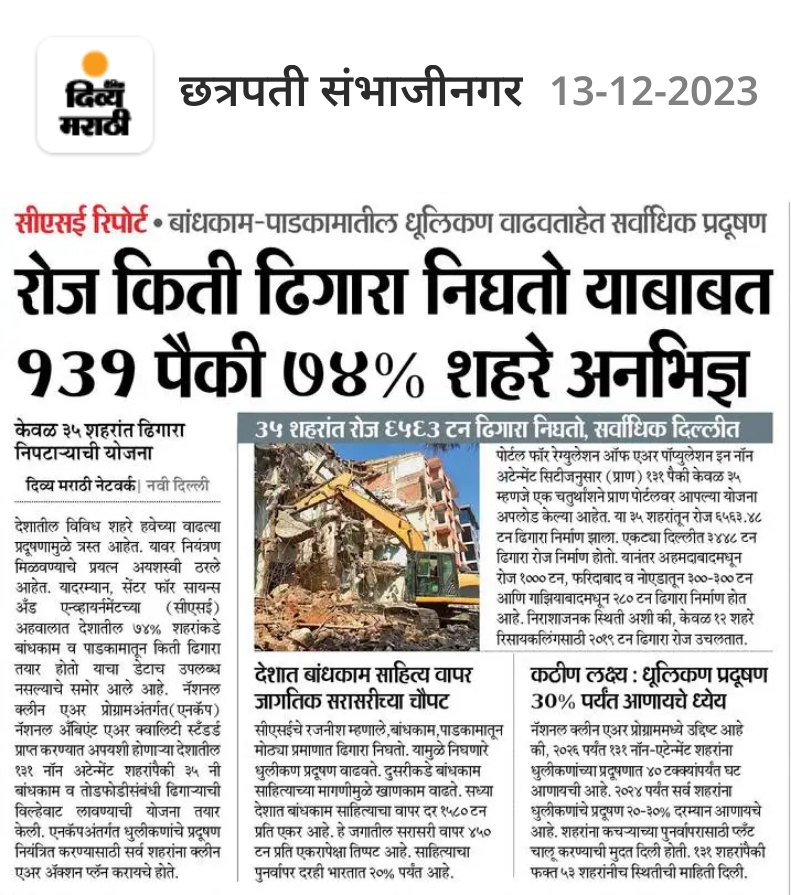
At a time when Indian cities are struggling to control their air pollution levels, a new report by Centre for Science and Environment (CSE) has found that most of them lack institutional preparedness to carry out systematic and scientific management of construction and demolition (C&D) waste, one of the key sources of pollution in urban areas. Titled Construction and Demolition Waste: Closing the loop for sustainability, the report was released here today by CSE at a national conference. Releasing the report, CSE director general Sunita Narain said: “C&D waste management is a potential game changer. A decade back, the concern with C&D waste was not about air pollution, but about saving waterbodies from the dumping of this waste in them. By 2018-19, the issue of C&D waste became hot and this time, it was about dust in the air which was contributing to pollution. The realisation struck that there lies a huge opportunity in changing things for the better in this sector.” Quoting data from the National Investment Promotion and Facilitation Agency, the CSE report says India’s construction industry is expected to reach US $1.4 trillion by 2025, and contribute about 13 per cent to the national economy. India will be adding billions of square meters of space to create affordable housing units, commercial spaces, cold storage, industrial corridors, smart cities, roads and highways, among other things. Says Rajneesh Sareen, director, sustainable buildings and habitat programme, CSE: “This will not only generate enormous amounts of waste, but also increase the demand for natural and virgin building materials that require mining.” He points to the report, which says that as per the draft National Resource Efficiency Policy of 2019, India has already increased its material consumption six times from 1.18 billion tonne in 1970 to seven billion tonne in 2015. India’s resource extraction rate stands at 1,580 tonne per acre as compared to the world average of 450 tonne per acre; its material productivity is low. While India imports many critical raw materials such as sand, it has a much lower recycling rate at 20-25 per cent compared to developed countries of Europe (70 per cent). Adds Mitashi Singh, programme manager, sustainable buildings and habitat programme, CSE: “Besides the impacts that mining and resource extraction already exert, mismanagement of C&D waste — often dumped unscientifically in ecologically sensitive areas such as wetlands or low-lying areas — causes serious environmental damage. To add to this, the construction process in itself is a major dust and particles generator that leads to local pollution and exposure. This is a major concern as air pollution has emerged as a key public health issue in Indian cities. Some of the more disturbing serious health effects include lung cancer, silicosis, chronic obstructive pulmonary disease and asthma.” The CSE report, says Sareen, “comprises a performance matrix assessment of 14 cities from seven states based on six parametres and 26 sub-parametres. It also includes construction dust control guidelines”. The report lays down a clear set of recommendations: Adopt an ecosystem approach (instead of the fragmented approach that is currently being practiced). Expedite the framing and notification of bye-laws – many cities have notified only penalties and fines, which is not enough. Ensure generation of credible data on the quantity of C&D waste being produced. Ensure effective and accessible collection and treatment infrastructure. Promote efficient construction management practices to minimise waste and dust generation. Streamline the financials – adapt dynamic user charges, create a funding stream for legacy waste and link budgets to air pollution mitigation measures. Speaking at the Conference, Anumita Roychowdhury, executive director, research and advocacy, CSE said: “C&D waste management and construction dust mitigation are integral to all clean air action plans of the 134 non-attainment cities (NACs) under the environment ministry’s National Clean Air Programme (NCAP). Various other government programmes such as Swachh Bharat Mission 2.0, as well as multi-sector plans currently being implemented in cities, have also incorporated urban solid waste management – including C&D waste management – as a key focus area. CSE’s report has come at an opportune moment. It helps assess the adequacy of current action, identifies the gaps, captures the learning from different cities, and works out the solutions needed.”

Kolkata, 100 km from the Sundarbans, demands loss and damage fund support in Dubai

Kolkata’s climate vulnerability came into focus alongside the demand for loss and damage funding for its climate-impacted urban poor during a meeting of south Asian cities held at the ongoing 28th Conference of Parties (COP28) to the United Nations Framework Convention on Climate Change in Dubai, United Arab Emirates. Experts present at the meeting said the demand was a first-of-sorts for a city on an international platform. It may be a precursor to similar demands from several other global cities, particularly those in Africa and south Asia. This may include those that have not only been impacted by continuing climate extremes but are also witnessing migration from nearby coastal areas themselves facing climatic impacts. Kolkata, a city of nearly 4.5 million residents, has at least one-third of its populace living in slums or equivalent habitations, a significant proportion of whom have come from the Sundarbans and other nearby coastal cities that are extremely vulnerable to increasing climatic impacts. Moreover, many houses are quite old and can be severely affected in case of a major extreme weather event. The event, Adaptation, loss and damage finance frameworks ensuring transformation of south Asian cities towards net zero, was convened by Climate Action Network South Asia (CANSA). It is a platform of more than 250 green organisations across south Asia, along with few other organisations. ‘Development deterrent’ “Climate change impact is not only a physical threat or a major disaster issue. It is also a development deterrent. Already, our people are suffering. I am happy that the loss and damage fund has been operationalised in this COP and request you to see how the same can be facilitated for the cause of climate-impacted urban poor and other vulnerable populations in Kolkata,” said the metropolis’ mayor-in-council Debasish Kumar, who participated in the discussion at Dubai. The loss and damage finance facility, a mechanism to support climate-affected populations, has been operationalised at COP28. It allows communities to seek fund support for damage inflicted on them due to climate change. Vulnerable countries, including India, can also seek such fund support. The World Bank will coordinate the funding for the first four years, which is expected to be functional by next year. Several climate experts from Europe and Asia also joined the panel. This reporter spoke to a few experts on the sidelines. They pointed out that similar demands are likely to emanate from various cities in the Global South, especially south Asia. “It is necessary to assess how climate risk to urban infrastructure and the massive losses associated with it can be addressed under these funds. Urban centres also have the agenda of migration of climate-displaced people,” observed Anumita Roychowdhury, an expert from Delhi-based Centre for Science and Environment and a panellist at the session. “Today, Kolkata is demanding. Tomorrow Dhaka, Karachi and Colombo may ask. That is because all these cities are affected by the dual problems of being impacted by high intensity extreme weather events and also by migrants coming to them, most of them poor,” said another expert. “Countering climate change impacts on the city, particularly on its poor population living in slums and elsewhere, is a priority for me. We already have the component in our climate plan, the details of which are presently being worked out by an expert committee having domain experts from across India. We will also try to find out how finances can be generated to implement these plans, including loss and damage fund support,” said city mayor Firhad Hakim from Kolkata, who could not make it to the summit despite being invited. Kumar added: A UN report has mentioned that substantial green cover in Kolkata was lost in cyclones. It also notes that the city is most vulnerable to disaster-related mortality among eight global megacities. Kolkata is third among the 20 largest coastal flood-prone global cities. It is close to the Bay of Bengal which is steadily rising. It is also one of the fastest warming global cities … the list of examples is long. “These are not mere statistics, but hard realities, which we have been regularly facing,” added the official. Experts support Kolkata’s demand “We are already working with the Kolkata Municipal Corporation on the agenda of cutting fossil fuels as well as the preparation of the Kolkata Climate Action Plan. We will be very happy to explore opportunities for accessing funds for the city from all possible sources,” said Sanjay Vashist, director of CANSA. “Money is only one part of the story. The vulnerable community in Kolkata should be supported by appropriate case studies and technology to counter their climate-inflicted loss and damage,” said Harjeet Singh, a member of the UN transitional committee on climate change. Nilanjan Ghosh, an economist and member of the committee preparing the Kolkata Climate Action Plan, reminded that “losses in the Sundarbans, hardly 100 km away from Kolkata, result in permanent losses in various supporting and provisioning services for the urban centre, and hence it should be a claimant for loss and damage finances”. We are a voice to you; you have been a support to us. Together we build journalism that is independent, credible and fearless. You can further help us by making a donation. This will mean a lot for our ability to bring you news, perspectives and analysis from the ground so that we can make change together.