दिल्ली में जहरीली हवा की असली गुनहगार पराली नहीं, नई स्टडी में चौंकाने वाला खुलासा
सेंटर फॉर साइंस एंड एनवायरनमेंट (CSE) की रिपोर्ट के मुताबिक दिल्ली की जहरीली हवा का असली विलेन ट्रैफिक और स्थानीय कारक है, पराली का धुआं नहीं. इस बार ...

सेंटर फॉर साइंस एंड एनवायरनमेंट (CSE) की रिपोर्ट के मुताबिक दिल्ली की जहरीली हवा का असली विलेन ट्रैफिक और स्थानीय कारक है, पराली का धुआं नहीं. इस बार ...
पराली जलाने की घटनाएं कई सालों में सबसे कम होने के बावजूद, दिल्ली-एनसीआर की सर्दियों की हवा दमघोंटू बनी हुई है। अक्टूबर और नवंबर के अधिकतर समय, प्रदूषण का स्तर 'बेहद खराब' और 'गंभीर' के बीच रहा, जिसकी वजह मुख्य रूप से वाहनों और अन्य स्थानीय स्रोतों से निकलने वाला पीएम 2.5, नाइट्रोजन डाइऑक्साइड और कार्बन मोनोऑक्साइड का बढ़ता "जहरीला मिश्रण" है। सेंटर फॉर साइंस एंड एनवायरनमेंट (CSE) के एक नए विश्लेषण के अनुसार, दिल्ली के कम से कम 22 वायु-गुणवत्ता निगरानी केंद्रों पर 59 दिनों का अध्ययन किया गया। इनमें से 30 से ज्यादा दिनों तक कार्बन मोनोऑक्साइड (सीओ) का स्तर तय सीमा से ऊपर रहा। द्वारका सेक्टर-8 में सबसे ज्यादा 55 दिन कार्बन मोनोऑक्साइड की सीमा अधिक रही। इसके बाद जहांगीरपुरी और दिल्ली विश्वविद्यालय के उत्तर परिसर रहे, जहां 50 दिनों तक कार्बन मोनोऑक्साइड का स्तर सीमा से ज्यादा पाया गया।
दिल्ली-एनसीआर की सर्दी में प्रदूषण की स्थिति चिंताजनक बनी हुई है, लेकिन इस बार पराली जलाने को प्रदूषण के मुख्य कारण के रूप में नहीं देखा जा रहा है. एक नई रिपोर्ट में यह बात सामने आई है कि इस साल प्रदूषण का असली कारण वाहनों और अन्य स्थानीय स्रोतों से निकलने वाले जहरीले प्रदूषक तत्व हैं, जो दिल्ली की हवा को और भी दमघोंटू बना रहे हैं. 59 दिन तक प्रदूषण का खतरनाक स्तर सेंटर फॉर साइंस एंड एनवायरनमेंट (CSE) ने दिल्ली के विभिन्न इलाकों में 59 दिनों तक प्रदूषण का अध्ययन किया. इस दौरान पाया गया कि दिल्ली के कई इलाकों में कार्बन मोनोऑक्साइड (CO) का स्तर तय सीमा से ऊपर रहा. रिपोर्ट के अनुसार, दिल्ली के द्वारका सेक्टर-8 में कार्बन मोनोऑक्साइड का स्तर 55 दिनों तक बढ़ा रहा, जबकि जहांगीरपुरी और दिल्ली विश्वविद्यालय के उत्तर परिसर में भी 50 दिनों तक यह सीमा से ज्यादा था. जहांगीरपुरी में सबसे ज्यादा प्रदूषण जहांगीरपुरी को दिल्ली का सबसे प्रदूषित इलाका पाया गया, जहां सालभर का औसत पीएम 2.5 स्तर 119 माइक्रोग्राम प्रति घन मीटर था. इसके बाद बावाना और वज़ीरपुर का नंबर आता है, जहां यह स्तर 113 माइक्रोग्राम प्रति घन मीटर था. इस रिपोर्ट में कुछ नए प्रदूषण हॉटस्पॉट्स भी सामने आए हैं, जिनमें विवेक विहार, अलीपुर, नेहरू नगर, और सिरी फोर्ट शामिल हैं.
दिल्ली में सर्दियों के दौरान पलूशन का स्तर आम दिनों के मुकाबले अपने चरम पर पहुंच जाता है। सेंटर फॉर साइंस एंड एनवायरनमेंट रिपोर्ट में सामने आया है कि कुछ इलाके सबसे ज्यादा प्रदूषित हिस्से हैं। सर्दी के दिनों में राजधानी दिल्ली में पलूशन का स्तर अपने चरम पर पहुंच जाता है। सेंटर फॉर साइंस एंड एनवायरनमेंट (सीएसई) के एक नए विश्लेषण के अनुसार, दिल्ली के कम से कम 22 वायु-गुणवत्ता निगरानी केंद्रों पर 59 दिनों का अध्ययन किया गया जिनमें से 30 से ज्यादा दिनों तक कार्बन मोनोऑक्साइड (सीओ) का स्तर तय सीमा से ऊपर रहा। बीते सालों के आंकडों से तुलना करें तो मालूम होता है कि राजधानी दिल्ली का जहांगीरपुरी इलाका सबसे प्रदूषित क्षेत्र है। जानिए टॉप तीन प्रदूषित इलाकों में कौन से हिस्से शामिल हैं?
सेंटर फॉर साइंस एंड एनवायरनमेंट सीएसई के अनुसार, दिल्ली में प्रदूषण का मुख्य कारण स्थानीय स्रोत हैं। दिल्ली-एनसीआर में प्रदूषण के हॉटस्पॉट बढ़ गए हैं, और एनसीआर के छोटे शहर भी गंभीर संकट का सामना कर रहे हैं। सीएसई ने सरकार से स्थानीय स्रोतों पर ध्यान केंद्रित करने का आग्रह किया है, जिसमें वाहनों और औद्योगिक उत्सर्जन को नियंत्रित करना शामिल... नई दिल्ली, अनुराग मिश्र। खेतों में पराली जलाने से प्रदूषण का असर कम हुआ है, लेकिन दिल्ली की हवा अब भी ‘बहुत खराब’ से ‘गंभीर’ श्रेणी में यानी स्थानीय स्रोत प्रदूषण बढ़ा रहे हैं। सेंटर फॉर साइंस एंड एनवायरनमेंट की रिपोर्ट के अनुसार प्रदूषण हॉटस्पॉट की संख्या बढ़ी है साथ ही एनसीआर के छोटे शहरों में प्रदूषण और ज्यादा और स्मॉग की घटनाएं अधिक गंभीर हुई है। सीएसई का यह विश्लेषण शुरुआती सर्दियों के रुझानों पर किया गया है। सीएसई की कार्यकारी निदेशक अनुमिता रॉयचौधरी कहती हैं कि सबसे चिंता की बात यह है कि पीएम2. 5 के साथ-साथ जहरीली गैसें NO2 और CO भी रोजाना बढ़ रही हैं। खासतौर पर वाहन और दहन स्रोतों से निकलने वाली यह जहरीली मिली-जुली हवा आमतौर पर नजर में नहीं आती। लंबे समय से दिल्ली की हवा में कोई सुधार नहीं दिख रहा। अब वाहनों, उद्योगों, बिजली संयंत्रों, कचरे, निर्माण और घरेलू ईंधन से होने वाले उत्सर्जन को बड़े स्तर पर नियंत्रित करने की जरूरत है।सीएसई की डिप्टी प्रोग्राम मैनेजर शरणजीत कौर कहती हैं कि एनसीआर में प्रदूषण का फैलाव लगातार बड़ा और स्थिर बना हुआ है। शहर में प्रदूषण हॉटस्पॉट बढ़ गए हैं। छोटे शहरों में स्मॉग ज्यादा और लंबे समय तक बना रहता है। पराली कम होने से पीक लेवल तो थोड़ा कम हुए पर हवा धीरे-धीरे और ज्यादा प्रदूषित हो रही है। जहरीली गैसों और कणों का खतरनाक मिश्रण सर्दियों की शुरुआत में जब सबकी नजर पीएम2.5 पर होती है, तब NO2 और CO जैसी गैसें भी खतरनाक रूप से बढ़ती हैं पर इन पर ध्यान नहीं जाता। सुबह और शाम ट्रैफिक बढ़ने पर पीएम2.5 और NO2 लगभग साथ-साथ बढ़ते हैं। CO जो खून को गाढ़ा करती है और दम घोंटने जैसा असर डालती है, उससे भी हाल और बिगड़ रहा है। दिल्ली के करीब 22 मॉनिटरिंग स्टेशनों में 59 में से 30 दिन CO स्तर मानक से ऊपर रहा।द्वारका सेक्टर-8 में यह सबसे ज्यादा 55 दिन तक रहा। अनुमिता कहती हैं क् हम हर साल धूल पर ज्यादा ध्यान देते हैं, वाहन, उद्योग और कचरे के प्रदूषण पर बहुत कमजोर कार्यवाही होती है। पराली कम, फिर भी हवा खराब, स्थानीय स्रोत जिम्मेदार इस बार बाढ़ की वजह से पंजाब-हरियाणा में पराली जलाने की घटनाएं काफी कम रहीं। 10-15 नवंबर को कुछ दिनों में यह योगदान 22% तक गया, पर ज्यादातर कम ही रहा। इसके बावजूद अक्टूबर-नवंबर में पीएम2.5 34 दिन प्रमुख प्रदूषक रहा। एक्यूआई ज्यादातर नवंबर में बहुत खराब या गंभीर रहा, जो यह बताता है कि स्थानीय प्रदूषण ही सबसे बड़ा कारण है। औसत पीएम2.5 पिछले साल से 9% कम है, लेकिन तीन साल के औसत के बराबर यानी असली सुधार नहीं हुआ है। प्रदूषण हॉटस्पॉट बढ़े 2018 में 13 हॉटस्पॉट थे। अब इनके साथ नए इलाके भी जुड़ गए हैं, जैसे, जहांगीरपुरी , बवाना, वजीरपुर: ~113, आनंद विहार: 111, विवेक विहार, नेहरू नगर, सिरिफोर्ट, द्वारका-8, पतपड़गंज: 90+ µg/m³। छोटे शहर अब साफ जगह नहीं, बल्कि और ज्यादा प्रदूषित होते जा रहे हैं। क्या दिल्ली अपने एयर क्वालिटी सुधार खो रही है? 2022 से पीएम2.5 स्तर ऊपर-नीचे न होकर एक जगह अटका, वह भी खतरनाक स्तर पर। 2024 में औसत पीएम 2.5 104.7 µg/m³ रहा। साल भर हवा बेहद खराब रही। अब क्या करना होगा? अनुमिता रॉयचौधरी कहती हैं कि छोटी-छोटी कोशिशें काम नहीं आएंगी। अब बड़े कदम उठाने होंगे। सीएसई की सिफारिशें: - इलेक्ट्रिक वाहनों को तेज़ी से बढ़ावा, पुराने वाहन हटाना -पब्लिक ट्रांसपोर्ट, पैदल और साइकिल इंफ्रास्ट्रक्चर मजबूत -निजी वाहनों पर रोक, पार्किंग कीमत बढ़े, भीड़भाड़ शुल्क -उद्योगों में साफ ईंधन और सख्त मानक — प्राकृतिक गैस सस्ती की जाए -कचरा जलना बंद, अलगाव, रीसाइक्लिंग, पुराना कचरा हटाना - बिजली संयंत्रों पर कड़े उत्सर्जन मानक लागू - निर्माण में धूल नियंत्रण, स्मार्ट मॉनिटरिंग - घरों में साफ ईंधन की पहुंच - पराली को मिट्टी में मिलाने और बायोगैस/एथेनॉल उत्पादन को बढ़ावा
नई दिल्ली: दिल्ली इस साल फिर जहरीली हवा की गिरफ्त में रही, जबकि पंजाब और हरियाणा में पराली जलाने की घटनाएं कई सालों की तुलना में काफी कम रहीं. इसके बावजूद अक्टूबर और नवंबर में राजधानी का AQI लगातार ‘बेहद खराब’ और ‘गंभीर’ श्रेणी में बना रहा. सेंटर फॉर साइंस एंड एनवायरनमेंट की नई स्टडी ने साफ किया है कि प्रदूषण के लिए बाहरी कारकों से ज्यादा दिल्ली के भीतर का ट्रैफिक, औद्योगिक गतिविधियां और स्थानीय स्रोत जिम्मेदार हैं, जिनके कारण हवा में जहरीले तत्व बढ़ते गए. ट्रैफिक बना सबसे बड़ा प्रदूषण स्रोत स्टडी कहती है कि दिल्ली के अधिकतर इलाकों में पीक ट्रैफिक के दौरान हवा सबसे ज्यादा खराब होती दिखी. सुबह 7 से 10 बजे और शाम 6 से 9 बजे PM2.5 और NO₂ एक साथ बढ़े. शोधकर्ताओं के अनुसार, सर्दियों में हवा नीचे दब जाती है, जिससे वाहनों का धुआं ऊपर नहीं उठ पाता. नतीजतन, हर दिन हवा में जहरीले तत्वों की परत बनती चली जाती है और शहर स्मॉग की चादर में ढंक जाता है. पराली का योगदान 5% से भी कम रिपोर्ट के मुताबिक, इस बार ज्यादातर दिनों में पराली के धुएं का हिस्सा 5% से नीचे रहा. केवल 12-13 नवंबर को यह 22% तक पहुंचा, लेकिन इसके अलावा पूरा महीना स्थानीय प्रदूषण ही हावी रहा. इससे साबित होता है कि पराली जलाने की घटनाएं कम होने के बावजूद दिल्ली की हवा में किसी तरह का बड़ा सुधार नहीं आया. अक्टूबर और नवंबर में लगभग हर दिन AQI ‘बेहद खराब’ या ‘गंभीर’ पर अटका रहा.
सेंटर फॉर साइंस एंड एनवायरनमेंट की रिपोर्ट के अनुसार इस बार दिल्ली की जहरीली हवा के लिए पराली जिम्मेदार नहीं, बल्कि ट्रैफिक और स्थानीय प्रदूषण सबसे बड़े कारण हैं। पंजाब और हरियाणा में पराली जलाने की घटनाएं कई सालों के निचले स्तर पर रहीं, फिर भी अक्टूबर और नवंबर में दिल्ली का AQI अधिकतर दिनों में ‘बेहद खराब’ से ‘गंभीर’ श्रेणी में दर्ज किया गया। रिपोर्ट बताती है कि हवा में जहर खेतों से नहीं, हमारी अपनी सड़कों और सांसों से फैला। यह निष्कर्ष लंबे समय से चली आ रही गलतफहमी को चुनौती देता है।
दिल्ली-NCR में सर्दियों की शुरुआत होते ही शहर की हवा लगातार जहरीली होती जा रही है। हर साल इस प्रदूषण का जिम्मेदार पराली जलाने को ठहराया जाता था, लेकिन इस बार पराली की घटनाएं 71 प्रतिशत कम हुईं। फिर भी AQI बहुत ही खराब हालात में नजर आ रहा है। सेंटर फॉर साइंस एंड एनवायरमेंट (CSE) की नई रिपोर्ट में सामने आया कि असली वजह स्थानीय सोर्स हैं। गाड़ियां, फैक्ट्रियां, कचरा जलाना और धूल, वैज्ञानिक कारण? ठंडी हवा में प्रदूषक फंस जाते हैं, जो सांस की बीमारियां पैदा करते हैं। क्या कहती है रिपोर्ट? इस साल पंजाब-हरियाणा में बाढ़ आने की वजह से पराली जलाने की संख्या कम हुई। CPCB के डेटा के अनुसार, 12 से 13 नवंबर, 2025 को सिर्फ 22 प्रतिशत योगदान और बाकी दिन 5 प्रतिशत से कम रहा। फिर भी नवंबर में PM 2.5 औसत 174 माइक्रोग्राम/घन मीटर रहा, जो WHO स्टैंडर्ड से 35 गुना ज्यादा है। वैज्ञानिक कारण को देखे तो PM 2.5 बारीक कण हैं जो फेफड़ों में जाकर सूजन पैदा करते हैं। रिपोर्ट कहती है कि स्थानीय स्रोर्स 80 प्रतिशत जिम्मेदार है। दिए गए ये सुझाव रिपोर्ट कहती है छोटे-छोटे कदम काम नहीं आएंगे। उत्सर्जन कम करने से AQI 50 प्रतिशत गिर सकता है। इसके साथ ही कुछ सुझाव दिया कि गाड़ियों को इलेक्ट्रिक बनाओ, पुरानी स्क्रैप करो। पब्लिक ट्रांसपोर्ट बढ़ाओ, साइकिल-वॉकिंग पाथ बनाओ। पार्किंग लिमिट, कंजेशन टैक्स लगाओ। फैक्ट्रियों में क्लीन फ्यूल, पावर प्लांट्स पर सख्त स्टैंडर्ड। कचरा अलग करो, रिसाइकल करो, जलाना बंद करें। कंस्ट्रक्शन वेस्ट रिसाइकल, धूल कंट्रोल मॉनिटरिंग। घरों में क्लीन कुकिंग गैस, पराली को बायो-मेथेनेशन से एथेनॉल बनाओ।
Kiran Pandey and Rajit Sengupta, “In 2024, India experienced extreme weather events on 322 days, surpassing records of previous years,” Down to Earth, 13 February 202
So far this year alone, India has battled devastating floods in Uttarakhand, Himachal and Punjab. From January 1 to September 30, Centre for Science and Environment's 'Climate India 2025' recorded extreme events on 270 of the 273 days.
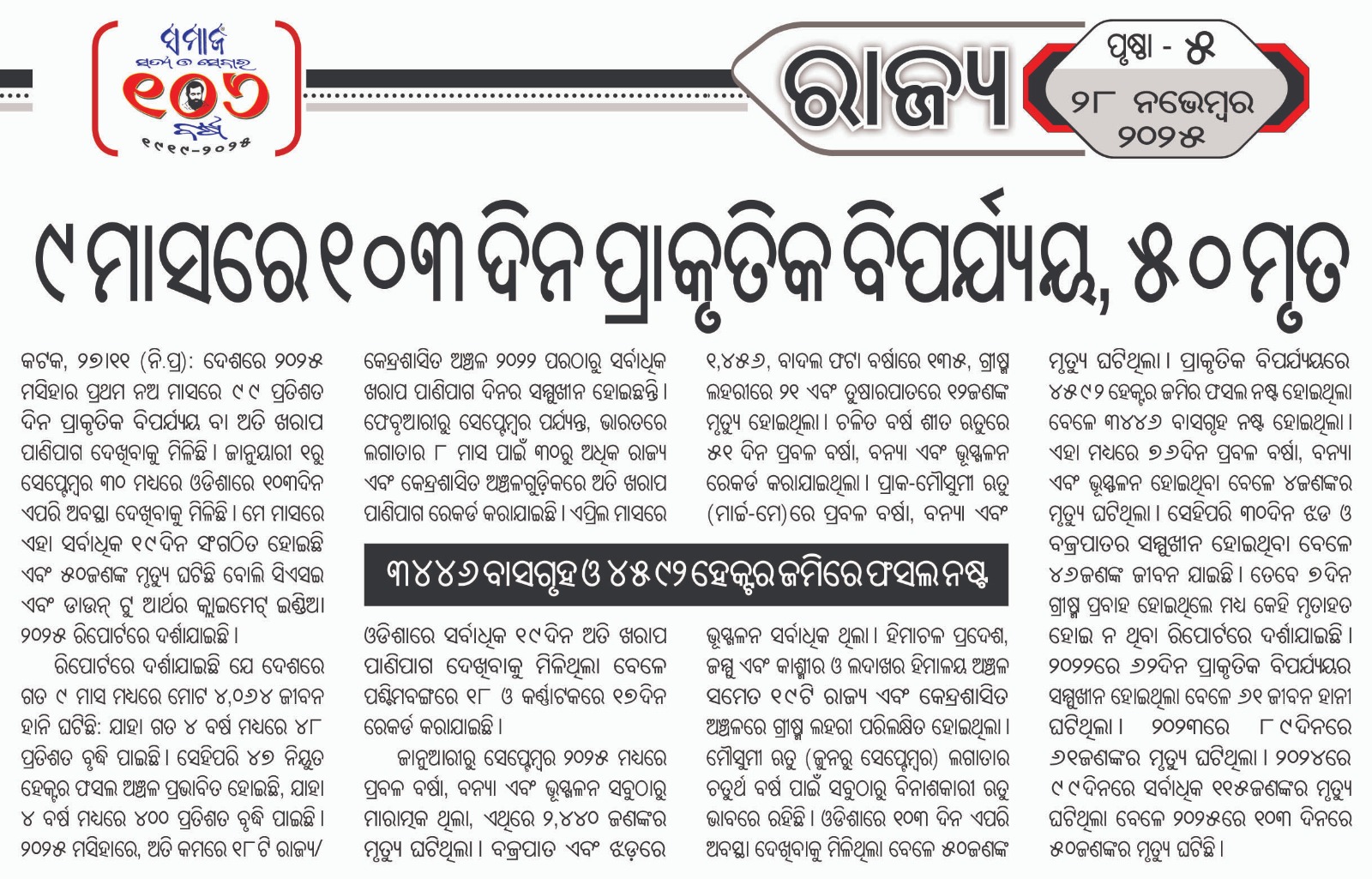
Cloudbursts in exceptional geographies like Chennai and Andhra Pradesh or a drought in Northeast India—these freak weather incidents are now becoming a daily reality. In fact, almost every day, one or the other part of the country is experiencing extreme weather, finds the Centre for Science and Environment (CSE) and Down To Earth's Climate India 2025 report, an annual assessment of extreme weather events. To put this in perspective, India experienced extreme weather events on 99 per cent of the days in the first nine months (January to September) of 2025, marked by heat and cold waves, lightning and storms, heavy rain, floods and landslides. The year 2025 also broke several climate records. January was India's fifth driest since 1901 while February became the warmest in 124 years. In September, India recorded its seventh-highest mean temperature for the month.
New Delhi: Centre for Science and Environment (CSE) has released a seven-point agenda titled "Our Right to Clean Air is Non-Negotiable", demanding action for Delhi-NCR. The plan urges measures such as replacing the commercial vehicle fleet, reducing personal vehicles, promoting clean fuel in industries, incentivising farmers to sell crop residue, preventing waste burning, enforcing regulations in power plants, brick kilns, stone crushers and construction sites, and acting with speed and scale throughout the year. Highlighting vehicular pollution, CSE stated that 500 cars and 1,500 two-wheelers are registered daily in Delhi. "Over the years, fuel quality improved drastically as the sulphur content in BSVI fuel fell from 10,000 ppm to less than 10 ppm. Even emission standards in vehicles are more stringent under BSVI, with heavy-duty vehicles such as trucks emitting 90% less than they did under BSIV. Taxis, buses and autorickshaws run on CNG, which emits fewer particulates than petrol and diesel," said CSE. The first agenda point calls for replacing old commercial vehicles, with scrappage incentivised for trucks, taxis, autos and para-transit vehicles, including a shift to electric models. To reduce private vehicle use, the plan advocates better public transport, last-mile connectivity and congestion charges. CSE also warned against waste burning, noting that household segregation programmes exist but are poorly implemented. "Waste is often dumped, sent to landfills or burnt, worsening pollution," it said. Urging authorities to learn from the successful CNG transition, which converted 1 lakh vehicles to gas in two years, CSE said the Clean Air Action Plan (CAP) was finalised in 2018 and then re-finalised in 2022-23, but it is still not being implemented. Anumita Roychowdhury, executive director, research and advocacy, CSE, said, "We need to leapfrog the way we did with CNG about 20 years ago. Small steps will not meet clean air targets. We need access to clean fuels, zero-emission vehicles, strong public transport, waste segregation and recycling, strict enforcement in industries and power plants and an end to farm fires."
Officials said the prolonged run this year is being driven by a combination of stagnant winds and falling temperatures. Forecasts by the Air Quality Early Warning System (AQEWS) indicate that the situation is unlikely to improve in the next six days, with wind speeds expected to remain low. Delhi’s air quality index (AQI) remained above 300 for the 23rd consecutive day, the second-longest spell of ‘very poor’ or worse air days since 2019, according to Central Pollution Control Board (CPCB) data. At 4pm, when the CPCB releases its daily national bulletin, the Capital’s average AQI registered at 369. The current streak began on November 6, and has included three days of “severe” air between November 11 and 13. The longest streak came last year, when Delhi logged 32 consecutive days of ‘very poor’ or worse air between October 30 and November 30, including a peak of 494 (severe) on November 18. The CPCB classifies air as ‘good’ when AQI is 50 or lower; ‘satisfactory’ between 51 and 100; ‘moderate’ between 101 and 200; ‘poor’ between 201 and 300; ‘very poor’ between 301 and 400; and ‘severe’ when it exceeds 400. Officials said the prolonged run this year is being driven by a combination of stagnant winds and falling temperatures. Forecasts by the Air Quality Early Warning System (AQEWS) indicate that the situation is unlikely to improve in the next six days, with wind speeds expected to remain low. Despite this, the Commission for Air Quality Management (CAQM) this week rolled back measures under Stage 3 of the Graded Response Action Plan (GRAP), allowing an end to the ‘Work from Home’ mandate and hybrid classes for classes 5 and lower, as well as the resumption of construction activities. Experts say that the prolonged streak exposes systemic failures in pollution control. ‘Tackle local emissions round the year’ Calling it a “public health emergency”, a Centre for Science and Environment (CSE) report warned that residents are breathing toxic pollution through the year, not just during the peak season. Its latest ‘Agenda for Action for Delhi-NCR’, released on November 27, said transport alone contributes 39%, the maximum, to Delhi’s PM2.5 load, with industry and construction making up 20%, and road dust accounting for 18%.
Cloudbursts in exceptional geographies like Chennai and Andhra Pradesh or a drought in Northeast India—these freak weather incidents are now becoming a daily reality. In fact, almost every day, one or the other part of the country is experiencing extreme weather, finds the Centre for Science and Environment (CSE) and Down To Earth’s Climate India 2025 report, an annual assessment of extreme weather events. To put this in perspective, India experienced extreme weather events on 99 per cent of the days in the first nine months (January to September) of 2025, marked by heat and cold waves, lightning and storms, heavy rain, floods and landslides. The year 2025 also broke several climate records. January was India’s fifth driest since 1901 while February became the warmest in 124 years. In September, India recorded its seventh-highest mean temperature for the month.
Relief Possible if Systemic Flaws Are Addressed Experts opine that the persistent poor air quality in Delhi is not merely a seasonal issue but a consequence of systemic flaws. A recent report by CSE (Centre for Science and Environment) has termed it a 'public health crisis'. According to CSE, the primary sources of PM2.5 in Delhi are local. Transportation contributes 39%, industries and construction units contribute 20%, and dust on roads accounts for 18%. Experts point out that while stubble burning has an impact in November, local sources are consistently responsible for the rise in pollution in Delhi.