
Cse In News

देश में जलवायु संकट गहराया: चार वर्षों में 400 फीसदी फसल को नुकसान

देश में जलवायु संकट गहराया है और 2025 (जनवरी से सितंबर) में 99 फीसदी दिन किसी न किसी चरम मौसमी घटना की चपेट में रहे। देश ने लू, शीत लहर, बिजली, तूफान, भारी बारिश, बाढ़ और भूस्खलन जैसी घटनाओं का सामना किया। इस भयावह स्थिति का मानवीय और आर्थिक दोनों तरह से भारी खामियाजा चुकाना पड़ा है। सेंटर फॉर साइंस एंड एन्वायरनमेंट (सीएसई) और डाउन टू अर्थ की वार्षिक क्लाइमेट इंडिया 2025 रिपोर्ट में यह दावा किया गया है। रिपोर्ट के मुताबिक इन नौ महीनों में, चरम मौसमी घटनाओं ने 4,064 लोगों की जान ली, जो पिछले चार वर्षों की तुलना में 48 फीसदी की वृद्धि है। कृषि क्षेत्र सबसे ज्यादा प्रभावित हुआ, जिसमें 9.47 मिलियन हेक्टेयर (करीब 47 मिलियन एकड़) फसल क्षेत्र प्रभावित हुआ, जो चार वर्षों में 400 फीसदी की भारी वृद्धि को दर्शाता है। इसके अलावा, 99,533 घर नष्ट हुए और लगभग 58,982 जानवरों की मौत हुई। 2025 में, कम से कम 18 राज्यों और केंद्र शासित प्रदेशों में 2022 के बाद से सबसे अधिक चरम मौसमी दिन दर्ज किए गए। फरवरी से सितंबर 2025 तक, लगातार आठ महीनों तक देश के 30 या उससे अधिक राज्यों और केंद्र शासित प्रदेशों में चरम मौसम की घटनाएं रिकॉर्ड की गईं। हिमाचल में सबसे अधिक 257 चरम मौसमी दिन रहे हिमाचल प्रदेश (257 दिन) में देश में सबसे अधिक चरम मौसमी दिन रहे, जबकि मध्य प्रदेश में सबसे अधिक 532 मौतें दर्ज की गईं। रिपोर्ट बताती है कि मॉनसून का मौसम सबसे अधिक विनाशकारी रहा। लगातार चौथे वर्ष, जून से सितंबर तक के सभी 122 मॉनसून दिन चरम मौसम से प्रभावित रहे, जिससे 3,007 मौतें हुईं। कुल 4,064 मौतों में, भारी बारिश, बाढ़ और भूस्खलन सबसे घातक रहे, जिनसे 2,440 मौतें हुईं, इसके बाद बिजली और तूफान से 1,456 मौतें हुईं। 2025 में जलवायु के कई रिकॉर्ड टूटे रिपोर्ट के मुताबिक वर्ष 2025 ने कई जलवायु रिकॉर्ड तोड़े। जनवरी 1901 के बाद पांचवां सबसे शुष्क महीना था, जबकि फरवरी 124 वर्षों में सबसे गर्म रहा। सितंबर में देश का सातवां सबसे अधिक औसत तापमान दर्ज किया गया। महाराष्ट्र 84 लाख हेक्टेयर के साथ फसल क्षेत्र के नुकसान के मामले में सबसे बुरी तरह प्रभावित राज्य था। क्षेत्रीय रूप से, उत्तर-पश्चिम क्षेत्र में घटनाओं की सबसे अधिक आवृत्ति दर्ज की गई, जबकि मध्य क्षेत्र में 1,093 लोगों की मौतें हुईं। जलवायु परिवर्तन का पैमाना समझना होगा रिपोर्ट जारी करते हुए, सीएसई की महानिदेशक सुनिता नारायण ने कहा, देश को अब सिर्फ आपदाओं को गिनने की जरूरत नहीं है, बल्कि उस पैमाने को समझने की जरूरत है जिस पर जलवायु परिवर्तन हो रहा है। उन्होंने वैश्विक स्तर पर उत्सर्जन कटौती की तत्काल आवश्यकता पर जोर दिया, क्योंकि इतने बड़े पैमाने की आपदाओं के लिए कोई भी अनुकूलन संभव नहीं होगा। सीएसई के कार्यक्रम निदेशक किरन पांडे ने मानसून के दौरान बढ़ते तापमान को चिंताजनक बताया, जो अनियमित और चरम मौसमी घटनाओं को ट्रिगर कर सकता है। डाउन टू अर्थ के प्रबंध संपादक रिचर्ड महापात्रा ने कहा कि यह रिपोर्ट एक आवश्यक चेतावनी है और बिना निर्णायक शमन प्रयासों के आज की आपदाएं कल का नया सामान्य बन जाएंगी।
भारत में जलवायु संकट-स्वास्थ्य एवं समृद्धि पर कहर

जलवायु परिवर्तन से उपजी पर्यावरणीय चुनौतियाँ आज मानव सभ्यता के अस्तित्व तक को प्रभावित कर रही हैं। जलवायु परिवर्तन अब कोई दूर का वैज्ञानिक विचार नहीं, बल्कि तत्काल अनुभव किया जाने वाला यथार्थ है, जिसकी भयावहता का प्रमाण सीएसई और डाउन टू अर्थ की क्लाइमेट इंडिया 2025 की रिपोर्ट में स्पष्ट दिखाई देता है। जनवरी से सितंबर 2025 तक भारत ने अपने 99 प्रतिशत दिनों में किसी न किसी चरम मौसमी घटना-बाढ़, सूखा, भारी बारिश, तूफान, ठंड-लहर, अथवा भीषण गर्मी का सामना किया। इसी अवधि में 4,064 लोगों की मौत, 9.47 मिलियन हेक्टेयर फसल का नष्ट होना, लगभग 58,982 जानवरों की मृत्यु और 99,533 घरों का ढहना इस संकट की गहराई को दर्शाते हैं। कृषि क्षेत्र इन घटनाओं का सबसे बड़ा शिकार बना, क्योंकि जलवायु असंतुलन ने खेतों, मौसम चक्र और पैदावार को सीधे प्रभावित किया। बढ़ते तापमान और असामान्य वर्षा ने ग्रामीण अर्थव्यवस्था को गहरी चोट पहुंचाई है। दुनिया के सबसे बड़ी आबादी वाले देश के सामने ये मुश्किलें सबसे बड़ी हैं। हिमाचल प्रदेश में 257 दिनों का चरम मौसम, मध्य प्रदेश में 532 मौतें और महाराष्ट्र में 84 लाख हेक्टेयर फसल का नुकसान बताता है कि यह सिर्फ पर्यावरणीय विषय नहीं, बल्कि मानव जीवन, स्वास्थ्य और अर्थव्यवस्था का संकट है। 2025 में, कम से कम 18 राज्यों और केंद्र शासित प्रदेशों में 2022 के बाद से सबसे अधिक चरम मौसमी दिन दर्ज किए गए। फरवरी से सितंबर 2025 तक, लगातार आठ महीनों तक देश के 30 या उससे अधिक राज्यों और केंद्र शासित प्रदेशों में चरम मौसम की घटनाएं रिकॉर्ड की गईं। भारत में जैसे हालात हैं, वही स्थिति पूरे विश्व में भी फैलती जा रही है। वर्ष 2023, 2024 और 2025 दुनिया के सबसे गर्म वर्षों में शामिल रहे। यूरोप की निरंतर हीटवेव, अफ्रीका के साहेल क्षेत्र का अकाल, अमेज़न और ऑस्ट्रेलिया के जंगलों में लगी आग, प्रशांत और अटलांटिक महासागरों में उग्र तूफान, और ग्लेशियरों के तेज़ी से पिघलने की घटनाएँ यह संकेत दे रही हैं कि पृथ्वी एक खतरनाक मोड़ की ओर बढ़ रही है। मौसम चक्रों का असंतुलन, समुद्र स्तर में वृद्धि, तापमान का अचानक बढ़ना और वर्षा का अनियमित होना, प्राकृतिक आपदाओं को न सिर्फ अधिक सघन बना रहा है बल्कि मानव जीवन को असुरक्षित भी। जलवायु परिवर्तन की सबसे बड़ी वजह मनुष्य की अनियंत्रित गतिविधियाँ हैं-जीवाश्म ईंधनों पर निर्भरता, वनों की कटाई, प्रदूषण, अनियोजित शहरीकरण और अत्यधिक उपभोग ने वातावरण में ग्रीनहाउस गैसों को खतरनाक स्तर तक बढ़ा दिया है, जिसका परिणाम है पृथ्वी का असामान्य रूप से गर्म होना। इन परिस्थितियों का असर जीवन के हर क्षेत्र पर दिखाई दे रहा है। स्वास्थ्य पर प्रभाव बढ़ रहा है, हीटवेव के कारण मौतें बढ़ रही हैं, नए वायरस और प्रदूषण से उत्पन्न बीमारियों की आवृत्ति बढ़ी है। जल संसाधन खतरे में हैं और कई क्षेत्रों में नदियाँ व भूजल तेजी से सूख रहे हैं। खाद्य संकट गहराता जा रहा है क्योंकि फसलें असफल हो रही हैं, जिससे अनाज और सब्जियों की कीमतें बढ़ रही हैं। प्राकृतिक आपदाओं से आर्थिक ढाँचा भी डगमगा रहा है, लाखों लोग विस्थापित हो रहे हैं और असमानता तेज़ी से बढ़ रही है। यदि दुनिया ने तापमान को 1.5 डिग्री सेल्सियस से नीचे रखने का लक्ष्य पूरा नहीं किया, तो आने वाले तीन दशकों में हिमालयी नदियों का प्रवाह अनिश्चित हो जाएगा, तटीय शहर खतरे में पड़ेंगे और मानव जीवन मुश्किल होता चला जाएगा। जलवायु परिवर्तन के दुष्प्रभाव को दर्शाती एक ओर रिपोर्ट पिछले दिनों ‘द लांसेट काउंटडाउन ऑन हेल्थ एंड क्लाइमेट चेंज 2025’ के अनुसार पिछले साल जलवायु परिर्वतन के कारकों से कृषि क्षेत्र में 66 फीसदी और निर्माण क्षेत्र में बीस फीसदी का नुकसान हुआ। यह रिपोर्ट इशारा करती है कि अत्यधिक गर्मी के कारण श्रम क्षमता में कमी के कारण 194 अरब डॉलर की संभावित आय का नुकसान हुआ। उल्लेखनीय है कि यह रिपोर्ट विश्व के 71 शैक्षणिक संस्थानों और संयुक्त राष्ट्र की एजेंसियों के 128 अंतर्राष्ट्रीय विशेषज्ञों ने तैयार की, जिसका कुशल नेतृत्व यूनिवर्सिटी कालेज लंदन ने किया। इस रिपोर्ट में जलवायु परिवर्तन और स्वास्थ्य के बीच संबंधों का अब तक सबसे व्यापक आकलन किया गया है। रिपोर्ट बताती है कि साल 2020 से 2024 के बीच भारत में औसतन हर साल दस हजार मौतें जंगल की आग से उत्पन्न पीएम 2.5 प्रदूषण से जुड़ी थीं। चिंता की बात यह है कि यह वृद्धि 2003 से 2012 की तुलना में 28 फीसदी अधिक है, जो हमारी गंभीर चिंता का विषय होना चाहिए। विडंबना यह है कि ‘द लांसेट’ की रिपोर्ट में सामने आए गंभीर तथ्यों के बावजूद अंतर्राष्ट्रीय स्तर पर इस संकट से मिलकर जूझने की ईमानदार कोशिश होती नजर नहीं आती। यह निर्विवाद तथ्य है कि दुनिया के विकसित देश अपनी जिम्मेदारी से लगातार बचने के प्रयास कर रहे हैं। खासकर हाल के वर्षों में अमेरिकी राष्ट्रपति डोनाल्ड ट्रंप ने जलवायु परिवर्तन को लेकर जो गैरजिम्मेदाराना रवैया अख्तियार किया है, उससे नहीं लगता कि वैश्विक स्तर पर इस संकट से निपटने की कोई गंभीर साझा पहल निकट भविष्य में सिरे चढ़ेगी। विकसित देश इस दिशा में मानक पेरिस समझौते की संस्तुतियों को नजरअंदाज करते नजर आते हैं। सीएसई और डाउन टू अर्थ की क्लाइमेट इंडिया और द लांसेट काउंटडाउन ऑन हेल्थ एंड क्लाइमेट चेंज 2025 रिपोर्टों में उजागर तथ्य हमारी आंख खोलने वाले व सचेतक हैं। इन्हीं चिन्ताजनक रिपोर्टों पर सीएसई की महानिदेशक सुनिता नारायण ने कहा, देश को अब सिर्फ आपदाओं को गिनने की जरूरत नहीं है, बल्कि उस पैमाने को समझने की जरूरत है जिस पर जलवायु परिवर्तन हो रहा है। उन्होंने वैश्विक स्तर पर उत्सर्जन कटौती की तत्काल आवश्यकता पर जोर दिया, क्योंकि इतने बड़े पैमाने की आपदाओं के लिए कोई भी अनुकूलन संभव नहीं होगा। सीएसई के कार्यक्रम निदेशक किरन पांडे ने मानसून के दौरान बढ़ते तापमान को चिंताजनक बताया, जो अनियमित और चरम मौसमी घटनाओं को ट्रिगर कर सकता है। डाउन टू अर्थ के प्रबंध संपादक रिचर्ड महापात्रा ने कहा कि यह रिपोर्ट एक आवश्यक चेतावनी है और बिना निर्णायक शमन प्रयासों के आज की आपदाएं कल का नया सामान्य बन जाएंगी। ऐसे समय में सिर्फ सरकारों और अंतरराष्ट्रीय संस्थाओं की जिम्मेदारी नहीं है, बल्कि हर आम नागरिक को भी पर्यावरण संरक्षण का सहभागी बनना होगा। सबसे पहले जीवनशैली को प्रकृति के अनुकूल बनाना जरूरी है, ऊर्जा की बचत, जल का सीमित और विवेकपूर्ण उपयोग, प्लास्टिक का परित्याग, वृक्षारोपण, जैविक कचरे का पृथक्करण और पुनर्चक्रण जैसी छोटी गतिविधियाँ बड़े परिणाम ला सकती हैं। घरेलू स्तर पर सौर ऊर्जा, वर्षा जल संचयन, रसोई कचरे से खाद बनाना और अनावश्यक उपभोग कम करना पर्यावरण पर सकारात्मक असर डालते हैं। वाहन का कम उपयोग, सार्वजनिक परिवहन को प्राथमिकता, पैदल चलने और साइकिल जैसे पर्यावरण-मित्र विकल्प अपनाना जलवायु परिवर्तन से लड़ने की दिशा में शक्तिशाली कदम हैं। पर्यावरणीय संवेदनशीलता भी उतनी ही आवश्यक है जितनी तकनीकी कोशिशें। प्रकृति के प्रति सम्मान की भावना, संसाधनों का संयमित उपयोग, और भविष्य की पीढ़ियों के लिए पृथ्वी को सुरक्षित रखने की दृष्टि, जलवायु संकट के खिलाफ हमारी सामूहिक ताकत बन सकती है। यदि समाज में यह चेतना विकसित हो कि प्रकृति का संरक्षण ही जीवन और प्रगति का आधार है, तो परिवर्तन स्वतः शुरू हो जाता है। शिक्षा, जागरूकता और जनभागीदारी इस लड़ाई के सबसे महत्वपूर्ण हथियार हैं। स्कूलों और घरों में बच्चों को पर्यावरणीय मूल्यों का प्रशिक्षण देना भविष्य के लिए अत्यंत उपयोगी होगा। जलवायु संकट अपने आप नहीं थमेगा; इसे रोकने के लिए संकल्प, संयुक्त प्रयास और सतत विकास को जीवन की प्राथमिकता बनाना आवश्यक है। पृथ्वी हमारे पास केवल एक है और उसका कोई विकल्प नहीं। समय का यही संदेश है कि यदि हम प्रकृति की चेतावनियों को गंभीरता से नहीं लेंगे, तो आने वाला समय मानवता के लिए और भी कठिन हो जाएगा। लेकिन यदि हर मनुष्य अपने हिस्से की जिम्मेदारी निभाए, तो जलवायु परिवर्तन की दिशा को बदला जा सकता है और धरती को संतुलन, शांति और स्थायित्व प्रदान किया जा सकता है।
देश में जलवायु संकट गहराया: चार वर्षों में 400 फीसदी फसल को नुकसान

देश में जलवायु संकट गहराया है और 2025 (जनवरी से सितंबर) में 99 फीसदी दिन किसी न किसी चरम मौसमी घटना की चपेट में रहे। देश ने लू, शीत लहर, बिजली, तूफान, भारी बारिश, बाढ़ और भूस्खलन जैसी घटनाओं का सामना किया। इस भयावह स्थिति का मानवीय और आर्थिक दोनों तरह से भारी खामियाजा चुकाना पड़ा है। सेंटर फॉर साइंस एंड एन्वायरनमेंट (सीएसई) और डाउन टू अर्थ की वार्षिक क्लाइमेट इंडिया 2025 रिपोर्ट में यह दावा किया गया है। रिपोर्ट के मुताबिक इन नौ महीनों में, चरम मौसमी घटनाओं ने 4,064 लोगों की जान ली, जो पिछले चार वर्षों की तुलना में 48 फीसदी की वृद्धि है। कृषि क्षेत्र सबसे ज्यादा प्रभावित हुआ, जिसमें 9.47 मिलियन हेक्टेयर (करीब 47 मिलियन एकड़) फसल क्षेत्र प्रभावित हुआ, जो चार वर्षों में 400 फीसदी की भारी वृद्धि को दर्शाता है। इसके अलावा, 99,533 घर नष्ट हुए और लगभग 58,982 जानवरों की मौत हुई। 2025 में, कम से कम 18 राज्यों और केंद्र शासित प्रदेशों में 2022 के बाद से सबसे अधिक चरम मौसमी दिन दर्ज किए गए। फरवरी से सितंबर 2025 तक, लगातार आठ महीनों तक देश के 30 या उससे अधिक राज्यों और केंद्र शासित प्रदेशों में चरम मौसम की घटनाएं रिकॉर्ड की गईं। हिमाचल में सबसे अधिक 257 चरम मौसमी दिन रहे हिमाचल प्रदेश (257 दिन) में देश में सबसे अधिक चरम मौसमी दिन रहे, जबकि मध्य प्रदेश में सबसे अधिक 532 मौतें दर्ज की गईं। रिपोर्ट बताती है कि मॉनसून का मौसम सबसे अधिक विनाशकारी रहा। लगातार चौथे वर्ष, जून से सितंबर तक के सभी 122 मॉनसून दिन चरम मौसम से प्रभावित रहे, जिससे 3,007 मौतें हुईं। कुल 4,064 मौतों में, भारी बारिश, बाढ़ और भूस्खलन सबसे घातक रहे, जिनसे 2,440 मौतें हुईं, इसके बाद बिजली और तूफान से 1,456 मौतें हुईं। 2025 में जलवायु के कई रिकॉर्ड टूटे रिपोर्ट के मुताबिक वर्ष 2025 ने कई जलवायु रिकॉर्ड तोड़े। जनवरी 1901 के बाद पांचवां सबसे शुष्क महीना था, जबकि फरवरी 124 वर्षों में सबसे गर्म रहा। सितंबर में देश का सातवां सबसे अधिक औसत तापमान दर्ज किया गया। महाराष्ट्र 84 लाख हेक्टेयर के साथ फसल क्षेत्र के नुकसान के मामले में सबसे बुरी तरह प्रभावित राज्य था। क्षेत्रीय रूप से, उत्तर-पश्चिम क्षेत्र में घटनाओं की सबसे अधिक आवृत्ति दर्ज की गई, जबकि मध्य क्षेत्र में 1,093 लोगों की मौतें हुईं। जलवायु परिवर्तन का पैमाना समझना होगा रिपोर्ट जारी करते हुए, सीएसई की महानिदेशक सुनिता नारायण ने कहा, देश को अब सिर्फ आपदाओं को गिनने की जरूरत नहीं है, बल्कि उस पैमाने को समझने की जरूरत है जिस पर जलवायु परिवर्तन हो रहा है। उन्होंने वैश्विक स्तर पर उत्सर्जन कटौती की तत्काल आवश्यकता पर जोर दिया, क्योंकि इतने बड़े पैमाने की आपदाओं के लिए कोई भी अनुकूलन संभव नहीं होगा। सीएसई के कार्यक्रम निदेशक किरन पांडे ने मानसून के दौरान बढ़ते तापमान को चिंताजनक बताया, जो अनियमित और चरम मौसमी घटनाओं को ट्रिगर कर सकता है। डाउन टू अर्थ के प्रबंध संपादक रिचर्ड महापात्रा ने कहा कि यह रिपोर्ट एक आवश्यक चेतावनी है और बिना निर्णायक शमन प्रयासों के आज की आपदाएं कल का नया सामान्य बन जाएंगी।
Climate crisis: देश में जलवायु संकट चरम पर: चार वर्षों में 400% फसल नुकसान

2025 में 99% दिन चरम मौसम की चपेट में Climate crisis: नई दिल्ली। देश में जलवायु संकट अभूतपूर्व स्तर पर पहुँच चुका है। सेंटर फ़ॉर साइंस एंड एन्वायरनमेंट (CSE) और डाउन टू अर्थ की वार्षिक क्लाइमेट इंडिया 2025 रिपोर्ट बताती है कि जनवरी से सितंबर 2025 तक भारत के 99% दिन किसी न किसी चरम मौसमी घटना की चपेट में रहे। गर्मी, ठंड, बिजली गिरना, तूफान, बाढ़, भारी बारिश और भूस्खलन ने देश के बड़े हिस्से को प्रभावित किया। 48% बढ़ीं मौतें, 4,064 लोगों की जान गई रिपोर्ट के अनुसार 2025 के नौ महीनों में— 4,064 लोगों की मौत हुई, जो पिछले चार वर्षों की तुलना में 48% की वृद्धि है। 58,982 पशुओं की मौत दर्ज हुई। 99,533 घर क्षतिग्रस्त या नष्ट हो गए। कृषि पर सबसे बड़ा प्रहार — 400% की वृद्धि

Climate Crisis in India – Collective Action Needed

The environmental challenges arising from climate change today threaten not just ecosystems but the very existence of human civilization. Climate change is no longer a distant scientific hypothesis; it has become an immediate, lived reality. Its severity is starkly revealed in the Climate India 2025 report by the Centre for Science and Environment (CSE) and Down To Earth. From January to September 2025, India faced some form of extreme weather—floods, droughts, heavy rainfall, storms, cold waves, or deadly heat—on 99 percent of the days. In the same period, 4,064 lives were lost, 9.47 million hectares of crops destroyed, 58,982 livestock perished, and 99,533 houses collapsed. Agriculture has suffered the deepest wounds, as rising temperatures and erratic rainfall directly disrupt crops, soil moisture, and farming cycles. Rural economies are reeling under unprecedented stress. In Himachal Pradesh alone, extreme weather struck on 257 days, while Madhya Pradesh recorded 532 deaths and Maharashtra saw 8.4 million hectares of crops damaged. Clearly, this is not merely an environmental concern—it is a grave crisis impacting human life, health, economic stability, and national prosperity. At least 18 states and Union Territories recorded their highest number of extreme-weather days since 2022. From February to September 2025, for eight consecutive months, 30 or more states witnessed uninterrupted extreme weather events. What India is facing today mirrors the global situation. The years 2023, 2024, and 2025 have been among the hottest ever recorded. Europe’s unending heatwaves, famine in Africa’s Sahel region, wildfires in the Amazon and Australia, violent cyclones across the Pacific and Atlantic, and rapidly melting glaciers—all point to a planet hurtling toward a dangerous tipping point. Disrupted weather cycles, rising sea levels, sudden temperature spikes, and unpredictable rainfall are not only intensifying natural disasters but also rendering human life increasingly unsafe. The core cause behind this planetary disturbance is human behaviour: unchecked industrialization, dependence on fossil fuels, deforestation, pollution, unplanned cities, and reckless consumption. These actions have pushed greenhouse gas concentrations to perilous levels, overheating the Earth and destabilizing its climate system. The consequences now touch every sphere of life. Health risks are rising sharply; heatwaves are claiming more lives, pollution-induced diseases are increasing, and new viruses are emerging. Water resources are depleting as rivers and groundwater dry up. Food security is under threat as crop failures grow, pushing up prices of essential grains and vegetables. Economies are staggering under the weight of repeated natural disasters, millions are being displaced, and inequality is widening. If the world fails to limit global warming to 1.5°C, the next three decades could see erratic Himalayan rivers, sinking coastal cities, and widespread human distress. Another alarming warning comes from The Lancet Countdown on Health and Climate Change 2025. According to its findings, climate-related factors caused a 66% decline in agricultural productivity and a 20% loss in the construction sector last year. Excessive heat alone resulted in an estimated $194 billion loss in potential earnings. The report, prepared by 128 international experts from 71 academic institutions and UN agencies, offers the most comprehensive assessment yet of the links between climate change and human health. It highlights that between 2020 and 2024; India recorded an average of 10,000 deaths annually linked to wildfire-generated PM2.5 pollution—a 28% increase compared to 2003–2012. These figures should shake our collective conscience. Yet, in spite of such alarming warnings, the global response remains inadequate. Developed nations continue to evade their historical responsibility. In recent years, the irresponsible stance of leaders like U.S.A. President Donald Trump—who repeatedly undermined global climate commitments—has further weakened international efforts. Many rich countries are openly disregarding the Paris Agreement and its essential recommendations. Sunita Narain, Director General of CSE, rightly observed that India must now focus not merely on counting disasters but on understanding the scale at which climate change is unfolding. She stressed the urgent need for global emission reductions, emphasizing that no amount of adaptation can match the magnitude of these rapidly multiplying disasters. CSE Programme Director Kiran Pandey warned that rising temperatures during the monsoon could trigger even more intense and unpredictable weather events. Richard Mahapatra, Managing Editor of Down To Earth, cautioned that without decisive mitigation, today’s disasters will soon become “the new normal.” In such times, responsibility cannot be left to governments and international bodies alone. Every citizen must become a participant in environmental protection. We must reshape our lifestyles to align with nature. Simple, everyday actions—saving energy, using water responsibly, reducing plastic use, planting trees, segregating waste, and recycling—can create transformative results. Rainwater harvesting, solar power, composting, and minimizing unnecessary consumption strengthen environmental resilience. Choosing public transport, reducing vehicle use, walking, and cycling are powerful steps toward combating climate change. However, technological solutions alone are not enough. A deeper environmental consciousness must take root—respect for nature, restrained use of resources, and a commitment to safeguarding the Earth for future generations. If society embraces this mindset—that protecting nature is the foundation of life, prosperity, and peace—change will naturally follow. Education, awareness, and community participation are our strongest tools. Teaching children’s environmental values at home and in school will secure the planet’s future. The climate crisis will not resolve itself—it demands determination, collective effort, and a commitment to sustainable living. We have only one Earth, and there is no substitute. The message of our times is clear: ignoring nature’s warnings will make tomorrow far more perilous for humanity. But if each individual shoulders their share of responsibility, we can still alter the course of climate change and restore balance, peace, and stability to our planet.

FG Reaffirms Commitment Towards Eradicating Open Defecation

The Minister of Environment, Balarabe Abbas Lawal has reaffirmed the commitment of the Federal Government towards eradicating Open Defecation nationwide by 2030 inline with the United Nation Convention. The Permanent Secretary of the Ministry, Mahmud Adams Kambari who represented the Minister revealed this recently in Abuja during a Press Briefing to commemorate the 2025 World Toilet Day (WTD) with global theme: Sanitation in changing World, We’ll Always Need the Toilet. Balarabe lamented that 4.2 billion people globally Iive without safe toilet while over 45 million Nigerians still practice open defecation, adding that only about 25 per cent of the population have access to safely managed sanitation facilities. He noted that the 2025 WTD theme reflects the growing impacts of climate change, rapid urbanization and widening inequalities that weaken sanitation system. The Minister called on Sub-Nationals to prioritises provision of toilet and effective management of waste to enhance environmental health as lack of toilet and poor management of waste contributes significantly to diseases such as cholera, diarrhoea, typhoid and intestinal worm infections, which continues to claim lives, especially among children below the age of five. Mrs. Sushmita of the Centre for Science and Environmental India, pledged the support of their Centre to mitigate open defecation and environmental sustainability in Nigeria. In her welcome address, the Director of Pollution Control & Environmental Health (PC/EH) Bahijjah Abubakar who represented the Permanent Secretary, believed that numerous people still lack access to safe toilets and millions continue to practice open defecation globally. The Permanent Secretary stated that open defecation poses serious health and environmental risks, especially to women, children and other vulnerable groups, as poor sanitation fuels the spread of diarrhea, cholera and typhoid, which remain major causes of illness and death among children under five. The Registrar of the Environmental and Health Council of Nigeria (EHCON), Dr. Yakubu Mohammed Baba, in his goodwill message called for an urgent need for inclusive action on sanitation as inadequate access to safe toilets remains a major challenge amid climate change, population growth, urbanization and social inequality. Dr. Yakubu believed that toilets are not ordinary facilities; they are essential markers of public health, human dignity, and social progress. Also, the Secretary General of the Nigerian Red Cross Society Dr. Abubakar Ahmed Kende, emphasised the constant necessity of sanitation as a human right despite global challenges and called for urgent action to protect and expand access to safety managed sanitation in a world which have been impacted by issues such as aging infrastructure, rising demand, climate change and growing inequality. Dr. Kende reiterated that “We lived in a changing world marked with innovation, migration, economic changes and climate uncertainty. In fact, one thing remains constant, we would always need the toilet for convenient and dignity”.

Garbage or gold? Punjab’s opportunity in its own waste

The formula is simple: segregate at source, collect consistently, process locally, enforce honestly and remain transparent. As environmentalist Sunita Narain reminds us: waste is not garbage, but a misplaced resource. Punjab has always known how to feed the nation. Its fields pulse with wheat and rice, its canals carry lifelines and its farmers push boundaries of productivity. Yet the state finds itself caught in an uncomfortable paradox: while it nourishes millions, it is choking on its own waste. Garbage here doesn’t vanish, it merely relocates, often to the edges of towns, the banks of drains or the fields that once symbolised abundance. For students preparing for Punjab’s state examinations, the story of the state’s waste crisis is not merely academic, it is a real, evolving public challenge that demands understanding, urgency and imagination. Punjab generates more than 3,000 tonnes of waste every day and nearly a third of it remains untreated. The consequences are impossible to ignore. Across its 210 legacy dumps, many piled high like miniature hills, more than two-thirds remain un-remediated, silent reminders of decades of mismanagement. In rural Punjab, the situation is even starker. Barely 27% of villages have functioning solid waste services, while untreated sewage exceeds treatment capacity by over 700 million litres daily. Repeated reprimands and fines, over Rs 3,000 crore, from the National Green Tribunal underline just how far behind the state has fallen. But the deeper truth lies in chronic underinvestment: one budget allocated barely Rs 6.7 crore for waste management, an amount symbolic at best. Infrastructure is the weakest link. Several small and medium towns lack composting units, biomethanation plants or even basic waste sorting centres. Where facilities exist, they often run at half capacity because the waste that arrives is mixed and contaminated. Rules mandating segregation remain paper tigers —bins are missing, pickups are irregular and citizens lose trust in a system that doesn’t follow through. Enforcement, too, has been inconsistent. Without segregation at source, processing plants can never succeed; without processing, dumps will only grow. This cycle has trapped Punjab for years. Garbage or gold? Punjab’s opportunity in its own waste PCS Perspective: How the ‘Land of Five Rivers’ can turn its trash into tomorrow’s treasure article_Author Pushpinder Singh Gill Updated At : 02:29 PM Nov 22, 2025 IST fb twitter whatsapp Follow us 0 Follow us Connect with us 1 Connect with us featured-imgfeatured-img Advertisement Punjab has always known how to feed the nation. Its fields pulse with wheat and rice, its canals carry lifelines and its farmers push boundaries of productivity. Yet the state finds itself caught in an uncomfortable paradox: while it nourishes millions, it is choking on its own waste. Garbage here doesn’t vanish, it merely relocates, often to the edges of towns, the banks of drains or the fields that once symbolised abundance. For students preparing for Punjab’s state examinations, the story of the state’s waste crisis is not merely academic, it is a real, evolving public challenge that demands understanding, urgency and imagination. Advertisement A crisis that has been piling up for decades Advertisement Punjab generates more than 3,000 tonnes of waste every day and nearly a third of it remains untreated. The consequences are impossible to ignore. Across its 210 legacy dumps, many piled high like miniature hills, more than two-thirds remain un-remediated, silent reminders of decades of mismanagement. In rural Punjab, the situation is even starker. Barely 27% of villages have functioning solid waste services, while untreated sewage exceeds treatment capacity by over 700 million litres daily. Advertisement Repeated reprimands and fines, over Rs 3,000 crore, from the National Green Tribunal underline just how far behind the state has fallen. But the deeper truth lies in chronic underinvestment: one budget allocated barely Rs 6.7 crore for waste management, an amount symbolic at best. Where the system falls apart Read More Flowers UPSC Chandigarh at the crossroads: Why Article 240 has reignited an old storm' View More right-arrow Advertisement Infrastructure is the weakest link. Several small and medium towns lack composting units, biomethanation plants or even basic waste sorting centres. Where facilities exist, they often run at half capacity because the waste that arrives is mixed and contaminated. Rules mandating segregation remain paper tigers —bins are missing, pickups are irregular and citizens lose trust in a system that doesn’t follow through. Enforcement, too, has been inconsistent. Without segregation at source, processing plants can never succeed; without processing, dumps will only grow. This cycle has trapped Punjab for years. The hidden costs: A burden on health, soil and society The impacts are not just environmental. They are deeply human. Rural health surveys show that in villages lacking sanitation services, nearly 25% of residents routinely suffer from ailments like diarrhoea, respiratory infections and fevers linked to unhygienic surroundings. Burning waste adds toxic dioxins to already polluted air and leachate from dumps contaminates groundwater that villagers and farmers depend on. Agriculture, Punjab’s prized economic backbone, is also taking a hit. When mixed waste contaminates compost, it introduces plastics and toxins into the soil, weakening fertility and undoing decades of agricultural gains. Waste has become a silent tax — on health, on budgets and on the environment. Signs of hope: What’s working in Punjab Despite the grim picture, success stories offer a path forward. Mohali’s 15 MGD sewage treatment plant, built at a cost of Rs 146 crore, shows that with political will, major infrastructure is possible. Amritsar has taken meaningful steps by biomining legacy dumps and planning a waste-to-energy plant, though it must ensure recyclables are not burned. In rural pockets, community-led initiatives shine even brighter. Villages like Keshopur in Gurdaspur and Khusropur in Kapurthala have demonstrated that disciplined segregation, door-to-door collection and composting can transform public spaces. Clean lanes, reduced disease and free compost for fields have turned scepticism into ownership. Their example reinforces a crucial point: not all solutions require big budgets, many require consistent participation. Punjab’s pilot Plastic Waste Management Society, aimed at enforcing Extended Producer Responsibility (EPR), is another promising step. If scaled well, it could force industries to take responsibility for the plastic they produce. Learning from India’s best Punjab need not reinvent the wheel. Other Indian cities offer proven models: Indore: India’s cleanest city for six consecutive years, built on strict segregation, daily cleanliness scoring and uncompromising enforcement. Ambikapur (Chhattisgarh): Women’s self-help groups run decentralised waste recovery centres that generate income and dignity. Alappuzha (Kerala): Eliminated landfills by focusing on household-level and ward-level composting. These models share common principles: enforce segregation, decentralise processing, build citizen trust and maintain transparency. Waste as a resource, not a burden Handled right, Punjab’s waste could power a new sustainability revolution. Organic waste can be composted into nutrient-rich inputs that reduce chemical fertiliser use. Food scraps from langars, canteens and mandis can be converted into biogas and bio-fertiliser. Clean recyclables already have strong demand in Punjab’s industrial network. A municipality’s cost-benefit study showed that every rupee spent on segregation and composting saves nearly three rupees in health costs, drain cleaning, and land restoration. Waste management is not charity—it is investment backed by data. The roadmap: What Punjab must do now Short-term (0–18 months) Provide every household with a two-bin system Enforce segregation through trained municipal staff Begin phased biomining of legacy dumps Mandate bulk generators — hotels, markets, institutions — to manage waste on-site Introduce a grievance app and statewide helpline Track waste collection vehicles through GPS to ensure coverage Medium-term (2–3 years) Close the sewage treatment gap with modular STPs in small towns Establish decentralised composting and biogas units at ward or cluster levels Enforce a complete ban on open dumping and burning Implement EPR fully and transparently Improve dignity of workers through contracts, insurance, safety gear, and mechanisation. Long-term (five-year benchmark) 100% door-to-door collection 90%+ segregation at source Universal sewage treatment Elimination of open dumping and burning These targets are not aspirational. They are achievable and other Indian regions have already proved it. Changing mindsets: The final frontier Investment and enforcement matter, but culture will determine the outcome. Punjab has long held the habit of removing dirt from inside only to throw it just outside. Waste must stop being someone else’s problem. Schools can run composting drives. Gurdwaras can adopt zero-waste langars as seva. Municipalities can use competitions and public dashboards to make cleanliness a source of pride. Visibility creates accountability, when citizens see results, compliance follows naturally. Conclusion: Punjab’s choice will shape its future Punjab today stands at a crossroads. Waste can either remain a crisis that stains fields, burdens budgets and harms public health or become an opportunity to build cleaner towns, healthier villages and more resilient farmlands. The formula is simple: segregate at source, collect consistently, process locally, enforce honestly and remain transparent. As environmentalist Sunita Narain reminds us: waste is not garbage, but a misplaced resource. Punjab now has a chance to place that resource where it belongs and reshape its future with cleaner air, safer water and streets worthy of the state’s proud legacy. Conclusion: Punjab’s choice will shape its future Punjab today stands at a crossroads. Waste can either remain a crisis that stains fields, burdens budgets and harms public health or become an opportunity to build cleaner towns, healthier villages and more resilient farmlands. The formula is simple: segregate at source, collect consistently, process locally, enforce honestly and remain transparent. As environmentalist Sunita Narain reminds us: waste is not garbage, but a misplaced resource. Punjab now has a chance to place that resource where it belongs and reshape its future with cleaner air, safer water and streets worthy of the state’s proud legacy.

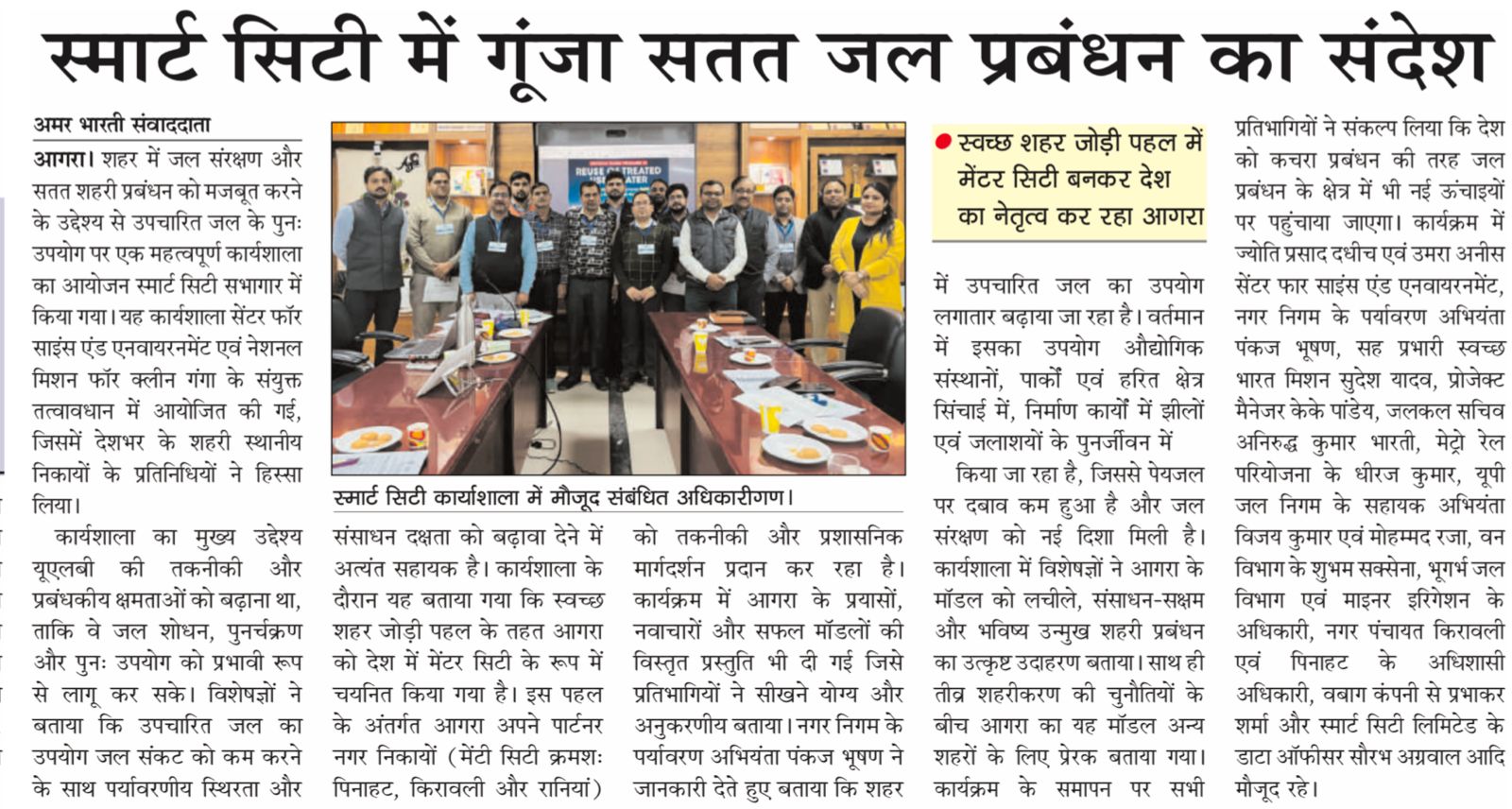
Report filed by the National Mission for Clean Ganga (NMCG) before the National Green Tribunal (NGT) on sewerage networks in India cited Centre for Science and Environment (CSE) and Down to Earth.

he report, November 22, 2025 said that the Namami Gange Programme succeeded the Ganga Action Plan of 1985. In the interim, several national frameworks — including those of Union Ministry of Housing and Urban Affairs, Central Pollution Control Board, NITI Aayog and the World Bank — as well as technical organisations such as the Delhi-based think tank Centre for Science and Environment (CSE) and the International Water Association (IWA), have recognised the tapping and diversion of drains to STPs as an unavoidable interim measure to address urban sanitation issues. The NMCG report noted that several reputed journals and studies, including a March 2025 CSE report published in Down to Earth, demonstrate field evidence that intercepting drains, temporarily diverting flow, and capturing solids and floatable matter can significantly reduce river pollution during sewerage system build-out. https://shorturl.at/gvmSD

Climate-Change-Driven Inflation, Modern Money Theory, and Degrowth

Recent heatwaves in India have been linked to climate change. For example, it has been estimated that human-induced climate change made the April 2023 heatwaves across India thirty times more likely. The June 2023 heatwave across twelve Indian states has been linked to climate change as well. The higher temperatures that plagued eleven Indian states in June–August 2023 were made at least three times more likely by climate change (Sengupta and Pandey Citation2023).

From zero heatwave days in 2023 to 25 last yr, extreme weather triggers rise in power demand in Himalayan states

Dehradun: Extreme heat has expanded into the Indian Himalayas, with states like Uttarakhand and the Union Territory of Ladakh recording steep spikes in summer temperatures in 2024. A joint study by Climate Compatible Futures and Climate Trends revealed that Uttarakhand went from recording zero heatwave days in 2023 to 25 in 2024, while Ladakh saw its average summer temperature rise by 9.1%. The report noted that this shift signals the movement of heat into previously cooler, high-altitude zones, pushing these regions into the same climate stress category as the plains of north and central India. The study, which analysed India's heat and power systems, found that Uttarakhand experienced an 11.2% rise in average summer temperatures — the highest among Himalayan states — suggesting a worrying breakdown of the long-assumed natural buffer offered by these mountain regions. The authors warned that the trend is not only reshaping the climate profile of the Himalayas but also exposing these ecologically fragile zones to cascading consequences for energy systems, public health and climate equity. Nationally, India's average annual temperature in 2024 rose 0.65°C above the 1991–2020 baseline, closely matching the global increase of 0.62°C. The temperature spike was directly linked to a surge in electricity consumption, with April–June 2024 heatwaves alone adding nearly 9% to the country's power demand. This surge resulted in 327 million tonnes of carbon dioxide emissions from fossil power consumption during those three months. The report highlighted that over the past decade, summer fossil-based energy demand alone led to nearly 2.5 gigatonnes of emissions. The report also contextualised these findings against broader climate data from the India Meteorological Department and the Centre for Science and Environment, both of which confirmed 2024 as one of the hottest years on record. The country reported over 200 heatwave days between March and June this year, including in states where such phenomena were previously rare. The National Disaster Management Authority had earlier urged states to revise their Heat Action Plans, stressing that the Himalayan belt was no longer shielded from heat stress. Manish Ram, CEO at Climate Compatible Futures, said, "Our research shows that rising temperatures are steadily increasing power demand for cooling, deepening dependence on fossil fuels and worsening emissions and air pollution. Breaking this cycle is essential to avoid further burdening vulnerable and low-income communities who face the harshest impacts of extreme heat." The report described this as a reinforcing "heat–power trap": higher temperatures trigger greater cooling demand, which increases fossil-based electricity generation, in turn worsening overall heat levels. Although India has made significant strides in renewables — more than doubling its capacity from 84 gigawatts in 2015 to 209 gigawatts in 2024 — fossil fuel use has continued rising, keeping the country locked in a carbon-heavy energy response cycle. Researchers pointed to the situation in the Himalayan states as a critical turning point. Regions like Uttarakhand and Ladakh, which once had minimal exposure to extreme heat, are now experiencing multiple heatwave days, putting strain on public health infrastructure, energy supply systems and water resources. Yet, despite growing risks, only four states, three cities and one district in India currently incorporate renewable-powered cooling systems into their Heat Action Plans. The report flagged the absence of robust grid backup, battery storage, and weather-responsive forecasting as major gaps in most state-level strategies. Aarti Khosla, director at Climate Trends, said, "India's heatwaves and power shortages are now converging crises. We urgently need stronger grids, storage, and flexible, climate-resilient systems, or each summer will push us deeper into fossil dependence and worsening health impacts. This is not just a climate issue but an equity challenge for millions most vulnerable to extreme heat." The report concluded that without immediate national investments in battery storage, flexible electricity grids and demand-side management, India's clean energy transition could slow under mounting temperature pressures. For the Indian Himalayas, once considered resilient to such extremes, the challenge is no longer just environmental but humanitarian — one that demands urgent response to break the heat–power cycle before it becomes irreversible.

Early GRAP triggers, late response: Forecast failures keep capital in red

The Graded Response Action Plan (GRAP), a set of emergency measures implemented to prevent an unchecked spike in air pollution, is set for its fourth modification since 2022. On Wednesday, Supreme Court asked the Commission for Air Quality Management to bring stricter measures in the earlier stages. Some Stage IV actions — triggered when AQI exceeds 450 — are now proposed for Stage III, and some Stage III directives for II. Although Stage II-IV measures are supposed to come into force three days in advance based on AQI forecasts, this no longer happens. CAQM, in a note to Supreme Court, proposed that two measures — allowing public, municipal and private offices to work at 50% in-office strength and the rest from home in Delhi-NCR, and work from home for central govt offices — may be shifted from Stage IV to III. Staggered timings in public offices and civic bodies in Delhi-NCR may be enforced in Stage II. These are part of Stage III now. CAQM also proposed uninterrupted power supply to discourage the use of power-generating sets in Stage I. It is now part of Stage II. A CAQM official said, "The commission is reviewing the measures and will take action accordingly." When GRAP was modified in 2022, a new clause was added that restrictive actions under Stages II, III, and IV will be invoked at least three days in advance of the AQI reaching the projected levels of that stage based on the forecast of IITM and India Meteorological Department. The move was aimed at ensuring that air quality does not reach hazardous pollution levels. However, GRAP measures are now mostly invoked when the AQI crosses such a stage. Anumita Roychowdhury, executive director for research and advocacy at the Centre for Science and Environment, said: "It is necessary to support GRAP measures with an improved forecasting system to make it more predictable. At the same time, this needs to be implemented with planning to minimise disruptions, including safeguards against earning losses." She added that it was more important to leverage GRAP to catalyse action for sustained and long-term improvement in air quality, which would minimise the requirement of such restrictions in winter. Activist Bhavreen Kandhari, who is the founder of Warrior Moms, said Supreme Court's push for an earlier and stricter GRAP was welcome, but it has also exposed how the current framework has remained largely reactive, rather than preventive. "GRAP has waited for pollution to spike before acting, with thresholds set so high that interventions came only after public health damage was already under way. What we need now is a year-round, data-driven system with lower trigger points, stronger monitoring infrastructure, clearer accountability for states, and genuine stakeholder participation, from citizens to industry," Kandhari said. Dipankar Saha, former head of the Central Pollution Control Board's air laboratory, said the entire Indo-Gangetic Plain needs common measures for preventing and controlling emissions, such as stopping solid-waste burning, regulating construction, repairing roads before winter, conducting pollution checks for vehicles, setting predefined industrial emission limits for winter months, and bringing the entire NCR under a single regulatory framework. "These common practices should remain in place throughout winter. Stricter measures under GRAP Stages I to IV should then be enforced with appropriate penalties and punitive action," said Saha.