
Jal Jeevan Mission (JJM) has not only ensured water supply at the doorstep of each rural household but it also focuses on managing greywater from kitchens, bathrooms and washing areas. JJM went, for the first time in India, beyond water supply alone to tackle wastewater-related issues.
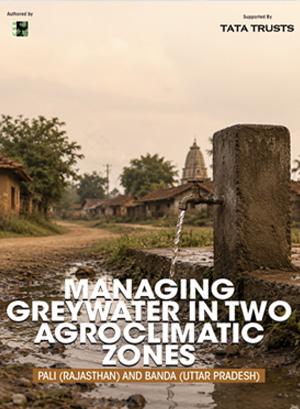
To understand the state of greywater management in rural areas, the Centre for Science and Environment (CSE) examined two ecologically distinct districts—Pali in Rajasthan and Banda in Uttar Pradesh. Around 30 villages and 589 households were surveyed in these two districts. Multi-village surface-water-based schemes have been planned under JJM in both districts, but due to irregular supply both districts have shifted largely to groundwater-based sources— public or private.
CSE’s analysis shows that underestimating greywater generation has led to the installation of undersized or improperly sited greywater management structures. The greywater conveyance systems in both districts also remain a challenge. Poor maintenance of the conveyance and the greywater management structures exacerbates the problems. The report suggests a matrix of soil-specific solutions for both districts.


Share this article