
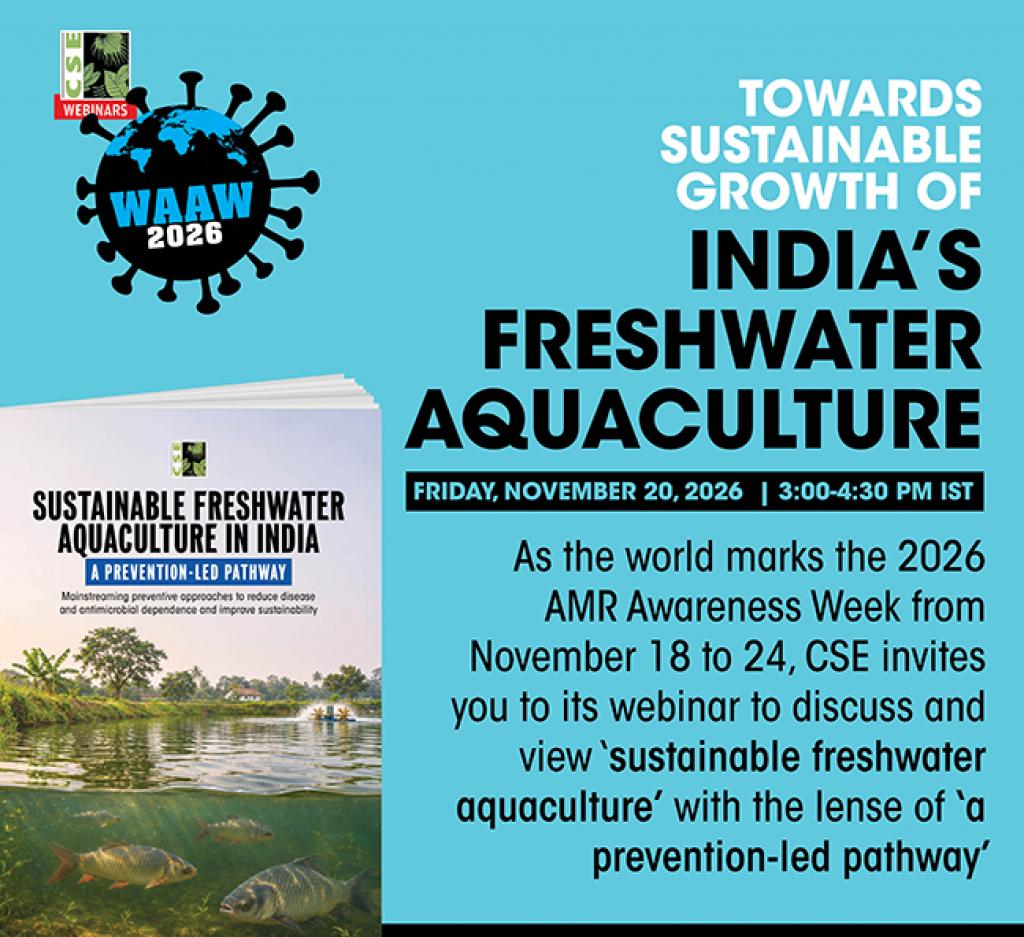
Supporting nearly 30 million people, the Indian fisheries sector produced 19.77 million tonne (MT) of fish in 2024- 25, 77 per cent of which came from inland fisheries, predominantly driven by freshwater aquaculture. Over the last decade, the freshwater aquaculture sector, which has a huge growth potential, has received considerable attention from the government at the Centre and in several states. While this growth must remain sustainable — securing smallholder livelihoods, ensuring consumer health and protecting the environment -- the sector remains vulnerable to diseases. The disease cost to Indian Major Carps (IMC) alone is estimated at US $996 million.
As the world marks the 2026 AMR Awareness Week from November 18 to 24, CSE invites you to its webinar to discuss and view ‘sustainable freshwater aquaculture’ with the lense of ‘a prevention-led pathway’. CSE will release its new report on the occasion: the report focuses on eight prevention pillars — water quality, biosecurity, disease management, quality seed, improved varieties, quality feed, alternatives and vaccination.
| "It is critical that prevention-based approaches are mainstreamed in the freshwater aquaculture sector. Beyond curbing antibiotic misuse, keeping antibiotics effective and mitigating antimicrobial resistance (AMR), these approaches offer sustainable benefits as they reduce fish mortality and improve health and resilience on the farm; provide better incomes and livelihood to farmers; benefit safe food, nutrition and health of people and prevent water and environment pollution.” Amit Khurana, Director, Sustainable Food Systems Programme, CSE |
FOR MORE DETAILS, PLEASE CONTACT:
NEERAJ KUMAR
neeraj_k@cseindia.org
8802698587
| Anchor | |
 |
SUNITA NARAIN Director General Centre for Science and Environment |
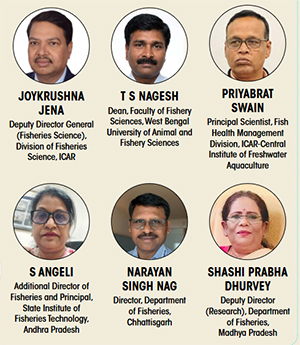
| Our Panellists | |
 |
|
| CSE Team | |
 |
AMIT KHURANA Director Sustainable Food Systems Programme, CSE |
 |
RAJESHWARI SINHA Senior Programme Manager Sustainable Food Systems Programme, CSE |
 |
NEERAJ KUMAR Deputy Programme Manager Sustainable Food Systems Programme, CSE |
 |
|
Share this article