
India’s growing demand for animal-source foods is driving the expansion of intensive production systems, characterised by heavy inputs, high stocking densities, productivity-centric breeds, and inadequate animal husbandry. This increases disease risks and dependence on antibiotics, contributing to antimicrobial resistance (AMR), threatening public health. The challenge is, therefore, to sustain productivity while reducing antibiotic dependence and minimising environmental and public health risks.
For this, a shift towards preventive and sustainable production offers a way forward. Improved biosecurity, vaccination, nutrition, alternatives to antibiotics and better farm management can reduce disease burden in intensive systems. Alongside, strengthening traditional, backyard and rural production systems can offer sustainable growth for producing animal-source foods.
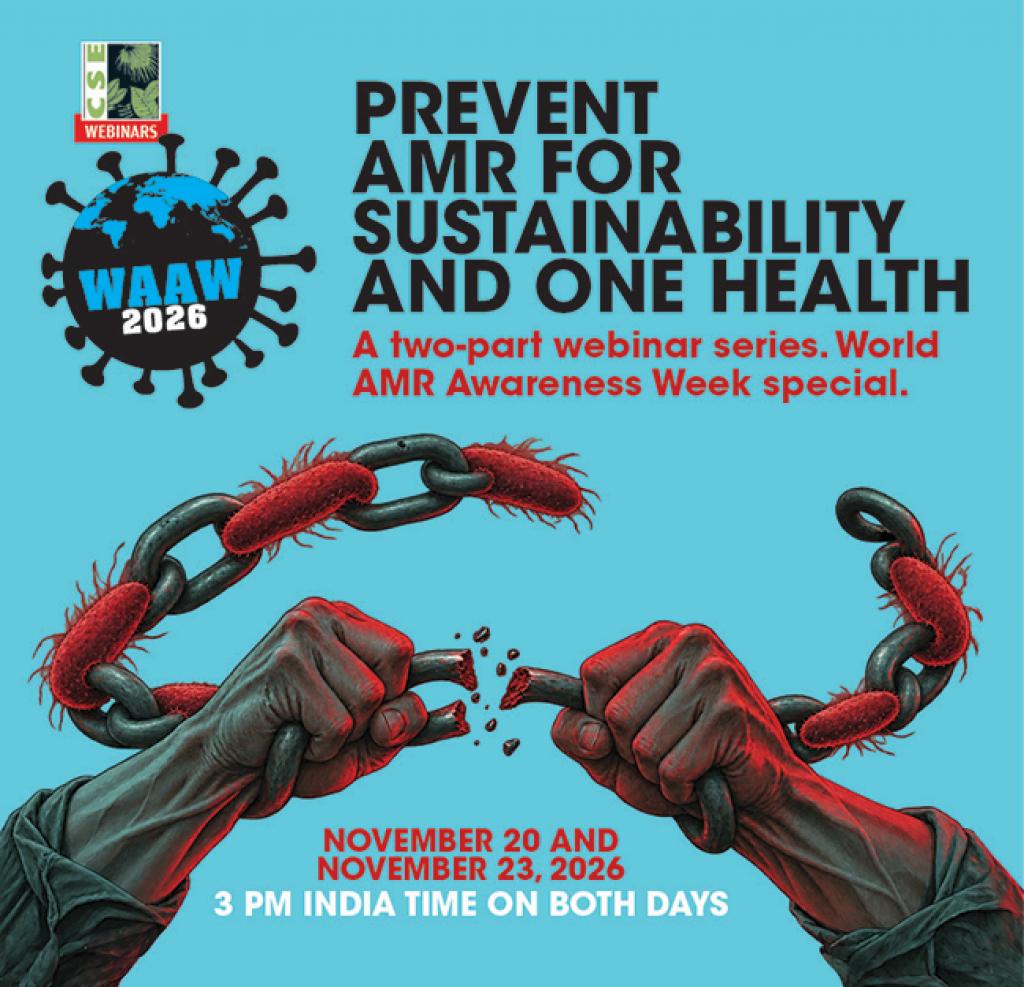
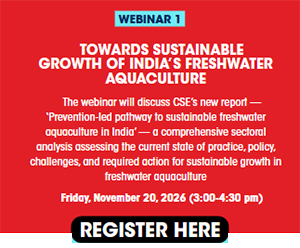
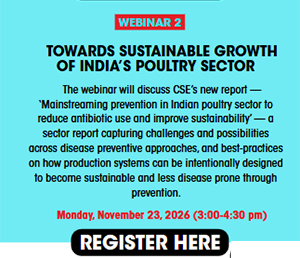
Centre for Science and Environment (CSE) is marking the 2026 World AMR Awareness Week (November 18-24) with a two-part webinar series to release its two new reports and discuss how prevention-led pathways can help balance productivity in agri-food systems (poultry and aquaculture), while also ensuring livelihoods, nutrition, biodiversity, food safety, environmental sustainability and AMR mitigation.
For any other details, please contact:
Neeraj Kumar
Deputy Programme Manager
Sustainable Food Systems
neeraj_k@cseindia.org
Phone: +91 8802698587
| Webinar | |
 |
|
 |
Share this article