
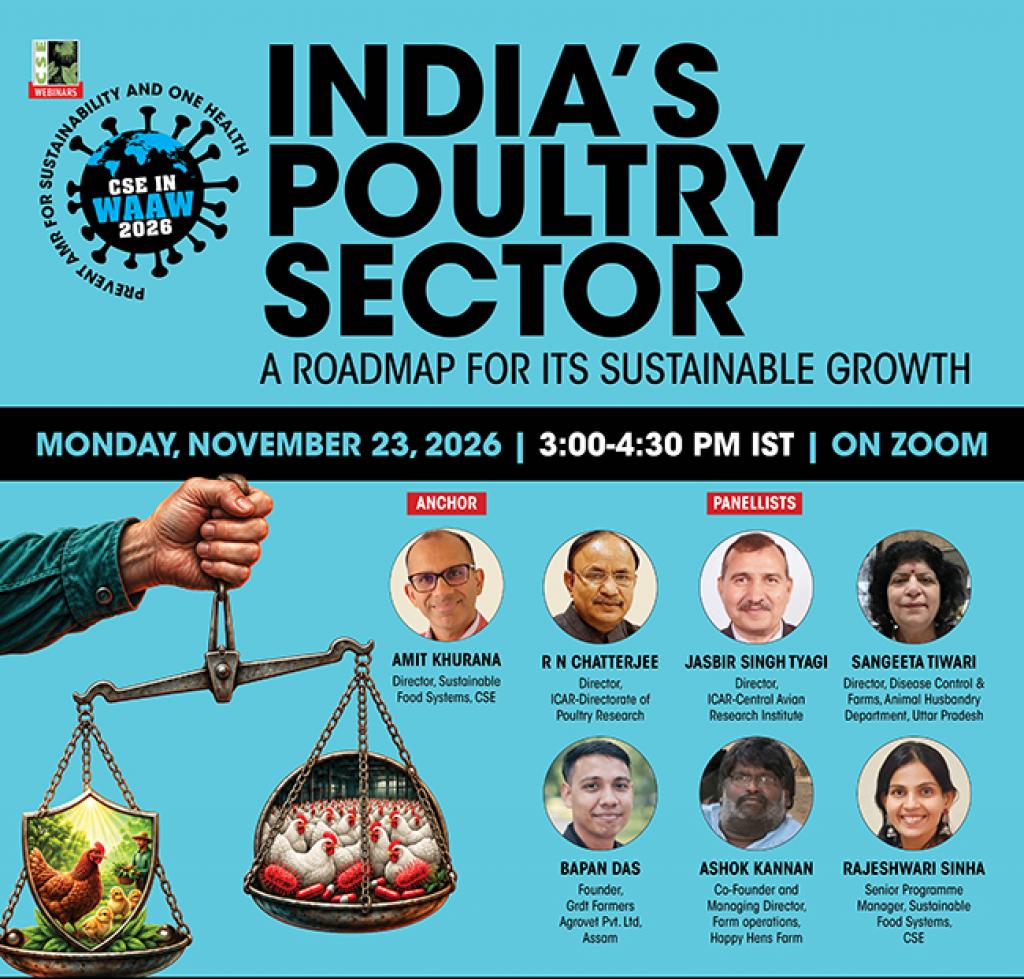
The Indian poultry sector is big in terms of productivity, livelihood opportunities and nutrition support that it provides. Led by intensive systems, the sector is growing steeply even as backyard systems are also being promoted. But this growth has to be sustainable – especially keeping in mind the sector’s dependence on compound feed and chemicals including antibiotics, its high stocking densities and disease-prone conditions, and use of breeds that are productivity-centric and not disease-resilient.
Mainstreaming prevention-based approaches is the key to contain diseases and improve sustainability in both the broiler and layer sub-sectors. Upscaled adoption of prevention pillars such as biosecurity and farm management and alternatives to antibiotic use, among other things, can enhance the economic and environmental sustainability of the sector by boosting farm productivity and incomes, creating small-holder livelihood opportunities, conserving hardy native breeds, and improving trade. Importantly, by reducing the occurrence of disease on the farm, preventive approaches reduce the need for antibiotics and emergence of antimicrobial resistance (AMR) and improve food safety, control zoonoses and spread of food-borne infections.
We invite you to our webinar (a part of our 2026 World AMR Awareness Week portfolio) to discuss this issue in the backdrop of a new report to be released by CSE – ‘Sustainable Poultry Farming in India: Mainstreaming prevention to reduce antibiotic use and improve sustainability’. The report presents challenges and possibilities in mainstreaming the prevention pillars, along with over 15 case studies from public, private and civil society stakeholders which show that prevention is possible and profitable.
For more details, please contact: Neeraj Kumar, neeraj_k@cseindia.org, 8802698587
 |
Share this article