
Finds mismatch between cost of managing plastic waste and financial support available through EPR for plastic packaging
Download the CSE report click here
To access the deliberations at the report release, please click here
New Delhi, August 12, 2026: Who pays for the plastic waste generated by products that are sold in our markets? India produces about 158,619 tonne of municipal solid waste every day, of which an estimated 10-12 per cent is plastic waste — nearly 19,000 tonne per day. A significant share of this is plastic packaging, which has a short shelf life and which rapidly enters the waste stream, placing huge pressure on municipal collection, segregation, processing and recycling systems.
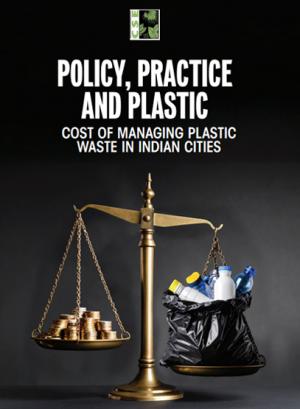
A new study by Centre for Science and Environment (CSE) says there is a clear mismatch between the actual cost of managing plastic waste and the financial support available through Extended Producer Responsibility (EPR) for plastic packaging. Officially released yesterday, “the study finds that inadequate cost recovery can leave municipalities to shoulder a financial burden that EPR was intended to place on producers, importers and brand owners (PIBO) under the polluter-pays principle,” says Atin Biswas, director, municipal solid waste and circular economy programme, CSE.
CSE researchers say there exists a gap between India's recycling targets and the available capacity to manage difficult-to-recycle plastic packaging. Under the Plastic Waste Management Rules, PIBOs are required to meet 50-70 per cent recycling targets by 2026-27. However, the country continues to face significant capacity constraints, particularly for flexible and multi-layered plastic packaging -- nearly 66 per cent of registered plastic packaging is flexible plastic, a category that is particularly difficult to collect, segregate and recycle.
According to Siddharth G Singh, programme manager, municipal solid waste and circular economy programme, CSE, “the current EPR framework in India disproportionately directs financial value towards plastic waste processors and end-of-life facilities, while the collection and segregation systems that make plastic recovery possible remain inadequately financed. Waste collectors, informal waste workers, urban local bodies and material recovery facilities continue to perform critical functions without adequate access to EPR financing.”
The CSE study points out that the methodology adopted by the Central Pollution Control Board provides a price range for EPR certificates linked to environmental compensation: certificates can be traded between 30 and 100 per cent of the applicable environmental compensation. However, says Singh, “the market has tended to gravitate towards the lower end of this range, creating a persistent gap between certificate prices and the actual cost of managing plastic waste”.
CSE's analysis shows that this gap is particularly pronounced in cities facing higher logistical and infrastructure costs. The study notes that a uniform EPR rate across geographies does not adequately account for variations in terrain, infrastructure, waste generation and transportation requirements.
Dr Tribhuwan Singh Bisht, deputy programme manager, municipal solid waste and circular economy, CSE and one of the researchers behind the CSE study, says: “The actual cost of managing plastic waste varies significantly across cities and plastic categories.” For example, the cost of managing Category III plastics (multi-layered plastic packaging) ranges from Rs 2.35-3.67 per kg in Indore (Madhya Pradesh), to Rs 9.87-11.83 per kg in Sri Vijaya Puram (formerly known as Port Blair, Andaman and Nicobar Islands).
The mismatch with EPR credit rates becomes particularly stark for difficult-to-recycle plastics. The CSE study estimates that in Dharamshala (Himachal Pradesh), the cost of managing Category III plastics range up to Rs 9.15 per kg, while the prevailing market-linked EPR credit rates are only around Rs 1-1.25 per kg, resulting in cost recovery of just 13-14 per cent.
Dr Bisht says: “This variation reflects differences in geography, infrastructure, logistics and local waste management systems. Even in cities with more developed waste management systems, current market rates do not necessarily cover the full cost of managing flexible and multi-layered plastics.”
Says Biswas: “There exists a central contradiction in the current EPR system: the financial responsibility for plastic waste is intended to rest with the producer under the polluter-pays principle, but the actual cost of managing the waste can continue to fall on municipalities. This is what we need to correct.”
What does CSE recommend?
In its study, CSE has proposed a Weighted Adjustment Factor (WAF) to adjust base EPR credit rates according to geographic and operational conditions. Under this proposed approach, cities or regions with higher costs due to factors such as terrain, infrastructure deficits and logistics would receive appropriately adjusted EPR rates.
The study also proposes a localised EPR obligation, under which PIBOs would be required to purchase a defined share of EPR certificates from the regions where their products are consumed. Such a mechanism would help direct EPR resources towards regions where plastic waste is actually generated and where the cost of managing it may be significantly higher.
There is a need for EPR to create stronger incentives for better packaging design in the case of difficult-to-recycle plastic. If the cost of managing hard-to-recycle materials is not adequately reflected in EPR fees, there is little economic incentive for producers to shift towards recyclable or more sustainable alternatives.
Delivering her valedictory address at the release of the study, CSE director general Sunita Narain pointed out that “India's plastic waste management system relies heavily on the labour of poor and informal workers who collect, segregate and aggregate valuable recyclable materials. Unless these workers are incorporated into the EPR framework and receive financial support from it, the system will continue to leave a critical part of the value chain outside the financing architecture”.
The deliberations at the release event concluded with the statement that EPR cannot be considered successful merely because PIBOs have purchased certificates or fulfilled a numerical compliance target. Its effectiveness must ultimately be measured by whether plastic waste is collected, segregated, processed and recycled; whether the people performing this work are fairly compensated; and whether the financial responsibility for managing plastic remains with those who place it on the market.
For more on this and interviews etc, please contact Sukanya Nair of The CSE Media Resource Centre, sukanya.nair@cseindia.org, 8816818864.
Share this article