
With the increasing adoption of Faecal Sludge and Septage Management systems across India, many states have established Faecal Sludge Treatment Plants to ensure the safe collection, treatment, and disposal of faecal sludge and septage generated from on-site sanitation systems. Rajasthan has emerged as a frontrunner in this sector, with more than 60 operational FSTPs serving Urban Local Bodies across the state. While significant investments have been made in creating treatment infrastructure, the long-term success of these facilities depends on efficient operation, regular maintenance, and effective monitoring.
The sustainable performance of FSTPs requires systematic operation and maintenance (O&M), including routine monitoring of treatment processes, preventive maintenance of equipment, proper record-keeping, compliance with occupational health and safety (OHS) protocols, and regular performance assessment. However, recent assessments undertaken by the Centre for Science and Environment revealed several operational challenges, such as inadequate maintenance practices, underutilization of treatment capacity, insufficient process monitoring, limited technical expertise among plant operators, and weak institutional oversight. Addressing these gaps through targeted capacity building is essential to improve plant performance, resource efficiency, and environmental compliance.
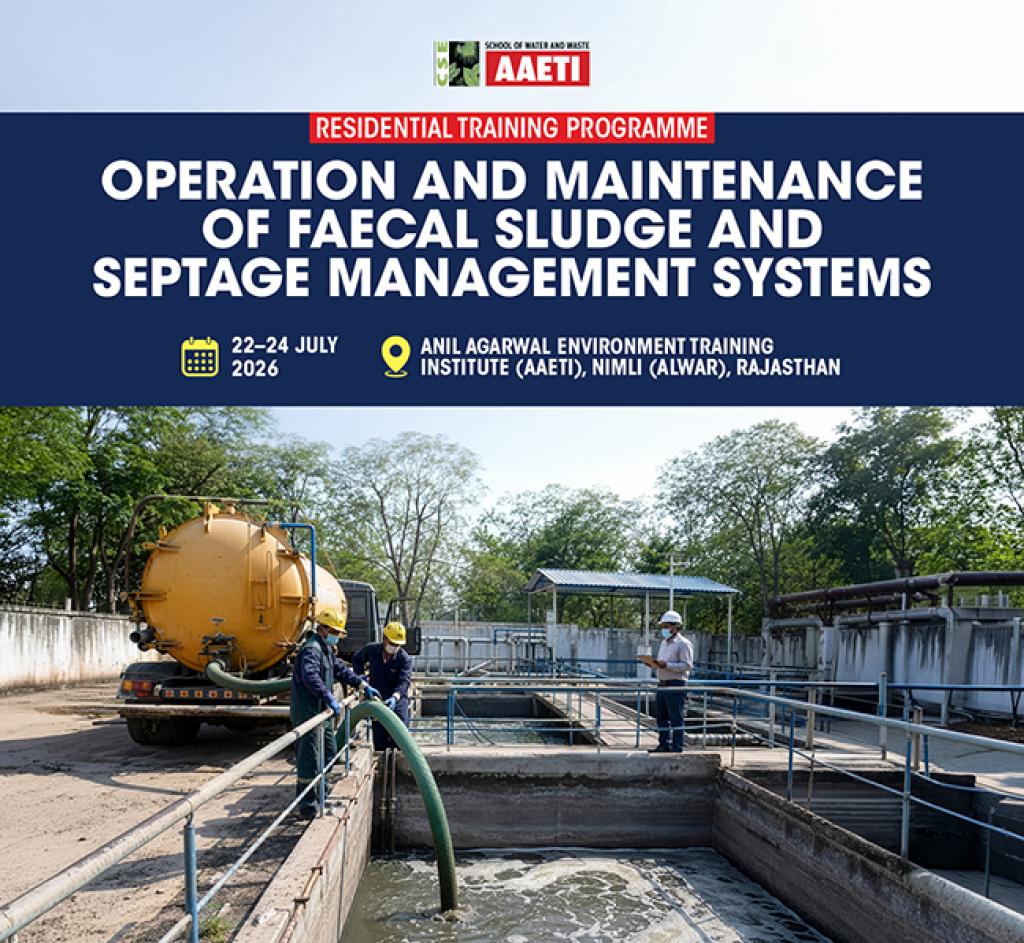
To strengthen the technical and operational capacities of key stakeholders, the Centre for Science and Environment in collaboration with the Swachh Bharat Mission (Urban), Directorate of Local Bodies, Government of Rajasthan, organized a three-day Residential Training Programme on "Operation and Maintenance of Faecal Sludge and Septage Management Systems" from 22-24 July 2026 at the Anil Agarwal Environment Training Institute (AAETI), Nimli, Alwar, Rajasthan.
The training was designed for municipal officials, engineers, sanitation professionals, and FSTP operators responsible for planning, operating, and maintaining faecal sludge treatment systems. It focused on strengthening participants' understanding of FSSM technologies, plant operation and maintenance, process monitoring, occupational health and safety, troubleshooting of operational issues, and strategies to improve treatment efficiency and plant utilization.
Training Methodology
The training adopted a participatory and practice-oriented learning approach, combining classroom instruction with hands-on demonstrations and field-based learning. The programme included technical presentations by subject experts, interactive discussions, group exercises, quizzes, case studies, laboratory demonstrations, and a field exposure visit.
Technical sessions covered the fundamentals of FSSM, treatment technologies, operational and maintenance protocols, monitoring frameworks, process optimization, and occupational health and safety measures. Participants also discussed common operational challenges encountered at FSTPs and explored practical solutions based on field experiences and best practices.
Interactive group activities and peer-learning sessions encouraged participants to exchange experiences from their respective urban local bodies, fostering collaborative problem-solving and knowledge sharing. Laboratory demonstrations provided practical exposure to sludge and treated wastewater sampling, quality analysis, and monitoring techniques.
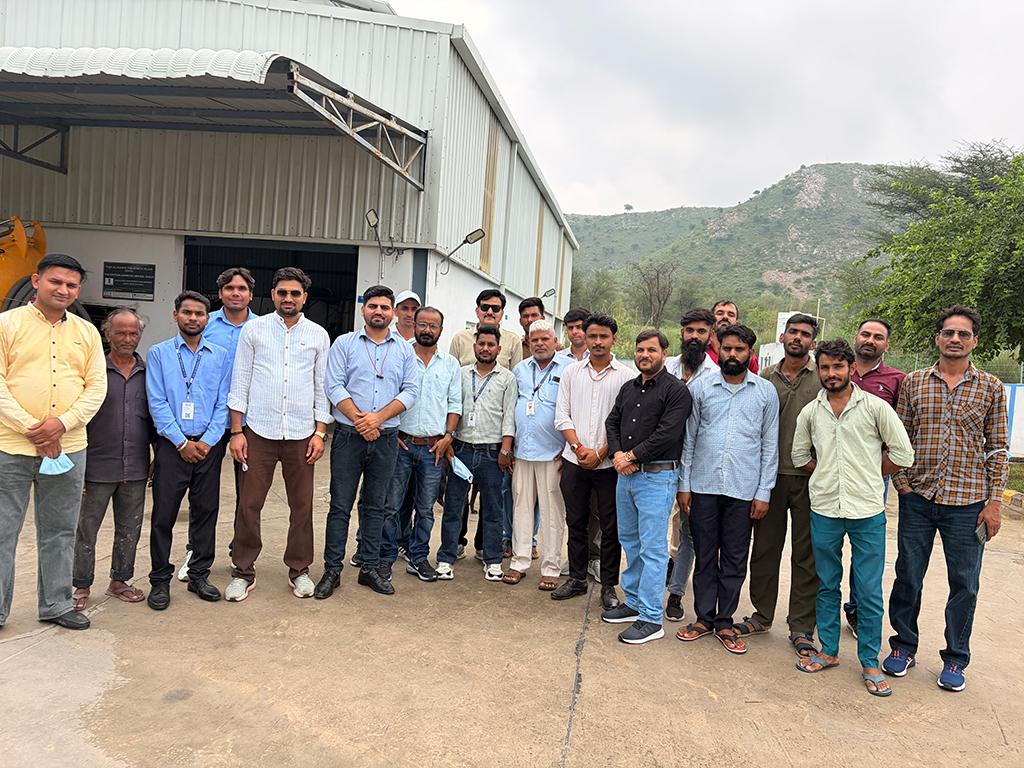
A field visit to the Kishangarh Bas Faecal Sludge Treatment Plant enabled participants to observe treatment processes, plant operation, maintenance practices, monitoring systems, and day-to-day management under real operating conditions.
By integrating technical knowledge with practical exposure, the programme enhanced participants' understanding of FSTP operation and maintenance, equipping them with the skills and confidence needed to improve the efficiency, sustainability, and regulatory compliance of FSSM systems in their respective jurisdictions.
TRAINING COORDINATOR
Vivek Kumar Sah
Programme Officer
Water, CSE
vivek.sah@cseindia.org
+91- 9708887214
TRAINING DIRECTOR
Subrata Chakraborty
Director
Water Programme, CSE
subrata.chakraborty@cseindia.org
| List of participants | |
| Download pdf | |
| Proceedings | |
| Download pdf | |
| Feedback | |
| Download pdf | |
| Flyer | |
 |
|
| Download pdf |
Share this article