
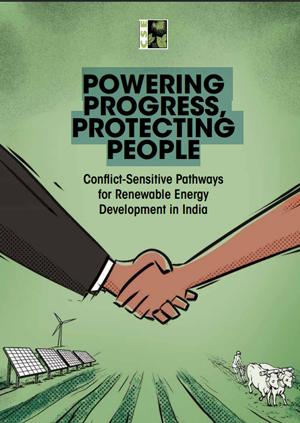
India’s renewable energy transition is advancing rapidly, but its success depends on how projects affect the people and landscapes around them. Powering Progress, Protecting People examines the social and environmental conflicts emerging from large-scale renewable energy development, with case studies spanning Rajasthan, Gujarat, Andhra Pradesh, Madhya Pradesh, Assam and other states. It traces how land classified as wasteland or government land often supports grazing, agriculture, water systems and culturally significant commons, while compensation and employment opportunities remain unevenly distributed. The report also examines environmental pressures on wildlife habitats, wetlands, coastal ecosystems and water resources. Drawing on experiences from projects across India, it identifies practical approaches to reduce conflict, including inclusive land-use planning, agrivoltaics, canal-top and floating solar, water stewardship, local skills development and community benefit sharing. It concludes with five policy priorities to strengthen environmental and social accountability and ensure that renewable energy expansion advances climate goals while protecting livelihoods and community interests.


Share this article