
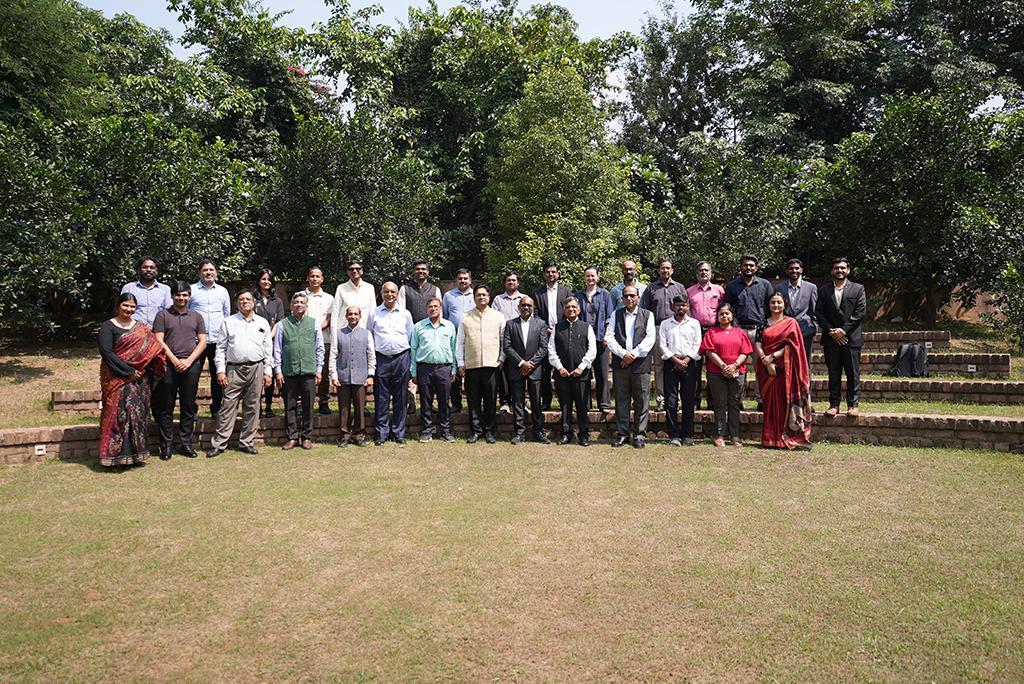
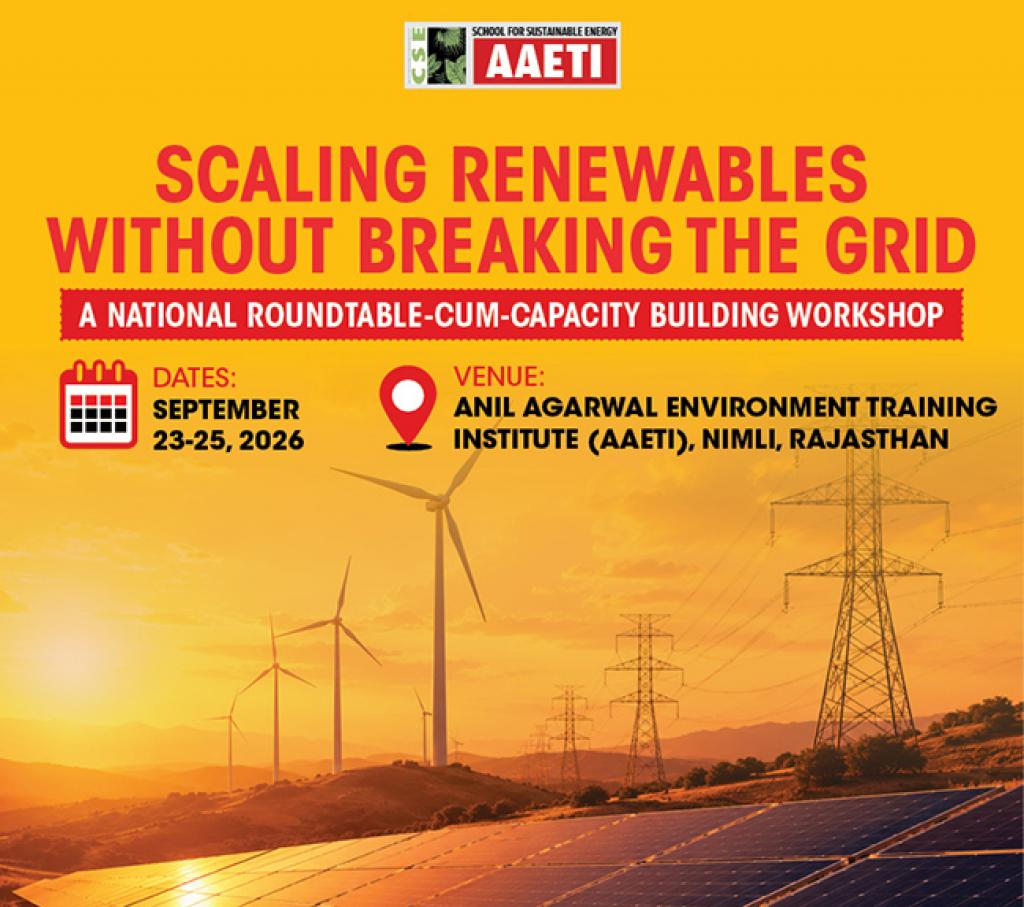
Centre for Science and Environment (CSE) is organising a national Roundtable to discuss pathways for scaling utility-scale renewable energy deployment while ensuring grid reliability. The roundtable is expected to bring together policymakers, regulatory bodies, transmission and distribution utilities, project developers, financiers, manufacturers, and state and central government agencies to examine how India can sustain the pace of utility-scale renewable energy addition without compromising grid stability, generation scheduling discipline, land-use sustainability and cost to consumers.
Scaling utility-scale renewables to meet India’s 500-GW target by 2030 will test the grid as much as it tests the market. Rising renewable penetration is straining transmission infrastructure and grid-balancing capacity at both the national and state level, even as coordination between the Centre and states on capacity-addition targets remains uneven, with progress tracked and reported inconsistently across states. RE’s integration is amending the regulatory framework at generator and distribution level with avenues such as competitive bidding, shorter PPAs and even virtual PPAs. With utility-scale storage only beginning to be deployed at the pace, grid balancing becomes key. These developments necessitate dialogue around the evolving challenges for all stakeholders.
Meanwhile, India’s dependence on imported PV cells, modules and battery technologies remains a structural risk to the pace of deployment. Simultaneously, land required for utility-scale projects is increasingly colliding with agricultural, ecological and community interests. This roundtable will confront the challenges directly and chart pathways for reliable, sustainable, and domestically-anchored scale-up of utility-scale renewable energy.
KEY SESSIONS AND SUBJECTS OF DISCUSSION
FOR FURTHER DETAILS AND INFORMATION, PLEASE CONTACT
BINIT DAS
Programme Manager
Renewable Energy Programme, CSE
binit.das@cseindia.org
+91 80933 26269
KUSHAGRA GOYAL
Senior Research Associate
Sustainable Industrialization Unit, CSE
kushagra_goyal@cseindia.org
+91 9799436833
| Agenda | ||||||
| Download pdf | ||||||
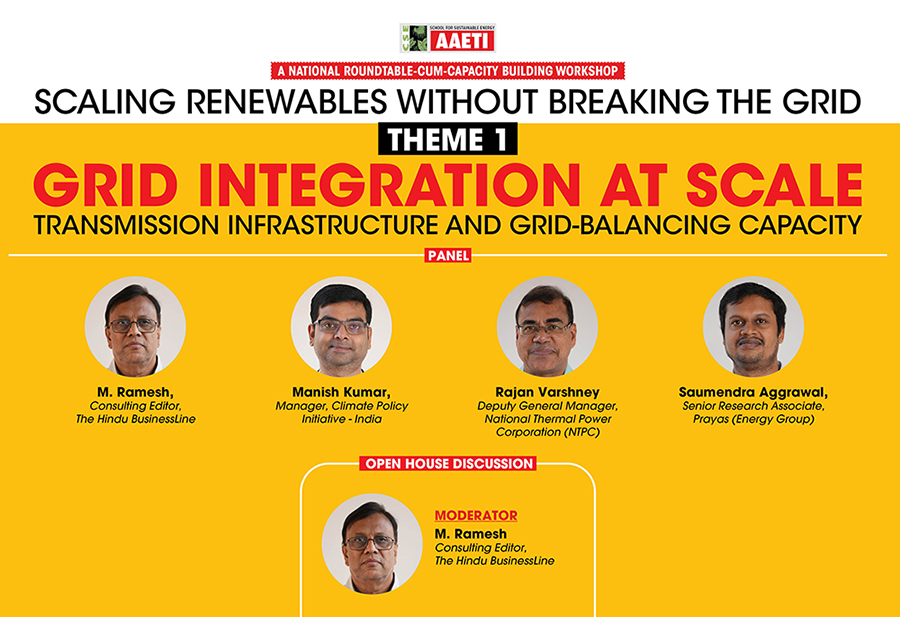
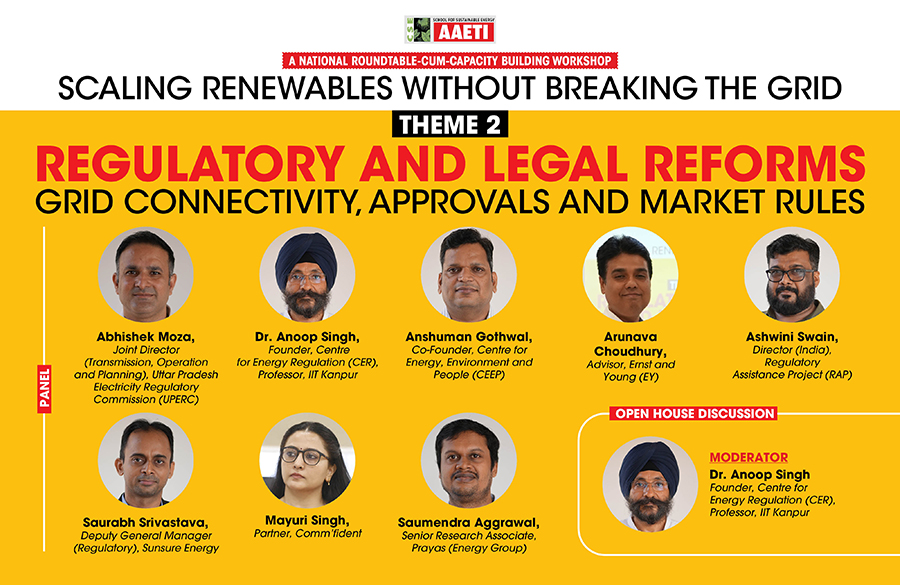
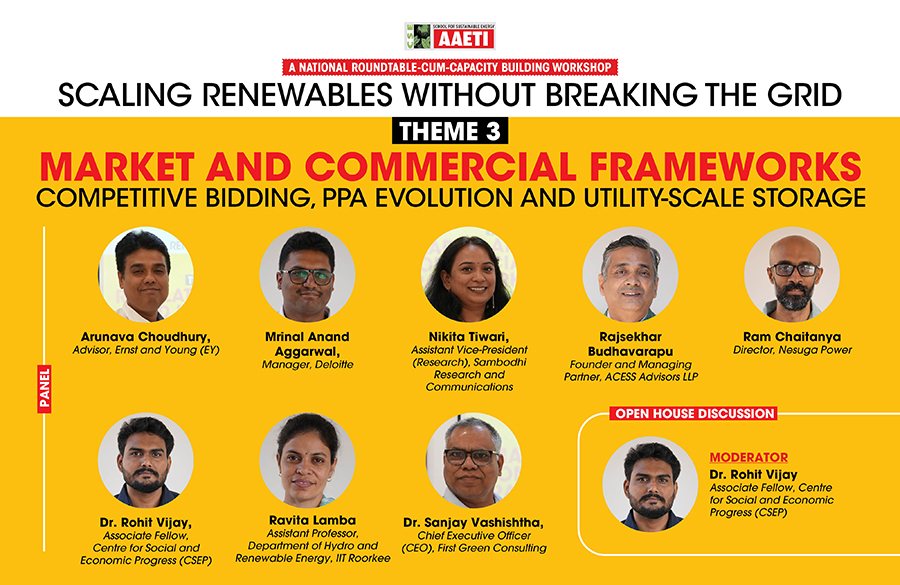
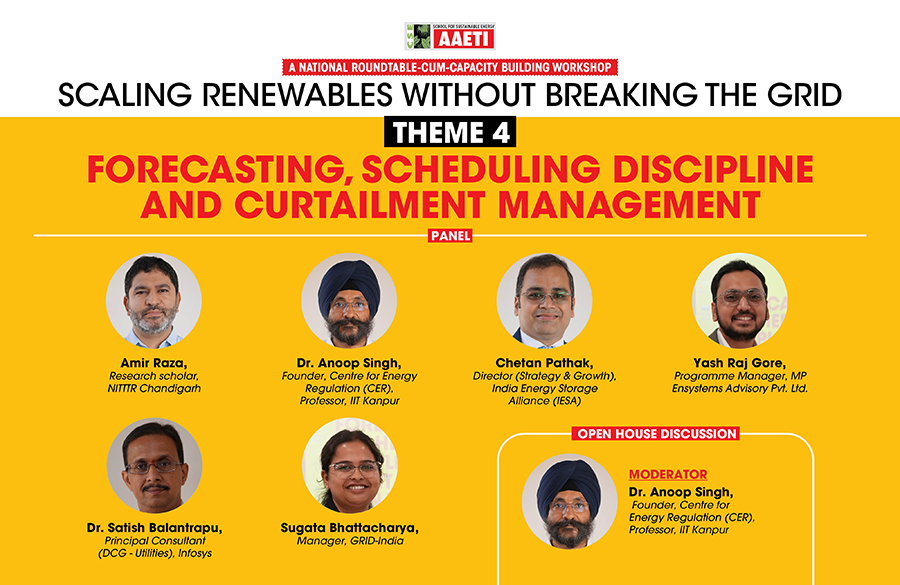
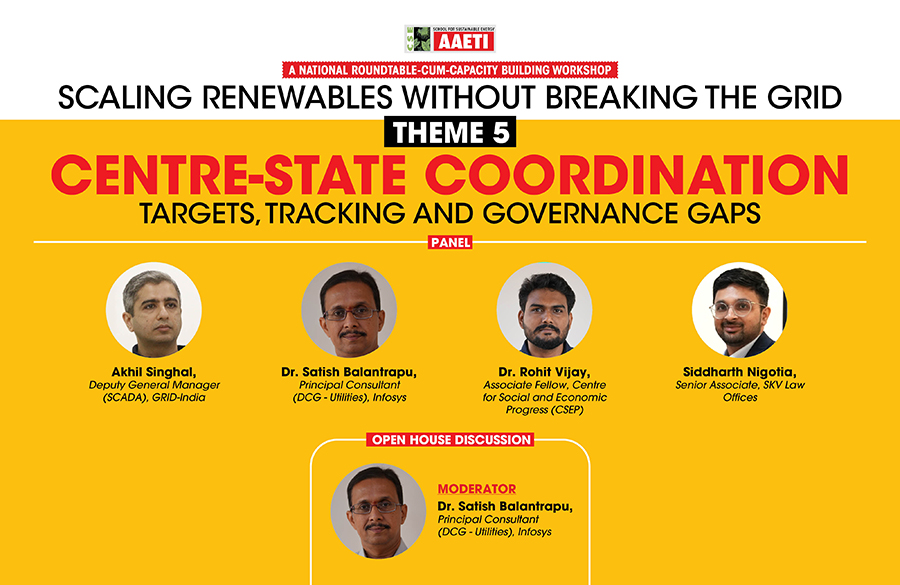
| Thematic Discussions and Panelists | ||||||
|
||||||
| Key speaker | ||||||
 |
Dr. Rahul Tongia Senior Fellow, Centre for Social and Economic Progress (CSEP) |
|||||
 |
KVS Baba Former Chairman and Managing Director GRID, India |
|||||
 |
Arun Goyal Former Member Central Electricity Regulatory Commission (CERC) |
|||||
 |
Dr. Pradeep Chandra Pant Former Advisor and Scientist 'G'' Ministry of New and Renewable Energy (MNRE) |
|||||
 |
Rajeev Kumar Chouhan Former Director (Projects) POWERGRID Corp. of India Ltd. |
|||||
| Presentation | ||||||
| Scaling renewables without breaking the GRID – setting the context By: Binit Das and Kushagra Goyal, CSE |
||||||
| Planning for Firm power – What resource adequacy needs to account for By: Dr. Rohit Vijay and Dr. Rahul Tongia, CSEP |
||||||
| Operating a 24x7 Green Energy Grid (GEG) - 2070 By: IlangovenA, Consun Energy |
||||||
| Aligning RE development with Regulations By: Dr. Anoop Singh, IIT Kanpur |
||||||
| Rethinking Renewable Energy Curtailment- Planning Regulation and the path ahead By: Mrinal Anand Aggarwal, Deloitte |
||||||
| SCADA - a critical Grid infrastructure and benefits of Indigenization By: Akhil Singhal, GRID-India |
||||||
| When Power System Changes - Communication in changing times By: Mayuri Singh, Comm’fident |
||||||
| Importance of RE forecasting - Wind forecasting using deep learning methods By: Dr. Ravita Lamba, IIT Roorkee |
||||||
| One National Target Many State Pathways - Equity and transition via Demand Flexibility By: Nikhil Thejesh Venkataramana, IIT Bombay |
||||||
| From RE forecasts to grid operations - Strengthening scheduling, balancing and grid stability By: Sugata Bhattacharya, GRID-India |
||||||
| Grid Over-injection - lessons from recent cases By: Sidharth Nigotia and Mohit Mansharamani, SKV Law Offices |
||||||
| Flyer | ||||||
 |
||||||
| Download flyer | ||||||
Share this article