September 25, 2026
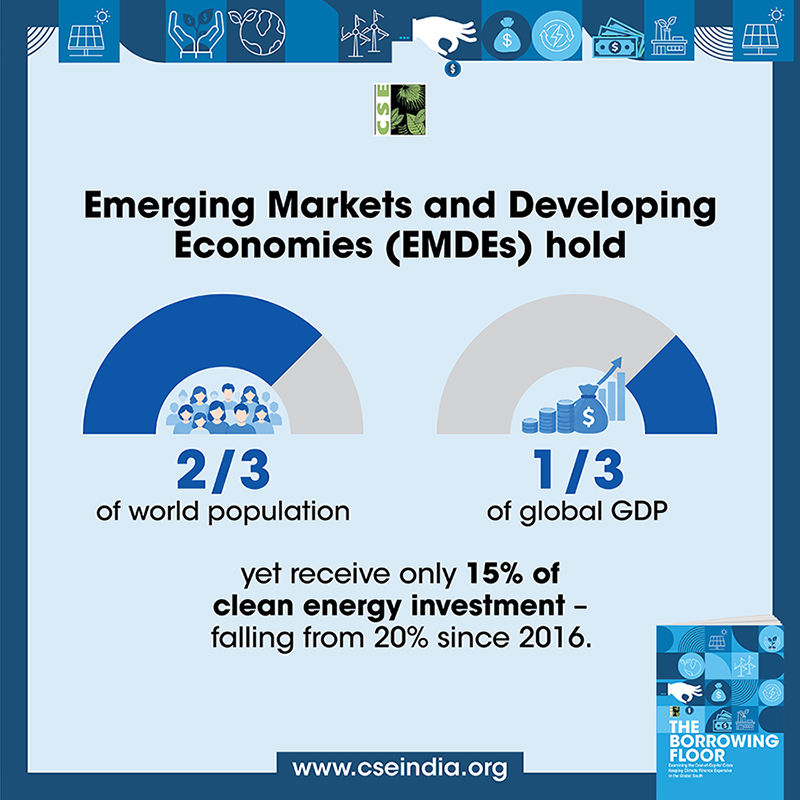
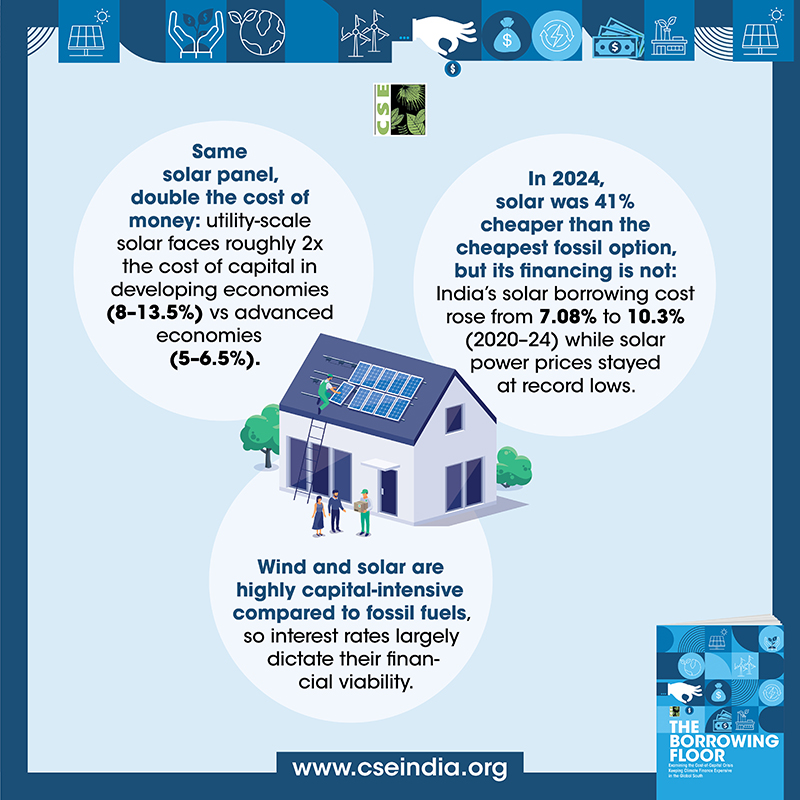
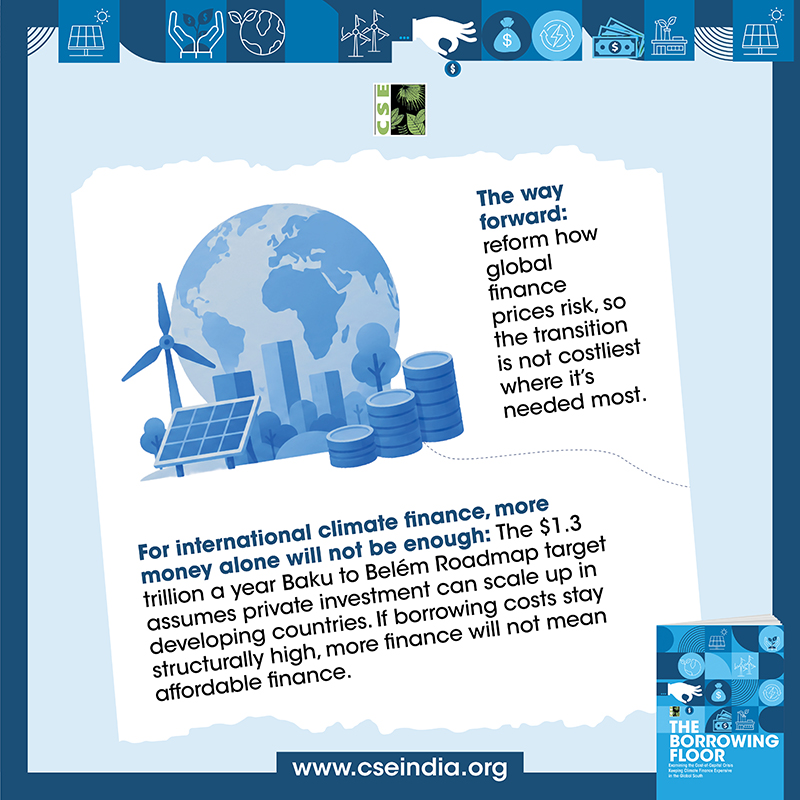
The clean energy transition is booming, but financing remains one of its biggest hurdles. Emerging Markets and Developing Economies (EMDEs) hold two-thirds of the world’s population and a third of global GDP yet receive only 15 per cent of clean energy investment, and face financing costs roughly twice as high as advanced economies for identical technologies. This paper argues that the high cost of capital facing developing countries is less a reflection of real project risk than a structural feature of how the global financial system prices risk.
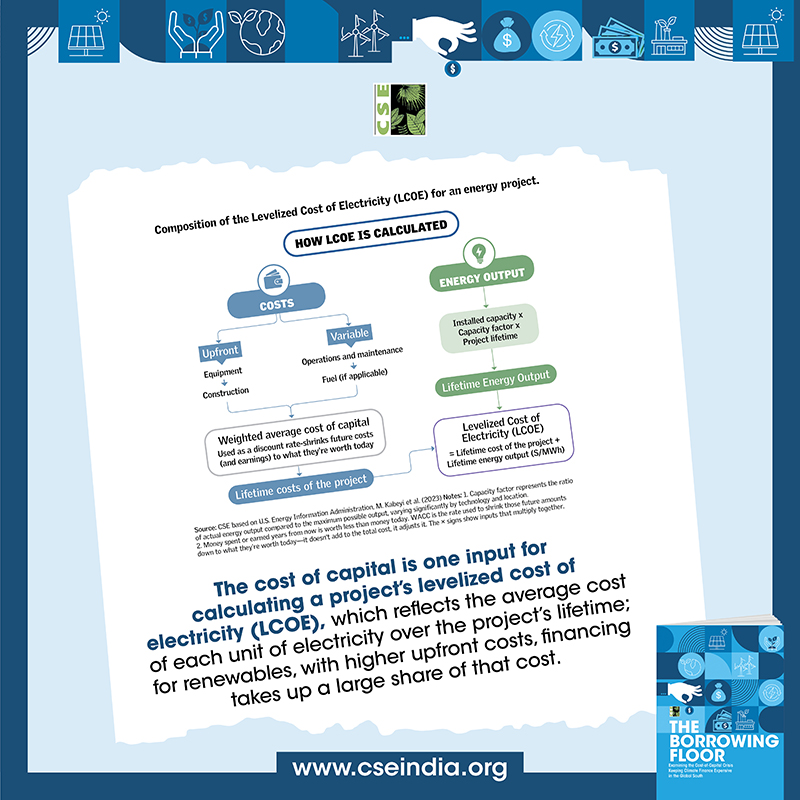
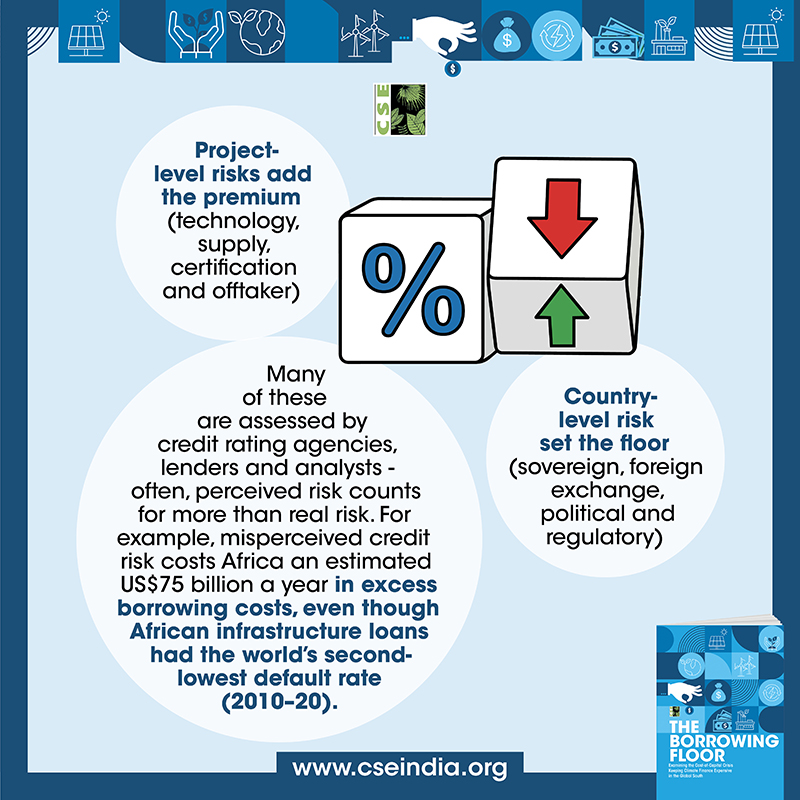
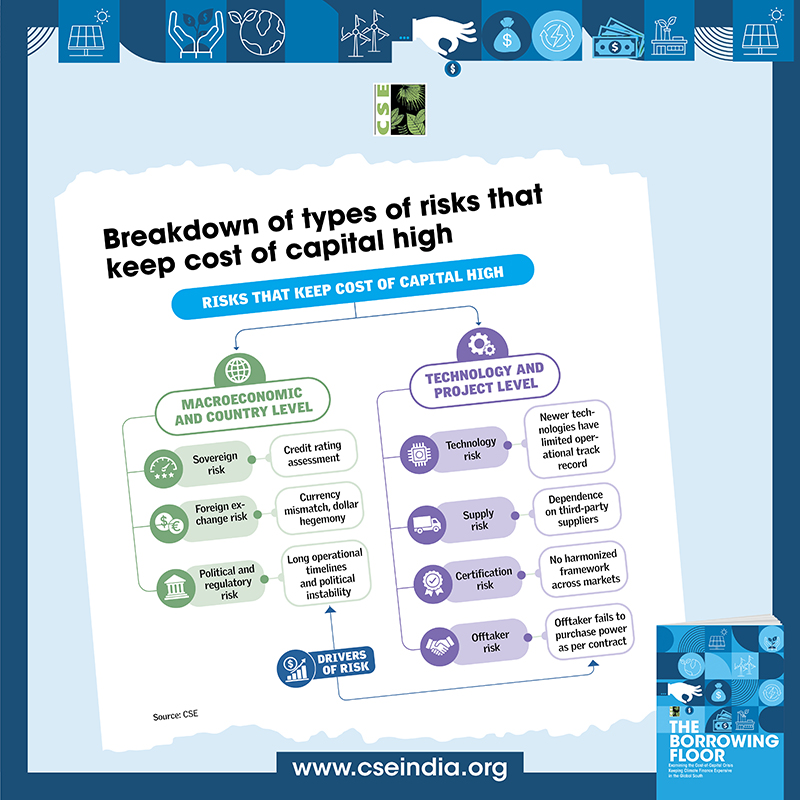
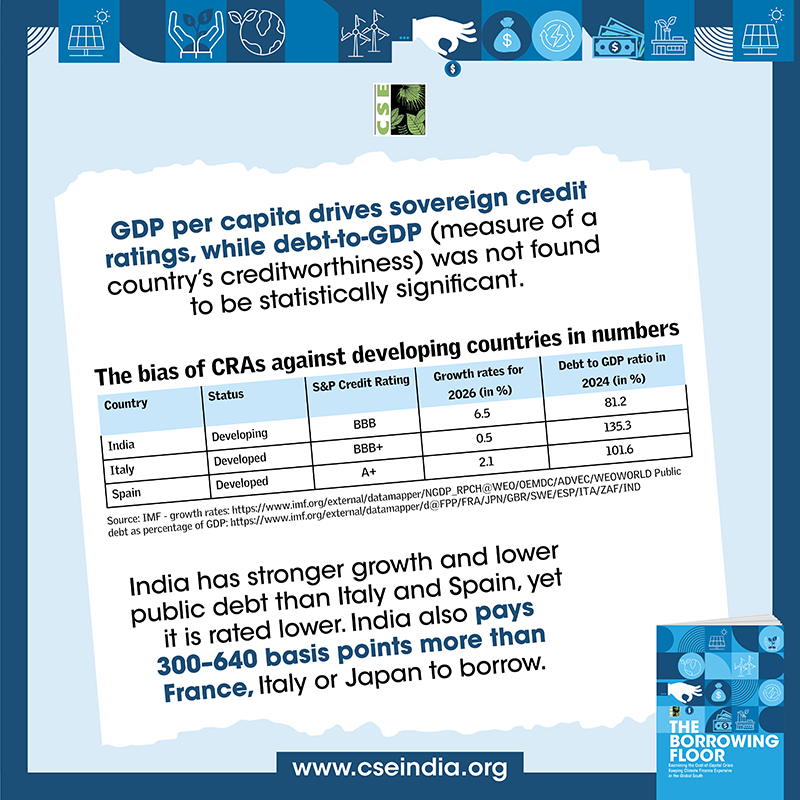
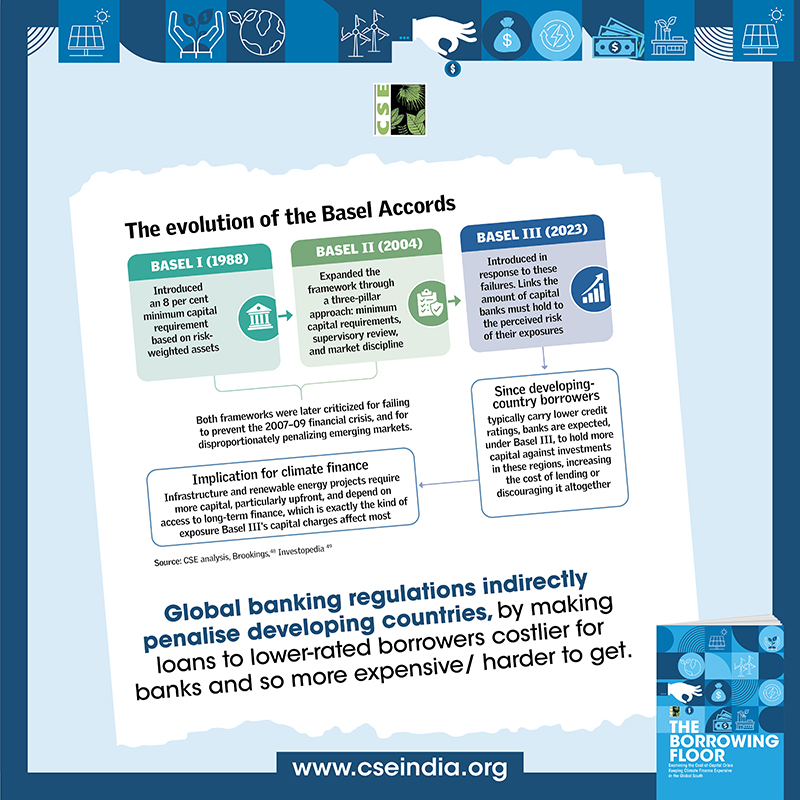
Section 2 shows why this matters more for clean energy than for fossil fuels. Because renewables are financed almost entirely through upfront capital rather than ongoing fuel costs, the price of that capital plays a significant role in project viability. This price is set by a mix of a base rate and a risk premium that is consistently steeper for the Global South. Section 3 interrogates that risk premium and finds it is driven in part, by risk perceptions, rather than just fundamentals. Sovereign credit ratings, which anchor pricing for almost everything built in a country, correlate more closely with income level than with actual repayment capacity. This bias compounds through global banking regulations, and dollar-denominated debt, keeping borrowing costs high even where macroeconomic performance is strong or improving.
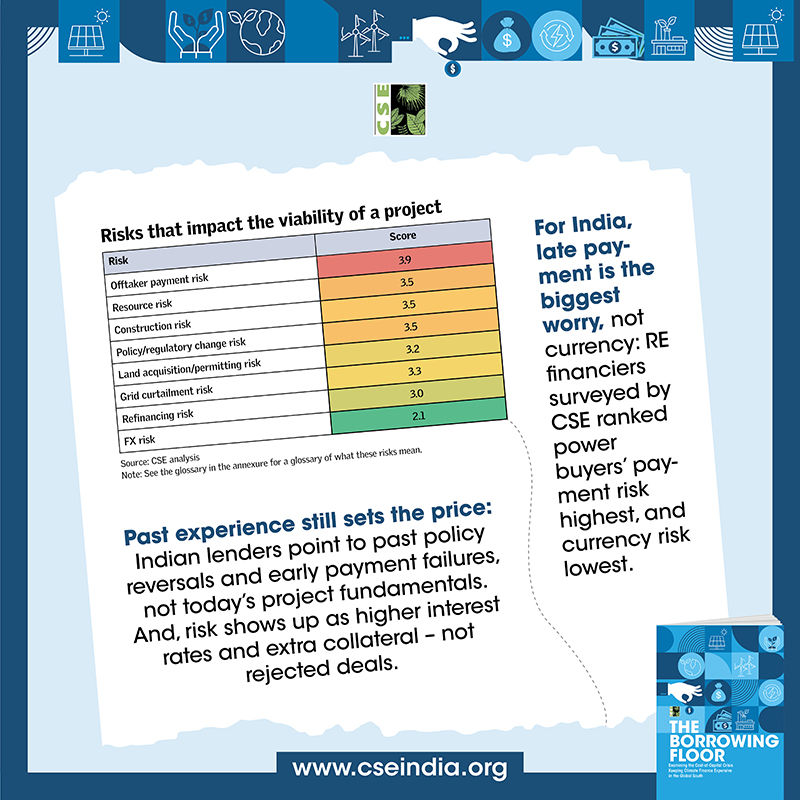
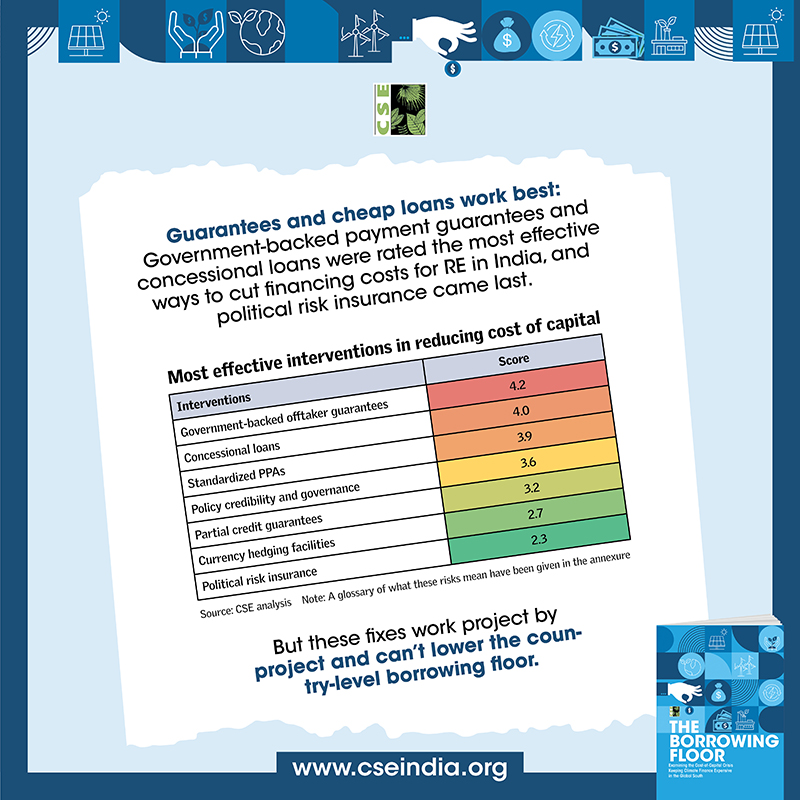
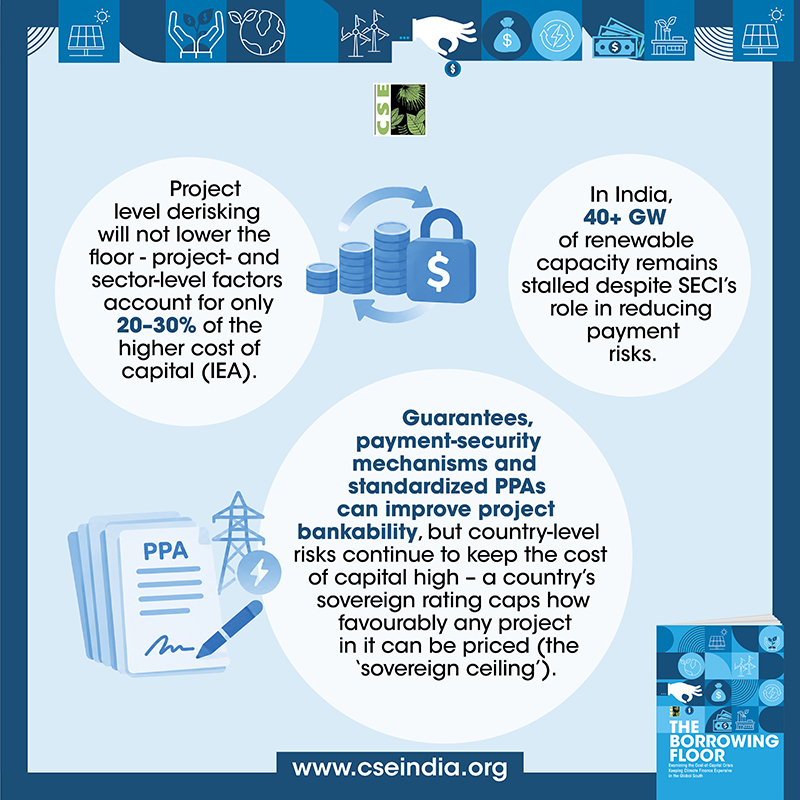
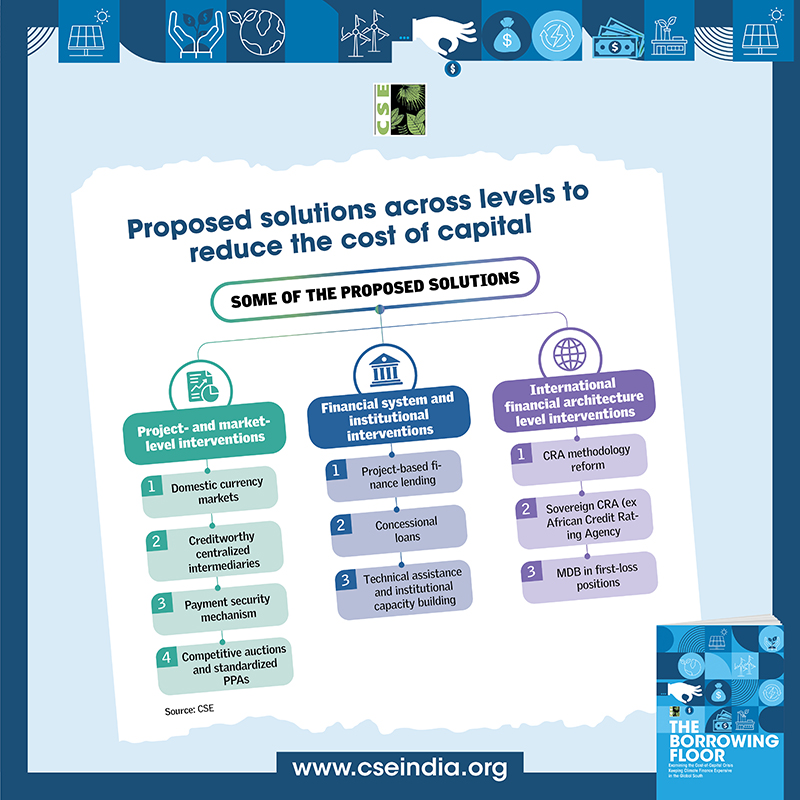
Section 4 grounds the study in India, a country with strong growth and fiscal fundamentals that still borrows 300–640 basis points more expensively than France, Italy or Japan. A primary survey of Indian financiers and project developers points to distribution company payment delays, not currency or technology risk, as the dominant concern shaping financing terms on the ground. Section 5 maps the solution space at the global level and argues that project-level de-risking tools and blended finance can improve individual project bankability but do not impact factors such as the sovereign ceiling, dollar hegemony, or rating methodologies that set the 'borrowing floor.'
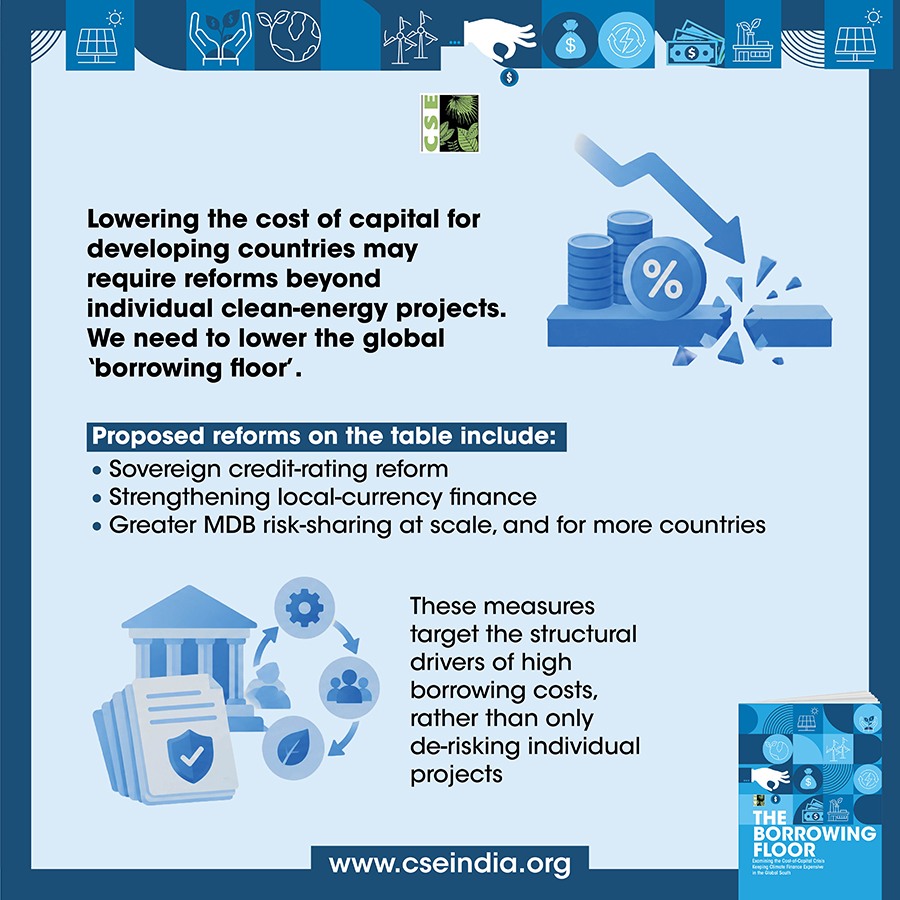
The paper concludes that de-risking should be treated as one tool among many, not a substitute for reform of the international financial architecture itself, including credit rating reform, deeper multilateral lending, and the broader reform agenda championed by efforts such as the Bridgetown Initiative.
For more details, please contact:
Sehr Raheja
sehr.raheja@cseindia.org
Tags:




Share this article