
State of India’s Environment 2026: In Figures, brought out every year by CSE and Down To Earth, ranks states in four thematic areas: environment; agriculture and land; public health; and public infrastructure and human development
New Delhi, June 4, 2026: Down To Earth and Centre for Science and Environment’s (CSE) annual compilation and analysis of nation-wide data on environment and development says India’s five most populous states – Uttar Pradesh, Maharashtra, Bihar, Madhya Pradesh and West Bengal – are poor performers on many development indicators. Assessing the performance of states in India in thematic categories such as environment and public health the report has ranked Goa, Assam, Punjab, Haryana, Himachal Pradesh, Nagaland etc at the top of the charts.
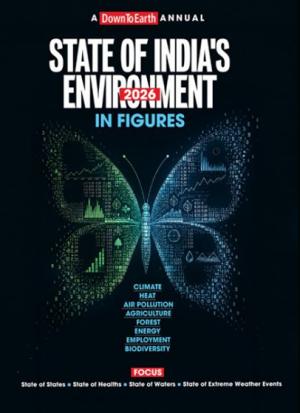
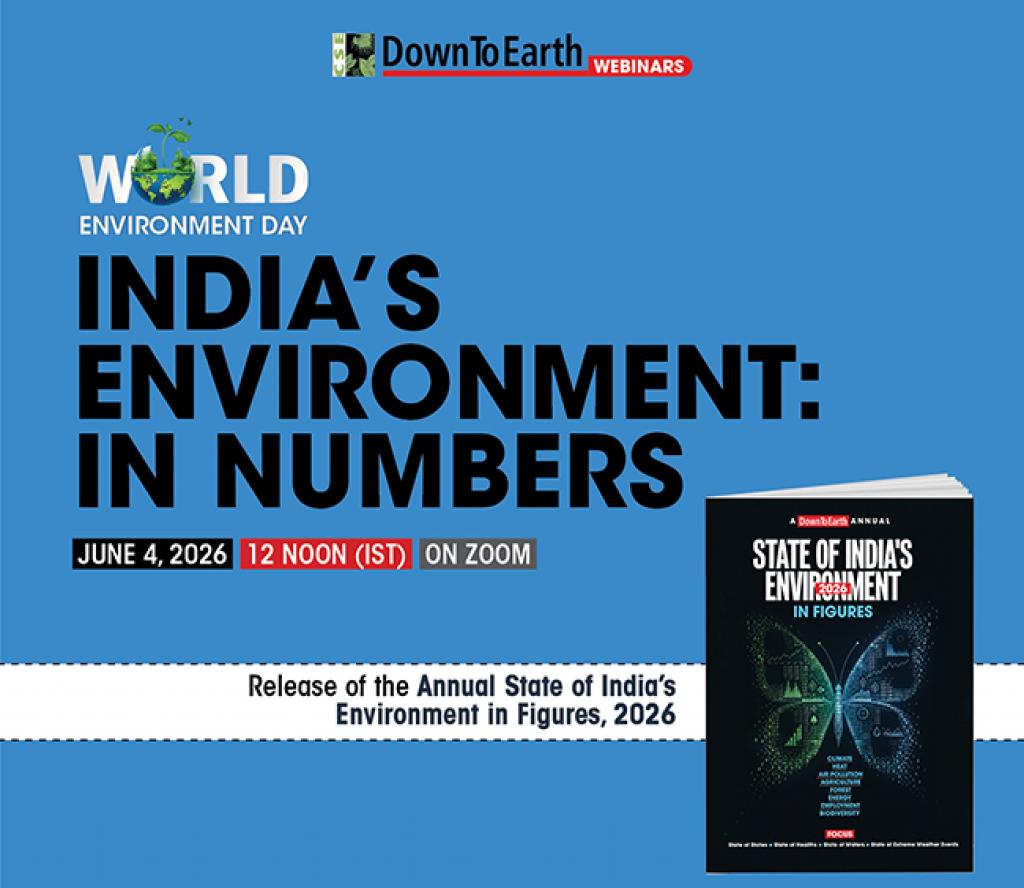
The e-report – State of India’s Environment 2026: In Figures – was released here today at a webinar to mark this year’s World Environment Day (June 5). CSE director general SunitaNarain released the report.
Explaining the methodology behind the data selection and analysis, Richard Mahapatra, managing editor of Down To Earth said: “We have ranked all 36 states and Union territories (UTs) of India across four thematic areas: Environment, Agriculture and Land, Public Health,and Human Development and Public Infrastructure. Barring one, all indicators for assessment have used official government data sources.”
On Environment
There are 15 states and UTs which fall below the halfway mark in the analysis. Waste management has emerged as the area in which most of them are struggling to cope.
Goa, the top-ranked state, has excelled due to its high share of new renewable sources in power generation, says Kiran Pandey, programme director, environmental resources, CSE and one of the writers of the report. “However, the state faces challenges like forest cover change, sewage treatment and management of polluted river stretches,” she adds.
Mahapatra points out that even top-ranked states seem to be struggling. Punjab, which demonstrates a strong agricultural economy, lags in ‘agriculture inputs’ due to its high dependence on chemical fertilisers and weak show on organic farming.
On Agriculture and Land
Twenty-seven states have remained below the halfway mark in this category –“farmer welfare is where most of the states have performed poorly,” says Pandey.
On Public Health
Goa is the only state in India where all registered deaths are medically certified with a known cause of death. However, the state faces a shortfall in government hospital beds per 1,000 population.
While 16 states and UTs have fallen below the halfway mark in this category, ‘environmental risk’ (disability adjusted life years due to air pollution) has emerged as the key cause for concern in most of them.
On Public Infrastructure and Human Development
Thirty-two of the 36 states and UTs are below the halfway mark here. Public infrastructure (roadways, power and housing) has been identified as the problem area.
Mahapatra says that the fact that none of India’s most populous statesfeature in the top ranks “indicates that a substantial share of India’s population is not experiencing strong performance across key development indicators. As a result, overall national progress toward achieving the Sustainable Development Goals (SDGs) is likely to be slower, particularly in critical areas such as health outcomes, infrastructure development, social equity, and environmental sustainability.”
Releasing the report, Narain said: “In today’s uncertain world, numbers are the crutch that will help us stay grounded. They will help us understand trends: what is shaping our world and our future; what is changing; what is improving, and what is not. Numbers reveal the current state of affairs, and offer a clear view into the state of the environment. This report from Down To Earth and CSE bolsters our understanding by bringing these numbers together.”
You can buy the e-report here
For more information, interviews etc, please contact Sukanya Nair of The CSE Media Resource Centre: sukanya.nair@cseindia.org, 8816818864
Share this article