
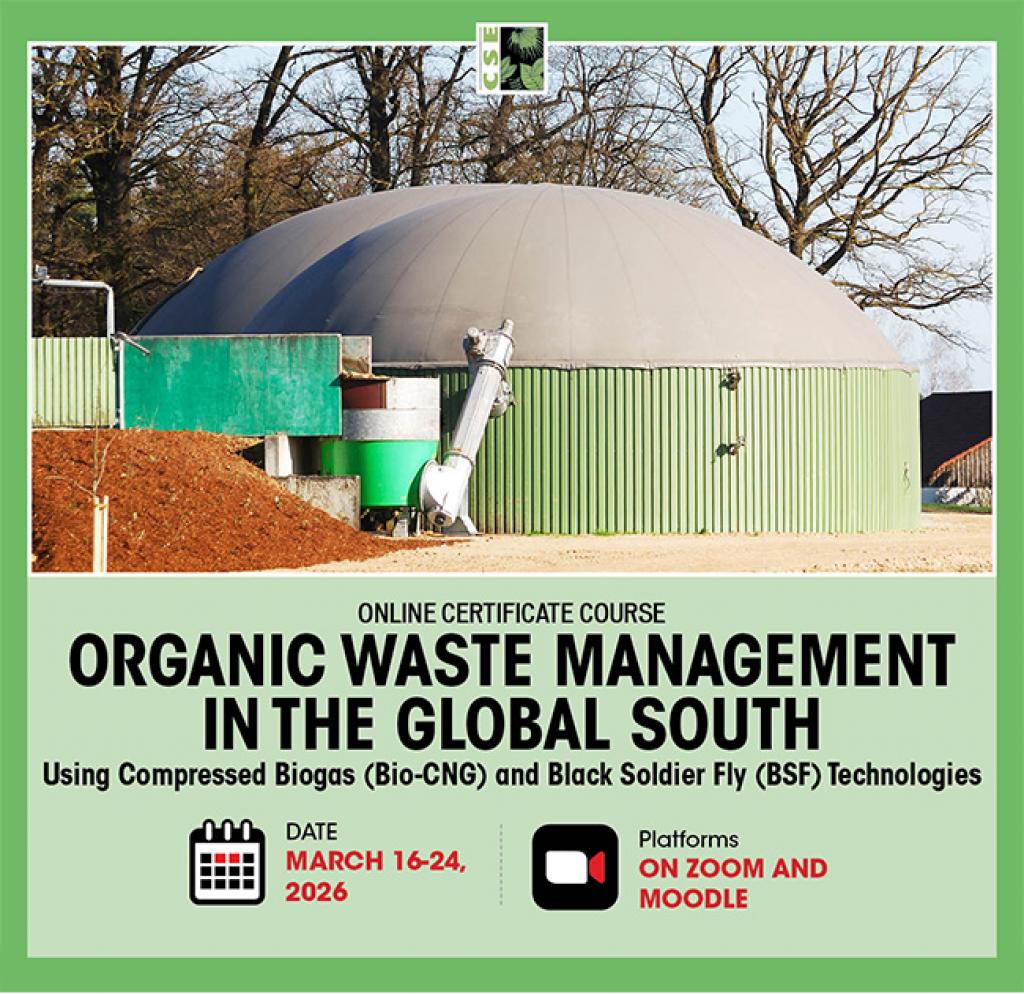
Every day, millions of tonne of organic waste food scraps from household, bulk waste generators, markets, garden trimmingsetcare indiscriminately discarded, left to rot in open dumps and landfills. This mismanaged waste is not merely an eyesore and a public health hazard; it is also a catastrophic contributor to climate change. The municipal solid waste sector is the world's fourth largest source of greenhouse gas emissions. The Global South, where organic waste amounts to 50-60 per cent of the total waste generated,naturally accounts for a significant share of those emissions. By 2050, the Global South, especially Sub-Saharan Africa, will see a sharp rise in waste generation, making the traditional ‘collect-and-dump’ model environmentally unsustainable and economically unviable.
Yet this challenge presents a clear opportunity: that of converting organic waste into a clean, renewable and commercially viable energy source – Compressed Biogas (CBG) or Bio-CNG. CBG/Bio-CNG could be an answer to the need for a renewable energy fuel for industrial and automobile uses, apart from its proven potential to generate electricity. The technology can create a whole new industrial ecosystem around organic waste, create jobs and most importantly, provide a solution to the current landscape of mismanaged waste.
For Sub-Saharan African cities, where organic waste dominates and financial resources are limited, the Black Soldier Fly technology offers a scalable local solution that cuts landfill dependence, reduces methane emissions, and lowers processing costs while strengthening sustainability and job creations, especially for informal waste pickers. It enables a cost-effective and decentralised approach to organic waste management by rapidly bio-converting high-moisture food and market waste into high-value protein and soil enhancers, apart from selling the black soldier fly as poultry feed.
Recognising this transformative potential, the Global Forum of Cities for Circular Economy (GFCCE), an initiative fostered by CSE, is announcing a comprehensive, tailor-made and in-depth training programme designed to equip stakeholders with the knowledge, understanding and practice to champion and implement Bio-CNG and BSF technology-based projects.
WHAT WILL THIS TRAINING COVER?
WHO WILL BENEFIT FROM THE COURSE
FOR FURTHER DETAILS, CONTACT
Kaifee Jawed
Deputy Programme Manager
Solid Waste Management and Circular Economy
Email: Kaifee.jawed@cseindia.org
Mobile: +91 9755411810
Sreyas Valsan
Programme Officer
Solid Waste Management and Circular Economy
Email:sreyas.valsan@cseindia.org
Mobile: +91 8287793170
| COURSE FEE | |
| Free for government officials from African and Asian nations | |
|
|
| WHAT DO YOU GET | |
|
Share this article