
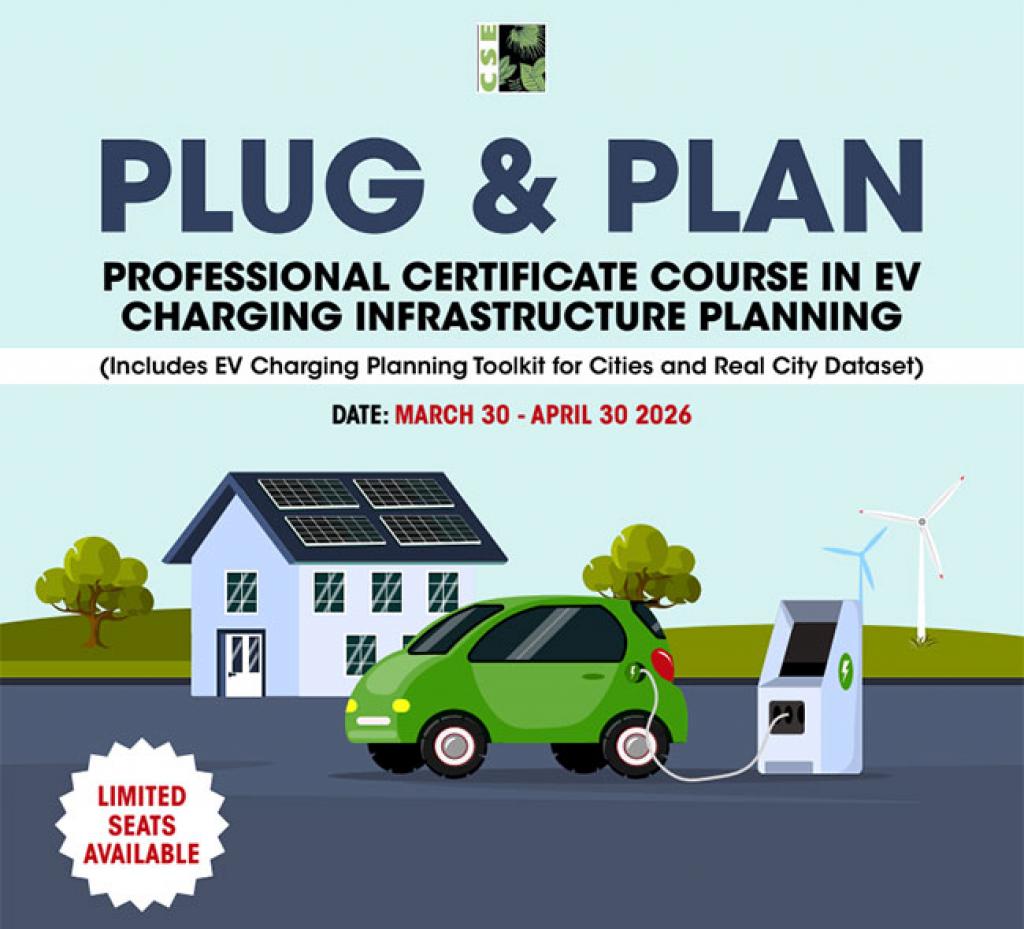
PLUG & PLAN Professional Certificate Course in EV Charging Infrastructure Planning

HOW MANY EV CHARGERS WILL CITIES ACTUALLY NEED?
Plug & Plan is a practical course that introduces the analytical methods used to understand the transport sector transition to electric mobility and its implications for charging infrastructure planning.

Cities across the world are transitioning to electric mobility. Electric buses, two-wheelers, cars, and commercial fleets are increasingly becoming part of urban transport systems.

However, one critical planning question remains:

How many EV chargers will cities actually need?

Installing charging infrastructure without understanding transport activity, vehicle fleets, and energy demand can lead to under-utilised or poorly located chargers.

Planning EV charging infrastructure requires an analytical understanding of:

  • The structure of the transport sector
  • Vehicle activity and travel demand
  • Transport sector emissions and electrification strategies
  • EV economics and adoption trends
  • Charging technologies and infrastructure requirements

Plug & Plan is a practical course designed to introduce students and early-career professionals to the analytical foundations required to understand and plan EV charging infrastructure.

The course demonstrates how transport data, energy analysis, and EV economics can be used to estimate charging demand and inform infrastructure planning.

WHAT YOU WILL LEARN

  • How to source and analyse transport and energy data
  • How to estimate on-road vehicle activity
  • Understanding transport sector emissions and electrification pathways
  • Vehicle emission standards and regulatory frameworks
  • EV economics using Total Cost of Ownership (TCO)
  • Fundamentals of electric vehicle charging systems

HANDS-ON LEARNING

Participants will complete practical exercises including:

  • EV Charging Demand Lab Estimate EV charging demand for a city using an EV Charging Planning Toolkit
  • EV Charging Planning Studio Identify potential locations for EV charging infrastructure.
  • Final Project Develop a mini EV charging infrastructure plan for a selected city with real city data


Tags:

Flyer
Download Flyer
Course Fees
Student Fee: Rs 899
Early Bird Fee:
Rs. 599
Who should attend
  • Urban planning students
  • Transport and mobility students
  • Energy and sustainability researchers
  • Early-career professionals interested in EV transition
Course format
  • Short course
  • Online learning
  • Practical exercises
Certificate
Participants who complete the course and final project will receive a Certificate in EV Charging Infrastructure Planning
Frequently Asked Questions (FAQs)
A FAQ section reduces hesitation and increases sign-ups.
Do I need prior knowledge of electric vehicles?
No. The course introduces key concepts step by step and is designed for students and early-career professionals interested in mobility and sustainability.
Is the course technical?
The course introduces analytical concepts but does not require advanced technical knowledge. It focuses on practical understanding of transport data, EV economics, and charging infrastructure planning.
What will I gain from the course?
Participants will gain:

• an understanding of EV charging infrastructure planning
• exposure to transport and energy datasets
• a practical toolkit for estimating EV charging demand
• a project that can be included in a professional portfolio
Will I receive a certificate?
Yes. Participants who complete the course and submit the final project will receive a Certificate in EV Charging Infrastructure Planning.
How long does the course take to complete?
The course is designed as a short program that can be completed alongside academic or professional commitments.
Is the course open to students from all universities?
Yes. The course is open to students and early-career professionals from universities across India.
How do I register?
You can register using the online registration form. Once registered, participants will receive further information about course access and schedule.