
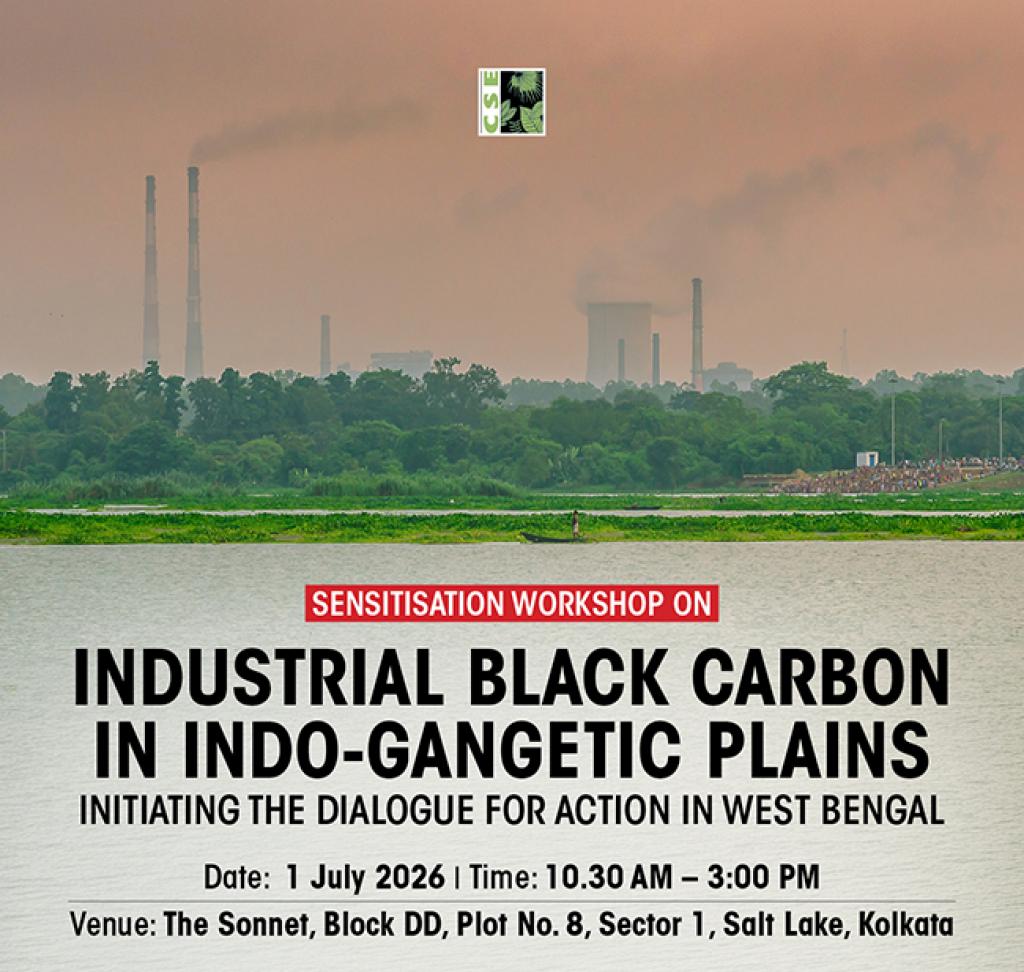
Black carbon, commonly known as soot, is increasingly recognised as a super pollutant because of its significant impacts on both air quality and climate change. While it is a component of PM2.5, black carbon remains largely absent from dedicated monitoring and regulatory frameworks. Its impacts extend beyond air pollution, contributing to climate warming, glacier melt, water insecurity and adverse public health outcomes.
Centre for Science and Environment (CSE) has undertaken a first-of-its-kind assessment of industrial black carbon emissions across the Indo-Gangetic Plains (IGP). CSE’s assessment indicates that industries across the Indo-Gangetic Plains emit an estimated 4.64 lakh tonnes of black carbon annually. The study further demonstrates that significant emission reductions can be achieved through improved combustion efficiency, cleaner fuels, better operational practices and effective pollution control systems.
These findings highlight an important yet often overlooked opportunity for strengthening air quality management and delivering near-term climate benefits. Given West Bengal’s diverse industrial base and strategic importance within the eastern Indo-Gangetic region, CSE is organising a sensitisation workshop to discuss:
FOR PARTICIPATION AND FURTHER INFORMATION:
SUBHRAJIT GOSWAMI
Programme Officer
Sustainable Industrialisation Unit
Mobile: +91 9126386648
Email: subhrajit.goswami@cseindia.org
SHOBHIT SRIVASTAVA
Programme Manager
Sustainable Industrialisation Unit
Mobile: +91-9711049558
Email: shobhit.srivastava@cseindia.org
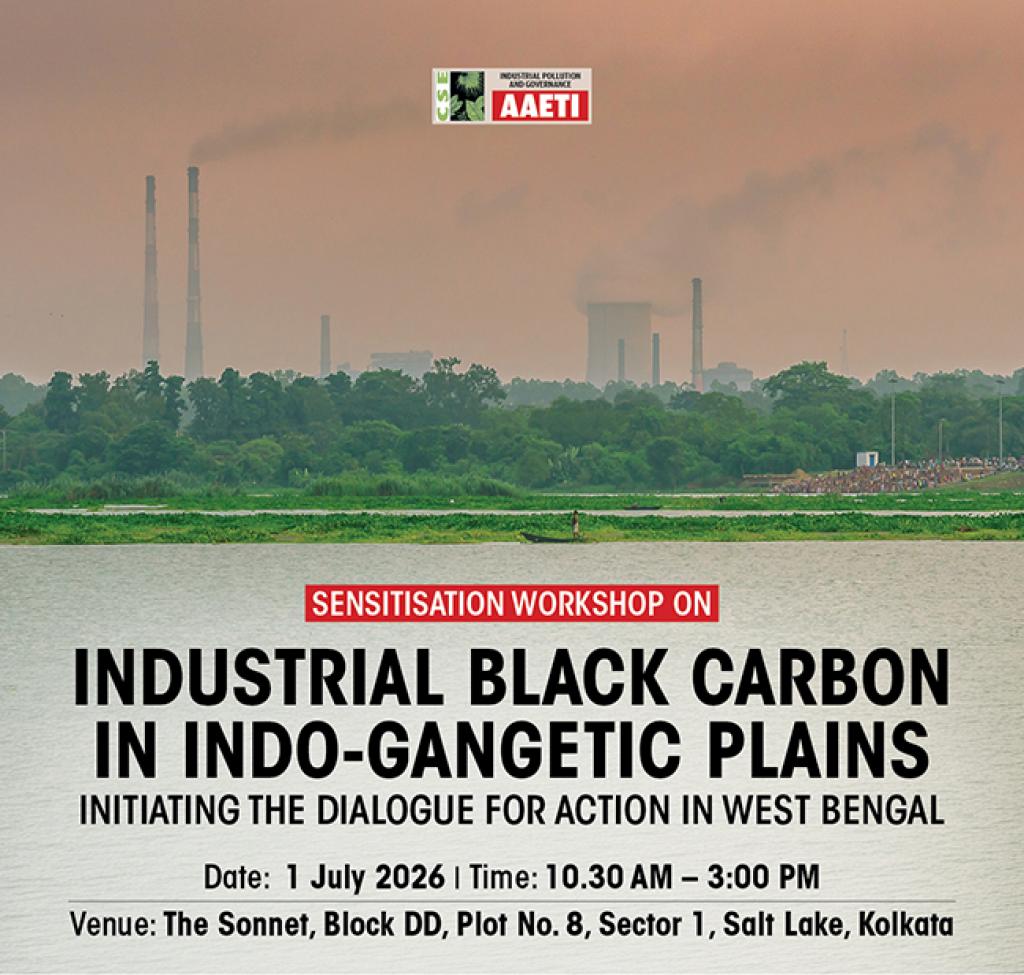
| Flyer | |
 |
|
| Download flyer | |
| Who Should Attend? | |
|
|
| Why Participate? | |
|
Share this article