
Faecal Sludge and Septage Management is a critical component of urban sanitation, particularly in towns that do not have comprehensive sewerage networks. Although Rajasthan achieved Open Defecation Free status under the Swachh Bharat Mission in 2018, sustaining safe sanitation outcomes requires effective systems for the collection, transportation, treatment, and safe disposal or reuse of faecal sludge and septage.
To strengthen FSSM services across the state, the Directorate of Local Bodies, Government of Rajasthan, has sanctioned nearly 200 Faecal Sludge Treatment Plants for non-sewered Urban Local Bodies, while the Panchayati Raj Department has approved 100 cluster-based FSTPs for rural areas. More than 60 FSTPs are currently operational in the state, with several additional facilities under construction.
As FSSM infrastructure continues to expand, strengthening the capacity of municipal officials has become essential for effective planning, operation, monitoring, and sustainable service delivery. Assessments conducted by the Centre for Science and Environment (CSE) have highlighted several challenges, including limited technical capacity, inadequate monitoring, low plant utilisation, operational constraints, and gaps in regulatory compliance.
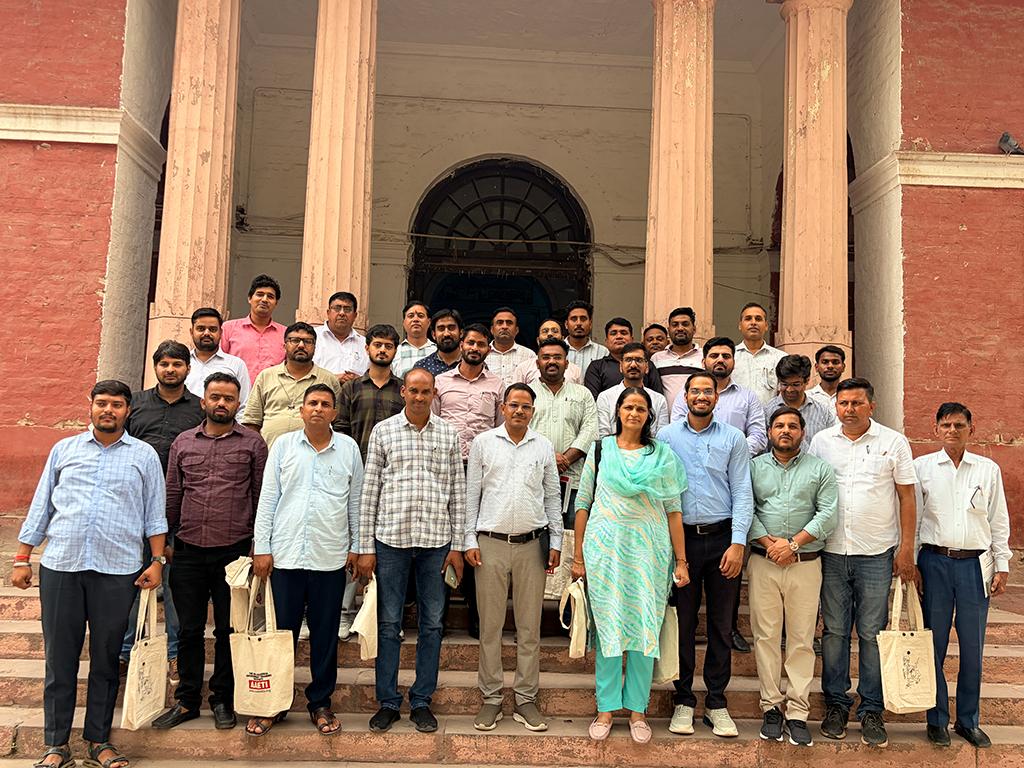
To address these challenges, CSE, in collaboration with the Swachh Bharat Mission (Urban) and the Directorate of Local Bodies, Government of Rajasthan, has initiated a series of Divisional-Level Training Programmes on the Operation and Maintenance of FSSM Systems. The second training programme in the series was held on 29 July 2026 at Nagar Nigam Auditorium, Bikaner, bringing together more than 58 engineers and municipal officials from over 30 Urban Local Bodies across the Bikaner and Jodhpur divisions.
The training aimed to strengthen the technical knowledge and implementation capacity of municipal officials responsible for sanitation service delivery. The programme provided participants with practical knowledge on FSSM planning, treatment technologies, operation and maintenance of Faecal Sludge Treatment Plants, regulatory and institutional frameworks, Information, Education and Communication strategies, and approaches for improving the performance, efficiency, and sustainability of sanitation services.
Training Methodology
The programme adopted a participatory and practice-oriented approach that combined technical inputs with interactive learning. The sessions included expert presentations, case studies, experience-sharing, and open discussions, enabling participants to actively engage with the subject and learn from the experiences of other Urban Local Bodies.
The programme began with an overview of the fundamentals of Faecal Sludge and Septage Management, along with Rajasthan’s progress, achievements, existing challenges, and future roadmap for strengthening sanitation infrastructure and services. Participants were introduced to the sanitation value chain, the characteristics and variability of faecal sludge, and the importance of safe collection, transportation, treatment, and final disposal or reuse.
The technical sessions covered the policy, governance, and regulatory framework for FSSM in India, followed by discussions on FSSM planning, faecal sludge treatment technologies, and Performance-Oriented Procurement (PoP) approaches. These sessions helped participants understand how appropriate planning, institutional arrangements, and procurement mechanisms can contribute to reliable and sustainable FSSM service delivery.
A dedicated session on the operation and maintenance of FSTPs provided practical guidance on routine maintenance, process monitoring, troubleshooting, record-keeping, occupational health and safety, and measures to improve plant efficiency and utilisation. Participants also discussed common operational challenges faced by FSTPs and possible measures for addressing them at the ULB level.
The programme also included a session on Information, Education and Communication (IEC), highlighting the importance of behaviour change communication, citizen engagement, stakeholder participation, and awareness generation in strengthening FSSM implementation and promoting safe sanitation practices.
The programme concluded with an interactive open-house session, during which participants shared field experiences, discussed implementation challenges, and exchanged practical solutions and good practices with experts and fellow practitioners.
The training provided a platform for municipal officials to strengthen their technical understanding of FSSM and learn from practical experiences across ULBs. The combination of technical sessions, case-based learning, practical guidance, and peer-to-peer interaction enhanced participants’ capacity to effectively plan, operate, monitor, and manage FSSM services and contribute to improved sanitation outcomes across Rajasthan.
Training Coordinators
Vivek Kumar Sah
Programme Officer, Water Programme
Centre for Science and Environment
Email vivek.sah@cseindia.org
Mob. No. - +91- 9708887214
Gaurav Singh
Assistant Engineer
Swachh Bharat Mission (Urban), Directorate of Local Bodies
Government of Rajasthan
Training Director
Subrata Chakraborty
Director, Water Programme
Centre for Science and Environment
Email - subrata.chakraborty@cseindia.org
| Training Methodology | |
| The programme will adopt a participatory learning approach comprising technical presentations from sector experts, interactive discussions, quizzes etc. | |
| Target Participants | |
| The programme is intended for Executive officers, municipal engineers, treatment plant operators, sanitation professionals, and representatives of agencies involved in the planning, implementation, O&M, monitoring of faecal sludge and septage management. |
Share this article